What Confederate Units were at the Battle of Belington / Laurel Hill?

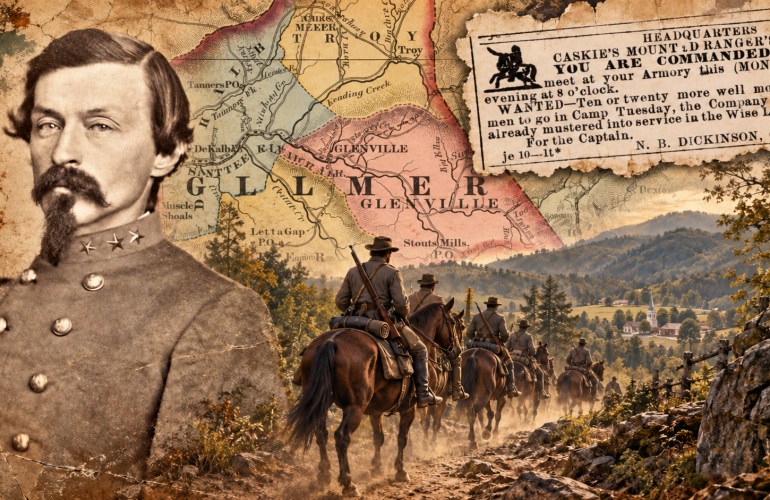
Following the rout at Philippi on June 3, Confederate President Jefferson Davis promoted Robert S. Garnett, adjutant to Robert E. Lee, to brigadier general and placed him in command of the army in the northwest. Garnett, 41, was a former U.S. Army officer and assistant instructor of infantry tactics at West Point. He joined Col.…

What Federal Units were at the Battle of Belington / Laurel Hill?

On July 6, 1861, Maj. Gen. George B. McClellan ordered Brig. Gen. Thomas A. Morris to advance on Confederate Brig. Gen. Robert S. Garnett’s position on Laurel Hill, near the small hamlet of Belington, also spelled Bealington or Beelington. McClellan instructed Morris to occupy a position “on the south side of Barker’s Mill Run, on…

The Union, Right or Wrong: Preston and Monongalia Counties Choose a Side

During the critical period of April-May 1861, Preston and Monongalia counties, in what was then northwestern Virginia, remained firmly in the Union camp. Both counties shared a northern border with Pennsylvania and, unlike their southern neighbors, organized no Confederate volunteer companies, though a few individuals may have enlisted in the Southern cause. Slavery was rare,…

Second Virginia Infantry Regiment (U.S.)

From May to July 1861, the Second Virginia Infantry (U.S.) did not operate as a cohesive regiment. Instead, several of its companies acted independently in support of Maj. Gen. George B. McClellan’s campaign to secure northwestern Virginia and the Baltimore & Ohio (B&O) Railroad for the Union. The regiment did not fully come together until…

First Virginia Infantry Regiment (U.S.)

The First Virginia Infantry Regiment (U.S.) featured prominently in Maj. Gen. George B. McClellan's advance into northwestern Virginia in late May 1861. Its presence helped reassure nervous civilians that this was a limited operation designed to protect the Baltimore & Ohio Railroad and expel secessionist militias, not a heavy-handed federal invasion. The regiment's colonel, Benjamin…

Union Forces Involved in the Action at Philippi

Determining the composition of the Union force that attacked Philippi on June 3, 1861, is, thankfully, easier than for their opponents. The orders outlining which units were to take part, and the number of companies assigned, have long been published. Even so, estimates of the total strength vary, and the sources do not always explain…

Secessionist Forces Involved in the Action at Philippi

As one of the earliest engagements in the American Civil War, the Action at Philippi on June 3, 1861 is clouded in faulty and incomplete information. We owe it to history (and the ancestors of the men involved) to get an accurate picture of who was present on that day, for either side. Today we…

From Revenue Cutter to Warship: USS Harriet Lane and the Opening Naval Actions of the Civil War

From firing one of the first naval shots of the Civil War off Charleston Harbor to helping secure a vital Union foothold on North Carolina’s Outer Banks, the USS Harriet Lane played an outsized role in the conflict’s opening months. Follow her journey from revenue cutter to warship, highlighting her actions at Fort Sumter, Pig…

Captain Henry Eagle and the USS Monticello (Star)

Small and lightly built with a teetotaling veteran captain, the USS Monticello (Star) became an early workhorse of the Union blockade, trading fire with Confederate batteries from the James River to Cape Hatteras. The USS Monticello was a schooner-rigged, wooden screw steamer constructed at Mystic, Connecticut, in 1859. The U.S. Navy chartered her in May…

The Role of USS Yankee in Early Civil War Naval Operations

A small, lightly armed tugboat doesn’t sound like the kind of vessel that makes history, until it does. In the Civil War’s opening weeks, USS Yankee, under Lt. Thomas O. Selfridge, Jr., became the Navy’s eyes on the Chesapeake, scouting hostile waterways and snapping up prizes. Notable for exchanging the first shots of the Civil…