Wednesday, June 19, 1861
Before dawn on June 19, 1861, hundreds of Confederate soldiers waded across the Potomac River at New Creek, Virginia, intent on driving off Union defenders and destroying a vital B&O Railroad bridge. The daring raid overwhelmed a small band of local Home Guards, severed an important transportation link, and heightened fears that Lew Wallace’s isolated command at nearby Cumberland, Maryland, would be next.
Narrative
The Action at Bridge No. 21 was fought on Wednesday, June 19, 1861 between Confederate forces commanded by Col. John C. Vaughn and Union Home Guard commanded by Capt. Horace Resley in modern-day Mineral County, West Virginia. The Confederate victory briefly interrupted traffic on the Baltimore & Ohio Railroad and severed the connection between Union forces in Maryland and western Virginia.
On June 12, 1861, shortly after arriving in Cumberland, Maryland, on the North Branch of the Potomac River, Col. Lewis “Lew” Wallace and the 11th Indiana Infantry Regiment cleared Confederate forces from Romney, Hampshire County, Virginia. They then returned to Cumberland to establish camp and secure the strategic transportation hub along the Baltimore & Ohio (B&O) Railroad. Raw materials like coal and iron flowed through the town from western Maryland and Virginia to cities along the eastern seaboard.
The people of western Maryland were decidedly unionist in sentiment. In April, Capt. Horace Resley organized his antebellum militia company, the Cumberland Continentals, to defend the town and guard local railroad bridges. The B&O Railroad partially funded the unit, with good reason to fear for its property.
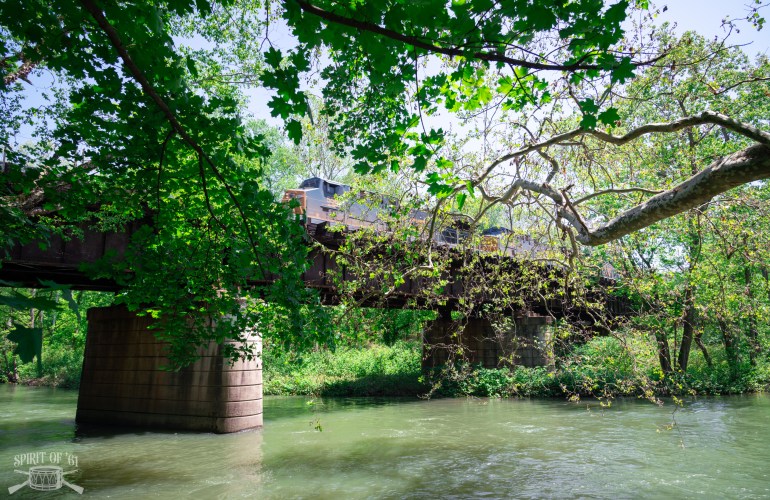
On May 28, covered railroad bridges over Patterson’s Creek in northern Hampshire County, along with the pump house and the 131-foot canal span at North Branch, were burned. In response, a detachment of the Continentals was sent to guard Bridge No. 21, the railroad bridge over the North Branch of the Potomac opposite Paddy Town, twenty miles southwest of Cumberland. They were armed with two cannon: a 6-pounder and an aging 4-pounder.
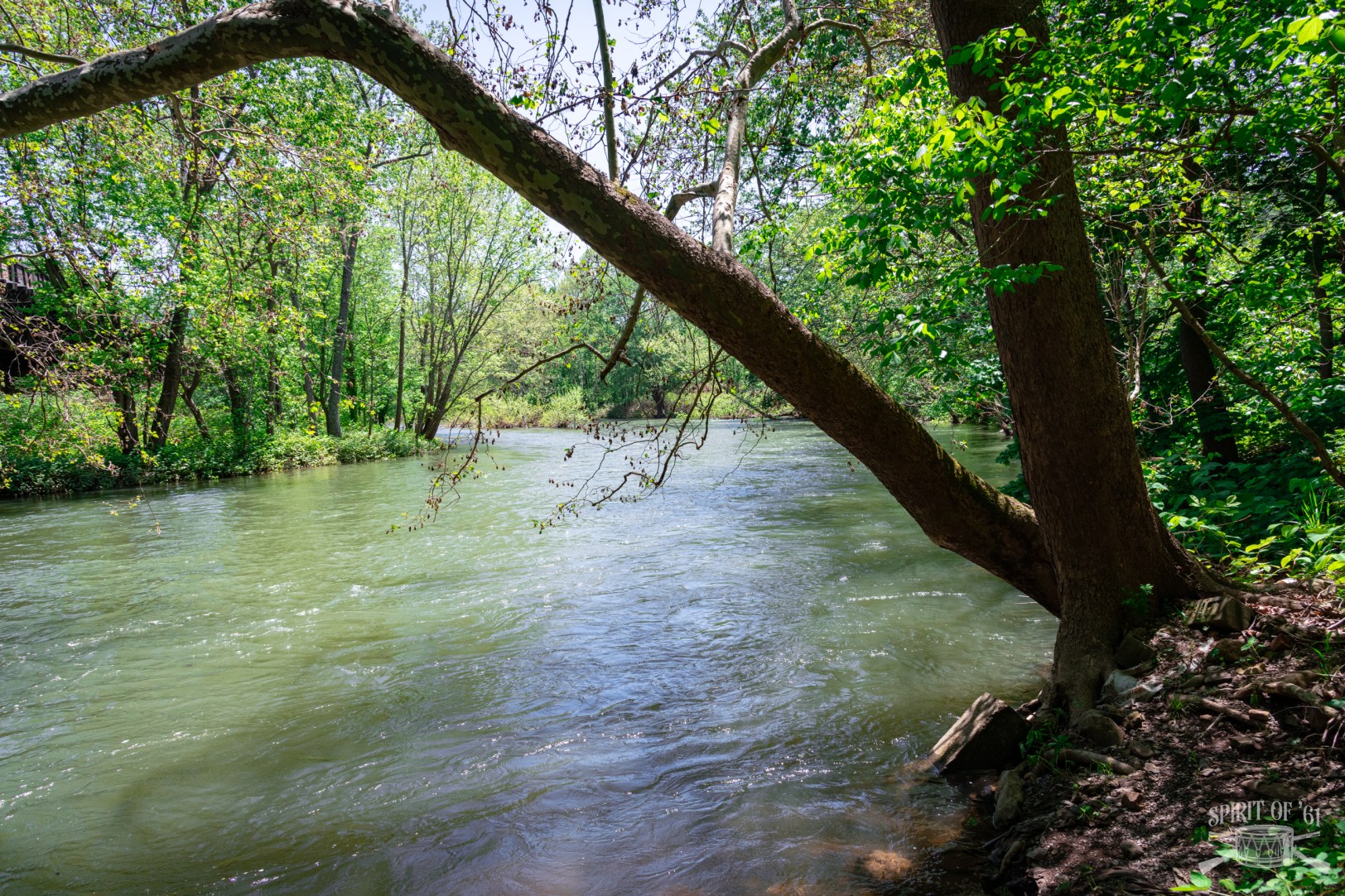
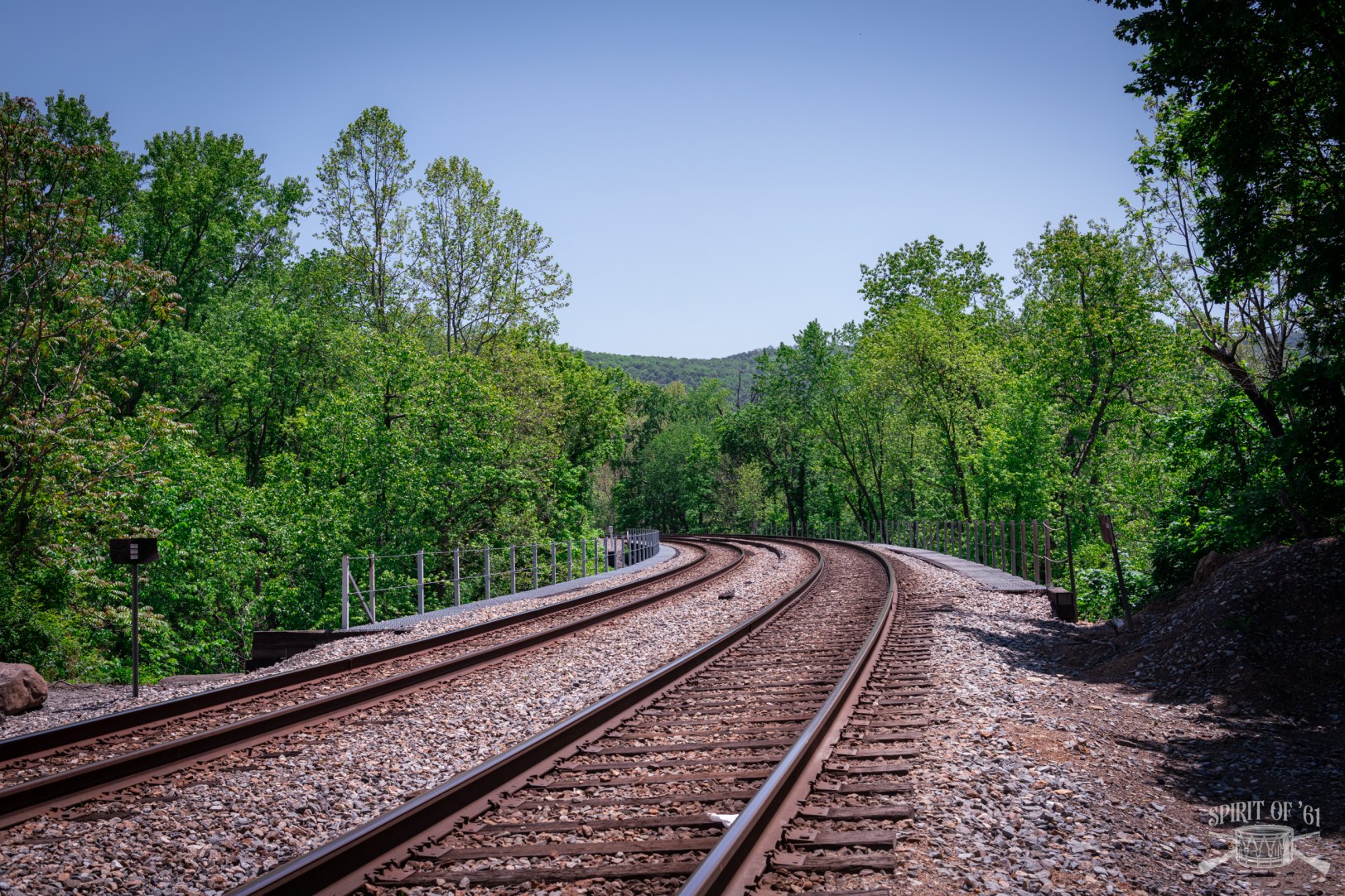
There, the river wrapped around Queens Point, a rocky prominence rising some 400 feet above the basin on the Maryland side. New Creek Station stood on the bend’s southwestern side, west of New Creek, while the small settlement of Paddy Town lay to the east near Limestone Run. The B&O Railroad crossed from Maryland at Bridge No. 21 on the bend’s northeastern side, curved past Paddy Town and New Creek Station, then followed the river westward before crossing again near Piedmont.
To counter Lew Wallace’s presence in the region, Confederate Brig. Gen. Joseph E. Johnston sent Col. Ambrose Powell Hill from the Shenandoah Valley to reoccupy Romney with the 3rd Tennessee Infantry, 10th Virginia Infantry, and his own 13th Virginia Infantry. A former Regular Army officer, Hill reached Romney sometime during the night of June 17. Civilians who had fled the town greeted the troops with food as regimental bands serenaded them with patriotic tunes. The Confederate force probably numbered about 2,000 men.
Wallace watched this new threat with anxiety. He had repeatedly dispatched pleas for assistance but received none. As a precaution, his men prepared their wagons for a retreat east toward Hancock. “We have been sleeping in our clothes with our arms ready in hourly expectation for the past forty-eight hours,” a private wrote to the Indiana State Sentinel. “We certainly are now in the most dangerous position of any regiment in the United States.”
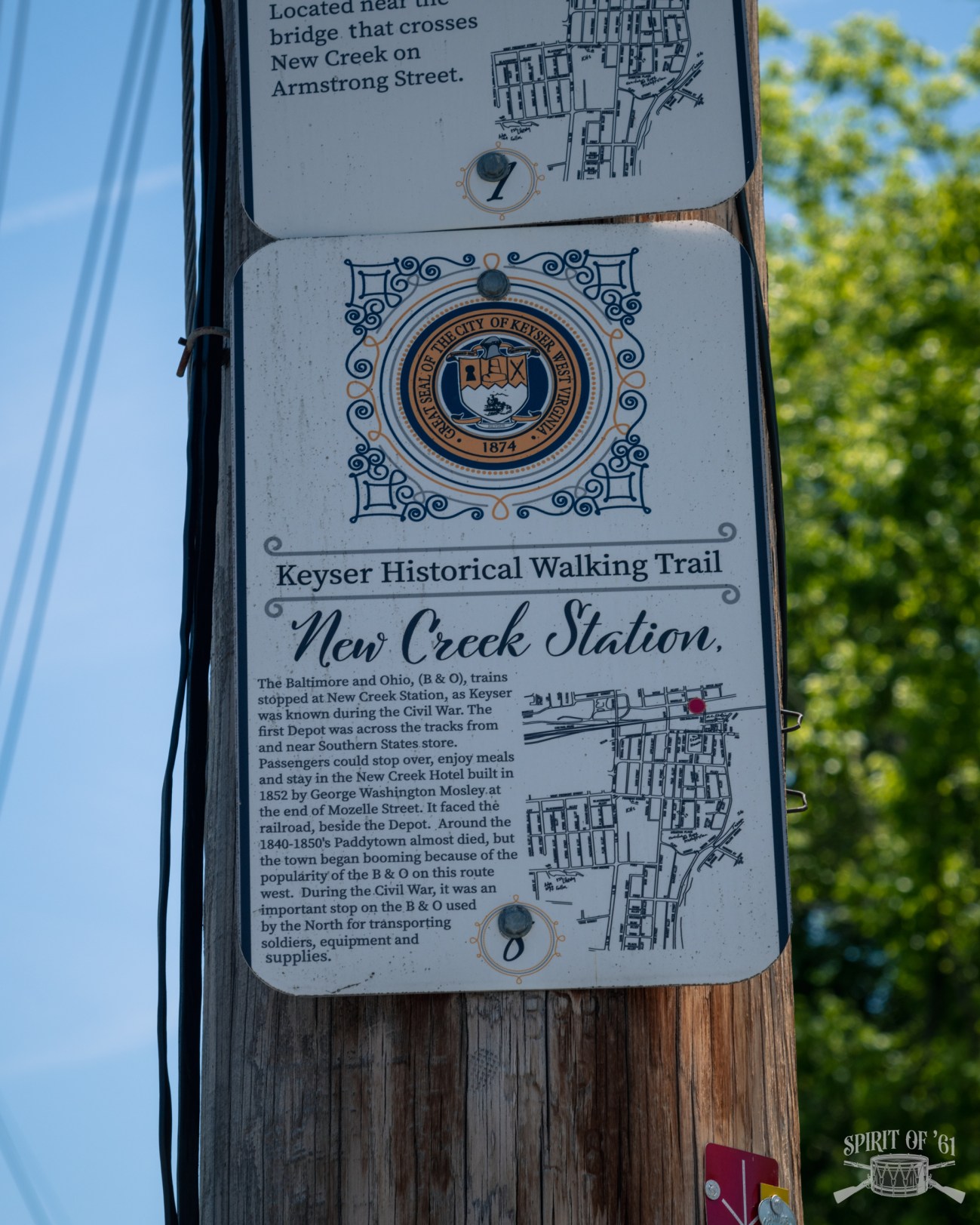
On the night of June 18, Col. John C. Vaughn marched Companies I and K of his 3rd Tennessee, along with Companies B and I and a detachment from Company K of the 13th Virginia, eighteen miles northwest to New Creek, present-day Keyser. A. P. Hill ordered Vaughn to disperse any Union troops stationed there and burn the bridge across the river.
Arriving about 4 a.m. on Wednesday, June 19, Vaughn claimed to have found 200-to-300-armed men guarding the Potomac’s north bank. In fact, the Cumberland Continentals numbered only twenty-eight to forty men, supported by two obsolete cannon.
Vaughn divided his command into two columns. Capt. Robert White, with Company I and the detachment from Company K of the 13th Virginia, both recruited in Romney, crossed downstream, east of the bridge. Vaughn led the rest of the force across upstream to approach from the south. Confederate Col. Angus W. McDonald and his wife, Cornelia, had lived in Paddy Town during the mid-1850s. One of their eleven sons, Edward Allen, served as a private in Company K, the “Hampshire Guard.”
When the column reached the river, it hesitated. A lieutenant turned to Edward for guidance, likely because he had served as an officer in the Virginia militia and knew the area well. Raising his musket, Edward shouted, “Men, follow me!” Except for a small rear guard, the entire column waded into the river behind him.
Meanwhile, Vaughn’s column crossed upstream and advanced on the farm of Peter Martz, the B&O watchman at the bridge. Martz and his family fled into the fields at the sight of the approaching Confederates. The Continentals formed in the farmyard and fired several volleys. Pvt. William A. Smith of the 3rd Tennessee was struck in the hand, and at least one Continental was wounded.
Realizing they were badly outnumbered and in danger of encirclement, the militia spiked their two cannon by driving metal into the vents, pushed them into the river, and retreated in haste, leaving their flag behind. The Confederates recovered both cannon and the flag, burned the bridge, cut the telegraph wires, and returned to Romney.
Over the following days in Cumberland, Wallace again prepared his men to fight or evacuate if necessary. He positioned baggage wagons on the main road north into Pennsylvania, then drew up his regiment for battle after scouts reported a rebel force advancing from Romney. “There were a number of curios in my camp, relics of the late raid, and I did not relish the thought of making contributions of the kind in return, not even a handful of beans,” he noted in his memoir.
The expected battle never materialized. Hill’s infantry was soon replaced by McDonald’s cavalry regiment and sent back to the Shenandoah Valley. Over the next few weeks, the cavalry destroyed or damaged several railroad bridges in and around Hampshire County, though most were quickly repaired. Bridge No. 21 reopened on July 25, restoring uninterrupted rail service between Wheeling and Cumberland.
Opposing Forces
Confederate
Col. John C. Vaughn, Commanding
| Unit | Commander(s) | Strength | Killed | Wounded | Captured |
|---|---|---|---|---|---|
| Elements of the 3rd Tennessee Inf. and 13th Virginia Inf. Regiments | Col. John C. Vaughn | 300 | 0 | 1 | 0 |
Union
Capt. Horace Resley, Commanding
| Unit | Commander(s) | Strength | Killed | Wounded | Captured |
|---|---|---|---|---|---|
| Cumberland Continentals | Lt. James C. Lynn Lt. Theodore Luman | 28-40 | 0 | 0 | 0 |
Timeline
June 10, 1861: Col. Lewis “Lew” Wallace and the 11th Indiana Infantry Regiment arrives in Cumberland, Maryland to guard the Baltimore & Ohio Railroad.
June 13, 1861: Wallace and the 11th Indiana drive Confederate forces away from Romney, Virginia.
June 15, 1861: Col. Ambrose Powell Hill and the 3rd Tennessee Infantry Regiment and Hill’s own 13th Virginia Infantry Regiment re-occupy Romney.
June 17-19, 1861: Colonel Angus W. McDonald, Sr. forms the 7th Virginia Cavalry Regiment and establishes his headquarters in Romney.
Location
GPS Coordinates — 39.45084, -78.95916
Primary Sources
News Articles
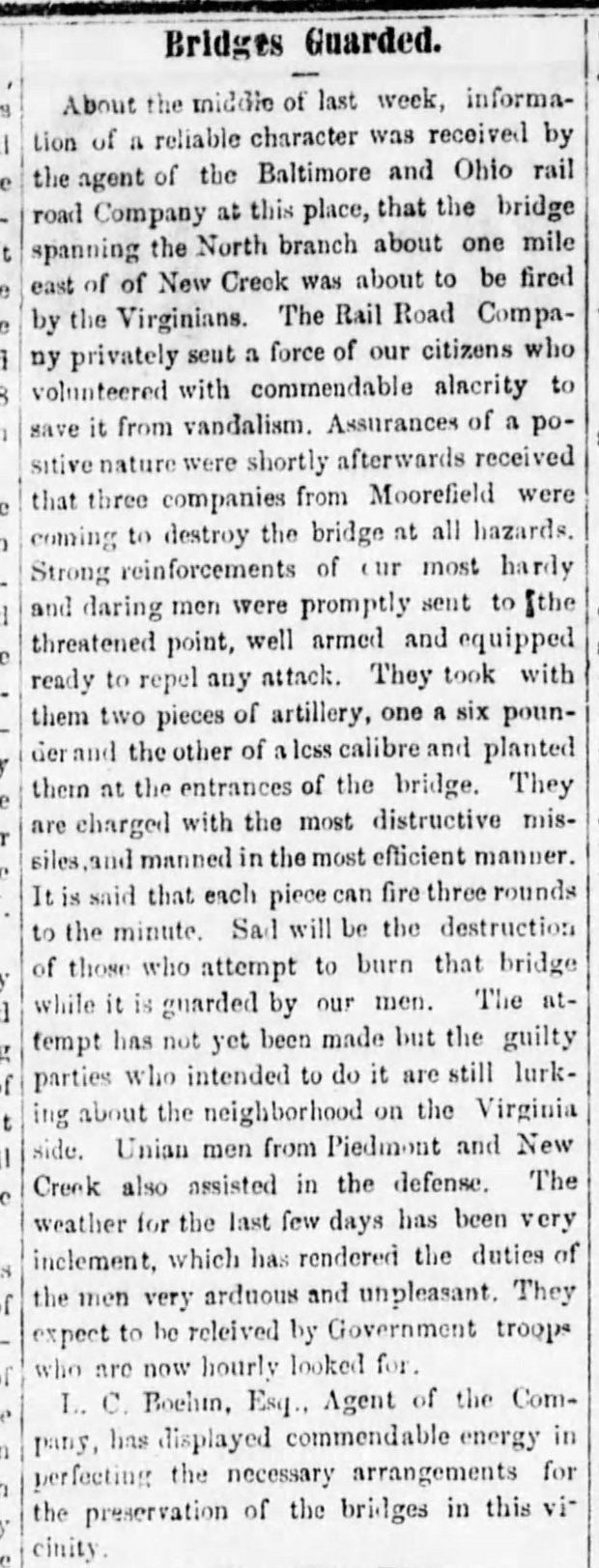
Civilian and Telegraph (Cumberland) 6 June 1861.
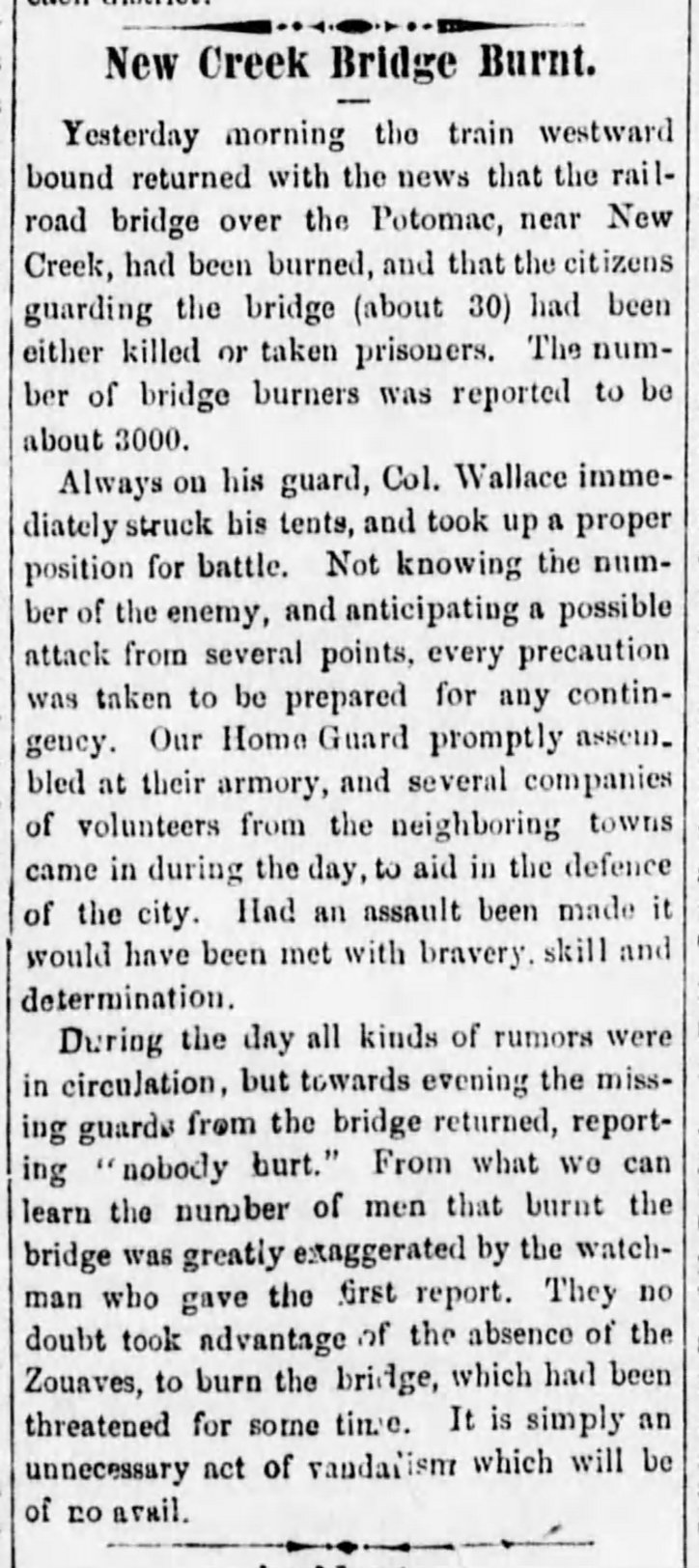
Civilian and Telegraph (Cumberland) 20 June 1861.
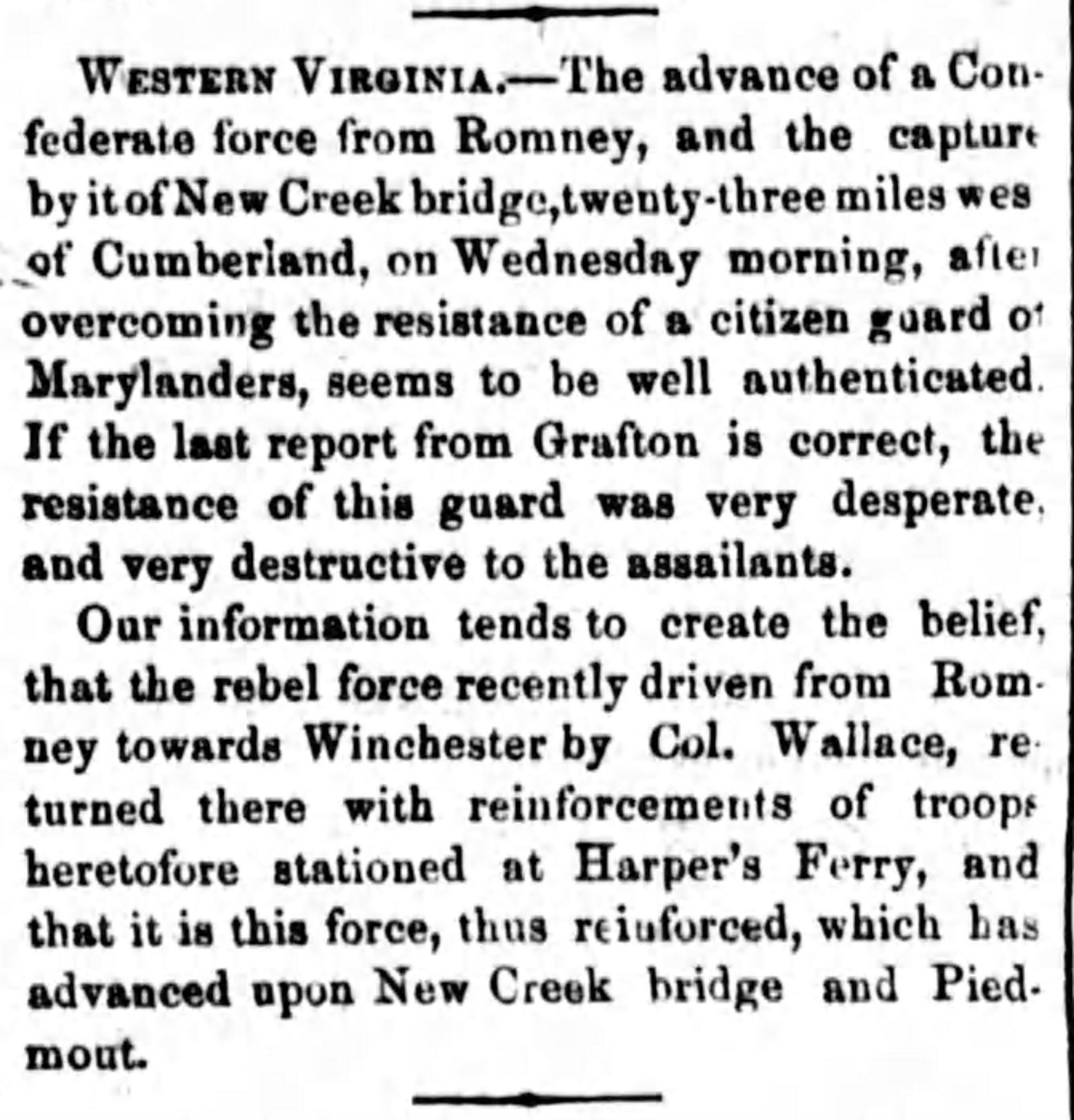
National Republican (Washington, DC) 21 June 1861.
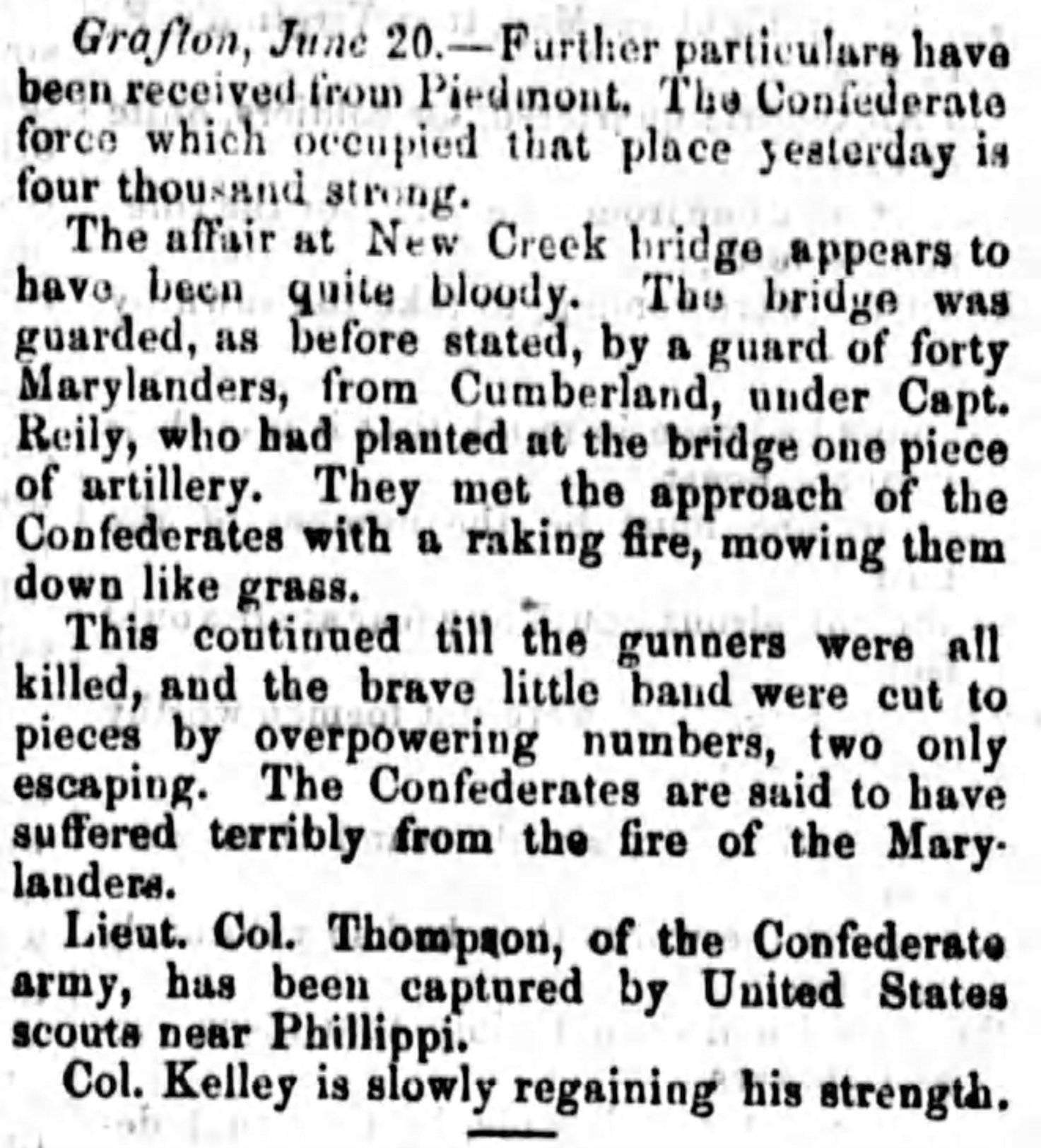
National Republican (Washington, DC) 21 June 1861.
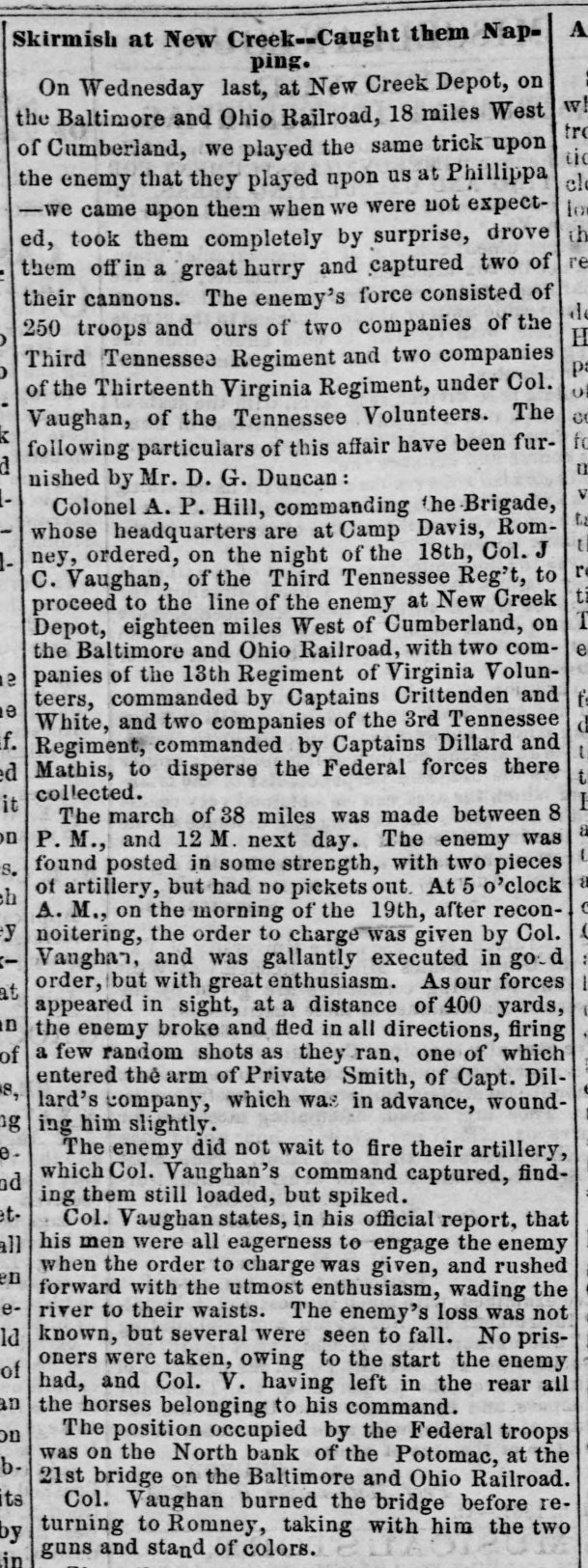
Staunton Spectator (Staunton) 25 June 1861.
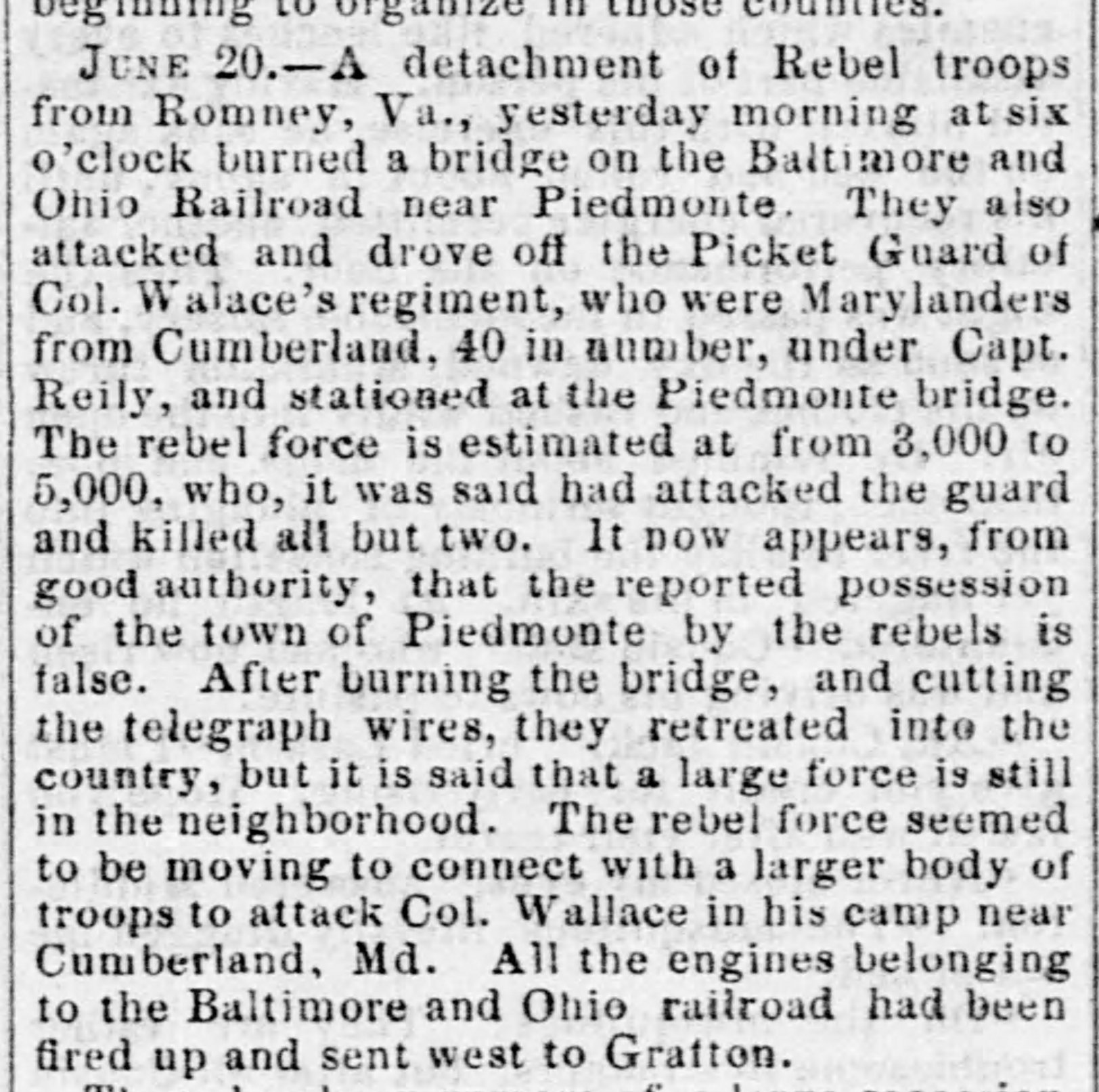
Raftsman Journal (Clearfield, PA) 26 June 1861.
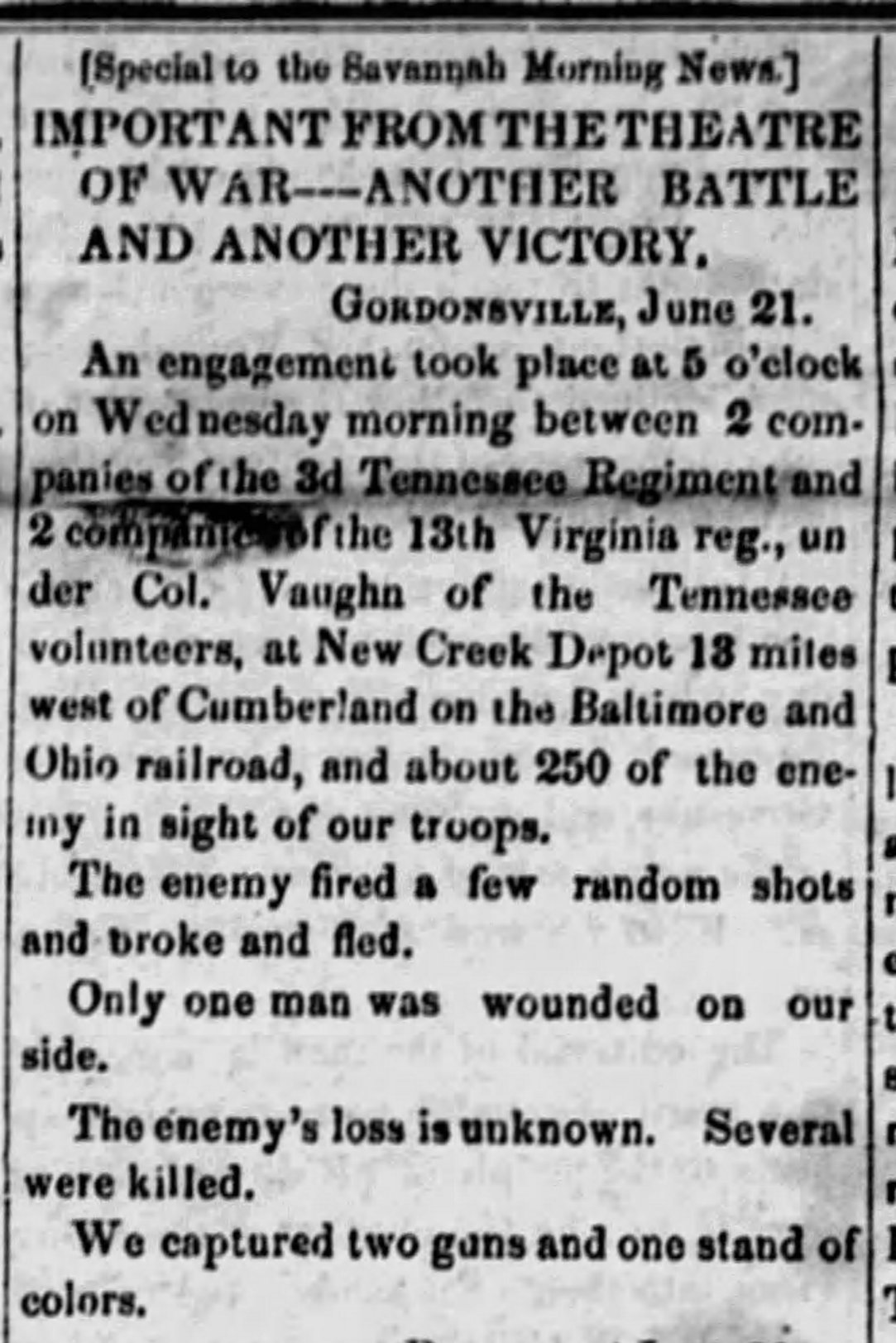
Southern Statesman (Prattville, AL) 29 June 1861.
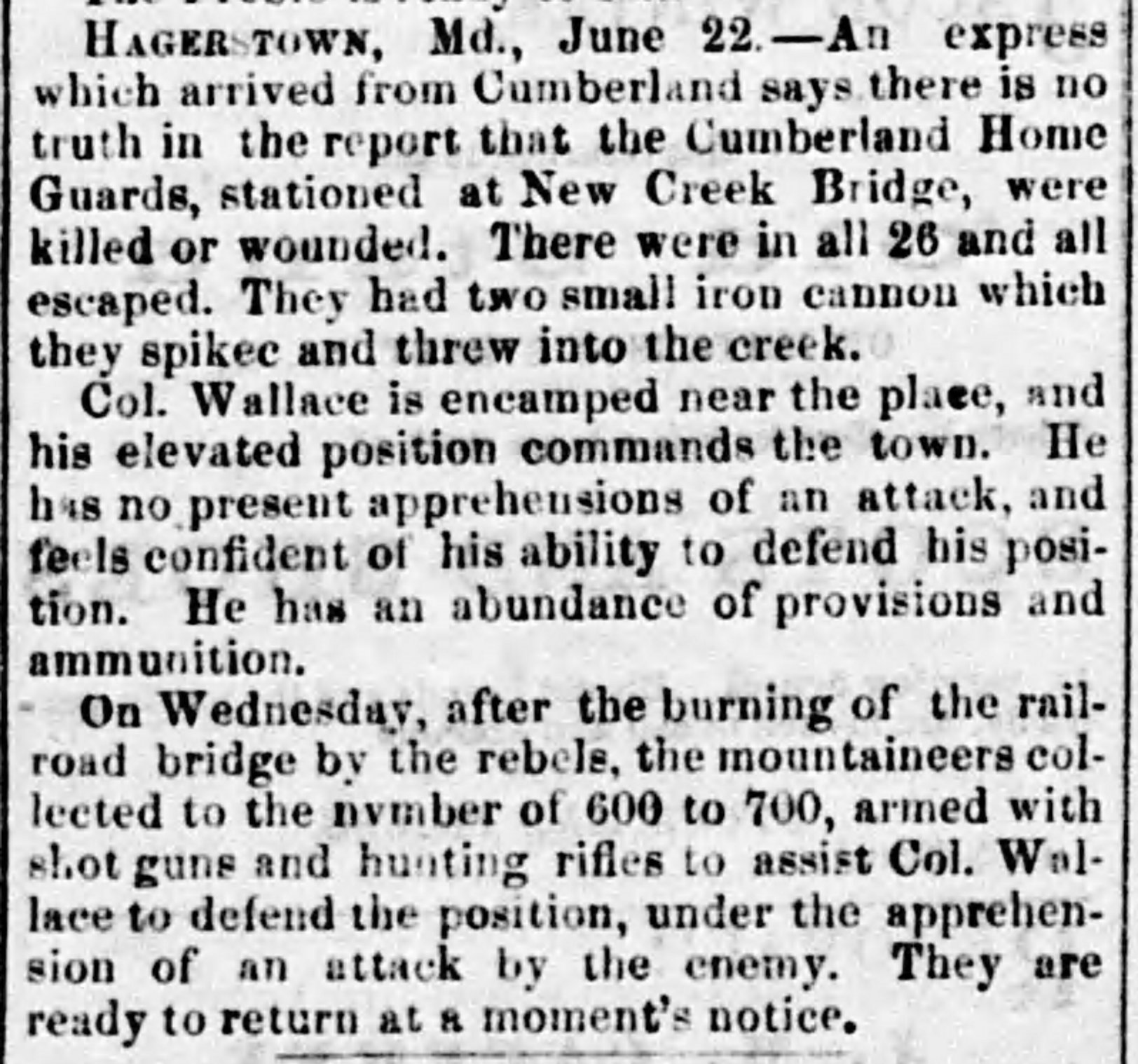
Burlington Weekly Hawk (Burlington, IA) 29 June 1861.
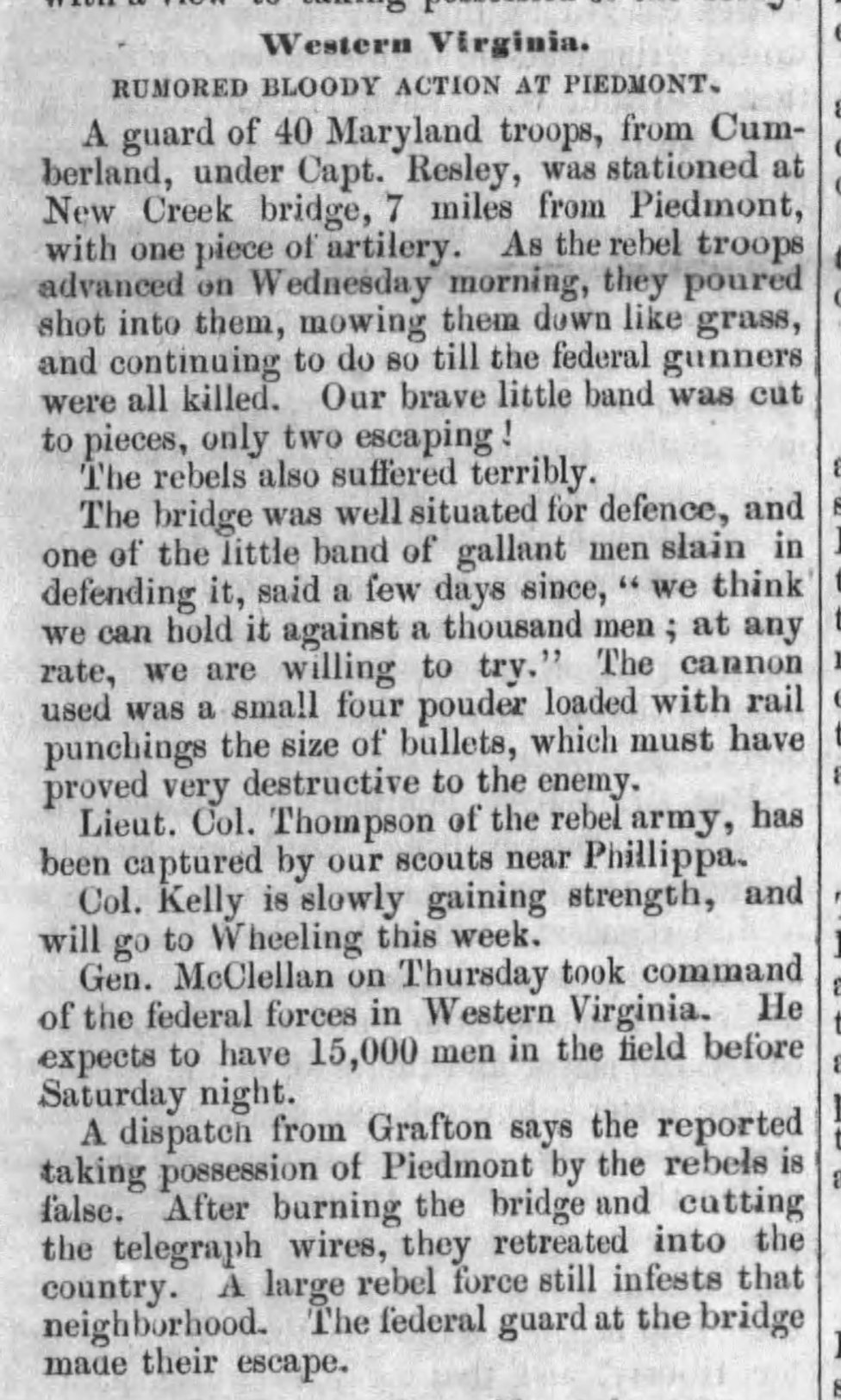
Vermont Journal (Windsor) 29 June 1861.
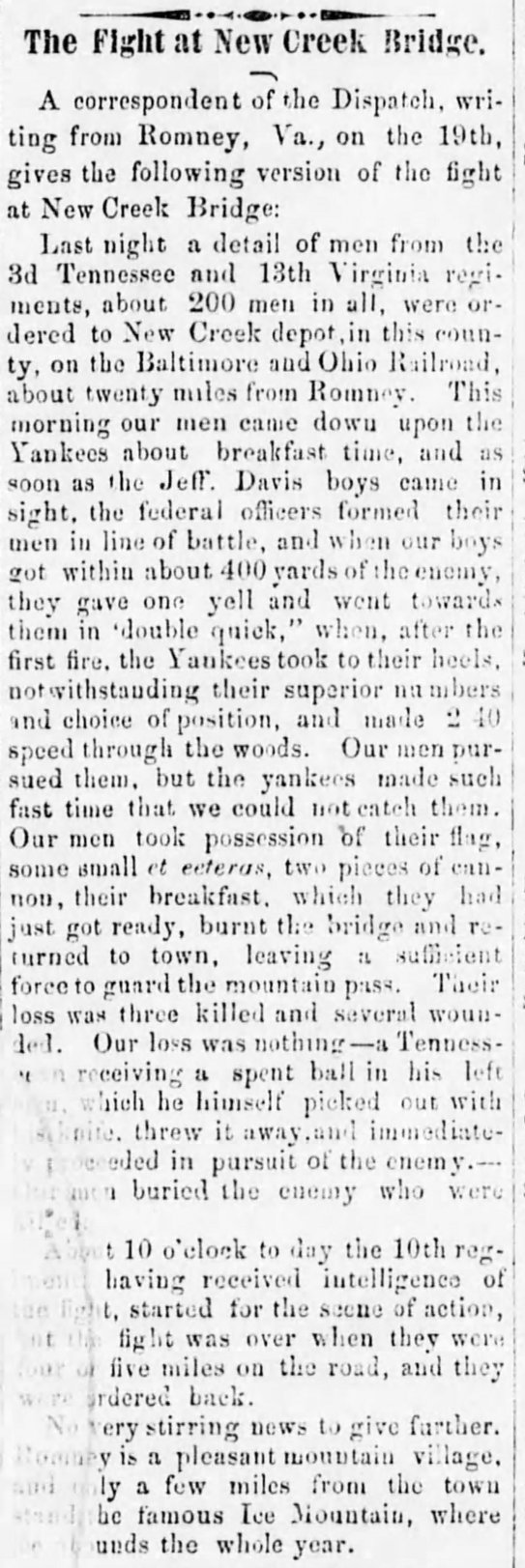
Civilian and Telegraph (Cumberland) 4 July 1861.
Primary Sources
Reports and Letters
- June 15th Letter from Col. Lew Wallace, Eleventh Indiana Infantry
- June 15th Letter from Maj. Gen. Robert Patterson
- June 19th Report of Colonel A. P. Hill, Thirteenth Virginia Infantry
- June 19th Report of Col. John C. Vaughn, Third Tennessee Infantry
Diaries and Memoirs
Casler, John O. Four Years in the Stonewall Brigade. Guthrie: State Capital Print, Co., 1893.
Sources
Thomas, James Walter and T.J. Williams. History of Allegany County, Maryland, Vol. 1. L.R. Titsworth & Co., 1923. Baltimore: Regional Publishing Company, 1969.
Updated:
Created:
 Spirit of '61