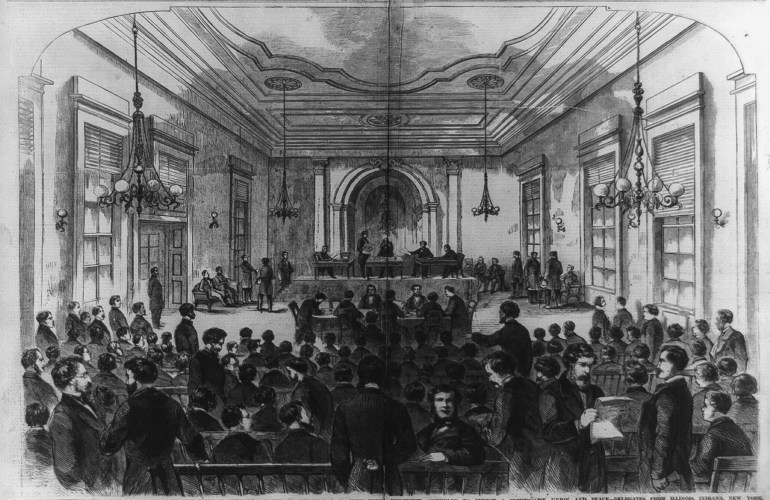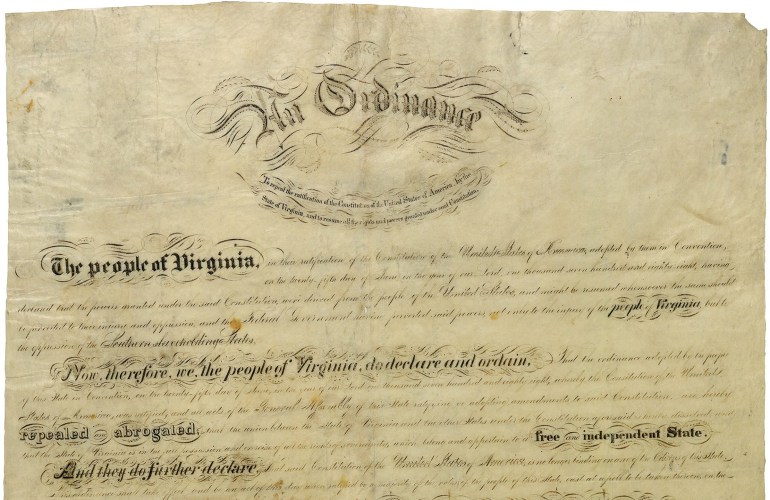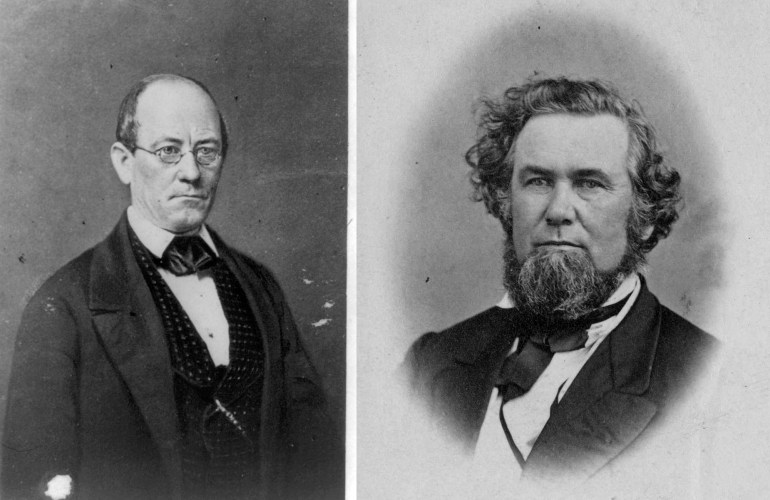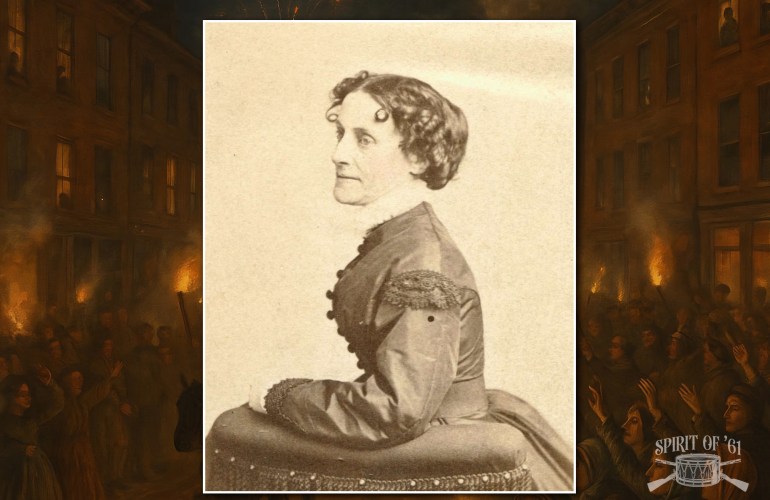
As Richmond erupted in celebration following Virginia’s vote to secede, one woman watched in silence--troubled, not triumphant. Elizabeth Van Lew's eyewitness account offers a rare, critical perspective on the fevered early days of the Confederacy. On Wednesday, April 17, 1861, at 10:00 a.m., 143 delegates from across the Commonwealth of Virginia gathered in the neoclassical…
Tag: secession
Governor Letcher’s 1861 Call to Arms: Uniting Virginia for the Confederacy
In June 1861, just weeks after Virginia’s secession from the Union, Governor John Letcher issued a fiery proclamation to the people of Northwestern Virginia—a region increasingly resistant to Confederate alignment. His message was clear: the time for debate was over, and unity under the Confederate cause was now a matter of duty and survival. John…
Continue reading ➞ Governor Letcher’s 1861 Call to Arms: Uniting Virginia for the Confederacy
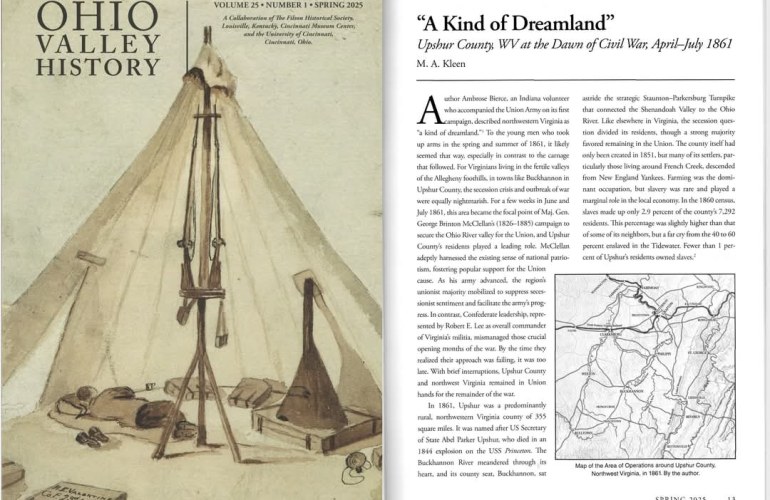
A Kind of Dreamland: Newly Published Article Explores the Role Upshur County, WV played in the Civil War’s First Campaign
Appearing in the Spring 2025 issue of Ohio Valley History, "'A Kind of Dreamland': Upshur County, WV at the Dawn of Civil War" by M.A. Kleen is the first academic article to emerge from our work here at Spirit of '61. This website strives to be a hub for research and scholarship of this interesting…
When did Virginia join the Confederacy?
Determining precisely when Virginia joined the Confederacy is a complex issue. President Abraham Lincoln’s administration maintained that the Union was "indivisible" and that secession was illegal. According to this view, a state could not leave the Union under any circumstances. Therefore, those taking up arms against the federal government were considered rebels or insurrectionists, while…
The Call to Duty – The Common Soldier in the Civil War (1861)
Threads from the National Tapestry is among the best Civil War series on YouTube. Its narrator, Fred Kiger, has one of those voices perfectly suited for storytelling. And storytelling is this channel's strong suit. Their aim is to "make you feel as if you were there." In this video, Kiger discusses early mobilization, the motivations…
Continue reading ➞ The Call to Duty – The Common Soldier in the Civil War (1861)
A PROCLAMATION BY THE GOVERNOR OF VIRGINIA
John Letcher, governor of Virginia, 1860–1864. Library of Congress Prints and Photographs Division The following proclamation by the Virginia governor, John Letcher (1813-1884), appeared in the Richmond Whig, Thursday, April 18, 1861, as well as other newspapers around the state in response to U.S. President Abraham Lincoln's calling for a volunteer army to suppress the…
Continue reading ➞ A PROCLAMATION BY THE GOVERNOR OF VIRGINIA
Artifact: Traitors in Wheeling
The town of Wheeling, located along the Ohio River in what was then the Virginia panhandle (today, West Virginia), was Virginia’s fourth largest city in 1860. Sandwiched between the free states of Ohio and Pennsylvania, it was largely populated by German immigrants with no affinity for Virginia’s Anglo-American planter class. When the Secession Convention in…
How Did Virginia’s Governors Respond to Secession?
While staunch unionists were rare among Virginia's political class, opinions differed on the secession question. The events of early 1861, however, would push nearly all of them into the same camp. When the Civil War broke out, Virginia had one sitting governor and eight living ex-governors. All owned slaves, though their opinions on slavery and…
Continue reading ➞ How Did Virginia’s Governors Respond to Secession?
Did Virginia Submit a list of Demands to Remain in the Union?
In dispelling a myth about the origin of the Civil War, this author created one of his own. In 2017, the American Civil War Museum in Richmond published an article in its Myths & Misunderstandings series that contained erroneous information about the Commonwealth of Virginia's stance toward the Federal Government prior to its secession. In…
Continue reading ➞ Did Virginia Submit a list of Demands to Remain in the Union?
Virginia in 1861
The Old Dominion played a principal role in America's independence from England and had a reputation as the "birthplace of presidents." As 1861 dawned, however, would it turn its back on the country it helped create? At the dawn of 1861, war clouds gathered over the United States. Before president-elect Abraham Lincoln was inaugurated on…