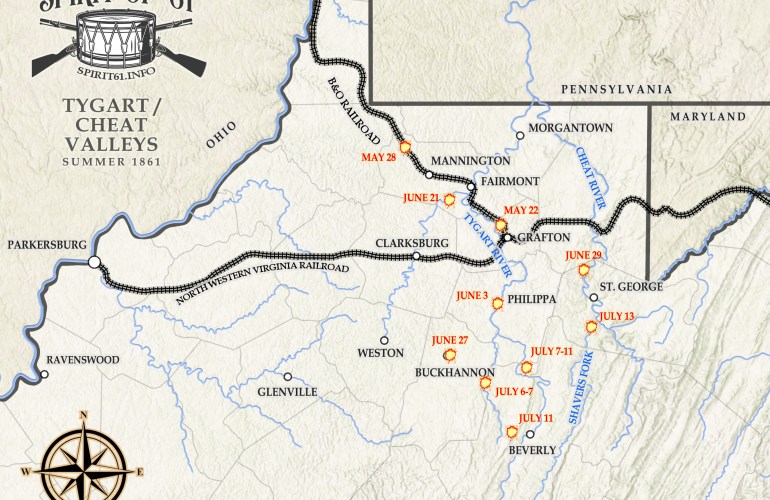
Timeline of Events in Northwest Virginia, June 4 – July 16, 1861

Previously, we chronicled the events leading up to the action at Philippi, from April 17 to June 3, 1861. Here, we turn to the 42 days between the secessionist retreat from Philippi and the Federal occupation of the Cheat Mountain summit, a period marked by steady reinforcements on both sides, intermittent clashes as the armies…

Morris, Garnett, and the Fight for Belington, July 7-11, 1861

In July 1861, Union forces under Brig. Gen. Thomas A. Morris spent five days skirmishing with Robert S. Garnett’s Confederates around the small hamlet of Belington, fixing them in place while George B. McClellan struck at Rich Mountain. Though largely indecisive on its own, the fighting helped set the stage for the campaign’s decisive turning…

The Tygart Valley / Cheat River Campaign at Emerging Civil War

Over the years, Emerging Civil War has published a range of engaging articles on events in northwestern Virginia during the spring and summer of 1861. Contributors include not only our friend Jon-Erik Gilot, but also Edward Alexander, Kevin Pawlak, David T. Dixon, and Gordy Morgan. The topics run from campaign overviews to forgotten Confederate drink…

What Confederate Units were at the Battle of Belington / Laurel Hill?

Following the rout at Philippi on June 3, Confederate President Jefferson Davis promoted Robert S. Garnett, adjutant to Robert E. Lee, to brigadier general and placed him in command of the army in the northwest. Garnett, 41, was a former U.S. Army officer and assistant instructor of infantry tactics at West Point. He joined Col.…

What Federal Units were at the Battle of Belington / Laurel Hill?

On July 6, 1861, Maj. Gen. George B. McClellan ordered Brig. Gen. Thomas A. Morris to advance on Confederate Brig. Gen. Robert S. Garnett’s position on Laurel Hill, near the small hamlet of Belington, also spelled Bealington or Beelington. McClellan instructed Morris to occupy a position “on the south side of Barker’s Mill Run, on…

Powder and Politics: The Skirmish at Bowman’s Place

In late June 1861, Union troops guarding the B&O Railroad clashed with Confederate cavalry near Bowman’s Place in Tucker County as they attempted to disrupt elections for Virginia’s Restored Government. The brief but deadly skirmish, tied to control of the Cheat River corridor, revealed how quickly political conflict in northwestern Virginia could turn violent. More…

Photo by M.A. Kleen, Spirit61.info

Previous Belington / Laurel Hill Research

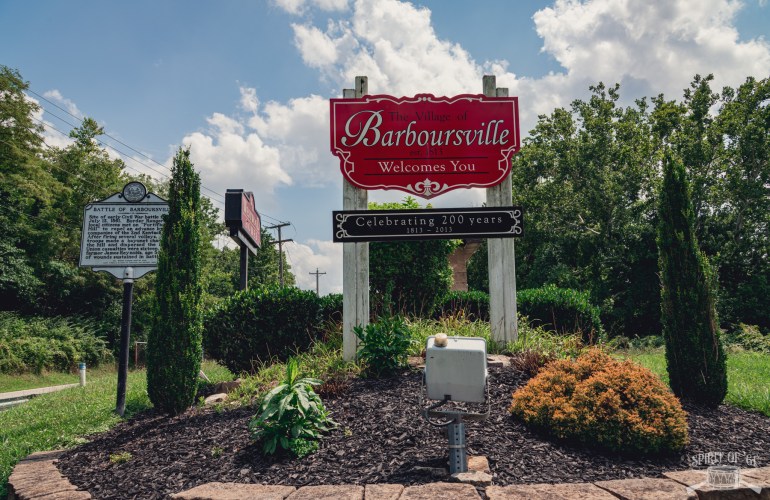
The Battle of Belington / Laurel Hill was fought from Sunday, July 7 to Thursday, July 11, 1861 between Union forces commanded by Brig. Gen. Thomas A. Morris and Confederate forces commanded by Brig. Gen. Robert S. Garnett in what is today Barbour County, West Virginia. It involved around 8,000 Union and Confederate soldiers. Over…

Divided Ground: Buckhannon’s Unionists Face a Confederate Incursion

On June 27, 1861, a Confederate foraging expedition descended on the unionist town of Buckhannon, scattering civilians and briefly seizing vital supplies along the Staunton-Parkersburg Turnpike. Though a small clash, the raid and the rumors it sparked pushed George B. McClellan to launch his campaign against Robert S. Garnett, setting the stage for the fight…

The Union, Right or Wrong: Preston and Monongalia Counties Choose a Side

During the critical period of April-May 1861, Preston and Monongalia counties, in what was then northwestern Virginia, remained firmly in the Union camp. Both counties shared a northern border with Pennsylvania and, unlike their southern neighbors, organized no Confederate volunteer companies, though a few individuals may have enlisted in the Southern cause. Slavery was rare,…