The Burning of Bridge No. 21

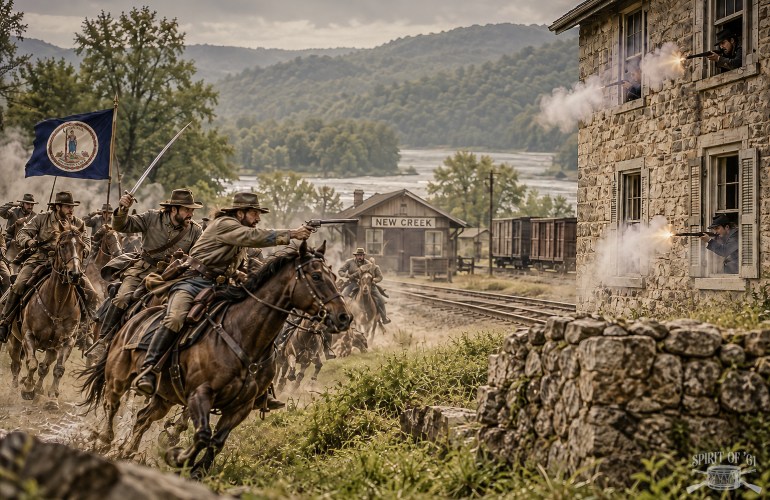
Before dawn on June 19, 1861, hundreds of Confederate soldiers waded across the Potomac River at New Creek, Virginia, intent on driving off Union defenders and destroying a vital B&O Railroad bridge. The daring raid overwhelmed a small band of local Home Guards, severed an important transportation link, and heightened fears that Lew Wallace’s isolated…

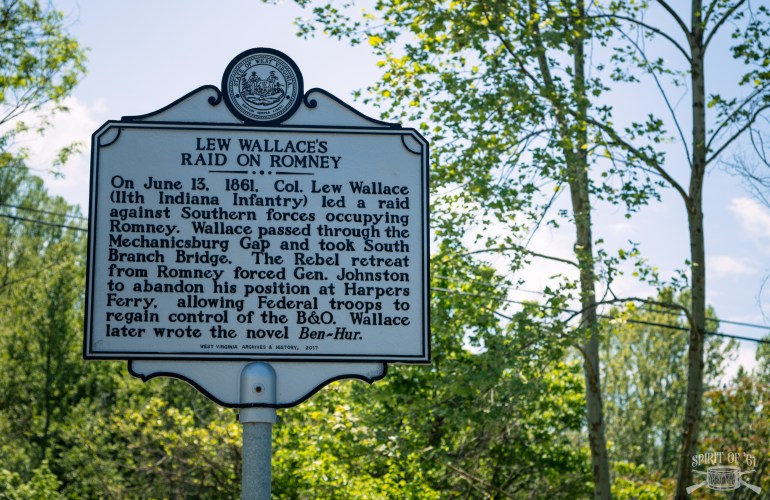
Lew Wallace’s Midnight March to Romney

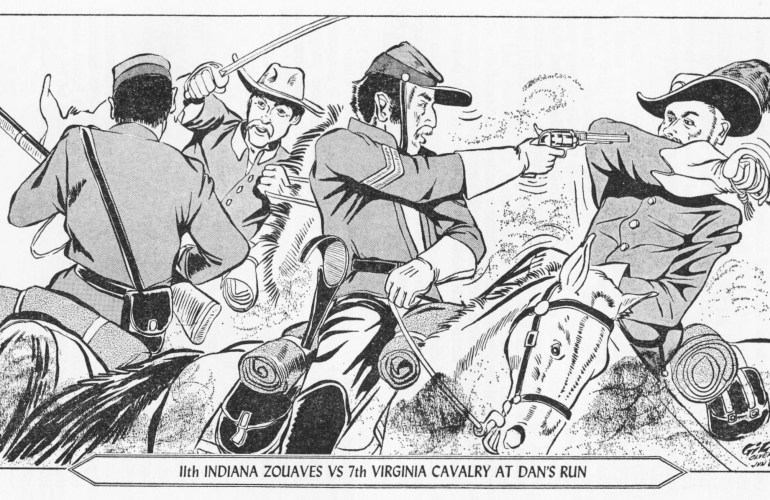
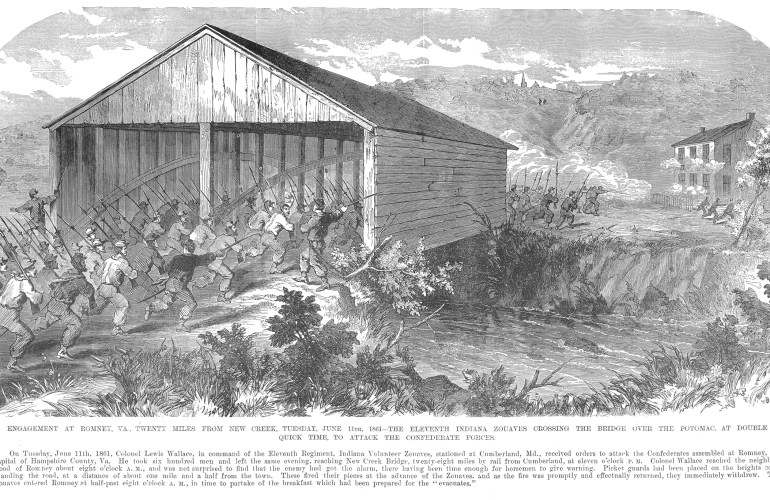
In June 1861, Lew Wallace and the 11th Indiana launched a grueling overnight march from Cumberland, Maryland, to surprise Confederate troops at Romney, Virginia, in one of the Civil War’s earliest actions. The resulting skirmish sent Confederate defenders fleeing, left Romney briefly in Union hands, and helped convince Gen. Joseph E. Johnston to abandon Harpers…

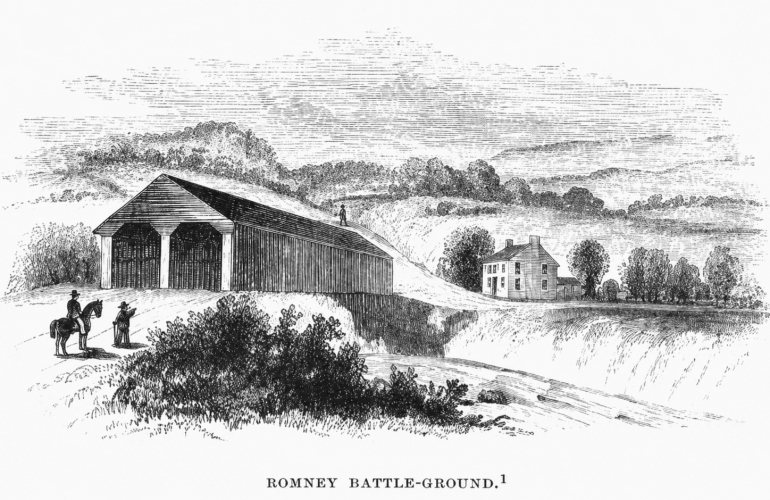
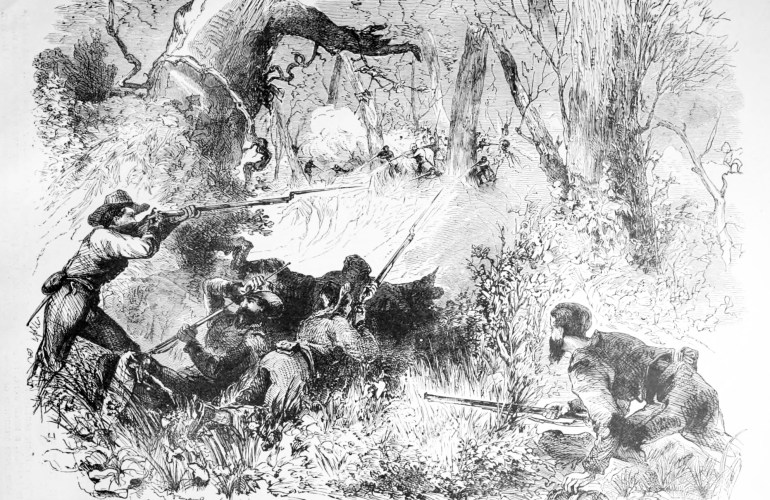
Illustrations of the 1861 “Battle” of Romney

The “Battle” of Romney, fought on Wednesday, June 12, 1861, received attention at the time and in later accounts that far outstripped its actual significance. Early in the Civil War, before anyone could imagine the bloody battles to come, a virtually bloodless victory like Romney seemed like a major triumph for the Union war effort.…

What Happened at Piedmont?

In early July 1861, following Lewis “Lew” Wallace’s departure from Cumberland, Maryland, the 13th and 5th Pennsylvania Reserve Regiments and Battery A, 1st Pennsylvania Artillery, advanced to protect this vital transportation hub on the Potomac River. On July 12, Confederate cavalry destroyed railroad cars and two trestle bridges over George’s Creek on the Maryland side…

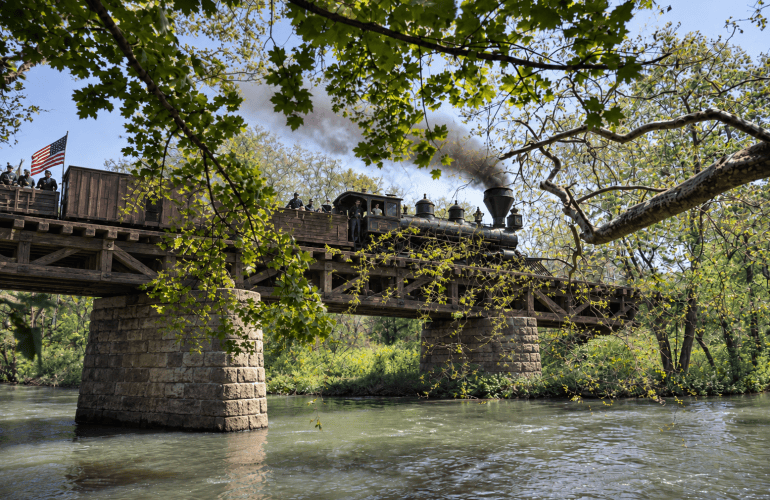
Photo by M.A. Kleen, Spirit61.info

What Day Did Lew Wallace Attack Romney?

The story is one we are familiar with. Shortly after arriving at Cumberland, Maryland on the Potomac River and Baltimore & Ohio Railroad in June 1861, Col. Lewis “Lew” Wallace and his Eleventh Indiana Infantry Regiment marched all night to route a smaller Confederate force at what is today Romney, West Virginia in a bloodless…

Colonel Ebenezer Dumont’s Report from Corrick’s Ford

A wealth of primary sources exists concerning the Battle of Corrick's Ford, fought on July 13, 1861, in Tucker County, West Virginia, and its aftermath. Official reports from several Union commanders involved in the action, however, are conspicuously absent. It was customary for each colonel engaged in an action like this to submit a report…

Battlelog 1.6 is Now Available

Welcome to version 1.6 of the Spirit of ’61 Battlelog! Over the past several months, we have focused on revising and updating our battle narratives for the Tygart Valley–Cheat River Campaign. With these updates completed, our Battlelog is now 88 pages and over 44,800 words. Here is a detailed list of all changes in this…

The Fight at Corrick’s Ford: Union Pursuit and the Death of Robert S. Garnett

After McClellan’s victory at Rich Mountain, Brig. Gen. Robert S. Garnett’s army fled Laurel Hill in a rain-soaked retreat through the mountains of western Virginia. At Corrick’s Ford, along Shavers Fork of the Cheat River, the pursuit caught up with them, ending in the collapse of Garnett’s command and the death of the first general…

The Battle of Rich Mountain: McClellan’s Breakthrough in Western Virginia, July 1861

In July 1861, George B. McClellan launched a coordinated offensive in western Virginia, using a diversion at Laurel Hill and a daring flank march over Rich Mountain to break Robert S. Garnett’s defensive line. The resulting Union victory not only shattered Confederate control of the region but propelled McClellan into national prominence at a critical…

Morris, Garnett, and the Fight for Belington, July 7-11, 1861

In July 1861, Union forces under Brig. Gen. Thomas A. Morris spent five days skirmishing with Robert S. Garnett’s Confederates around the small hamlet of Belington, fixing them in place while George B. McClellan struck at Rich Mountain. Though largely indecisive on its own, the fighting helped set the stage for the campaign’s decisive turning…