Account of the Action at Pike’s Creek in the Diary of Anne S. Frobel

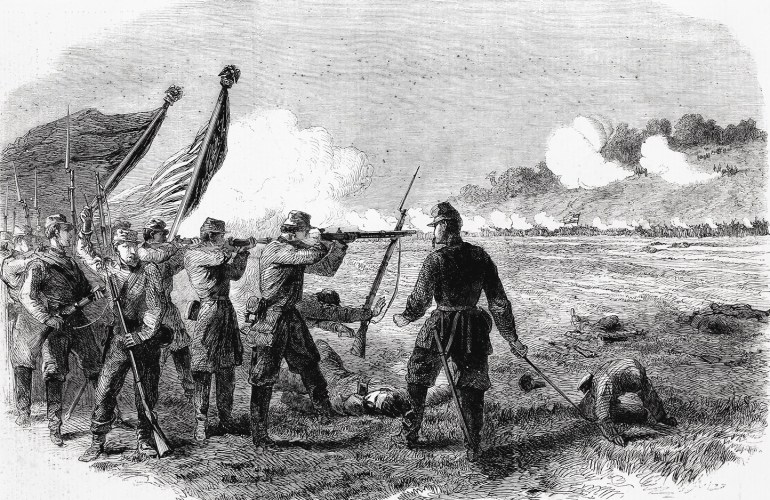
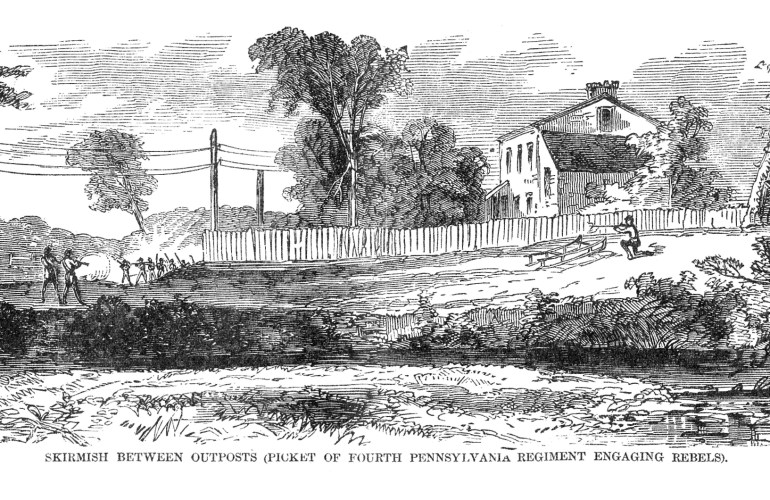
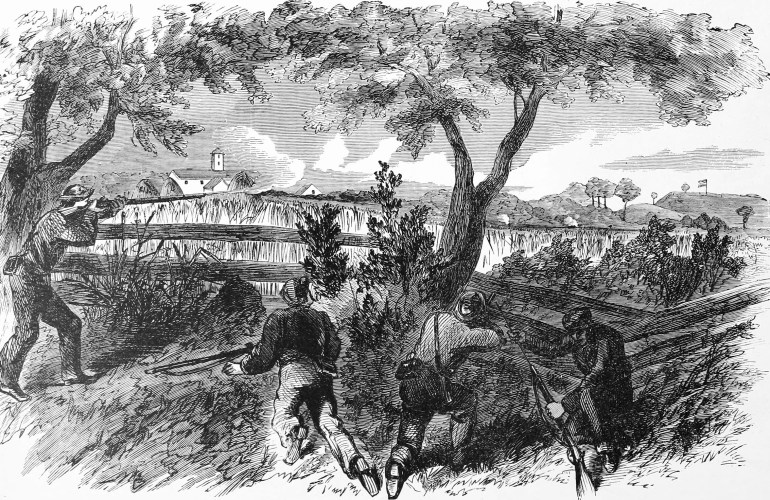
When a brief Civil War skirmish near Alexandria left two men dead, its aftermath sparked outrage on both sides. A Virginia woman’s diary captured the moment in gut-wrenching detail. Before sunrise on the morning of Sunday, June 30, 1861, a brief but deadly clash unfolded just southwest of Alexandria, Virginia, where Confederate scouts encountered Union…

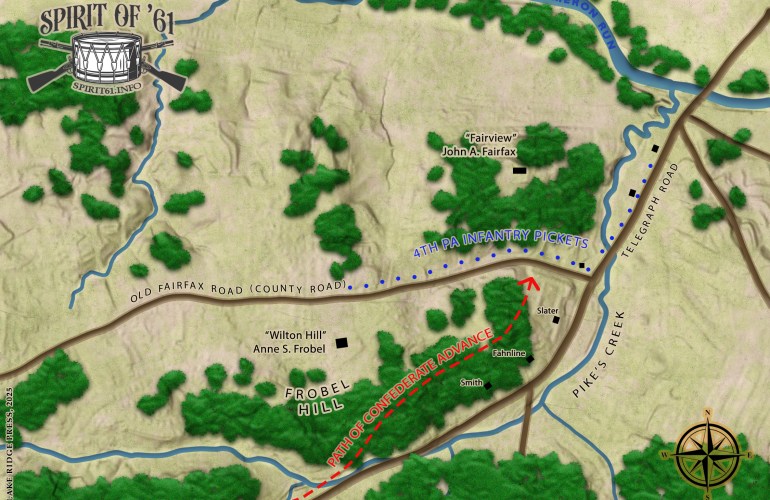
Mapping the Action at Pike’s Creek

At the end of June 1861, a small expedition of Alabama and Virginia troops scouted the southern approaches to Shuter's Hill and Alexandria, which Union forces had occupied since May. Captain Walter H. Weems’ force included 48 men from the 6th Alabama Infantry Regiment and 10 cavalrymen from the Governor’s Mounted Guard and Goochland Cavalry.…

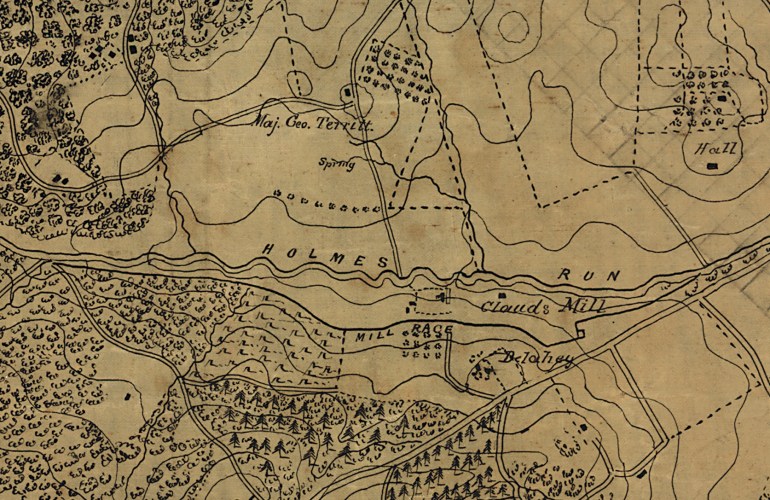
Detecting Cloud’s Mill

Once an obscure Civil War outpost, the importance of Cloud’s Mill has resurfaced through original research, offering a rare glimpse into Northern Virginia’s lost wartime landscape. Earlier this year, we completely revised our entry on the Skirmish at Arlington Mills after original research revealed the action actually took place three miles south, at Cloud's Mill.…

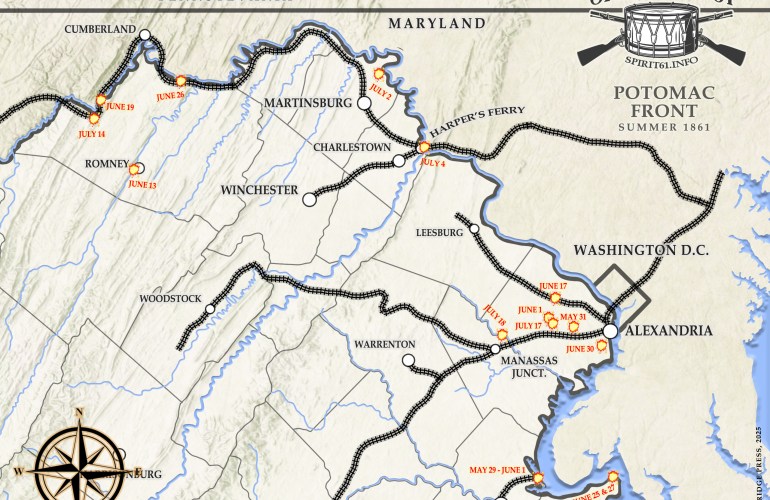
Map and Overview of the Potomac Front, May 1-July 20, 1861

In 1861, control of the Potomac River was critical to both Union and Confederate strategies, as it formed a key geographic boundary. While the Union secured the upper river and gained a foothold in northeastern Virginia, Confederate coordination between the Shenandoah and Manassas Junction led to victory at Bull Run and enabled a temporary blockade…

Holding the Line: Robert Rodes’ Stand at Farr’s Crossroads

On July 17, 1861, as Union forces advanced on Fairfax Court House, Col. Robert E. Rodes' 5th Alabama Infantry Regiment engaged in a fierce skirmish at Farr's Crossroads, delaying Col. Dixon S. Miles' division long enough to secure a safe Confederate withdrawal behind Bull Run. While Brig. Gen. Milledge Bonham's retreat from Fairfax was widely…

The Forgotten Colonel: Angus McDonald’s Role in the Civil War

Angus W. McDonald, Sr. (1799–1864) Colonel Angus William McDonald, Sr. (1799–1864) was born in Winchester, Virginia, on February 14, 1799. He was taken in by his grandmother at the family home of Glengarry after the death of his parents at a young age. As a teenager, he attended the United States Military Academy at West…

Lower Potomac Front – Numbers and Losses

Fifty-eight. That’s how many days passed between the Union Army crossing the Potomac River into northeastern Virginia and the First Battle of Manassas (Bull Run). During those nearly two months, the Union and Confederate armies shadowboxed in that corner of Virginia, hampered by undisciplined and inexperienced soldiers while probing for enemy weaknesses. The exact number…

Thank God for Michigan: Orlando B. Willcox (1823–1907)

Photographic Portrait of Orlando B. Willcox. Library of Congress Prints and Photographs Division. Orlando Bolivar Willcox (1823–1907) was born on April 16, 1823, in Detroit, Michigan Territory. He graduated from the United States Military Academy at West Point in 1847. Commissioned as a second lieutenant in the 4th U.S. Artillery, Willcox served at the end…

A Costly Lesson at Blackburn’s Ford

Though minor in comparison to the clash that would erupt at Bull Run days later, the fight at Blackburn’s Ford rattled Union confidence and emboldened Confederate troops. With McDowell now seeking another route forward, the war’s first major battle loomed just beyond the horizon. Confederate Brig. Gen. Pierre Gustave Toutant-Beauregard arrived at Manassas Junction on…

Daniel Ruggles: A New England General in the Confederate Ranks

Photographic Portrait of Daniel Ruggles. Library of Congress Prints and Photographs Division. Daniel Ruggles (1810–1897), born in Barre, Massachusetts, became one of the few New Englanders to achieve the rank of general officer in the Confederate Army. After graduating 34th in his class from the U.S. Military Academy at West Point in 1833, he embarked…