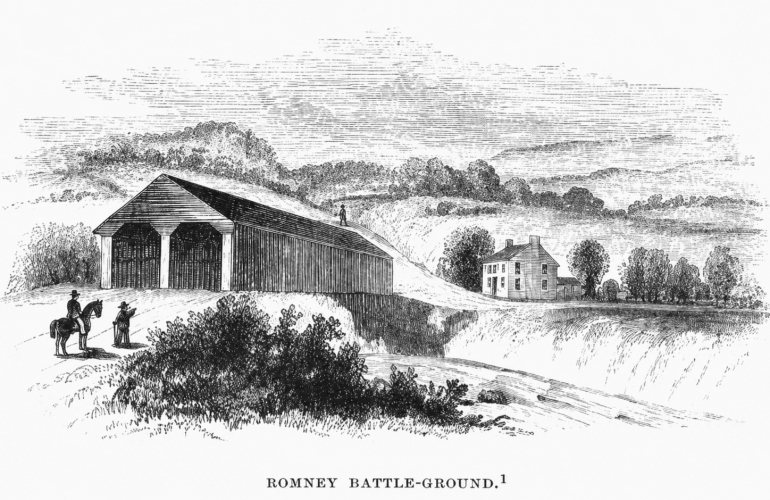
The “Battle” of Romney, fought on Wednesday, June 12, 1861, received attention at the time and in later accounts that far outstripped its actual significance. Early in the Civil War, before anyone could imagine the bloody battles to come, a virtually bloodless victory like Romney seemed like a major triumph for the Union war effort. As a result, it received extensive coverage in publications such as Harper’s Weekly and Frank Leslie’s Illustrated Newspaper.
Both publications rushed to provide illustrations of Lew Wallace and the Indiana Zouaves charging across the covered bridge over the South Branch of the Potomac River. Harper’s Weekly depicted the action in a subdued scene viewed from a distance, while Frank Leslie’s placed its readers squarely in the thick of the fighting. It is clear, however, that neither illustrator witnessed the action or had ever visited Romney.
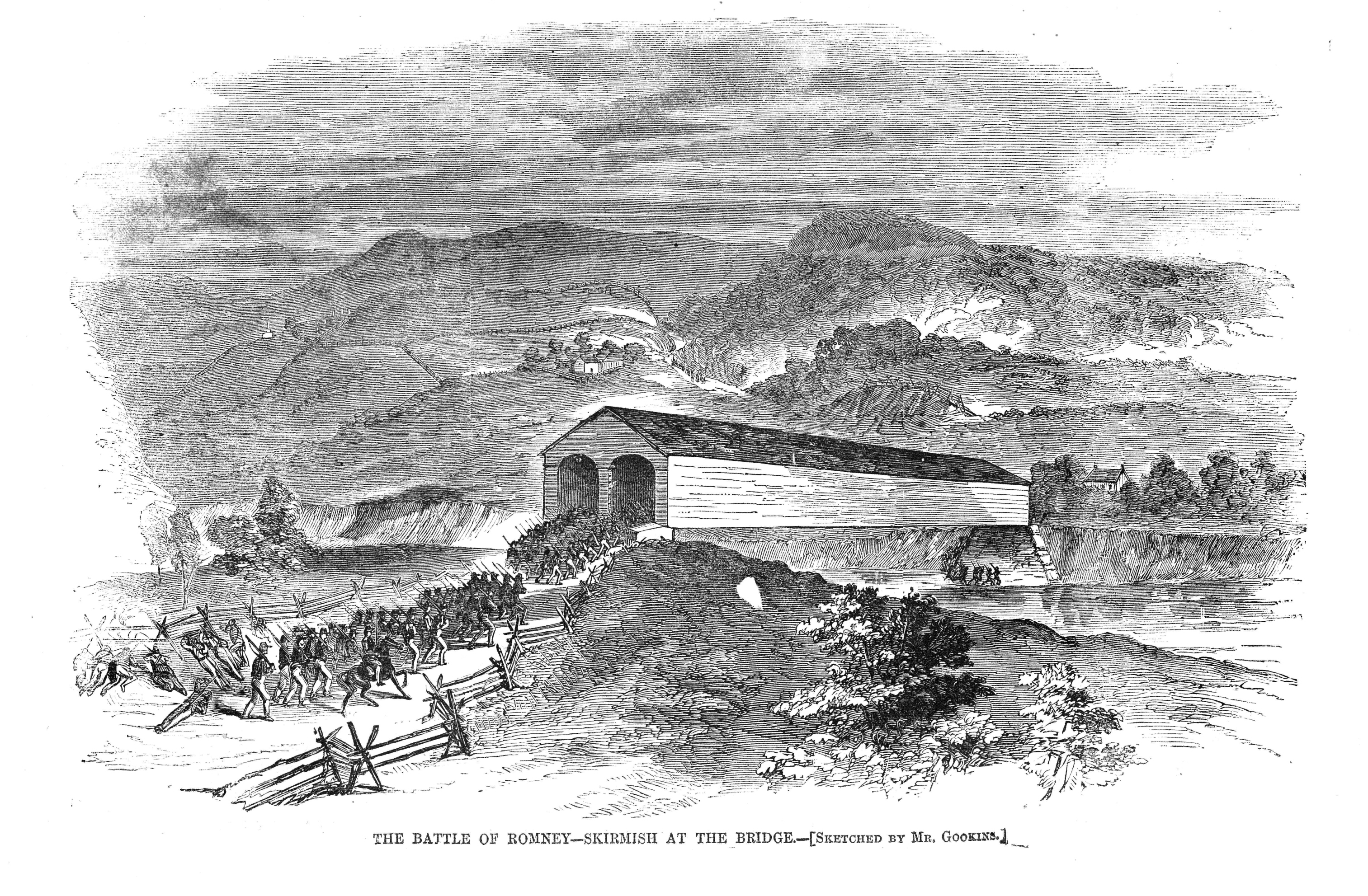
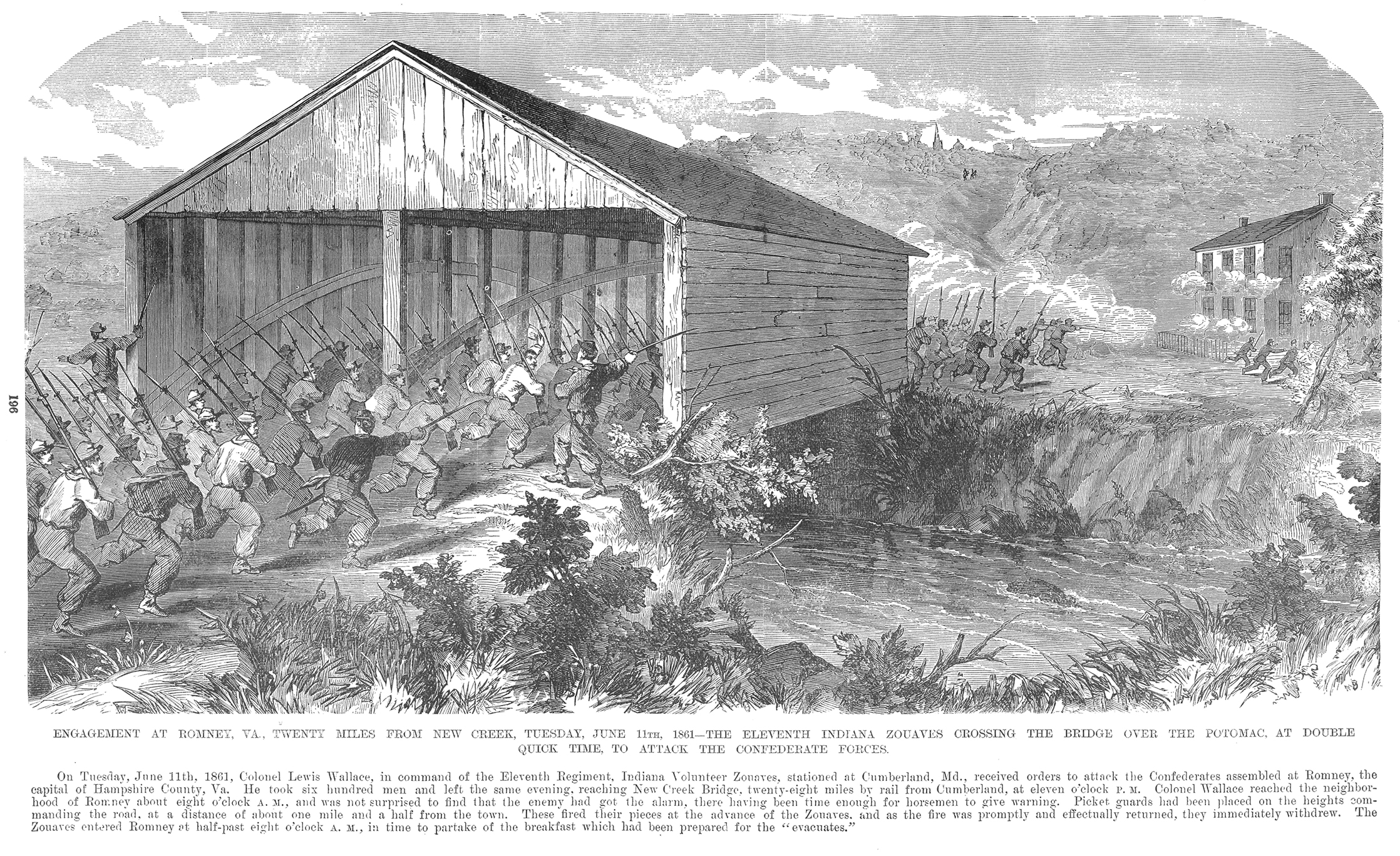
Another postwar illustration, published in 1866 and seen below, fares little better. None of the three agree on the depth of the riverbed, the length of the bridge, the shape of its portal, or even the direction of its wooden siding. Unfortunately, the bridge was destroyed in 1862 and I know of no surviving photos.
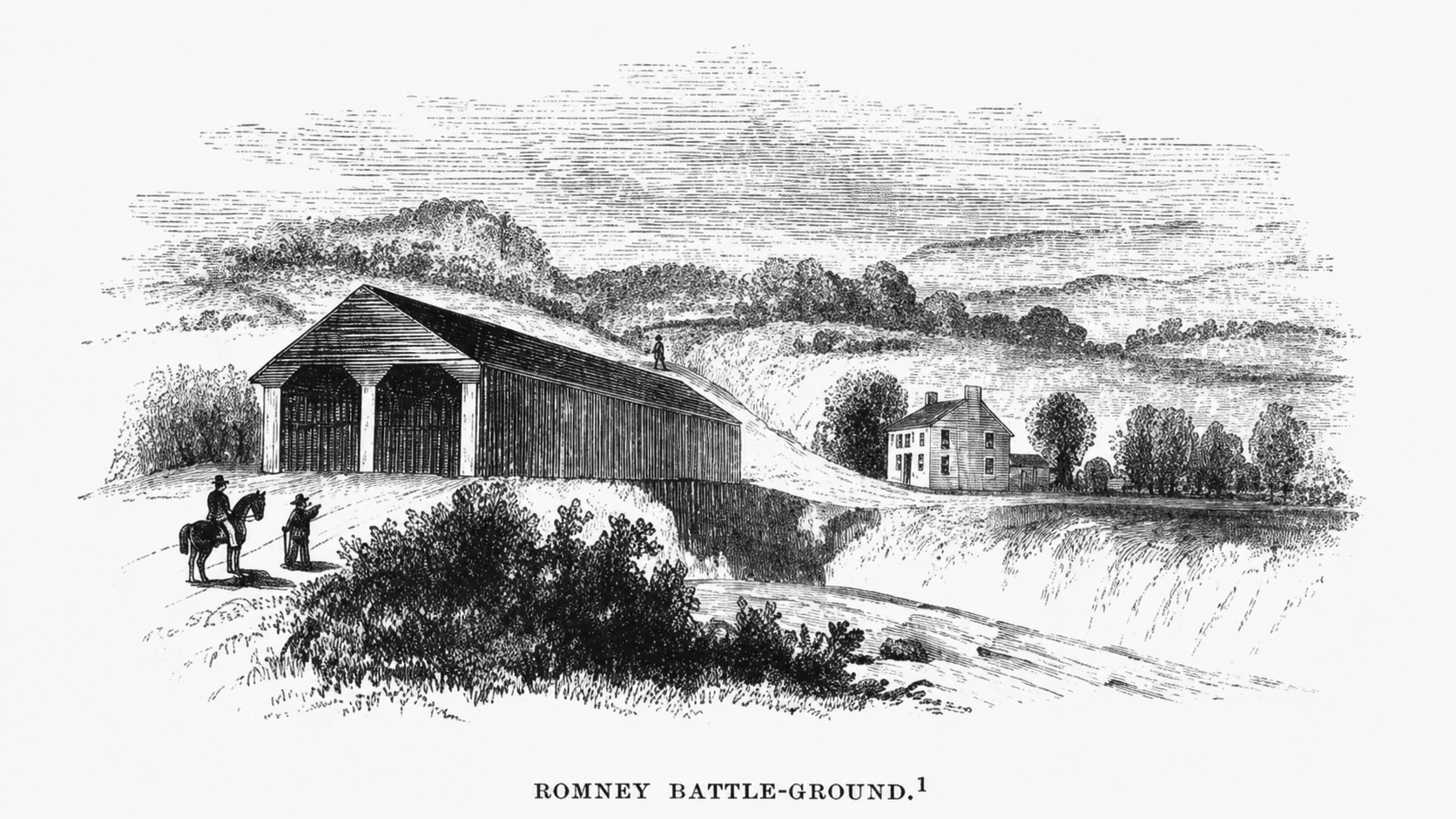
The house depicted in these illustrations is Sycamore Dale, a two-story, L-shaped Greek Revival plantation house owned by David Gibson in 1861. Built in 1839, it remains remarkably similar in appearance today. Despite a few minor additions over the years, its front facade is largely unchanged.
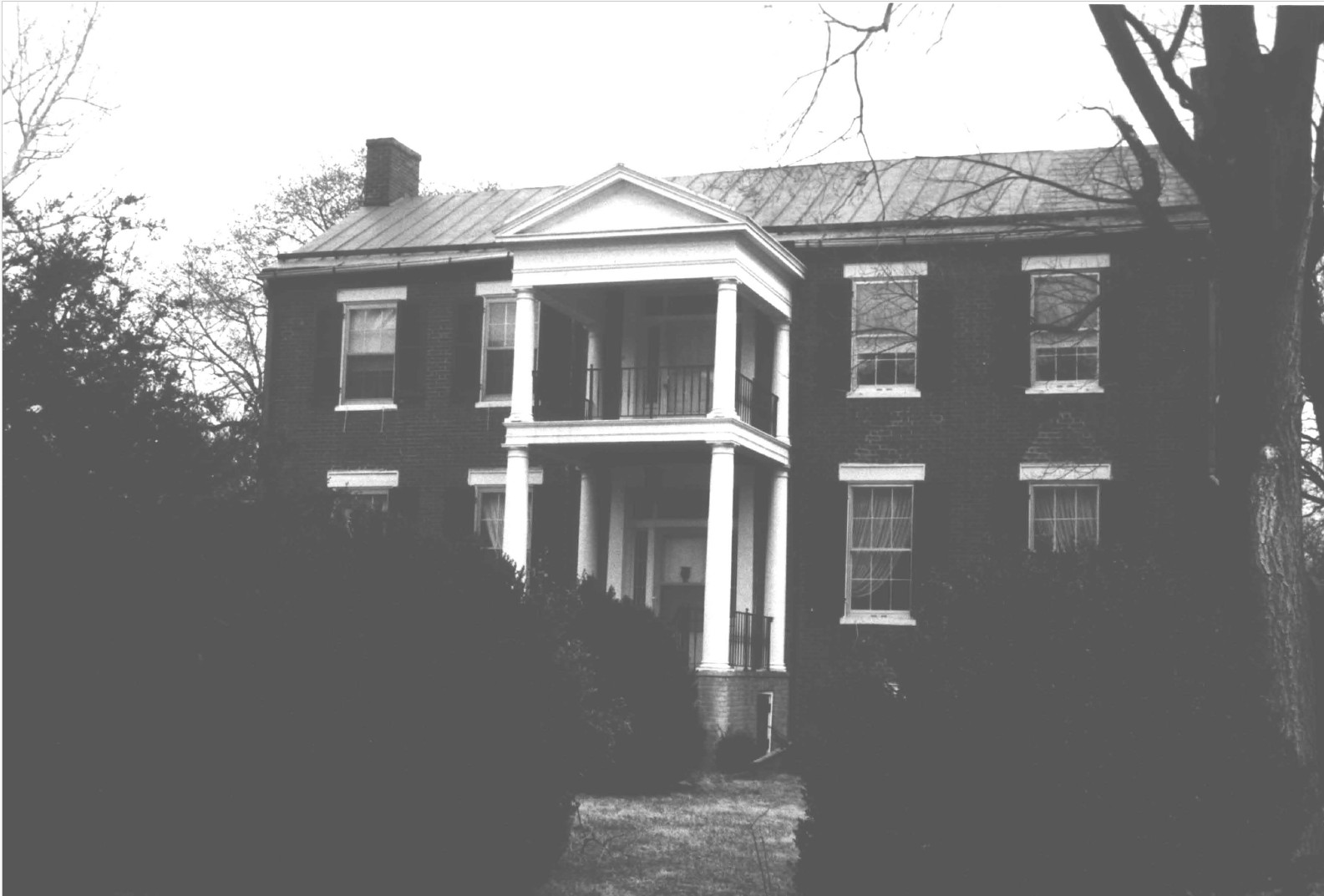
As seen in this photo, one of Sycamore Dale’s most prominent features is a large, two-story, one-bay-wide portico supported by eight Tuscan columns and topped with a Greek Revival pediment. Unmistakable to anyone who has seen the house in person, this distinctive feature does not appear in any of the illustrations above.
In some ways, we are fortunate to have so many illustrations of a single event from this early in the Civil War. But we should be careful not to give them the same weight as photographs. As faithfully as illustrators tried to depict events, they often had little choice but to rely on their imaginations to fill in the details.


