The Action at Glover’s Gap occurred on Tuesday, May 28, 1861 between irregular secessionist militia commanded by Stephen Roberts and a detachment of Company A, 2nd Virginia Infantry (U.S.) commanded by 2nd Lt. Oliver R. West in Marion County, West Virginia. Maj. Gen. George B. McClellan's two-pronged invasion of northeastern Virginia began on May 26,…
Tag: B&O Railroad
Powder and Politics: The Skirmish at Bowman’s Place
In late June 1861, Union troops guarding the B&O Railroad clashed with Confederate cavalry near Bowman’s Place in Tucker County as they attempted to disrupt elections for Virginia’s Restored Government. The brief but deadly skirmish, tied to control of the Cheat River corridor, revealed how quickly political conflict in northwestern Virginia could turn violent. More…
Continue reading ➞ Powder and Politics: The Skirmish at Bowman’s Place
The Union, Right or Wrong: Preston and Monongalia Counties Choose a Side
During the critical period of April-May 1861, Preston and Monongalia counties, in what was then northwestern Virginia, remained firmly in the Union camp. Both counties shared a northern border with Pennsylvania and, unlike their southern neighbors, organized no Confederate volunteer companies, though a few individuals may have enlisted in the Southern cause. Slavery was rare,…
Continue reading ➞ The Union, Right or Wrong: Preston and Monongalia Counties Choose a Side
Irregular War in Northwestern Virginia: Captain Cable’s Raid on Righter’s House
In June 1861, as Union forces secured the B&O Railroad after the rout at Philippi, a nighttime raid on a secessionist militia at Righter’s House erupted into violence and fiery retribution. The clash at Coon Run reveals how the fight for strategic ground in northwestern Virginia quickly devolved into a bitter war between neighbors. Following…
Continue reading ➞ Irregular War in Northwestern Virginia: Captain Cable’s Raid on Righter’s House
The Road to Philippi: Glover’s Gap and the Fight for the B&O Railroad in Northwestern Virginia
In the tense weeks following Virginia’s secession vote, rival unionist and secessionist forces in northwestern Virginia maneuvered for control of the Baltimore & Ohio Railroad. Skirmishes at Fetterman and Glover’s Gap produced some of the war’s earliest casualties and set the stage for the opening of McClellan's campaign in the region. On April 17, 1861,…
First Blood in Western Virginia: Secession, Divided Loyalties, and the Death of Thornsbury Bailey Brown
In the tense weeks following the April 17, 1861 secession vote, communities across northwestern Virginia divided sharply as unionists and secessionists began organizing. The killing of Thornsbury Bailey Brown at Fetterman Bridge in May, often considered the first Union soldier killed in combat during the Civil War, showed how quickly the political crisis was spiraling…
Events Leading up to the Action at Philippi
The following is a comprehensive chronology of the important events leading up to the Action at Philippi, June 3, 1861. It begins at the initial secession vote at the Virginia Convention in Richmond, April 17, 1861, and covers 47 days, although not every day is represented. These days were filled with military and political intrigue…
Continue reading ➞ Events Leading up to the Action at Philippi
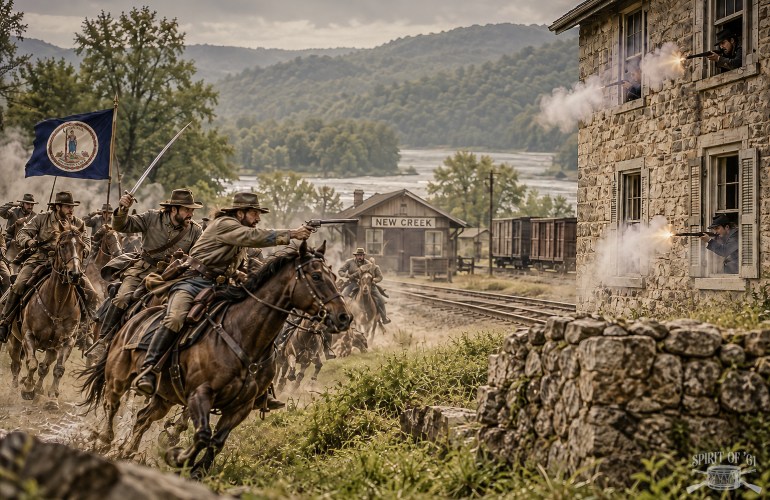
The Bucktail’s Stand at New Creek: A Detailed Account of the July 1861 Skirmish
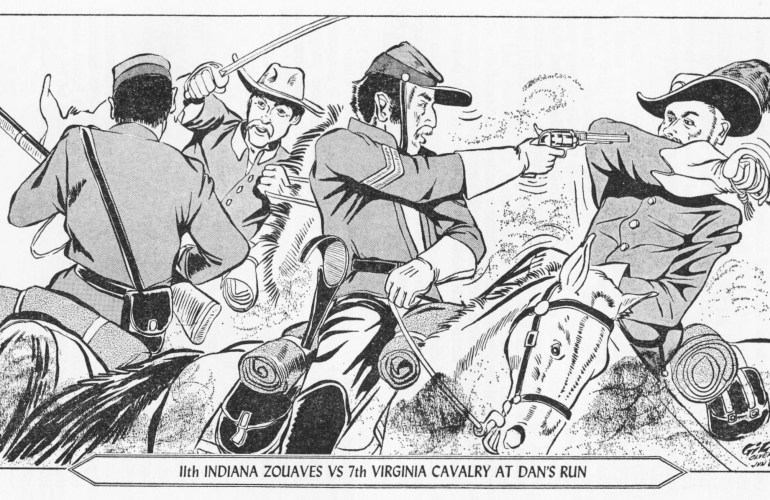
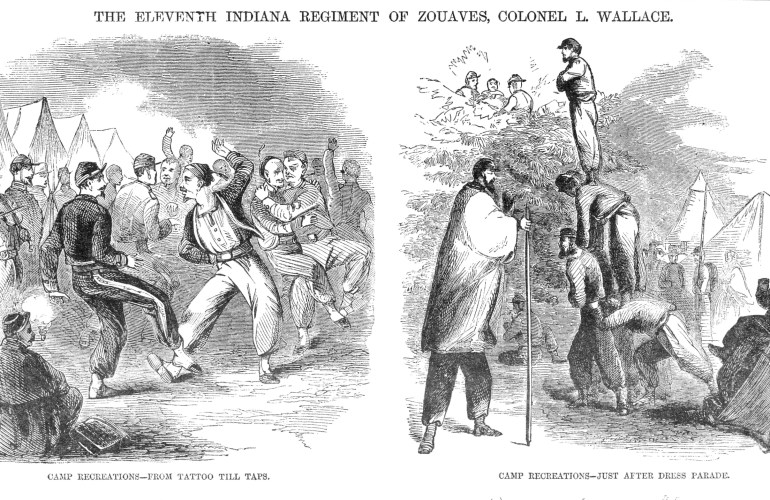
When the departure of Lew Wallace’s 11th Indiana left the B&O Railroad exposed in July 1861, Pennsylvania Reserves faced off against Confederate raiders in another fierce skirmish at New Creek Station. In early July, Colonel Lewis “Lew” Wallace and his 11th Indiana Infantry Regiment, stationed in Cumberland, Maryland, along the Potomac River, were ordered to…
Continue reading ➞ The Bucktail’s Stand at New Creek: A Detailed Account of the July 1861 Skirmish
First Blood at Fetterman
Largely forgotten today, Thornsbury Bailey Brown was among the first Union casualties of the Civil War.
Second New Creek Skirmish?
In late June, the small town of New Creek (today, Keyser, WV) along the Baltimore & Ohio Railroad was the scene of a brief skirmish between Maryland Home Guard and three Confederate companies, who ultimately burned the railroad bridge over the Potomac River. Accurate information on this skirmish is scarce, but while researching it, I…