In the tense weeks following the April 17, 1861 secession vote, communities across northwestern Virginia divided sharply as unionists and secessionists began organizing. The killing of Thornsbury Bailey Brown at Fetterman Bridge in May, often considered the first Union soldier killed in combat during the Civil War, showed how quickly the political crisis was spiraling out of control.
The April 12-13, 1861 Confederate bombardment of Fort Sumter, followed by President Abraham Lincoln’s call for 75,000 volunteers to “suppress the rebellion” in the Deep South, pushed the Virginia Convention in Richmond to adopt an ordinance of secession by a vote of 88 to 55, subject to ratification by popular referendum on May 23.
A large majority of the delegates who voted “no,” including Congressman John S. Carlile, an early advocate of West Virginia statehood, came from the Trans-Allegheny region and northern Virginia. Upon returning to Clarksburg, Carlile immediately called a large Union meeting and delivered an impassioned speech urging the election of delegates from western Virginia to assemble and oppose secession.
Meanwhile, partisans on both sides began mobilizing for war. In Wheeling two infantry companies loyal to the United States took shape: the Rough and Ready Guards and the Iron Guards. Workers from the La Belle Iron Works figured prominently among the latter. As more volunteers arrived, they went into camp at the Western Virginia Agricultural Society fairgrounds on Wheeling Island to be organized into a regiment. The site soon became known as Camp Carlile.
On April 29, Maj. Gen. Robert E. Lee ordered Maj. Alonzo Loring, sheriff of Ohio County, to muster volunteer forces into state service in Wheeling and protect the terminus of the Baltimore & Ohio (B&O) Railroad. Loring, however, proved either unable or unwilling to comply.
Despite his inaction, two secessionist companies were recruited in the city: the 80-man Shriver Grays under Capt. Daniel Shriver, and a much smaller company led by Capt. James W. Sweeney. Both slipped out of Wheeling in secret before the secession referendum. The Shriver Grays eventually reached Harper’s Ferry, while Sweeney’s company made its way to the Kanawha Valley, where it disbanded a few months later.
Farther south, Lee ordered Maj. Francis M. Boykin, Jr. to muster volunteer forces into state service around Grafton, where the B&O and Northwestern Virginia railroads met, and to cooperate with Loring. Boykin, however, found volunteers hard to come by. “I find that organizations exist in most of the counties pledged to the support of what they term the Union,” he wrote. “I see no other alternative than to send forces from the east for the present. This section is verging on a state of actual rebellion…”
On May 4, Robert E. Lee assigned Col. George A. Porterfield to organize and command the state’s secessionist volunteers in northwestern Virginia. Porterfield did not arrive in Grafton until May 14. By then, pro-Union delegates from 27 western Virginia counties had already convened at Washington Hall in Wheeling to debate a response to the secession crisis. After three days of debate, the convention adjourned with a consensus to wait for the results of the May 23 secession referendum before taking further action.
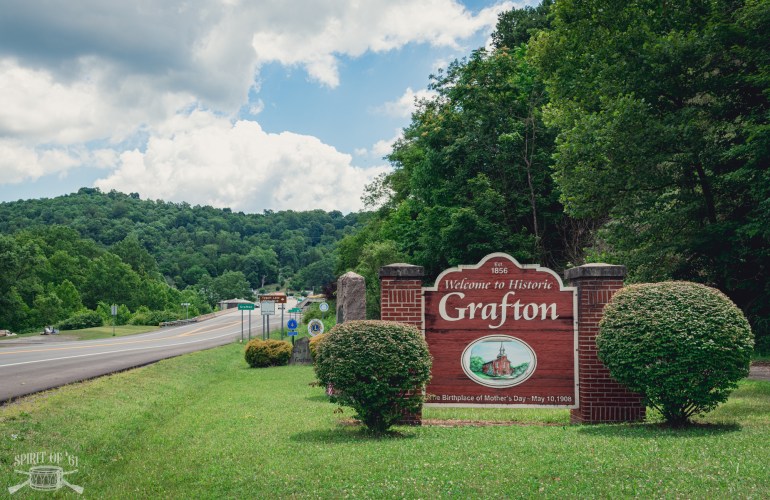
Porterfield found no volunteers in Grafton. Instead, attorney and newspaper publisher George R. Latham was quietly organizing a unionist company known as the Grafton Guards. In nearby Fetterman, a small town north of Grafton along the Tygart Valley River, Porterfield found merchant and postmaster John A. Robinson raising the Letcher Guard, named for Virginia Governor John Letcher. Thirty-two men mustered into service for one year on May 13.
At Clarksburg, the local militia split into two rival camps: the Union Home Guard and the secessionist Harrison Rifles. When the Harrison Rifles mustered in the streets with muskets in hand, a crowd of Union sympathizers and Home Guard men quickly gathered. To avoid a confrontation, the Harrison Rifles agreed to lock their arms in the county jail overnight, retrieve them in the morning, and quietly leave town to join Porterfield.
On the night of the 18th, someone attempted to burn the covered bridge over the Tygart Valley River at Fetterman. Porterfield quartered his men in the bridge to guard it. On the 22nd, he ordered the Harrison Rifles, Letcher Guard, and Barbour Lighthorse Cavalry to march on Grafton and break up the Union organization there. As the secessionists approached Latham’s newspaper office, townspeople began to gather, hurling insults. Musket barrels soon appeared in windows, doorways, and behind fences. Capt. John A. Robinson decided discretion was the better part of valor, and the expedition turned back.
That evening, three members of the Letcher Guard, George E. Glenn, Daniel W. S. Knight, and William Reese, were on picket duty along the Northwestern Turnpike at the Fetterman Bridge over the Tygart Valley River. Lt. Daniel Wilson and Thornsbury Bailey Brown were returning from a recruiting rally for the Grafton Guards in nearby Pruntytown when they attempted to cross the bridge.
The pickets ordered the pair to halt, but they ignored the warning. According to some accounts, Brown fired his pistol and struck Knight in the ear. The pickets returned fire, killing Brown. Lieutenant Wilson escaped. Daniel W. S. Knight was accused of firing the fatal shot and was later formally charged with Brown’s murder, though he was acquitted.
A few days after the shooting, Latham and his Grafton Guards marched toward Fetterman, spoiling for a fight to retrieve Brown’s body. Porterfield had already ordered it returned, however, and they met the escort bearing his remains on the road.
News of Brown’s death inflamed an already volatile situation. “Are the people of northwestern Virginia to stand this sort of thing?” Wheeling Daily Intelligencer editors fumed. “Are they to see their Union brethren shot down by marauding murderers, and forever remain powerless to avenge their blood? No! Never! Let the Union men prepare at once to meet the villainous traitors, and drive them from our midst.” Brown’s death became a rallying cry for unionists to take up arms.
The Grafton Guards soon departed for Camp Carlile in Wheeling. They were not formally sworn into federal service until May 25, but Thornsbury Bailey Brown is widely regarded as the first Union soldier killed in combat during the Civil War.
Sources
Armstrong, Richard L. 25th Virginia Infantry and 9th Battalion Virginia Infantry. Lynchburg: H.E. Howard, Inc., 1990.
Cammack, John Henry. Personal Recollections of Private John Henry Cammack: A Soldier of the Confederacy, 1861-1865. Huntington: Paragon Ptg. & Pub. Co., 1920.
Carnes, Eva Margaret. The Tygarts Valley Line, June-July 1861. Philippi: First Land Battle of the Civil War Centennial Commemoration, Inc., 1961. Parsons: McClain Printing Company, 2003.
Haselberger, Fritz. Yanks from the South! The First Land Campaign of the Civil War. Baltimore: Past Glories, 1987.
The Kingwood Chronicle (Kingwood) 25 May 1861.
Lang, Theodore F. Loyal West Virginia from 1861 to 1865. Baltimore: Deutsch Publishing Co., 1895.
Lesser, W. Hunter. Rebels at the Gate: Lee and McClellan on the Front Line of a Nation Divided. Naperville: Sourcebooks, Inc, 2004.
The War of the Rebellion: A Compilation of the Official Records of the Union and Confederate Armies. Series I, Vol. II. With additions and corrections. Washington: Government Printing Office, 1902.
The War of the Rebellion: A Compilation of the Official Records of the Union and Confederate Armies. Series I, Vol. LI, Part II. Washington: Government Printing Office, 1897.
The Wheeling Daily Intelligencer (Wheeling) 25 May 1861.

 Spirit of '61
One thought on “First Blood in Western Virginia: Secession, Divided Loyalties, and the Death of Thornsbury Bailey Brown”