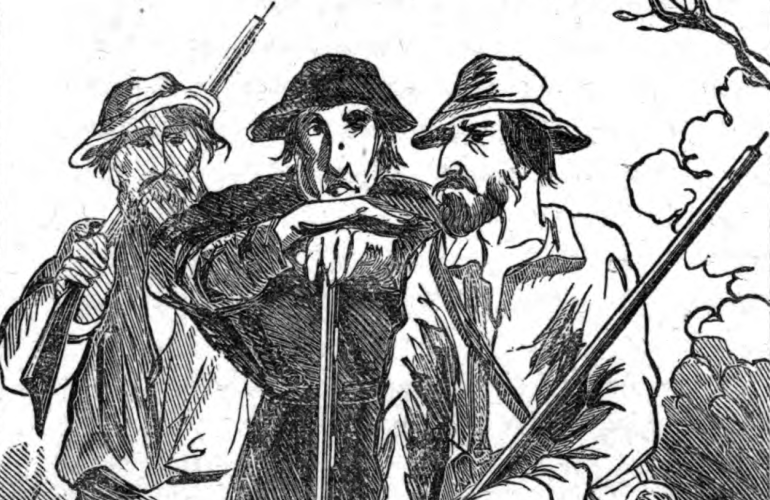
Was Stephen Roberts the first Confederate officer killed during the Civil War?
By the time Virginia voters ratified the decision of its secession convention on May 23, 1861, Richmond was named the Confederate capital and militia units were mobilizing. As commander of all Virginia forces, Robert E. Lee directed Col. George A. Porterfield to proceed to Grafton and organize the troops in northwestern Virginia. That area was heavily unionist in sentiment, and only several hundred recruits could be found.
Faced with the prospect of invasion by overwhelming numbers, Porterfield ordered bridges along the Baltimore & Ohio Railroad and Northwestern Virginia Railroad be destroyed. Several were, and in response, Union Maj. Gen. George B. McClellan, commander of the Department of the Ohio, invaded western Virginia with 3,000 volunteer troops under the overall command of Brig. Gen. Thomas A. Morris.
Opposing them were Porterfield’s approximately 800 poorly trained and equipped militia gathered at the town of Grafton. Porterfield retreated to Philippi as the Union army advanced. According to author Fritz Haselberger, Porterfield sent detachments, including one commanded by 65-year-old Capt. Stephen Roberts (misnamed Christian), to further disrupt the railroad and cut telegraph lines.
Stephen Roberts was an Anglo-American farmer originally from southern Pennsylvania who owned hundreds of acres in what is today Wetzel County, West Virginia. When war clouds gathered, his nephews and he, and a few neighbors, formed a militia band and offered their services to the secession government in Richmond.
Roberts’ detachment succeeded in causing enough mischief that Col. Benjamin F. Kelley, commanding the advanced federal units, sent 2nd Lt. Oliver R. West of Company A, 2nd Virginia Infantry (U.S.) to apprehend them and protect the railroad bridge at Glover’s Gap. West captured a handful of insurgents, then, on the morning of May 28th, came upon Stephen Roberts and his band at Glover’s Gap.
Roberts swore he would not be captured “by all the Federal troops in western Virginia” and raised his rifle, but it misfired. West’s troops returned fire and Roberts was killed. His company fled into the hills.
Not much is known about Stephen Roberts, and his status as a combatant is disputed. According to some sources, he was the first Confederate officer killed during the Civil War. At a time when volunteer officers were elected by their units, Roberts may well have considered himself captain of a company. Author Fritz Haselberger indicated that Col. Porterfield had overall control of Roberts and his men.
Union assistant quartermaster Charles Leib, as well as contemporary newspaper articles, stated that Stephen Roberts was leader of a local band of Marion County secessionists that disbanded after his death. Porterfield may have been in communication with them, but they were not formally sworn into service. In that case, Stephen Roberts was a civilian when he died and not a “Confederate officer”.
Discussion
- Why is it important to remember local engagements like the Action at Glover’s Gap in the broader narrative of the Civil War?
- How do you think the presence or absence of detailed records from conflicts like these shape our understanding of Civil War history?
- What other lesser-known engagements of the Civil War do you think deserve more attention and study?

 Spirit of '61