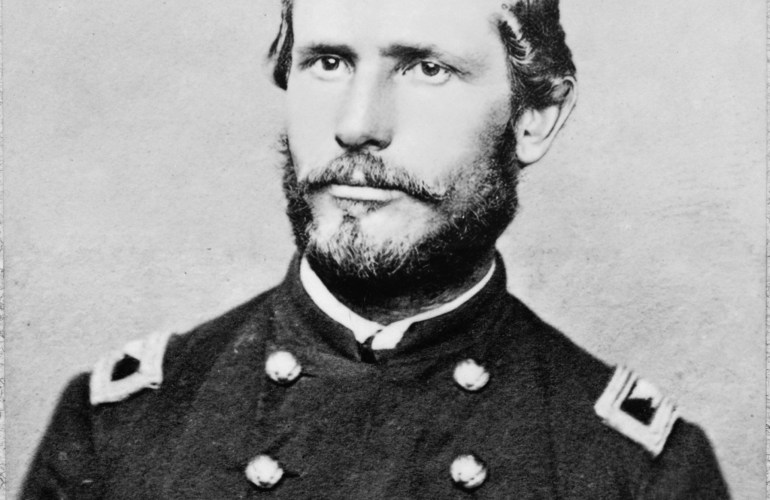
From May to July 1861, the Second Virginia Infantry (U.S.) did not operate as a cohesive regiment. Instead, several of its companies acted independently in support of Maj. Gen. George B. McClellan’s campaign to secure northwestern Virginia and the Baltimore & Ohio (B&O) Railroad for the Union. The regiment did not fully come together until late July, when it was organized under Colonel John W. Moss (1816-1864), a Parkersburg physician.
When President Abraham Lincoln called for 75,000 volunteers to serve 90-day terms, Ohio and Pennsylvania quickly filled their quotas. Virginia Governor John Letcher refused to comply, and as the government in Richmond moved toward secession, John S. Carlile and other unionists in northwestern Virginia began raising “loyal” regiments. Men from Ohio and Pennsylvania sidestepped their states’ quotas by enlisting in these units.
Half the companies in the Second Virginia (U.S.) were drawn entirely from Pennsylvania and Ohio. Three others included some Virginia recruits. Only two—Company B (Grafton Guards) and Company C (German Riflemen)—were raised solely in Virginia. The German Riflemen, led by Capt. Edward Plankey (1818-1885), were an especially interesting outfit. An immigrant from the Kingdom of Hanover and a veteran of the Mexican-American War, Plankey recruited his men through Wheeling’s German-language newspaper, the Virginische Staats-Zeitung.
In the predawn hours of May 30, the Germans chartered the steamer Eunice and slipped down the Ohio River to Sistersville in Tyler County, where two rifled cannon and a supply of ammunition lay hidden in a barn. They removed the pieces without incident and returned to Camp Carlile in Wheeling, where they were “exhibited free of charge.” Virginia Governor Henry A. Wise had placed the guns there after John Brown’s raid on Harper’s Ferry as part of a strengthened defense along the Ohio.
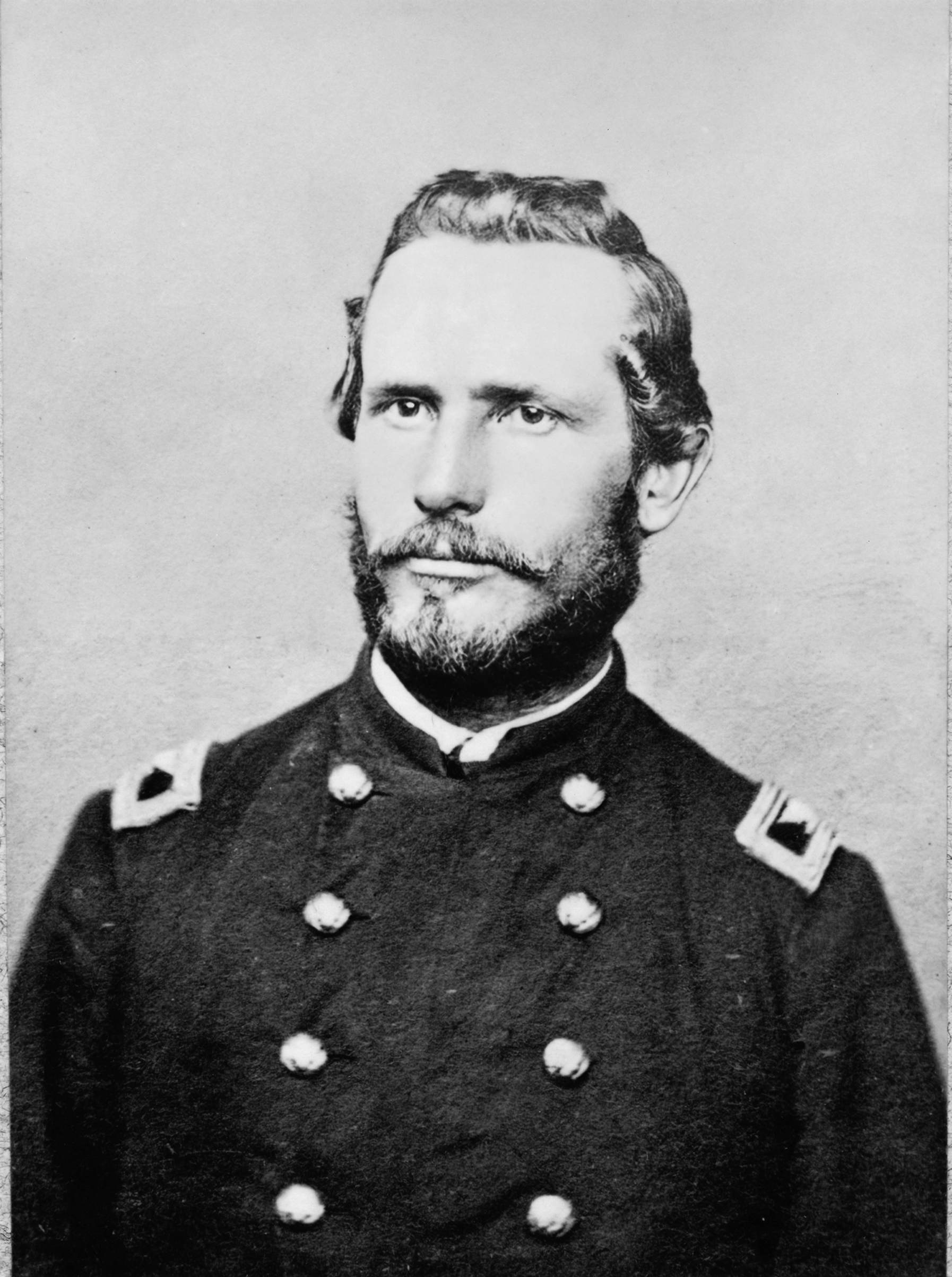
The Grafton Guards were the Second Virginia’s most active company during the Tygart Valley / Cheat River campaign. In mid-April, attorney George R. Latham (1832–1917), publisher of the Western Virginian, began organizing local unionists in the critical railroad town of Grafton. During the 1860 presidential election, he had championed Constitutional Union candidate John Bell, and his paper carried the motto, “the Constitution, the Union and the Enforcement of the Laws.”
Grafton’s economy was closely tied to the B&O Railroad, and its workers found little appeal in secession or the Southern cause. In June, one Taylor County resident wrote to his brother, “with few exceptions the people of this county are for the Union.”
On May 22, two members of the Grafton Guards, Lt. Daniel Wilson and Thornsbury Bailey Brown, were returning from a recruiting rally in nearby Pruntytown when they tried to cross the Fetterman Bridge over the Tygart Valley River. Pickets from the secessionist Letcher Guard ordered them to halt. Shots were exchanged, and Brown was killed. The Grafton Guards were not formally mustered into federal service until May 25, but Brown is widely regarded as the first Union soldier killed in combat during the Civil War.
The Guards served as Brig. Gen. Thomas A. Morris’ bodyguard as he advanced against Brig. Gen. Robert S. Garnett’s force on Laurel Hill. In May 1862, Captain Latham was promoted to colonel of the Second Virginia.
The other active company during this period was the Washington Rifle Guards, organized in Pittsburgh and Allegheny County, Pennsylvania. Led by Captain Albert C. Hayes, they arrived in Wheeling by steamboat on May 10, 1861, and were mustered into three-year service eleven days later. The Washington Rifle Guards accompanied the First Virginia Infantry (U.S.) during the initial advance down the Baltimore & Ohio (B&O) Railroad to Grafton.
The Washington Rifles were posted to guard Glover’s Gap Tunnel, seven and a half miles north of Mannington. While there, they captured several secessionists who had been cutting telegraph lines in the area. Second Lieutenant Oliver R. West then took a squad of five men to track down their leader and ended up killing him.
The core of Capt. John P. Kiger’s company was recruited among unionists in Parkersburg, VA in April 1861. They were involved in a brawl with secessionists over a stand of 400 flintlock muskets and two pieces of artillery, which they secured and locked in the city hall before surrendering to the 14th Ohio Infantry (3-months). Recruits from Bridgeport, Ohio filled out its ranks before the company was mustered into service.
The following is a nearly complete order of battle for the Second Virginia Infantry Regiment (U.S.). The company strengths are taken from their rosters in History of the Fifth West Virginia Cavalry, formerly the Second Virginia Infantry (1890). Unfortunately, the lists do not include individual muster dates. The numbers are unusally high. A typical regiment was authorized 100 men, so I wouldn’t be surprised if the lists included some later recruits.
Second Virginia Infantry Regiment (U.S.)
Col. John W. Moss, Commanding
Lt. Col. Robert Moran
| Company | Local Designation | Commander | Locality | Date of Muster | Strength |
|---|---|---|---|---|---|
| F&S | — | Col. John W. Moss | — | — | 11 |
| A | Washington Rifle Guards | Capt. Albert C. Hayes | Pittsburgh, PA | 5/21/1861 | 102 |
| B | Grafton Guards | Capt. George R. Latham | Grafton, VA | 5/25/1861 | 114 |
| C | German Riflemen | Capt. Edward Plankey | Wheeling, VA | 6/1/1861 | 106 |
| D | Minute Riflemen | Capt. Thomas Gibson, Jr. | Pittsburgh, PA | 6/14/1861 | 109 |
| E | Monroe Guards | Capt. Simpson Hollister | Monroe and Belmont County, OH; Wetzel, Taylor, and Ritchie County, VA | 6/16/1861 | 107 |
| F | Anderson Infantry | Capt. Alexander Scott | Pittsburgh, PA | 6/24/1861 | 104 |
| G | Plummer Guards | Capt. J. D. Owens | Allegheny County, PA and Wheeling, VA | 6/13/1861 | 113 |
| H | Pierpont Guards | Capt. F. Patrick McNally | Ironton, OH | 6/28/1861 | 105 |
| I | McKennan Infantry | Capt. Lewis E. Smith | Washington County, PA | 7/10/1861 | 113 |
| K | Capt. John P. Kiger | Parkersburg, VA and Bridgeport, OH | 7/21/1861 | 104 | |
| 1,088 |
When West Virginia became a state in 1863, the regiment was re-designated the Second West Virginia Infantry, and later reorganized as the Fifth West Virginia Cavalry.
Sources
Gilot, Jon-Erik. “Defending a Western Border: Governor Henry Wise Arms Virginia’s Border Following John Brown’s Raid.” Emerging Civil War, March 14, 2023.
Newton, J. H., G. G. Nichols, and A. G. Sprinkle. History of the Pan-Handle: Being Historical Collections of the Counties of Ohio, Brooke, Marshall, and Hancock, West Virginia. Wheeling: J. A. Caldwell, 1879.
Pittsburgh Gazette (Pittsburgh, PA) 2 May 1861.
Pittsburgh Post (Pittsburgh, PA) 7 May 1861.
Reader, Frank S. History of the Fifth West Virginia Cavalry, formerly the Second Virginia Infantry, and of Battery G, First West Va. Light Artillery. New Brighton: Daily News, 1890.
The Spirit of Democracy (Woodsfield, OH) 26 Jun 1861.
Wheeling Daily Intelligencer (Wheeling, VA) 20 May 1861.
Wheeling Daily Intelligencer (Wheeling, VA) 29 May 1861.
Wheeling Daily Intelligencer (Wheeling, VA) 31 May 1861.
Wheeling Daily Intelligencer (Wheeling, VA) 29 Jun 1861.
Wilkes, Kristen. “All Aboard: The Influence of the Baltimore and Ohio Railroad on Sectionalism and Statehood in West Virginia.” West Virginia History, New Series, 13, No. 2 (Fall 2019): 47-72.

 Spirit of '61