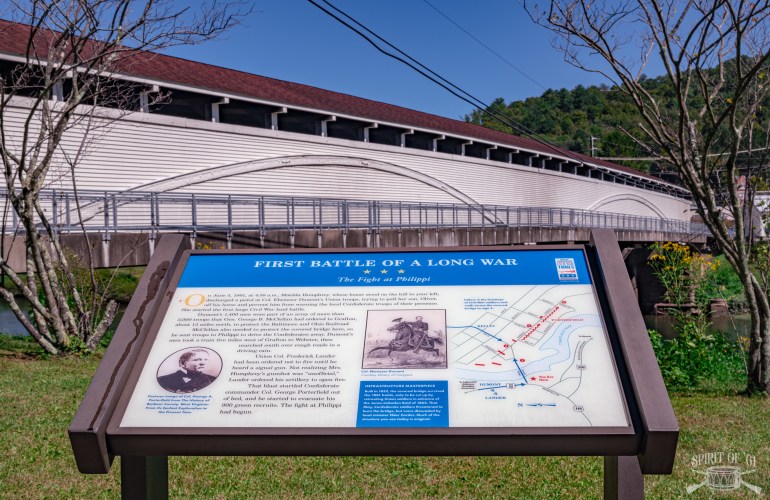
The following is a comprehensive chronology of the important events leading up to the Action at Philippi, June 3, 1861. It begins at the initial secession vote at the Virginia Convention in Richmond, April 17, 1861, and covers 47 days, although not every day is represented. These days were filled with military and political intrigue as residents of what was then northwestern Virginia rushed to pick a side in the growing conflict.
Wednesday, April 17
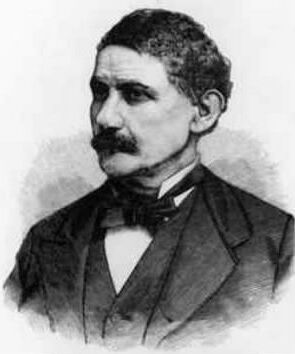
Delegates at the Virginia Convention in Richmond vote in favor of secession, 88 to 55. Governor John Letcher sends a letter to Andrew J. Sweeney, mayor of Wheeling in Virginia’s northwestern panhandle, requesting him to seize federal buildings for the Commonwealth of Virginia. Sweeney responds that he has seized them “in the name Abraham Lincoln, President of the United States, whose property they are.”
Thursday, April 18
Unionists in Parkersburg along the Ohio River are involved in a brawl with secessionists over a stand of 400 flintlock muskets and two pieces of artillery, which they had secured and locked in the city hall with the intention of surrendering them to federal authorities.
Monday, April 29
Maj. Gen. Robert E. Lee orders Maj. Alonzo Loring, sheriff of Ohio County, to muster volunteer forces into State service in Wheeling and protect the terminus of the Baltimore & Ohio (B&O) Railroad. He is to cooperate with Maj. Francis M. Boykin, Jr. in Grafton.
Tuesday, April 30
Lee orders Boykin to muster volunteer forces into State service around Grafton and to cooperate with Loring. Strong Union sentiment in the region discourages either man from accomplishing his mission.
Friday, May 3
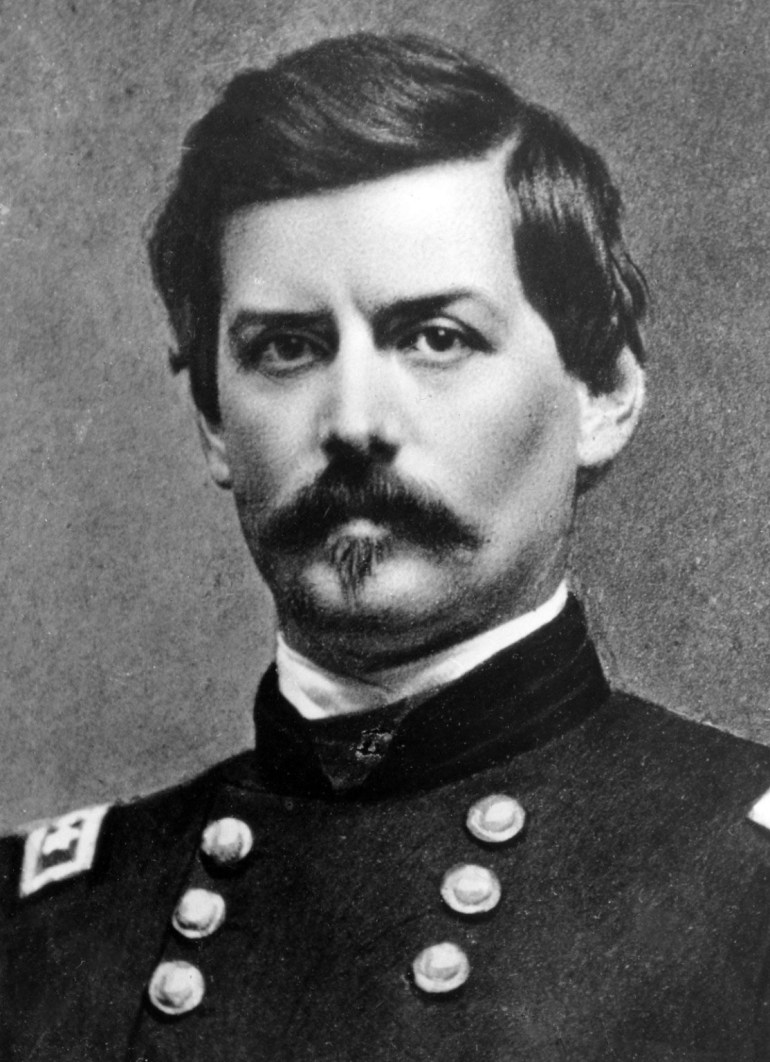
U.S. General Orders No. 14 creates the Department of the Ohio, encompassing Illinois, Indiana, and Ohio, commanded by Maj. Gen. George B. McClellan.
Saturday, May 4
Lee assigns Col. George A. Porterfield to help organize and command the State (secessionist) volunteers in northwestern Virginia.
Monday, May 13
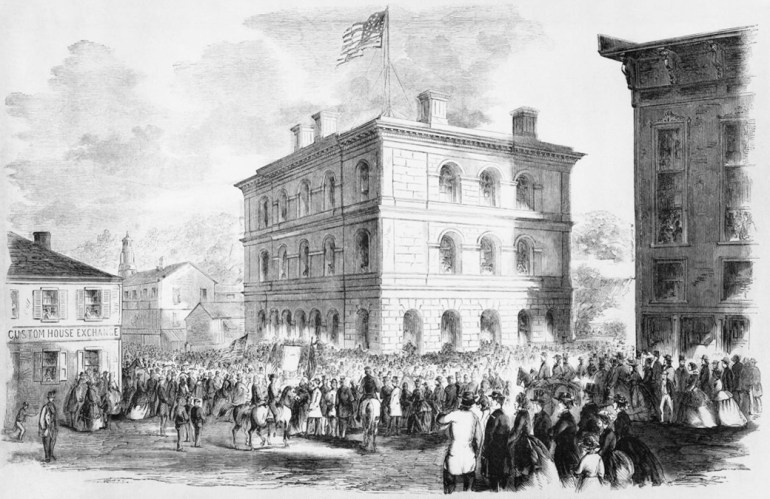
Pro-Union delegates from 27 western Virginia counties open a convention at Washington Hall in Wheeling to debate a response to the secession crisis.
Tuesday, May 14
Porterfield arrives in Grafton but finds no volunteers. He moves on to Fetterman, where some secessionists have gathered.
Wednesday, May 15
The First Wheeling Convention adjourns with a consensus to wait for the outcome of the May 23 secession referendum before taking further action.
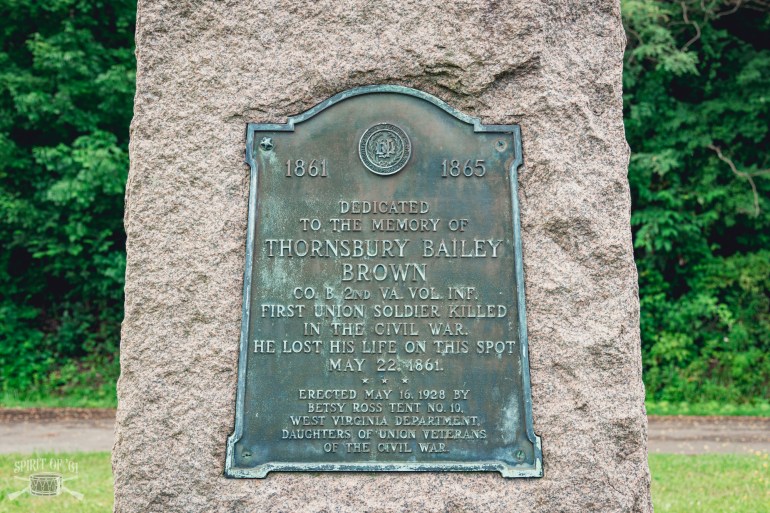
Wednesday, May 22
During the day, Porterfield sends a small force to occupy Grafton, but they are turned back. That evening, two members of the unionist Grafton Guards confront secessionist pickets at a bridge over the Tygart Valley River near Fetterman, Virginia. Thornsbury Bailey Brown is shot and killed.
Thursday, May 23
Virginia voters overwhelmingly ratify the Ordinance of Secession, 125,950 to 20,373, with the anti-secession vote concentrated in western Virginia. The 1st Virginia Infantry Regiment (U.S.) musters into federal service in Wheeling, with Benjamin F. Kelley as colonel.
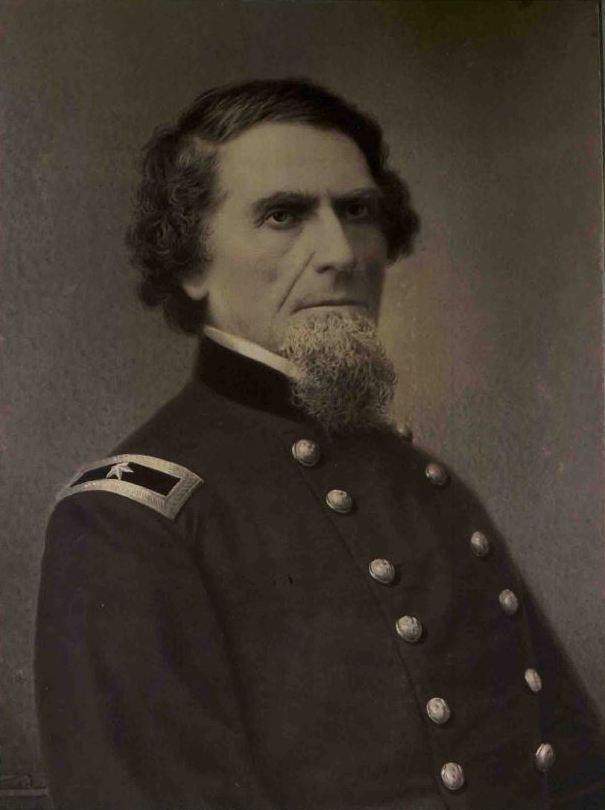
Friday, May 24
As the Harrison Rifles company leaves Clarksburg to join Porterfield, unionist home guard takes control of the town and patrols the streets.
Saturday, May 25
Porterfield’s force occupies Grafton and he orders Col. William J. Willey to target railroad bridges along the B&O Railroad, which Willey does with a small squad that evening. Two bridges over Buffalo Creek between Farmington and Mannington are destroyed.
Sunday, May 26
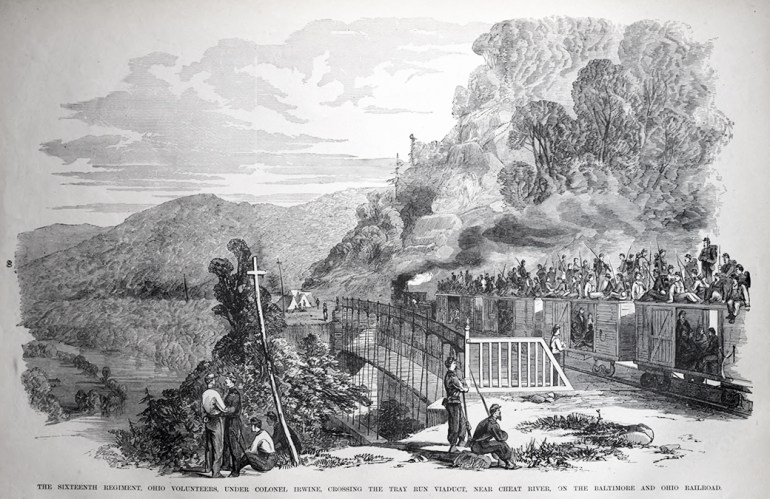
To secure and repair the railroads in northwestern Virginia, and capture the key junction at Grafton, McClellan orders a multi-pronged advance. The 1st Virginia Infantry (U.S.) and the 16th Ohio Infantry are tasked with approaching Grafton from Wheeling by way of the B&O Railroad. Simultaneously, the 14th Ohio Infantry regiment is to advance from Parkersburg along the Northwestern Virginia Railroad, with the 18th Ohio in support.
Monday, May 27
The 1st Virginia (U.S.) and 16th Ohio reach Mannington and the burned bridges along the B&O Railroad and begin repairs. Porterfield sends another expedition out to destroy bridges between Clarksburg and Parkersburg along the Northwestern Virginia Railroad. Bridges at Simpson’s Creek, Goose Creek, and the North Fork of Hughes River are destroyed.
Tuesday, May 28
Lt. Oliver R. West leads a patrol from Company A, 2nd Virginia Infantry (U.S.) and surprises an irregular secessionist band at Glover’s Gap along the B&O Railroad, killing 65-year-old Stephen Roberts. Porterfield evacuates Grafton and sets up his headquarters in Philippi, 15.5 miles south. He orders Lt. Joseph H. Chenoweth / Chenowith to take a company and destroy the Cheat River Bridge, but they fail to accomplish their mission.
Thursday, May 30
The 1st Virginia (U.S.) and 16th Ohio occupy Grafton unopposed. The advanced units under Col. James B. Steedman, 14th Ohio, reach Clarksburg. A detachment of Capt. Edward Plankey’s German Riflemen sail down the Ohio River from Wheeling to Sistersville in Tyler County and seize two cannon hidden in a barn.
Friday, May 31
Steedman’s main body reaches Tollgate Station along the Northwestern Virginia Railroad and repairs the railroad bridge over the North Fork of Hughes River.
Saturday, June 1
The Churchville and Bath cavalry, led by Col. Rudolph Turk, visits Buckhannon in Upshur County, where they compel the local unionists to take down the American flag flying from the courthouse. Brig. Gen. Thomas A. Morris arrives in Grafton to command Union forces there and learns Col. Kelley has already planned an advance on Philippi. Steedman’s main body reaches Clarksburg.
Sunday, June 2
Late this evening, Union forces in two columns proceed toward Philippi in a torrential rainstorm, hoping to catch Porterfield’s men off guard and entrap them.
Whenever possible, I have cross-referenced sources to ensure accuracy. If you see something you think is inaccurate or needs to be changed, please reply in a comment below or contact us.
Sources
Bell, Mark E. “A Day at the Races: The First Virginia (U.S.) Infantry at the Battle of Philippi.” Civil War Regiments 5, no. 4 (1997): 1-19.
Brock, R.A., Ed. “A Narrative of the Service of Colonel Geo. A. Porterfield in Northwestern Virginia in 1861-‘2.” Southern Historical Society Papers. Vol. 16 (Richmond: Southern Historical Society, 1888): 82-91.
Haselberger, Fritz. Yanks from the South! The First Land Campaign of the Civil War. Baltimore: Past Glories, 1987.
Leib, Charles. Nine Months in the Quartermaster’s Department; or the Chances for Making a Million. Cincinnati: Moore, Wilstach, Keys & Co., 1862.
Maxwell, Hu. History of Tucker County, West Virginia. Kingwood: Preston Publishing Company, 1884.
Reader, Frank S. History of the Fifth West Virginia Cavalry, formerly the Second Virginia Infantry, and of Battery G, First West Va. Light Artillery. New Brighton: Daily News, 1890.
Summers, Festus P. The Baltimore and Ohio in the Civil War. Gettysburg: Stan Clark Military Books, 1993.
Turner, George Edgar. Victory Rode the Rails: The Strategic Place of the Railroads in the Civil War. Indianapolis: Bobbs-Merril Company, Inc., 1953.

 Spirit of '61