Photo by M.A. Kleen, Spirit61.info

Holding the Line at Hoke’s Run: Jackson’s First Test in the Shenandoah Valley

When a quiet morning along the Potomac suddenly broke into a sharp, unexpected fight near Falling Waters, the resulting engagement helped determine the opening moves of the Civil War in the Shenandoah Valley. The Shenandoah Valley lies between the Appalachians and Blue Ridge Mountains, its fertile soil shaped by the twin branches of the Shenandoah…

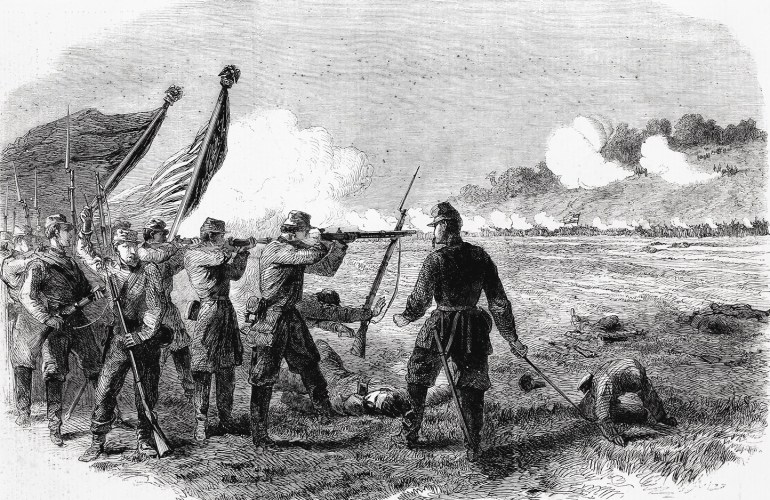
The Civil War in America, Engagement between the 71st New York and an Alabama Regiment at the Battle of Bull Run. Illustration for The Illustrated London News, 31 August 1861.

Two New Skirmishes in the Shenandoah?

Two previously unexplored skirmishes conducted during Robert Patterson's short-lived campaign in the lower Shenandoah Valley have recently come to my attention. One, near Martinsburg on July 11, 1861, resulted in the death of private Isaac Sly of the 28th New York Infantry Regiment. The other occurred near Bunker Hill on July 15, 1861. Unfortunately, information…

160 Years Ago Today: Battle of Hoke’s Run or Falling Waters

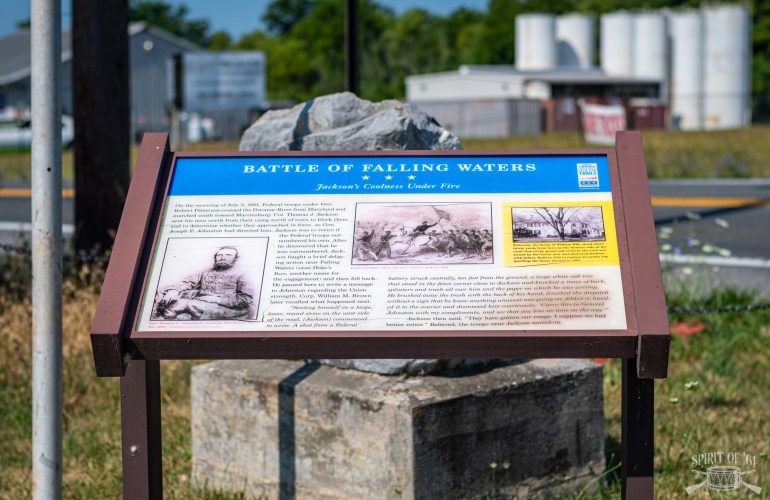
On the morning of Tuesday, July 2, 1861, Union Maj. Gen. Robert Patterson crossed the Potomac River at Williamsport, Maryland with two brigades totaling approximately 8,000 men. Confederate Col. Thomas J. Jackson’s 4,000-man brigade was ordered to delay the Federal advance toward Martinsburg, then a town in Virginia (today, West Virginia), approximately 13.5 miles south…

Illustration of Thomas J. Jackson

Thomas Jonathan Jackson (1824-1863) was born in what is today Clarksburg, West Virginia and graduated from West Point in 1846. He fought in the Mexican War, then taught at the Virginia Military Institute from 1851 to 1861. He was a devout Presbyterian and owned six slaves, mostly acquired through marriage. He established a Sunday school…