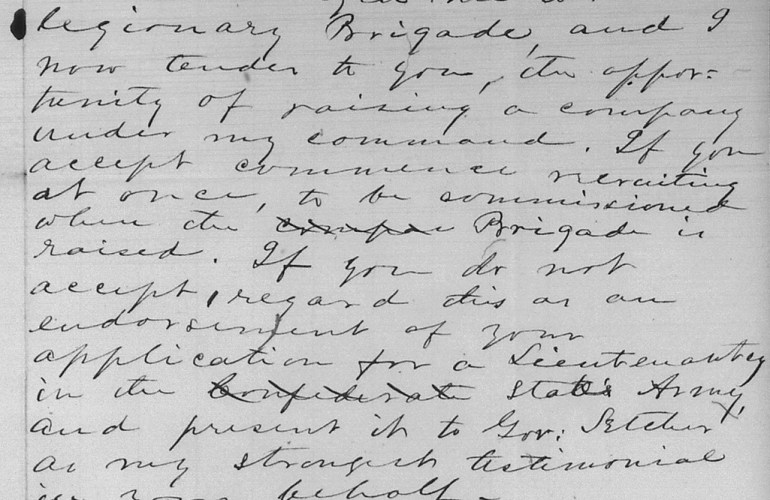
Letter from Henry A. Wise to Thomas P. McCandlish, May 26, 1861
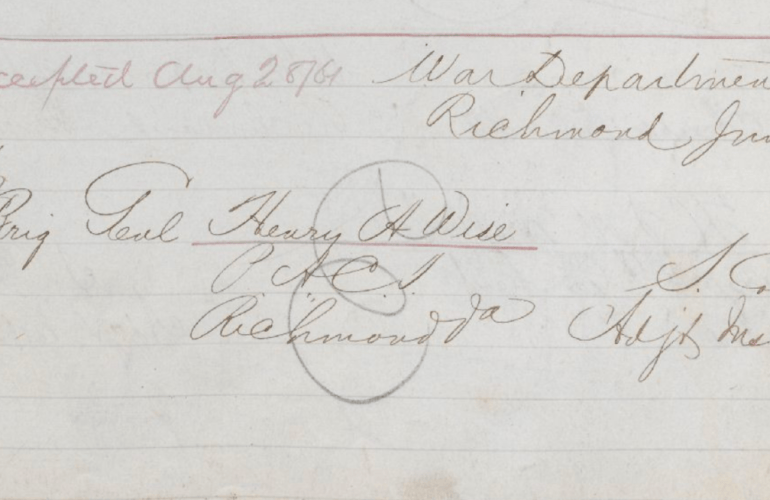
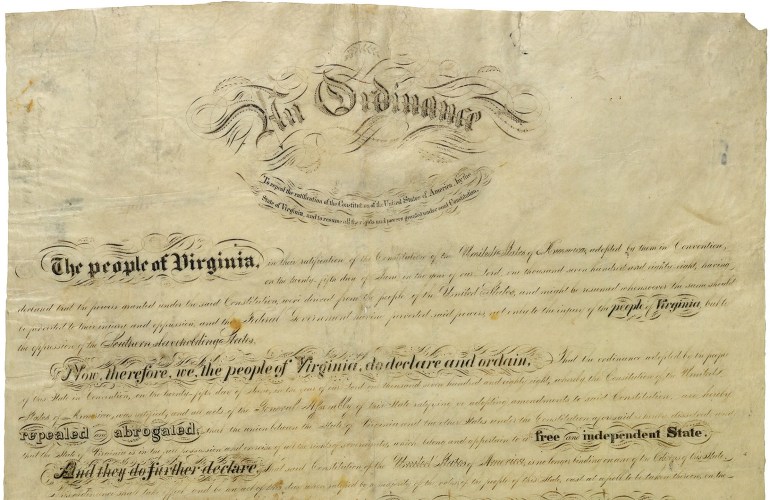
Following the April 17 secession vote at the convention in Richmond, former Virginia governor Henry A. Wise, leader of the secessionist faction, retired to his home at Rolleston Hall outside Norfolk, afflicted with illness and exhaustion. Laid up in bed, he dispatched a flurry of letters requesting offices in the Confederate government for his friends…

When and How Did Henry A. Wise Enter the Fight?

Though seldom remembered today, former Virginia governor Henry A. Wise played a key role in aligning Virginia with the Confederacy. He served as a Confederate general throughout the war, lost his eldest son, and surrendered with Lee at Appomattox Court House. A (sometimes reluctant) secessionist, he was nevertheless not an enthusiastic supporter of slavery, despite…

The Wise Legion Moves North: Failed Expeditions to Ripley and Glenville

In July 1861, Henry A. Wise sent Confederate detachments north from Charleston toward Ripley and Glenville. One turned back without a fight; the other traded shots with Ohio troops and briefly drew Union reinforcements away from Rich Mountain. What did the Wise Legion hope to accomplish, and why did both expeditions come to so little?…

Caskie’s Mounted Rangers in the 1861 Kanawha Campaign

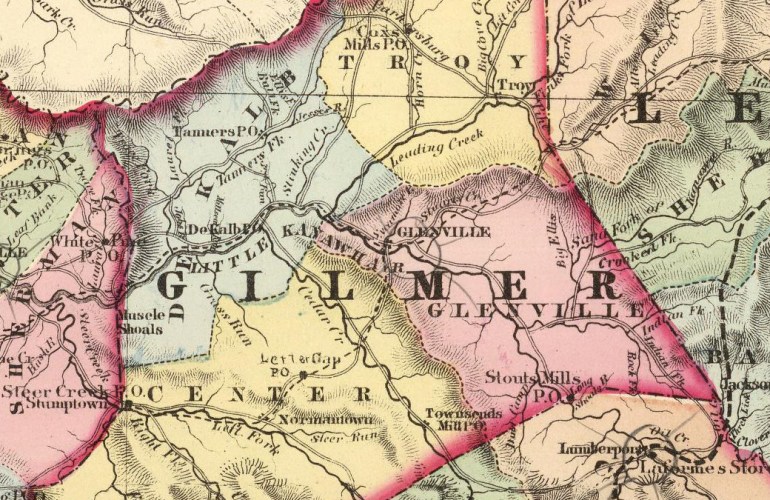
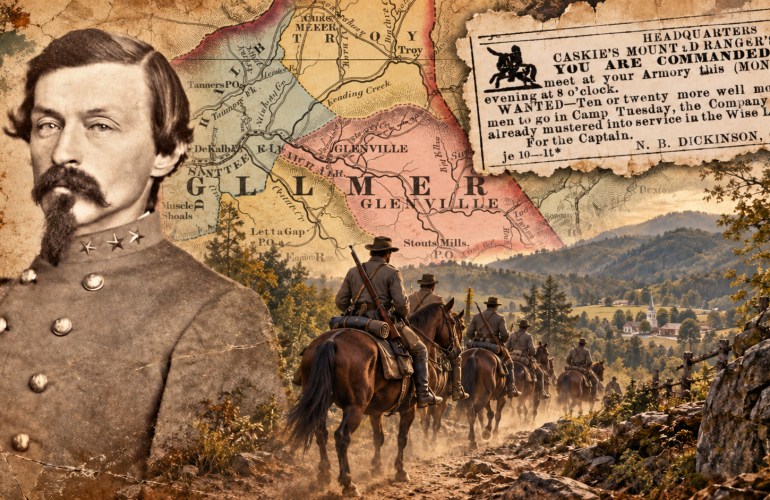
Captain Robert A. Caskie led his Mounted Rangers on a grueling expedition into Gilmer County in July 1861, where they spread alarm among local unionists and skirmished with Ohio troops outside Glenville. This overlooked episode of the Civil War in western Virginia reveals how this small company of Wise Legion cavalry gained its first campaign…

The Secessionist Coup D’état Aimed at the 1861 Virginia State Convention & What Might Have Been

Kevin Donovan has posted an excellent and meticulously researched article over at the Emerging Civil War blog on Virginia's secession crisis and the "Spontaneous People’s Convention." In those heated days in April 1861 before voting to secede, fire-eaters plotted and nearly executed a violent coup to force Virginia out of the Union. Click the link…

Revised Map and Overview of the Ohio Front

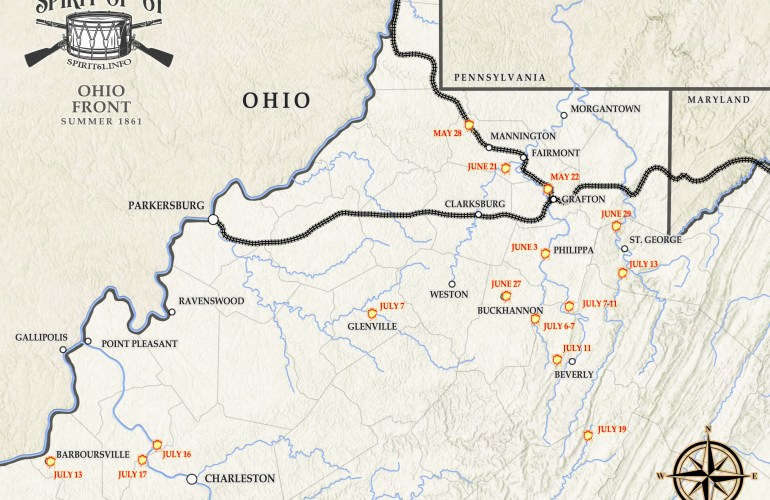
In 1861, Trans-Allegheny Virginia was a landscape of hills and mountains cut by rivers like the Kanawha, Little Kanawha, Tygart, Cheat, and Greenbrier. The region consisted largely of small towns and subsistence farms, with limited industry beyond coal mining, salt works, and a nascent iron trade. The first oil wells were drilled on the eve…

What Happened at Poca? Unpacking the Truth

Was the skirmish at the mouth of the Pocatalico River on July 16, 1861 a bold cavalry charge or blown out of proportion? Conflicting accounts tell vastly different tales, leaving us to sift through exaggerations and incomplete records to understand what really happened in this lesser-known prelude to the Battle of Scary Creek. A dramatic…

160 Years Ago Today: Harpers Ferry Armory Burned

First Lieutenant Roger Jones, a cousin of Robert E. Lee, was on recruiting duty at Carlisle Barracks in Pennsylvania when ordered to take a small force south through Maryland to protect the U.S. arsenal at Harpers Ferry, Virginia, a small mountain town nested at the confluence of the Potomac and Shenandoah rivers. Though Virginia had…

New Clue in Ravenswood Mystery Skirmish

Yesterday, I posted about a mystery skirmish mentioned in Union Maj. Gen. George B. McClellan's July 5, 1861 report to Assistant Adjutant-General E. D. Townsend that supposedly took place around present-day Ravenswood, West Virginia along the Ohio River in early July 1861. The engagement is not listed in any source that I am aware of.…

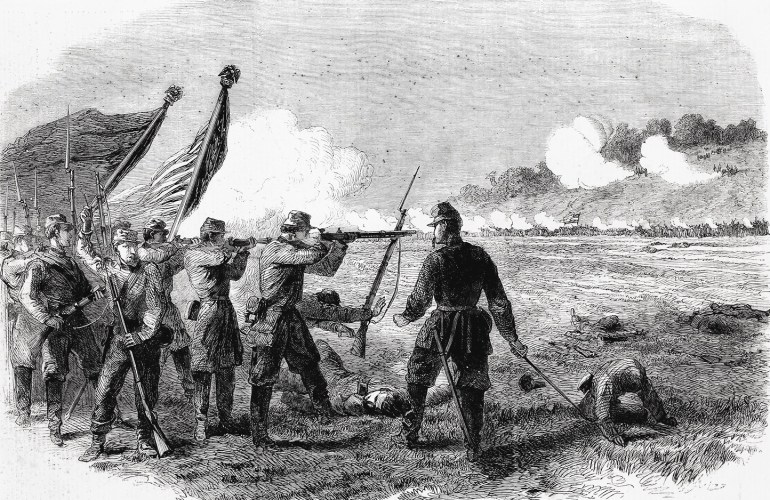
The Civil War in America, Engagement between the 71st New York and an Alabama Regiment at the Battle of Bull Run. Illustration for The Illustrated London News, 31 August 1861.

Mystery Skirmish Near Ravenswood?

Just when I thought I'd found every early Civil War skirmish in Virginia and West Virginia, I came across several references to an engagement near what is today Ravenswood, West Virginia along the Ohio River in Jackson County. Union Maj. Gen. George B. McClellan mentions it in his July 5, 1861 report to Assistant Adjutant-General…