Another Eyewitness Account of Brig. Gen. Robert S. Garnett’s Death at Corrick’s Ford

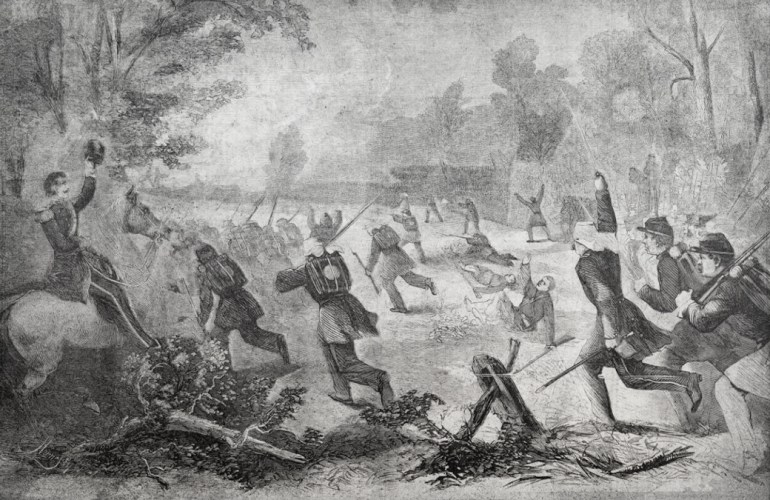
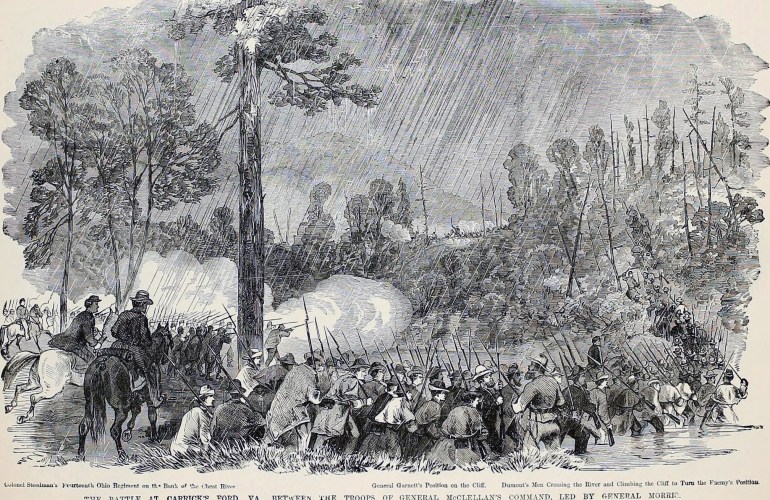
As the first general officer killed in the Civil War, the death of Brig. Gen. Robert S. Garnett at Corrick’s Ford on July 13, 1861 has remained a subject of discussion for over 160 years. As veterans of the conflict aged, a controversy emerged not only over who fired the fatal shot, but also regarding…

An Eyewitness Gives His Version of the Killing of Brig. Gen. Robert S. Garnett in the National Tribune

The following account of the death of Brig. Gen. Robert S. Garnett at Corrick's Ford on July 13, 1861 was written by Henry Clay Wheeler (1841-1924), Company E, 7th Indiana, who claimed to be among the party who fired at the general on that fateful day. It appeared in The National Tribune, a veterans' newspaper,…

Using Artificial Intelligence to Enhance Civil War Portraits

The growth of Artificial Intelligence (A.I.) in recent years has opened up an exciting new field. When used properly and responsibly, it can be of invaluable assistance to researchers and historians looking for new ways to bring the past to life. Our policy on A.I. is to solely employ it for purposes that complement, not…

Civil War “Firsts” in Virginia and West Virginia

From the first battlefield amputation to the first conventional land battle, Virginia was the stage for many pivotal "firsts" of the Civil War. This article explores these groundbreaking moments, shedding light on the early conflicts, innovations, and key figures that shaped the war's opening chapters. Following the bombardment and surrender of Fort Sumter on April…

“Only three or four lost by disease or accident…”: The First Deaths of the First Campaign

Accidental deaths of soldiers often receive less attention than battlefield casualties. However, for these soldiers of the First Virginia Regiment, sworn to fight for the Union, their fates marked some of the earliest losses of the Civil War. Were it not for a handful of brief newspaper articles and a sparse pension file, their stories…

Thank God for Michigan: Orlando B. Willcox (1823–1907)

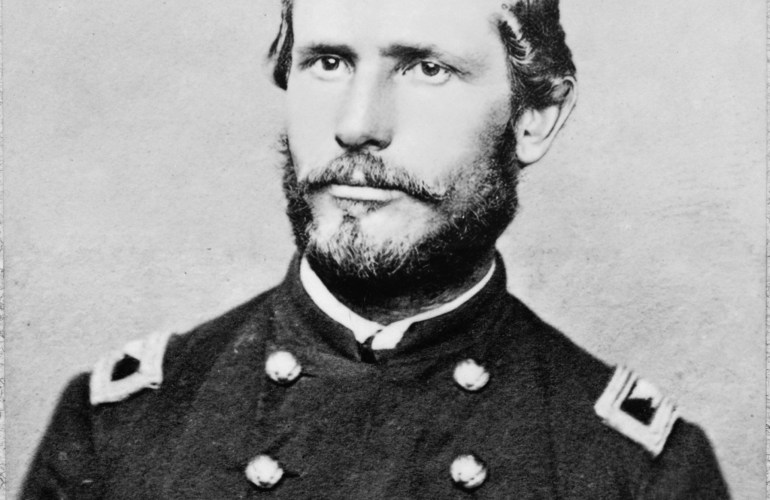
Photographic Portrait of Orlando B. Willcox. Library of Congress Prints and Photographs Division. Orlando Bolivar Willcox (1823–1907) was born on April 16, 1823, in Detroit, Michigan Territory. He graduated from the United States Military Academy at West Point in 1847. Commissioned as a second lieutenant in the 4th U.S. Artillery, Willcox served at the end…

Who Was the First Civil War Soldier Killed in Action in Virginia?

In the tense opening days of the Civil War, a single gunshot would mark the first true casualty of battle—but whose name deserves that grim distinction? Between riots, duels, and chaotic skirmishes, the first soldier killed in action is a title claimed by many, but only one truly fits the definition. Because of its proximity…

Earthwork Fort at Alexandria Protecting the Left of the Line of the Grand Army

This unfinished pencil drawing by famed artist Alfred Rudolph Waud (1828-1891) depicts Fort Ellsworth on Shuter’s (or Shooter’s) Hill, west of Alexandria in late June / early July 1861. Illustration has been enhanced to show details. Library of Congress Prints and Photographs Division. Click on the image to expand. The illustration is titled, Earthwork fort…

Outpost Watching Falls Church, Virginia, 1861

This pencil drawing by famed artist Alfred Rudolph Waud (1828-1891) depicts a Union artillery piece and camp of 2nd United States Cavalry, Company B, led by Lieutenant Charles H. Tompkins, near Falls Church, Virginia on July 1, 1861. Exactly one month earlier, Tompkins led a chaotic reconnaissance on Fairfax Court House, in which several of…

The Fate of Burdsall’s Men

On Friday, July 19, 1861, a seven-man patrol from Captain Henry W. Burdsall's Independent Company of Ohio Cavalry was ambushed along the West Fork of the Greenbrier River, near present-day Durbin, West Virginia, in Pocahontas County. Confederate reports claimed that all but one of the men were killed, but the reality was different. One man…