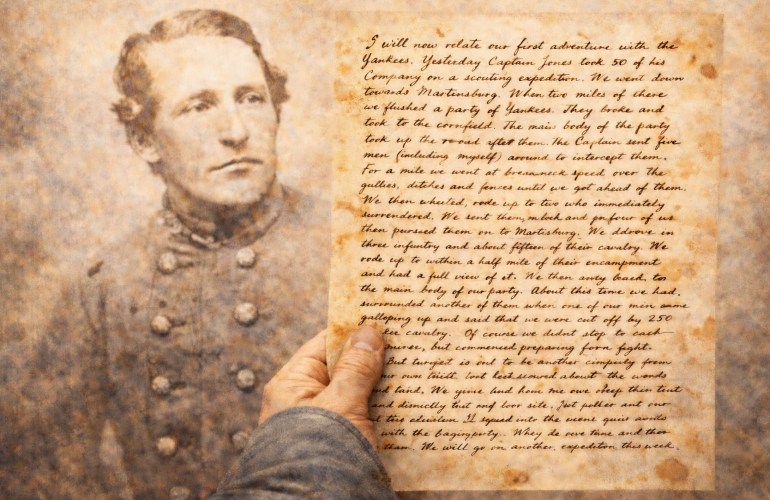
Mosby Sheds Light on What Happened Outside of Martinsburg on July 11, 1861

During the American Civil War, John Singleton Mosby became a famous (or infamous) partisan leader in northern Virginia. The "Gray Ghost" vexed Union commanders and wreaked havoc behind the lines. But in the spring and summer of 1861, he was a private in the Washington Mounted Rifles, a cavalry company in J.E.B. Stuart's 1st Virginia…

Another Eyewitness Account of Brig. Gen. Robert S. Garnett’s Death at Corrick’s Ford

As the first general officer killed in the Civil War, the death of Brig. Gen. Robert S. Garnett at Corrick’s Ford on July 13, 1861 has remained a subject of discussion for over 160 years. As veterans of the conflict aged, a controversy emerged not only over who fired the fatal shot, but also regarding…

Organizing for War: Governor John Letcher’s July 13, 1861 Militia Proclamation

In mid-July 1861, just weeks after Virginia’s formal entry into the Confederate States of America, Governor John Letcher issued a sweeping proclamation calling for the mobilization of militia forces in response to a troop requisition from Confederate President Jefferson Davis. The proclamation, dated July 13, targeted specific regions of the Commonwealth: counties north of the…

An Eyewitness Gives His Version of the Killing of Brig. Gen. Robert S. Garnett in the National Tribune

The following account of the death of Brig. Gen. Robert S. Garnett at Corrick's Ford on July 13, 1861 was written by Henry Clay Wheeler (1841-1924), Company E, 7th Indiana, who claimed to be among the party who fired at the general on that fateful day. It appeared in The National Tribune, a veterans' newspaper,…

Governor Letcher’s 1861 Call to Arms: Uniting Virginia for the Confederacy

In June 1861, just weeks after Virginia’s secession from the Union, Governor John Letcher issued a fiery proclamation to the people of Northwestern Virginia—a region increasingly resistant to Confederate alignment. His message was clear: the time for debate was over, and unity under the Confederate cause was now a matter of duty and survival. John…

Account of the Action at Pike’s Creek in the Diary of Anne S. Frobel

When a brief Civil War skirmish near Alexandria left two men dead, its aftermath sparked outrage on both sides. A Virginia woman’s diary captured the moment in gut-wrenching detail. Before sunrise on the morning of Sunday, June 30, 1861, a brief but deadly clash unfolded just southwest of Alexandria, Virginia, where Confederate scouts encountered Union…

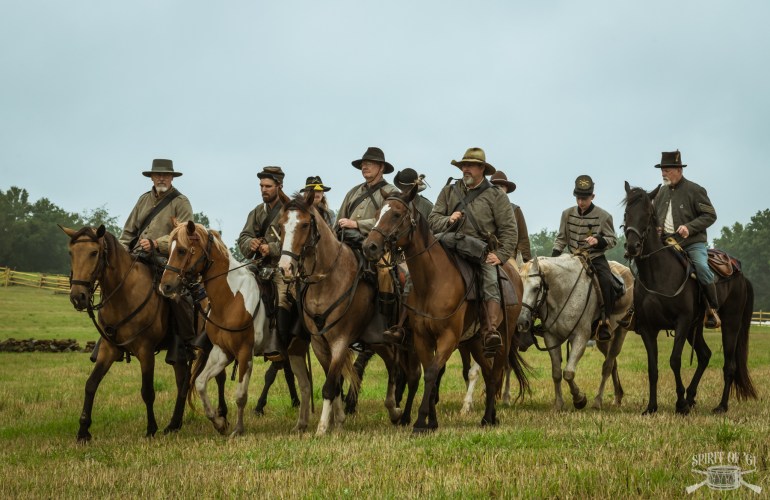
Photo by M.A. Kleen, Spirit61.info

Which Mills? Decoding an Early Civil War Skirmish

Did the so-called "Skirmish at Arlington Mills" really happen? Learn how a simple newspaper error sparked a century-long myth about one of the Civil War’s first land engagements. Primary sources reveal conflicting accounts, misidentified locations, and a puzzling lack of Confederate testimony—raising questions about how historical narratives take shape and why verifying sources is essential…

A PROCLAMATION BY THE GOVERNOR OF VIRGINIA

John Letcher, governor of Virginia, 1860–1864. Library of Congress Prints and Photographs Division The following proclamation by the Virginia governor, John Letcher (1813-1884), appeared in the Richmond Whig, Thursday, April 18, 1861, as well as other newspapers around the state in response to U.S. President Abraham Lincoln's calling for a volunteer army to suppress the…

“No Meat Hurt”: Letter from John C. Higginbotham

Portrait of John C. Higginbotham of Buchkannon. West Virginia & Regional History Center, Morgantown, WV Soon after Virginia voted to secede, John Carleton Higginbotham (1842-1864), an 18-year-old student at Lynchburg College, returned home to fight for the Confederacy. His father, William Thomas Higginbotham (1821-1892), was a prominent landowner in Upshur County and owned nearly 10…

New Issue of Frank Leslie’s Illustrated Newspaper

Frank Leslie's Illustrated Newspaper was published in New York from 1855 to 1922 and produced many volumes of compiled illustrated histories of the American Civil War. Its correspondents and illustrators got close to the action, so close, in fact, that one of their freelance correspondents, James R. O'Neill, was killed during the Battle of Baxter…