Testing the Waters: Sewell’s Point and the First Exchange of Fire in Hampton Roads

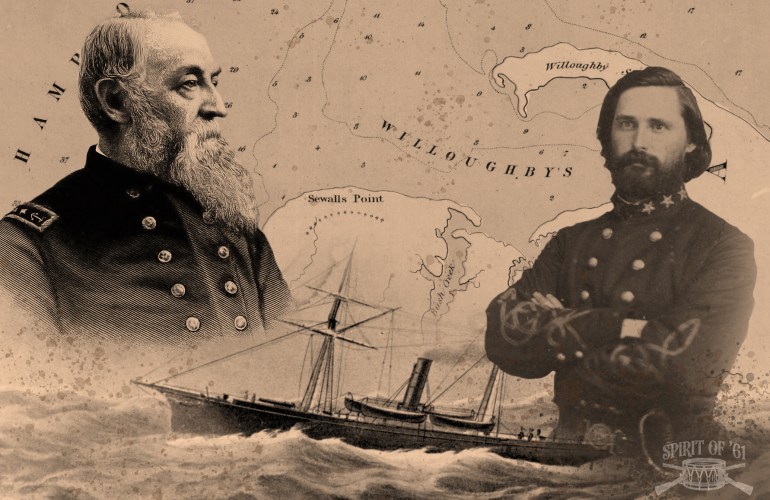
Just days before Virginia’s secession vote, the Engagement at Sewell’s Point on May 18–19, 1861, saw Union gunboats exchange fire with a hastily constructed Confederate battery near Fort Monroe in Hampton Roads. Though the skirmish caused little damage and few injuries, it marked one of the earliest naval engagements of the Civil War in Virginia…

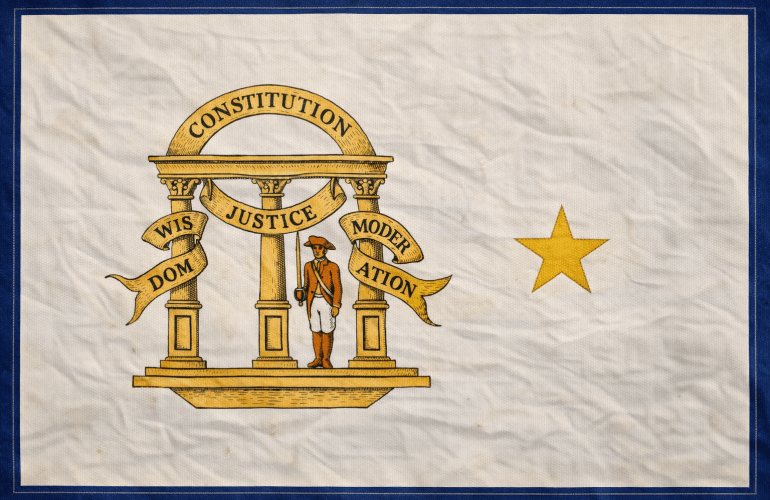
Eyewitness Account of the Engagement at Sewell’s Point by a Member of the Columbus City Light Guard

Another eyewitness account of the Engagement at Sewell’s Point appeared in the book The History of Norfolk, Virginia by Harrison W. Burton (1840-1902), a journalist who served in the 1st Virginia Infantry and Otey's Battery during the Civil War. It was simply identified as being written by "a Georgia gentleman" shortly after the fight concluded, dated…

Eyewitness Account of the Engagement at Sewell’s Point by a Member of the Norfolk Light-Artillery Blues

The following eyewitness account of the Engagement at Sewell’s Point appeared in the book The History of Norfolk, Virginia by Harrison W. Burton (1840-1902), a journalist who served in the 1st Virginia Infantry and Otey's Battery during the Civil War. It was written anonymously by a member of the Norfolk Light-Artillery Blues. There is no date…

“This is an entire mistake”: When a Misquote Harms History

Did Captain William C. Whittle really call the first shots fired in Virginia during the Civil War a “mistake”? A close reading of the primary sources shows how quoting a key document out of context creates a distorted picture of events. Let me begin with a caveat: I have been a member of the American…

Gloucester Point and the First Shots Fired by Virginia in the Civil War

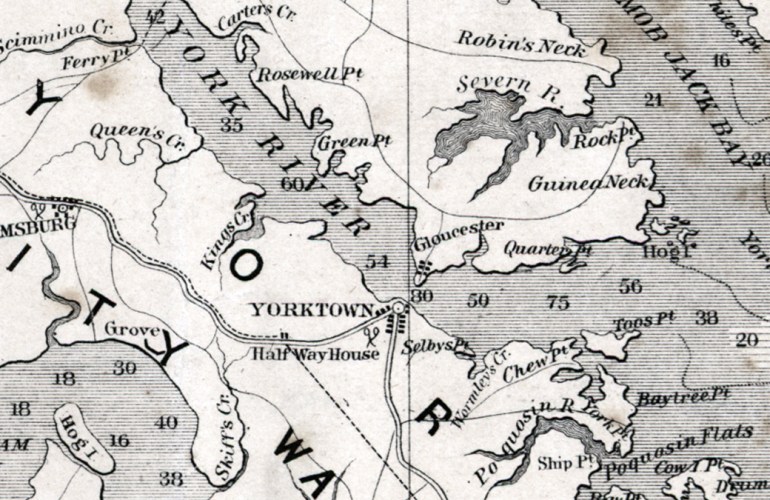
Before Virginia voters cast their ballots on secession, cannon fire echoed across the York River. In May 1861, at Gloucester Point, Virginia militia fired on the USS Yankee, marking the first shots of the Civil War in Virginia and an almost-forgotten opening clash between the state and the U.S. government. On April 17, 1861, the…

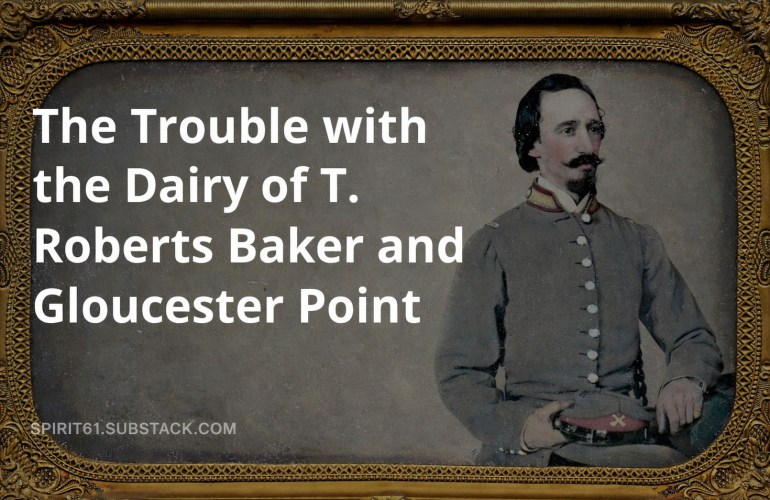
Patron Exclusive: The Trouble with the Dairy of T. Roberts Baker and Gloucester Point

It was the first time Virginia militia opened fire on federal forces during the American Civil War, weeks before the state’s secession referendum. One private left behind a detailed recollection of this fateful moment, but there is reason to question its accuracy. It serves as a cautionary tale about why all sources should be carefully…

“Only three or four lost by disease or accident…”: The First Deaths of the First Campaign

Accidental deaths of soldiers often receive less attention than battlefield casualties. However, for these soldiers of the First Virginia Regiment, sworn to fight for the Union, their fates marked some of the earliest losses of the Civil War. Were it not for a handful of brief newspaper articles and a sparse pension file, their stories…

Chaos at Cloud’s Mill: Early Bloodshed in Civil War Virginia

In the early days of the Civil War, a nighttime skirmish near Cloud’s Mill led to confusion, tragedy, and one of the first Union casualties of the conflict. What seemed like an enemy ambush may have been something far more chaotic—a fatal case of friendly fire. On May 23, 1861, Virginia voters ratified secession, and…

Photo by M.A. Kleen, Spirit61.info

Which Mills? Decoding an Early Civil War Skirmish

Did the so-called "Skirmish at Arlington Mills" really happen? Learn how a simple newspaper error sparked a century-long myth about one of the Civil War’s first land engagements. Primary sources reveal conflicting accounts, misidentified locations, and a puzzling lack of Confederate testimony—raising questions about how historical narratives take shape and why verifying sources is essential…

Fire on the Potomac: The Battle for Aquia Landing, 1861

In late May and early June of 1861, Union gunboats of the newly formed Potomac Flotilla clashed with Confederate shore batteries at Aquia Landing, a key rail terminus on Virginia’s Potomac River. Over three days of bombardment, the USS Thomas Freeborn and supporting vessels attempted to silence the Confederate defenses, but despite sustaining damage, the…