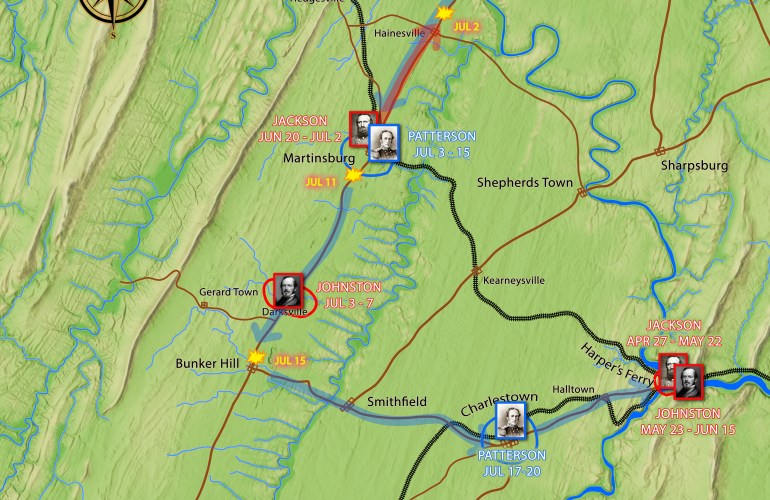
Map of the Lower Shenandoah Campaign, Summer 1861
Through June and July 1861, the armies of Union Maj. Gen. Robert Patterson and Confederate Brig. Gen. Joseph E. Johnston shadowboxed across the lower Shenandoah Valley. They fought a few incidental skirmishes, but no major battles. The stakes were high: the Shenandoah was a fertile valley rich in grain and foodstuffs, and it served as…

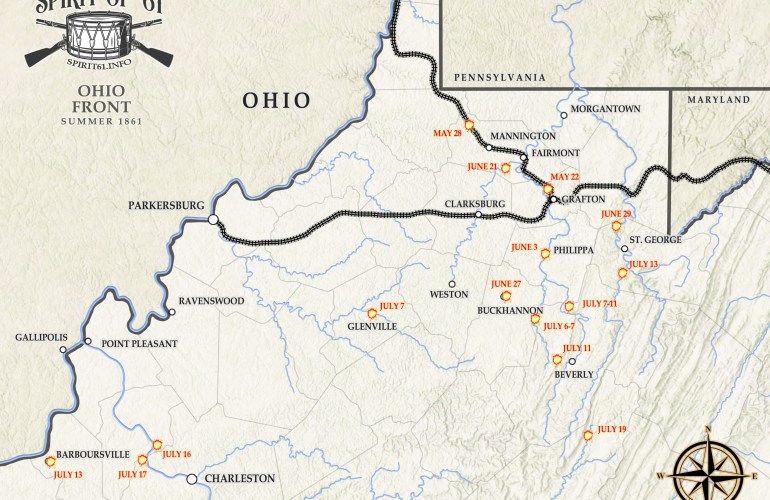
Revised Map and Overview of the Ohio Front

In 1861, Trans-Allegheny Virginia was a landscape of hills and mountains cut by rivers like the Kanawha, Little Kanawha, Tygart, Cheat, and Greenbrier. The region consisted largely of small towns and subsistence farms, with limited industry beyond coal mining, salt works, and a nascent iron trade. The first oil wells were drilled on the eve…

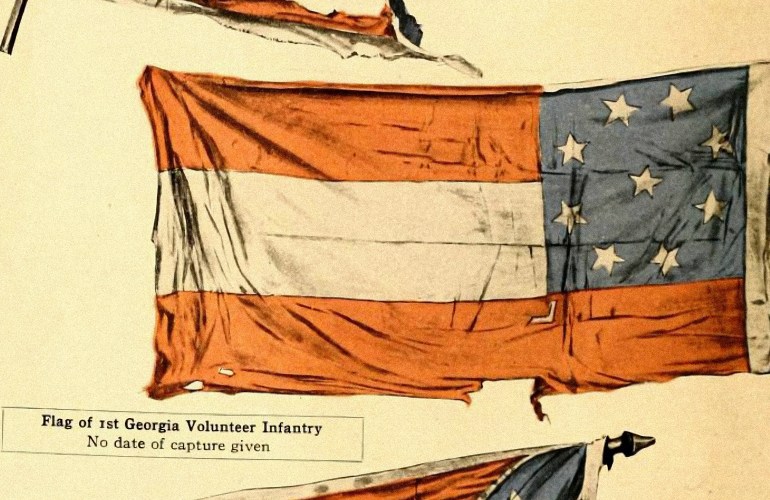
Flag of the First Georgia Regiment (Ramsey’s)

In 1905, Congress passed a resolution directing the War Department to return captured Confederate flags to their respective states. The United Confederate Veterans published a record of these flags called The Flags of the Confederate Armies, containing colorized photographs and short descriptions of the units that bore them in battle. Among them was the regimental…

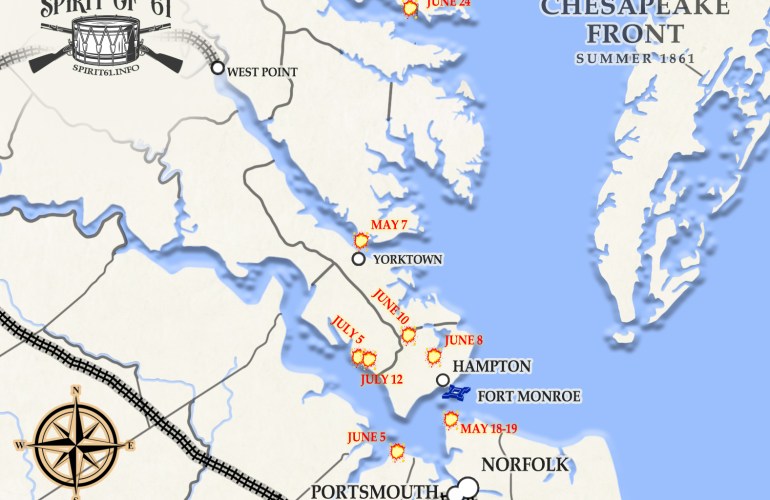
Map and Overview of the Chesapeake front

The Chesapeake Bay, a defining feature of Virginia's maritime border, stretches approximately 200 miles south from the mouth of the Susquehanna River in Maryland to Cape Henry and Cape Charles, Virginia. It is the largest estuary in the United States, providing an important avenue for domestic and international trade and commercial fishing. The 170-mile long…

Using Artificial Intelligence to Enhance Civil War Portraits

The growth of Artificial Intelligence (A.I.) in recent years has opened up an exciting new field. When used properly and responsibly, it can be of invaluable assistance to researchers and historians looking for new ways to bring the past to life. Our policy on A.I. is to solely employ it for purposes that complement, not…

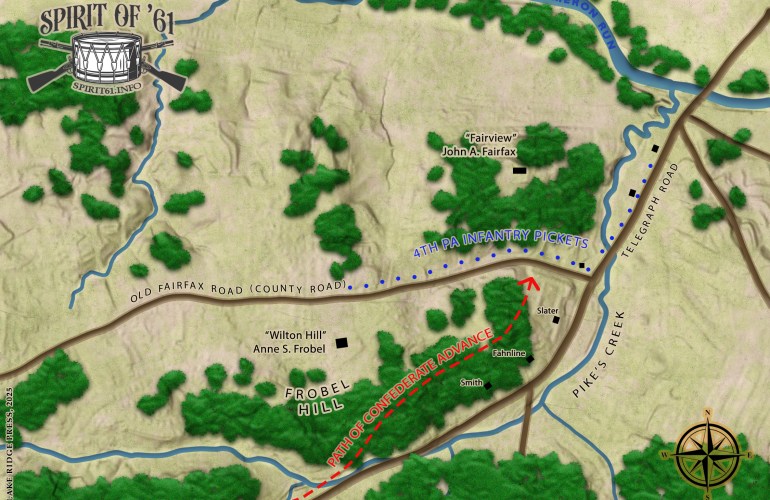
Mapping the Action at Pike’s Creek

At the end of June 1861, a small expedition of Alabama and Virginia troops scouted the southern approaches to Shuter's Hill and Alexandria, which Union forces had occupied since May. Captain Walter H. Weems’ force included 48 men from the 6th Alabama Infantry Regiment and 10 cavalrymen from the Governor’s Mounted Guard and Goochland Cavalry.…

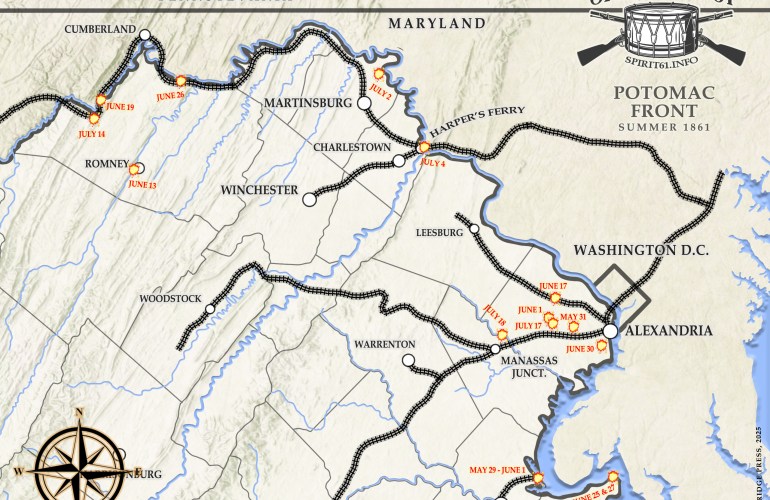
Map and Overview of the Potomac Front, May 1-July 20, 1861

In 1861, control of the Potomac River was critical to both Union and Confederate strategies, as it formed a key geographic boundary. While the Union secured the upper river and gained a foothold in northeastern Virginia, Confederate coordination between the Shenandoah and Manassas Junction led to victory at Bull Run and enabled a temporary blockade…

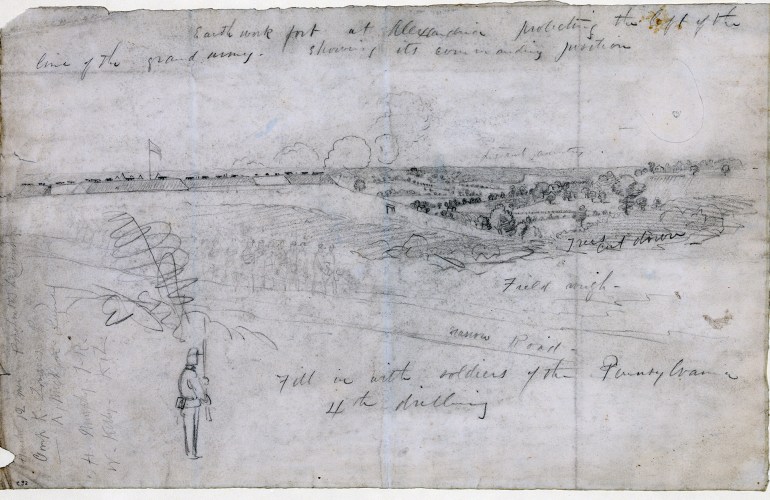
Earthwork Fort at Alexandria Protecting the Left of the Line of the Grand Army

This unfinished pencil drawing by famed artist Alfred Rudolph Waud (1828-1891) depicts Fort Ellsworth on Shuter’s (or Shooter’s) Hill, west of Alexandria in late June / early July 1861. Illustration has been enhanced to show details. Library of Congress Prints and Photographs Division. Click on the image to expand. The illustration is titled, Earthwork fort…

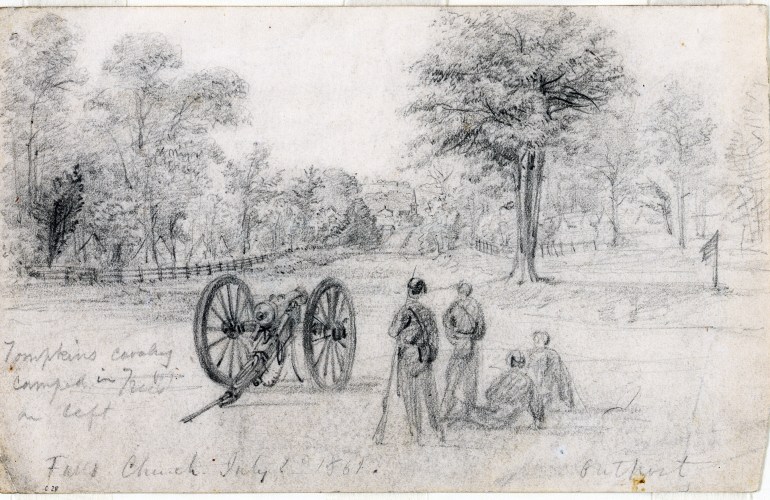
Outpost Watching Falls Church, Virginia, 1861

This pencil drawing by famed artist Alfred Rudolph Waud (1828-1891) depicts a Union artillery piece and camp of 2nd United States Cavalry, Company B, led by Lieutenant Charles H. Tompkins, near Falls Church, Virginia on July 1, 1861. Exactly one month earlier, Tompkins led a chaotic reconnaissance on Fairfax Court House, in which several of…