Photo by M.A. Kleen, Spirit61.info

Revenge at Cedar Lane

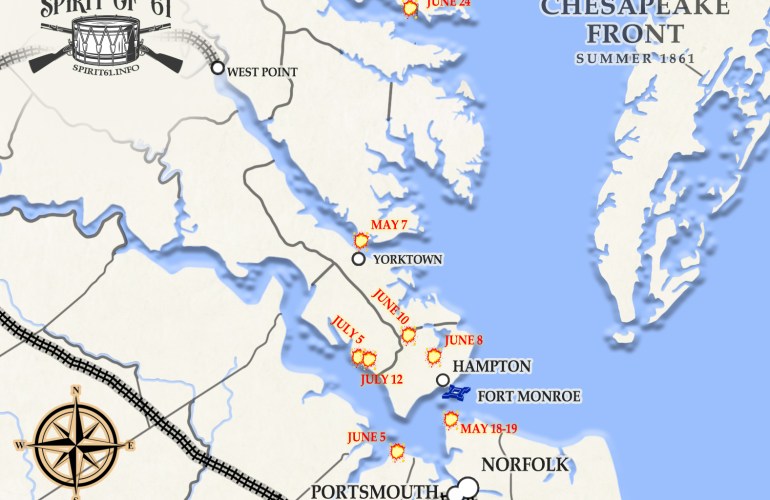
In the wake of Confederate Lt. Col. Charles Dreux's death, a Union foraging party’s bold venture beyond their orders sparked a swift and decisive skirmish with Maj. John Bell Hood's Confederate cavalry, resulting in Union losses and Confederate triumph. On July 5, 1861, a failed ambush near the farm of Nelson Smith resulted in the…

Failed Ambush at Smith’s Farm: The Death of Lt. Col. Charles Dreux

A Confederate plot to surprise Union troops ended in chaos, confusion, and the tragic death of Lt. Col. Charles Dreux, the first field-grade Confederate officer killed in the Civil War. Following the Battle of Big Bethel, Union and Confederate forces on the Virginia Peninsula settled into a stalemate behind their fortifications. Both armies occasionally sent…

Photo by M.A. Kleen, Spirit61.info

A Visit to Tyndall’s Point Park at Gloucester Point

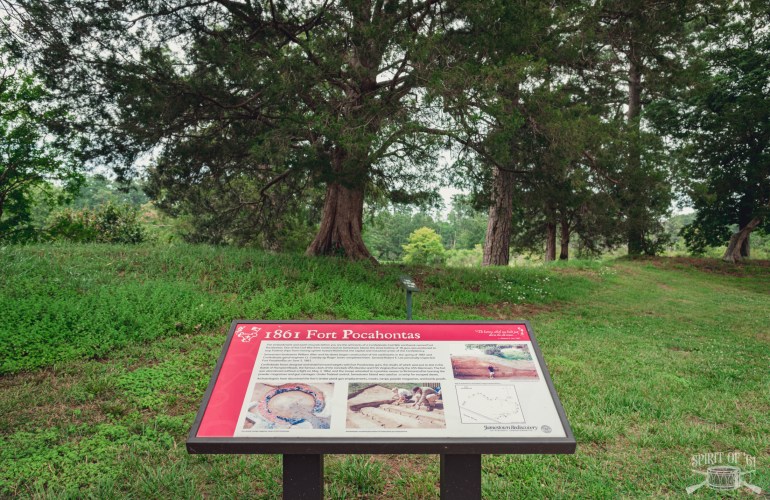
The short exchange of cannon fire at Gloucester Point is significant for being the first hostile engagement between Virginia and the U.S. government in the Civil War. Tyndall's Point Park sits tucked away behind the George Washington Memorial Highway (U.S. Route 17), its serpentine mounded earthworks winding along a trail through the woods. At one…

Illuminating the Skirmish at Smith’s Farm

Occurring on Friday, July 5, 1861, the Skirmish at Smith's Farm was significant because Louisianan Lt. Col. Charles Dreux became the first field grade Confederate officer killed during the Civil War. Yet few people, even Civil War historians, have ever heard of it. Sometimes inaccurately called Young's Mill, I refer to it as Smith's Farm…

160 Years Ago Today: The Battle of Big Bethel

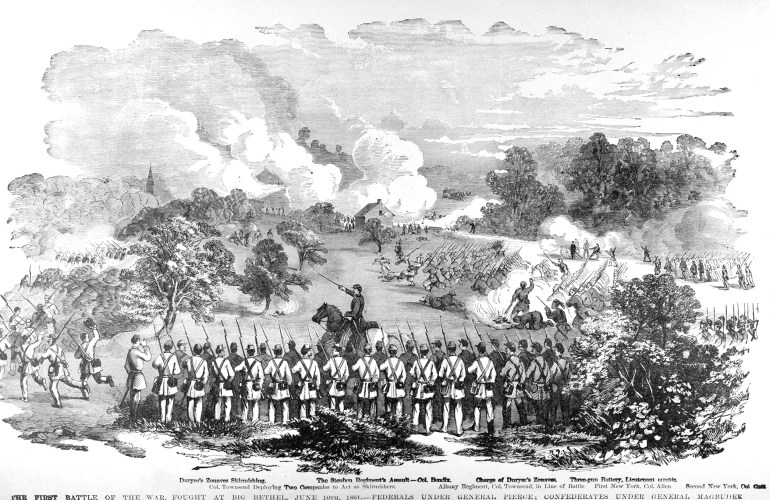
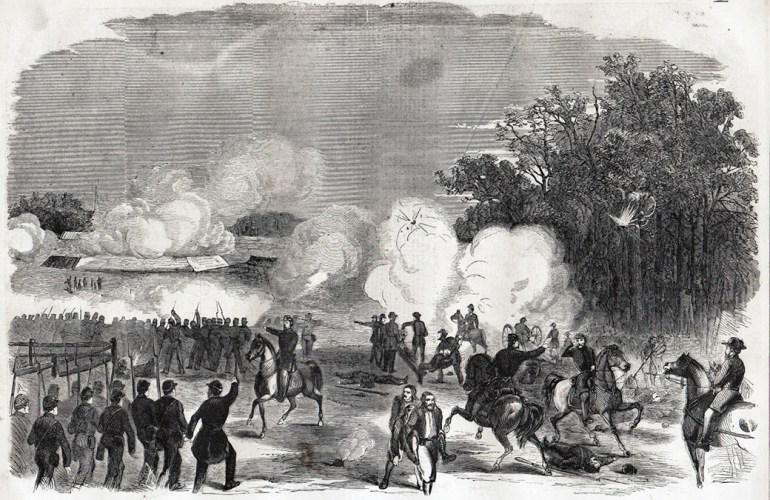
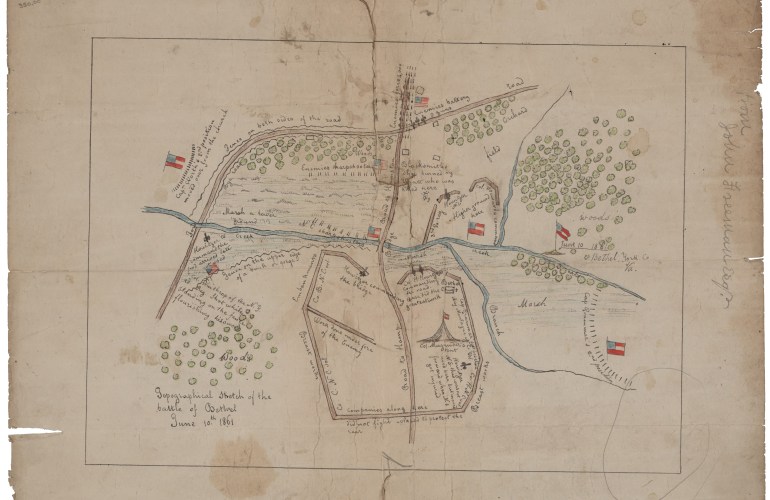
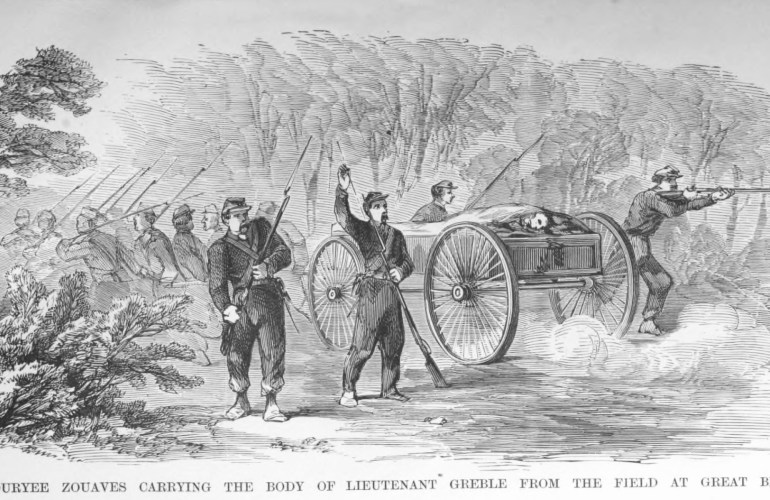
Fought on June 10, 1861, Big Bethel was among the American Civil War's first pitched battles. Since the Virginia Secession Convention passed an ordinance of secession in May, Union forces had steadily reinforced Fort Monroe, a federal fort at the tip of the Virginia Peninsula between the James and York rivers. It was the only…

160 Years Ago Today: Engagement at Pig Point

Since April 27, 1861, the U.S. Navy had been enforcing an economic and military blockade on Virginia ports, and several small fleets of U.S. Navy ships and converted civilian vessels had exchanged fire with Confederate shore batteries in the Potomac and James rivers. U.S. Maj. Gen. Benjamin Butler, commanding Fort Monroe at Old Point Comfort…

160 Years Ago Today: Engagement at Sewell’s Point

160 years ago, May 19, 1861, a popular referendum to decide whether the Commonwealth of Virginia would secede from the United States was still four days away. Never-the-less, U.S. President Abraham Lincoln had extended the naval blockade of the seven original Confederate States to include the ports of Virginia and North Carolina. On May 6th,…

160 Years Ago: Engagement at Gloucester Point

On April 17, 1861, a majority of delegates at the Virginia Secession Convention in Richmond passed an ordinance of secession, pending the results of a popular referendum to be held on May 23. Virginia Governor John Letcher appointed Col. Robert E. Lee, recently resigned from the U.S. Army, as overall commander of the Virginia Provisional…

160 Years Ago Today: Gosport Navy Yard Captured

In early spring 1861, events were at a boiling point in the United States. By February, six Southern states: South Carolina, Mississippi, Florida, Alabama, Georgia, Louisiana, and Texas, had seceded and formed the Confederate States of America. It was an act newly inaugurated President Abraham Lincoln's administration, and many others, saw as illegal and a…