Mosby Sheds Light on What Happened Outside of Martinsburg on July 11, 1861

During the American Civil War, John Singleton Mosby became a famous (or infamous) partisan leader in northern Virginia. The "Gray Ghost" vexed Union commanders and wreaked havoc behind the lines. But in the spring and summer of 1861, he was a private in the Washington Mounted Rifles, a cavalry company in J.E.B. Stuart's 1st Virginia…

Ninety Days to Nowhere: Bunker Hill and the Lost Opportunity at Winchester

In July 1861, a series of sharp skirmishes between 90-day Union volunteers and J. E. B. Stuart’s cavalry outside the village of Bunker Hill convinced Federal commanders that Joseph E. Johnston still stood between them and Winchester. That misjudgment helped shape the movements that allowed Confederate reinforcements to reach Manassas in time. At the beginning…

What happened at Bunker Hill? Detecting this early Civil War skirmish in the Shenandoah

In early July 1861, Union Major General Robert Patterson’s army (largely three-month Pennsylvania volunteers, about 18–25,000 strong) occupied Martinsburg in the Shenandoah Valley. After a minor clash at Falling Waters (Hoke’s Run) on July 2, Patterson remained inactive for nearly two weeks. Opposite him, Confederate General Joseph E. Johnston had moved his forces (approximately 10–12,000)…

Caught on the Road to Martinsburg: Private Sly and a Costly Lesson in the Shenandoah

On a hot July morning in 1861, a forage run five miles from Martinsburg turned into a brief, deadly clash that left one Union soldier dead and two in Confederate hands. Acting under pressure from the War Department in Washington, DC, after one false start and with 90-day enlistments about to expire, scant artillery, and…

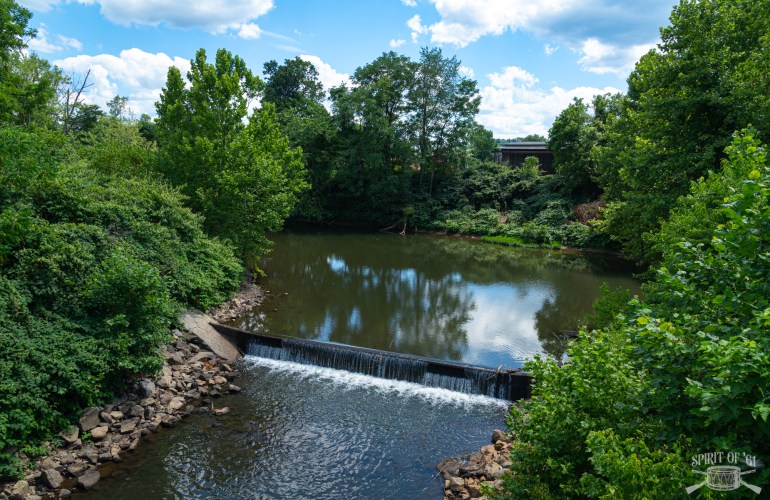
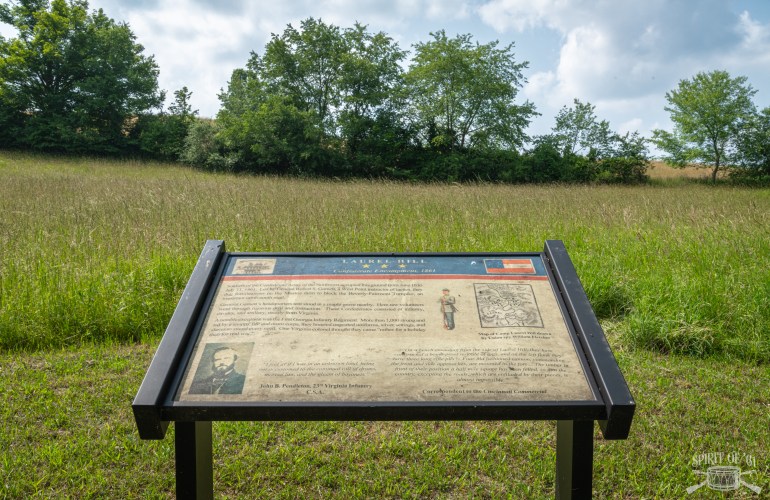
Photo by M.A. Kleen, Spirit61.info

Holding the Line at Hoke’s Run: Jackson’s First Test in the Shenandoah Valley

When a quiet morning along the Potomac suddenly broke into a sharp, unexpected fight near Falling Waters, the resulting engagement helped determine the opening moves of the Civil War in the Shenandoah Valley. The Shenandoah Valley lies between the Appalachians and Blue Ridge Mountains, its fertile soil shaped by the twin branches of the Shenandoah…

The Civil War in America, Engagement between the 71st New York and an Alabama Regiment at the Battle of Bull Run. Illustration for The Illustrated London News, 31 August 1861.

Two New Skirmishes in the Shenandoah?

Two previously unexplored skirmishes conducted during Robert Patterson's short-lived campaign in the lower Shenandoah Valley have recently come to my attention. One, near Martinsburg on July 11, 1861, resulted in the death of private Isaac Sly of the 28th New York Infantry Regiment. The other occurred near Bunker Hill on July 15, 1861. Unfortunately, information…

Battlelog 1.4 is Now Available

Welcome to version 1.4 of the Spirit of ’61 Battlelog. Developed over several months, this release includes strategic overviews for all regions and sub-regions, a detailed bibliography, and a version-control page. It is now 68 pages and over 32,000 words. Here is a detailed list of all changes in this version: Updated Action at Carter’s…

The Battle of Rich Mountain, Part 1 (1999 Reenactment Video)

https://www.youtube.com/watch?v=n_-ygaZqJ6I I recently stumbled upon this amateur video taken at a reenactment of the July 11, 1861 Battle of Rich Mountain in what is today Randolph County, West Virginia. The video features an interview with Phyllis Baxter of the Rich Mountain Battlefield Foundation and some of the reenactors, as well as footage of the skirmish.…

History Gone Wilder: The Battle of Big Bethel

Dr. Lucas Wilder is an adjunct professor at Lincoln Memorial University in Tennessee, and he runs one of the best Civil War channels on YouTube: History Gone Wilder. One highlight is his animated maps. What they lack in graphic design, they make up for in attention to detail. He posted the following video on the…

Account of the Action at Pike’s Creek in the Diary of Anne S. Frobel

When a brief Civil War skirmish near Alexandria left two men dead, its aftermath sparked outrage on both sides. A Virginia woman’s diary captured the moment in gut-wrenching detail. Before sunrise on the morning of Sunday, June 30, 1861, a brief but deadly clash unfolded just southwest of Alexandria, Virginia, where Confederate scouts encountered Union…