Just days before Virginia’s secession vote, the Engagement at Sewell’s Point on May 18–19, 1861, saw Union gunboats exchange fire with a hastily constructed Confederate battery near Fort Monroe in Hampton Roads. Though the skirmish caused little damage and few injuries, it marked one of the earliest naval engagements of the Civil War in Virginia…
articles
Captain Henry Eagle and the USS Monticello (Star)
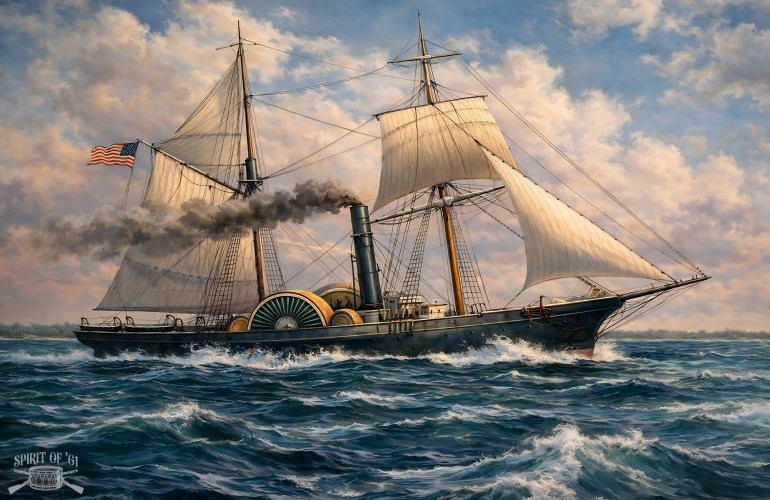
Small and lightly built with a teetotaling veteran captain, the USS Monticello (Star) became an early workhorse of the Union blockade, trading fire with Confederate batteries from the James River to Cape Hatteras. The USS Monticello was a schooner-rigged, wooden screw steamer constructed at Mystic, Connecticut, in 1859. The U.S. Navy chartered her in May…
Continue reading ➞ Captain Henry Eagle and the USS Monticello (Star)
“This is an entire mistake”: When a Misquote Harms History
Did Captain William C. Whittle really call the first shots fired in Virginia during the Civil War a “mistake”? A close reading of the primary sources shows how quoting a key document out of context creates a distorted picture of events. Let me begin with a caveat: I have been a member of the American…
Continue reading ➞ “This is an entire mistake”: When a Misquote Harms History
Gloucester Point and the First Shots Fired by Virginia in the Civil War
Before Virginia voters cast their ballots on secession, cannon fire echoed across the York River. In May 1861, at Gloucester Point, Virginia militia fired on the USS Yankee, marking the first shots of the Civil War in Virginia and an almost-forgotten opening clash between the state and the U.S. government. On April 17, 1861, the…
Continue reading ➞ Gloucester Point and the First Shots Fired by Virginia in the Civil War
The Role of USS Yankee in Early Civil War Naval Operations
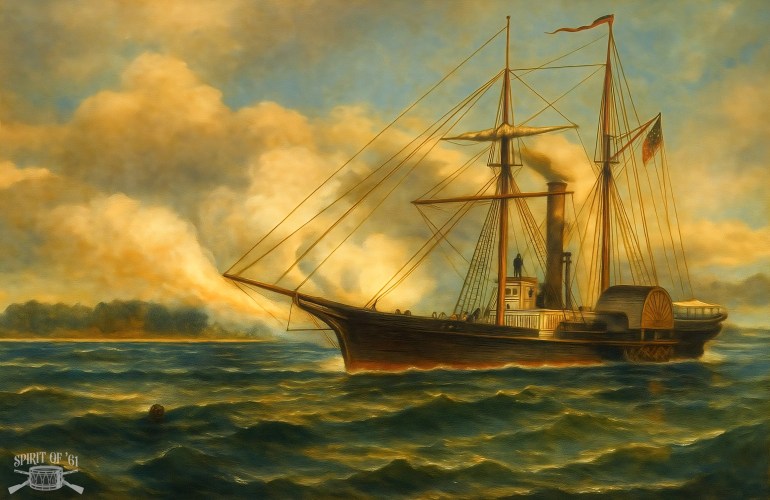
A small, lightly armed tugboat doesn’t sound like the kind of vessel that makes history, until it does. In the Civil War’s opening weeks, USS Yankee, under Lt. Thomas O. Selfridge, Jr., became the Navy’s eyes on the Chesapeake, scouting hostile waterways and snapping up prizes. Notable for exchanging the first shots of the Civil…
Continue reading ➞ The Role of USS Yankee in Early Civil War Naval Operations
Ninety Days to Nowhere: Bunker Hill and the Lost Opportunity at Winchester
In July 1861, a series of sharp skirmishes between 90-day Union volunteers and J. E. B. Stuart’s cavalry outside the village of Bunker Hill convinced Federal commanders that Joseph E. Johnston still stood between them and Winchester. That misjudgment helped shape the movements that allowed Confederate reinforcements to reach Manassas in time. At the beginning…
Continue reading ➞ Ninety Days to Nowhere: Bunker Hill and the Lost Opportunity at Winchester
Caught on the Road to Martinsburg: Private Sly and a Costly Lesson in the Shenandoah
On a hot July morning in 1861, a forage run five miles from Martinsburg turned into a brief, deadly clash that left one Union soldier dead and two in Confederate hands. Acting under pressure from the War Department in Washington, DC, after one false start and with 90-day enlistments about to expire, scant artillery, and…
Holding the Line at Hoke’s Run: Jackson’s First Test in the Shenandoah Valley
When a quiet morning along the Potomac suddenly broke into a sharp, unexpected fight near Falling Waters, the resulting engagement helped determine the opening moves of the Civil War in the Shenandoah Valley. The Shenandoah Valley lies between the Appalachians and Blue Ridge Mountains, its fertile soil shaped by the twin branches of the Shenandoah…
Continue reading ➞ Holding the Line at Hoke’s Run: Jackson’s First Test in the Shenandoah Valley
A Tale of Two Governors
During the American Civil War, Virginians found themselves divided not only by ideology and geography, but by government itself. From 1861 to 1864, two men, John Letcher and Francis Pierpont, each claimed to be the legitimate governor of Virginia. One led the Confederate state government from Richmond, while the other presided over the Unionist Reorganized…
A Richmond Unionist Witnesses Secession
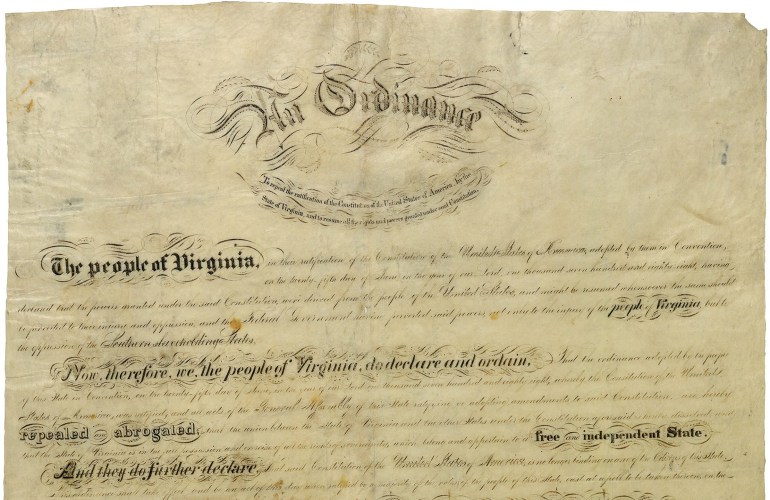
As Richmond erupted in celebration following Virginia’s vote to secede, one woman watched in silence--troubled, not triumphant. Elizabeth Van Lew's eyewitness account offers a rare, critical perspective on the fevered early days of the Confederacy. On Wednesday, April 17, 1861, at 10:00 a.m., 143 delegates from across the Commonwealth of Virginia gathered in the neoclassical…