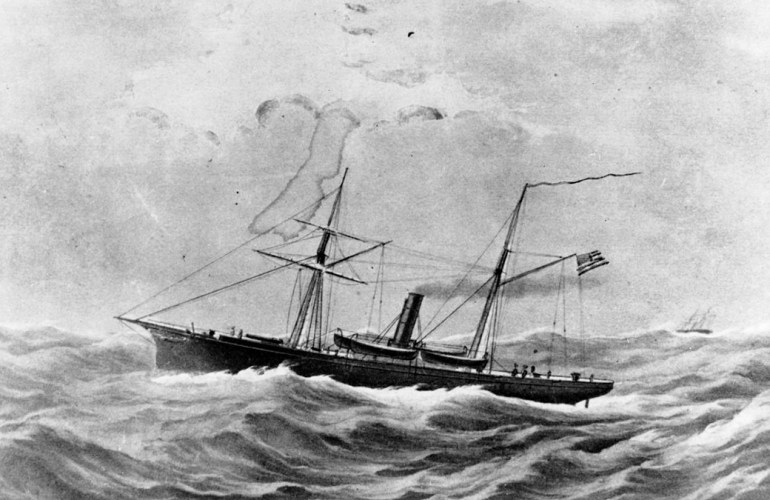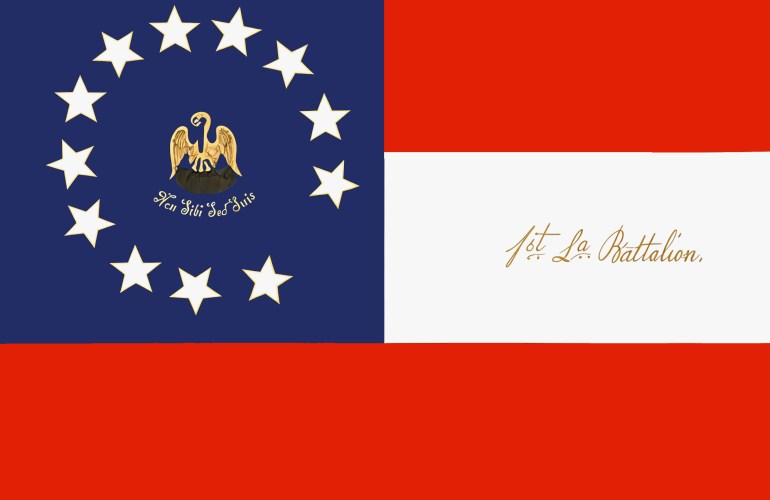
Good morning fellow Civil War buffs! Something new is coming to Spirit of '61: Artifacts. These will be photos and scans of objects from 1861. Some will already be available online, such as letters and documents from the National Archives, but others will be items that I acquire specifically for this collection. My first acquisition…
Blog
Virginia in 1861
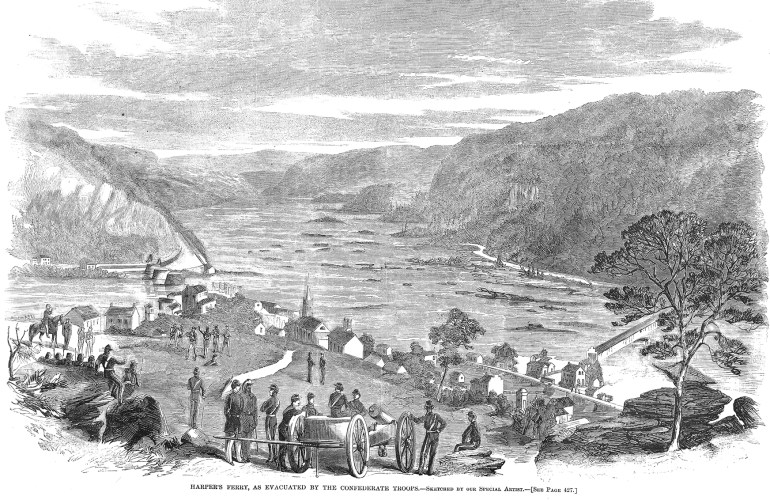
The Old Dominion played a principal role in America's independence from England and had a reputation as the "birthplace of presidents." As 1861 dawned, however, would it turn its back on the country it helped create? At the dawn of 1861, war clouds gathered over the United States. Before president-elect Abraham Lincoln was inaugurated on…
Unraveling the Action at Glover’s Gap
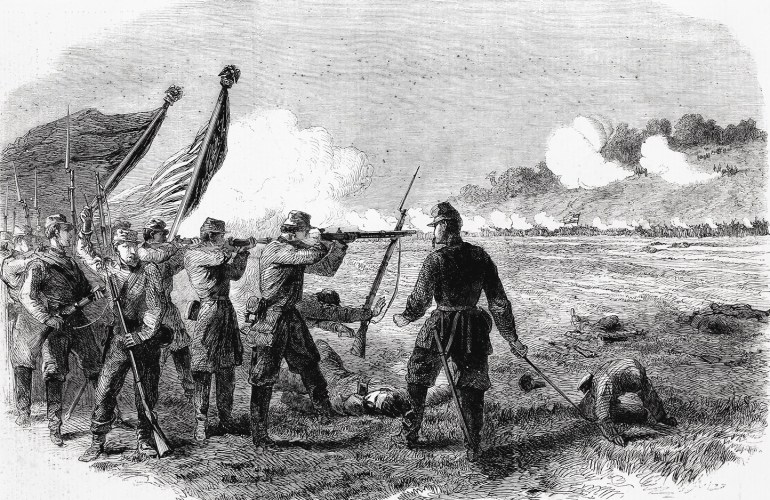
Was Stephen Roberts the first Confederate officer killed during the Civil War? By the time Virginia voters ratified the decision of its secession convention on May 23, 1861, Richmond was named the Confederate capital and militia units were mobilizing. As commander of all Virginia forces, Robert E. Lee directed Col. George A. Porterfield to proceed…
Map of Virginia’s Military Fronts, Spring-Summer 1861
Maneuvers and battles in Virginia prior to the Battle of First Manassas, July 21, 1861, were centered around control of major waterways. Virginia had three main waterways that defined its antebellum borders: the Ohio, Potomac, and Chesapeake rivers. While the men who fought in the Civil War wouldn’t have recognized these as “fronts” or used…
Continue reading ➞ Map of Virginia’s Military Fronts, Spring-Summer 1861
Action, Skirmish, Engagement or Battle – What Does it All Mean?
You may have noticed that clashes between North and South featured on this website aren't all referred to as "battles". There's the Action at Philippi, Engagement at Gloucester Point, and Battle of Blackburn’s Ford to name a few. Others are called skirmishes. What do these terms mean? Though somewhat arbitrary, these terms do have a…
Continue reading ➞ Action, Skirmish, Engagement or Battle – What Does it All Mean?
Map Added for Ohio Front
Maneuvers and battles in Virginia prior to the Battle of First Manassas were centered around control of major waterways. Virginia had three main waterways that defined its antebellum borders: the Ohio, Potomac, and Chesapeake rivers. While the men who fought in the Civil War wouldn't have recognized these as "fronts" or used that terminology, I…
What Confederate Unit was Engaged in the Skirmish at Glenville?
The Skirmish at Glenville was fought on July 7-8, 1861 in present-day Gilmer County, West Virginia. The dramatic episode proved to be a sideshow in the larger campaign of Union Maj. Gen. George B. McClellan to wrest control of Northwestern Virginia from the Confederacy. It's often forgotten against the backdrop of the Battle of Rich…
Continue reading ➞ What Confederate Unit was Engaged in the Skirmish at Glenville?
First Blood at Fetterman
Largely forgotten today, Thornsbury Bailey Brown was among the first Union casualties of the Civil War.
The Pocahontas Rescues
This unit's colorful commander was known for giving bellicose speeches, but his courage was of the liquid variety. The Pocahontas Rescues was a Confederate company raised in May 1861 in what is today Pocahontas County, West Virginia. “Count” Daniel A. Stofer (1821-1891), a boisterous attorney, organized the unit. Fifty-seven men mustered in at Huntersville, a…
Resignation Letter of Robert S. Garnett
Robert Seldon Garnett (1819–1861) was a Mexican War veteran and regular Army officer from Virginia. He graduated from the United States Military Academy at West Point in 1841 and later served as an assistant instructor of infantry tactics. It's rumored that one of his students was a young George B. McClellan, who attended West Point…