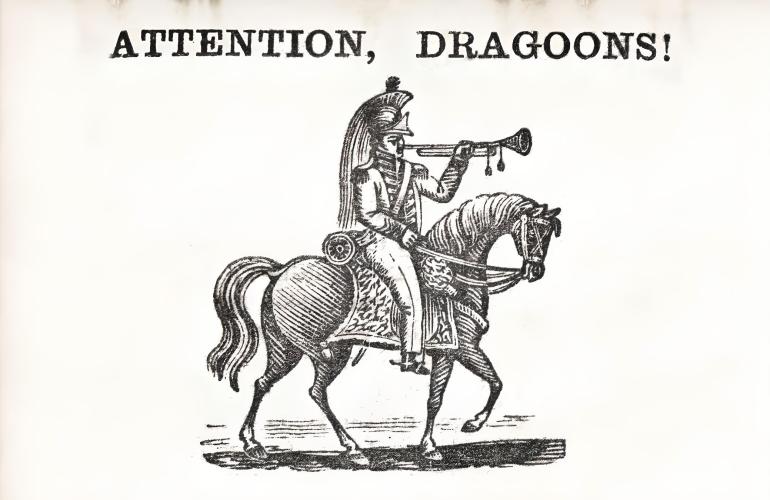
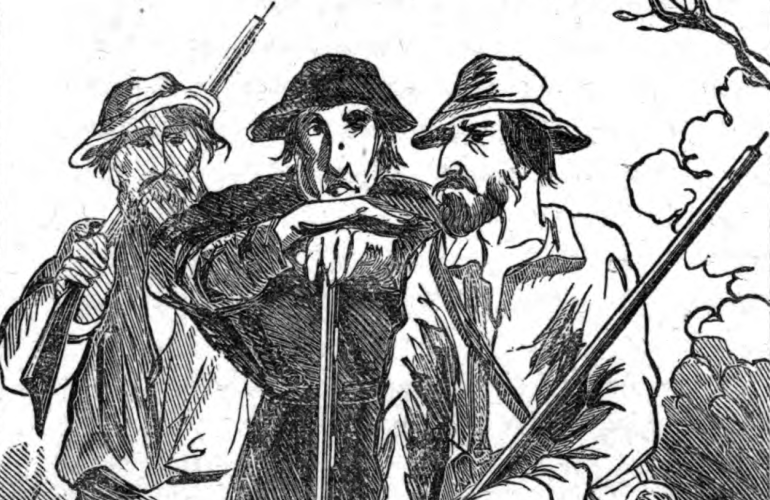
In January 1862, the Commonwealth of Virginia's Paymaster General’s Office published a tally of all Virginia volunteer companies prior to July 1, 1861. It tabulated 402 infantry companies, 78 cavalry companies, and 55 artillery batteries. This did not include the Wise Legion and Floyd’s Brigade, which were commissioned by the Confederate government. The purpose of…
Author: Michael Kleen
Did Virginia Submit a list of Demands to Remain in the Union?
In dispelling a myth about the origin of the Civil War, this author created one of his own. In 2017, the American Civil War Museum in Richmond published an article in its Myths & Misunderstandings series that contained erroneous information about the Commonwealth of Virginia's stance toward the Federal Government prior to its secession. In…
Continue reading ➞ Did Virginia Submit a list of Demands to Remain in the Union?
Illustration of James H. Ward
Connecticut-born James Harmon Ward (1806-1861) was a dyed in the wool Yankee steeped in his region's maritime tradition. He graduated from the American Literary Scientific and Military Academy at Norwich, Vermont in 1823 and entered the U.S. Navy as a midshipman. His varied naval career included interdicting illegal slave traders off the African coast and…
Resignation Letter of Joseph E. Johnston
Joseph Eggleston Johnston (1807-1891) grew up in Abingdon, Virginia, son of Judge Peter Johnston, Jr. He graduated from the U.S. Military Academy at West Point in 1929, in the same class as Robert E. Lee. He left the Army for a brief period, then re-joined as a first lieutenant and served with distinction in the…
Illustration of Philip St. George Cocke
Philip St. George Cocke (1809–1861) was born along the James River in what is today Fluvanna County, Virginia to John Hartwell and Ann Blaws Barraud Cocke. As a member of Virginia's planter class, he was educated at the University of Virginia and attended the U.S. Military Academy at West Point, graduating in 1834. He briefly…
The Second Rockbridge Dragoons
In mid-April 1861, as federal troops evacuated and set fire to Harpers Ferry Arsenal, 60 men assembled in Brownsburg, Virginia to form the Second Rockbridge Dragoons. They were led by 42-year-old Captain John Rice McNutt and 1st Lieutenant Robert McChesney. Though a small company, they would go on to play a role in one of…
Introducing: Artifacts
Good morning fellow Civil War buffs! Something new is coming to Spirit of '61: Artifacts. These will be photos and scans of objects from 1861. Some will already be available online, such as letters and documents from the National Archives, but others will be items that I acquire specifically for this collection. My first acquisition…
Virginia in 1861
The Old Dominion played a principal role in America's independence from England and had a reputation as the "birthplace of presidents." As 1861 dawned, however, would it turn its back on the country it helped create? At the dawn of 1861, war clouds gathered over the United States. Before president-elect Abraham Lincoln was inaugurated on…
Unraveling the Action at Glover’s Gap
Was Stephen Roberts the first Confederate officer killed during the Civil War? By the time Virginia voters ratified the decision of its secession convention on May 23, 1861, Richmond was named the Confederate capital and militia units were mobilizing. As commander of all Virginia forces, Robert E. Lee directed Col. George A. Porterfield to proceed…
Map of Virginia’s Military Fronts, Spring-Summer 1861
Maneuvers and battles in Virginia prior to the Battle of First Manassas, July 21, 1861, were centered around control of major waterways. Virginia had three main waterways that defined its antebellum borders: the Ohio, Potomac, and Chesapeake rivers. While the men who fought in the Civil War wouldn’t have recognized these as “fronts” or used…
Continue reading ➞ Map of Virginia’s Military Fronts, Spring-Summer 1861