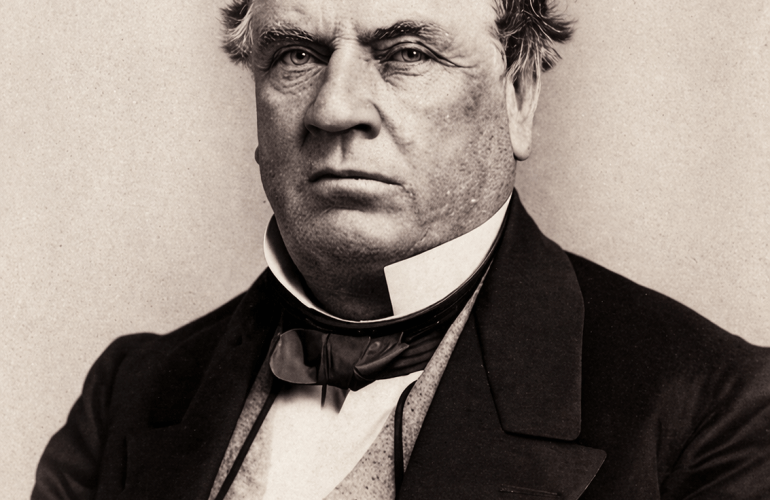
On Sunday, April 7, 1861, former congressman and outspoken Virginia unionist John Minor Botts met with President Abraham Lincoln in Washington, D.C., to discuss how to keep Virginia in the Union. Botts was a private citizen, not even a delegate to the Richmond Convention, and his account provides the only record of the meeting.
Botts recalled that Lincoln quietly floated an extraordinary compromise through Virginia’s unionist channels. With the state convention still in session and a clear majority opposed to secession, Lincoln offered to halt the relief expedition sailing from New York and assume responsibility for evacuating Fort Sumter if Union men in the convention would adjourn without passing an ordinance of secession. The proposal, allegedly conveyed to Delegate John B. Baldwin, was brusquely rejected.
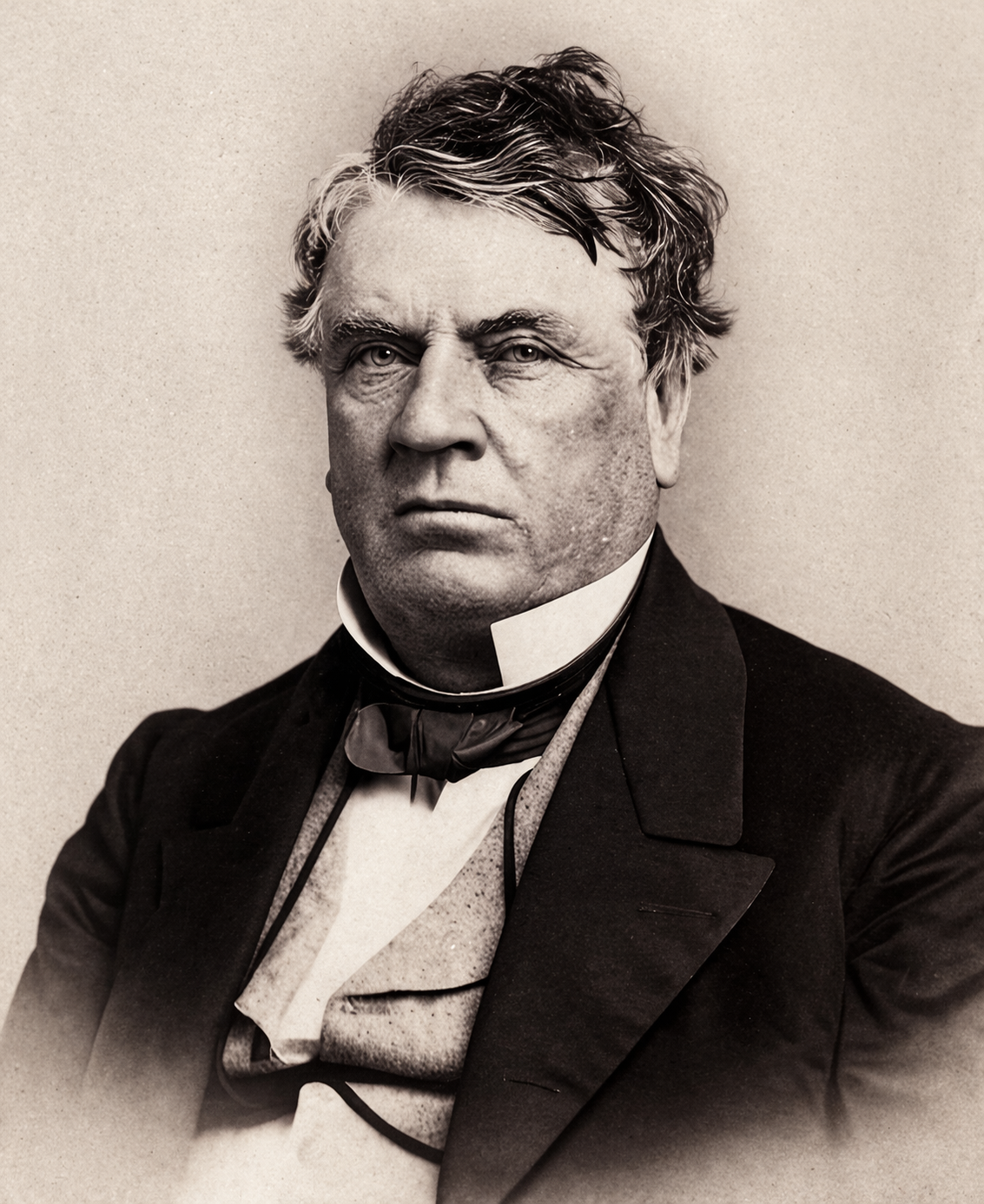
According to Botts, when he met privately with Lincoln days later, the president expressed frustration at Baldwin’s response, clarified that he expected only a temporary adjournment, and told Botts it was already too late, the fleet having sailed. Lincoln went on to describe himself as an old Henry Clay Whig seeking to preserve the Union on moderate principles, insisting he wanted peace above all. He explained that Sumter’s garrison was short of provisions, that he had sent a vessel carrying “bread” with notice to Governor Pickens, and that while the ship was unarmed, a fleet accompanied it for protection if fired upon.
Botts believed Lincoln sincere and later argued that the episode revealed just how far he had been willing to go to avoid war, even to the point of surrendering a federal fort, a step Lincoln likely kept quiet in the North because of its political risk. Back in Richmond, Botts shared the account with fellow unionists, including John F. Lewis, who initially doubted it but agreed such a proposal would have been welcomed by a majority of the convention. When Lewis raised the matter with Baldwin (again, according to Botts), Lincoln’s version was confirmed, reinforcing Botts’ view that a fleeting but genuine chance for compromise had been presented and lost.
The following is an excerpt of Botts’ account, published in his memoir The Great Rebellion: Its Secret History, Rise, Progress, and Disastrous Failure (1866). It has been broken it up into smaller paragraphs for ease of reading.
“This afternoon,” said [Lincoln], “a fleet is to sail from the harbor of New York for Charleston; your Convention has been in session for nearly two months, and you have done nothing but hold and shake the rod over my head. You have just taken a vote, by which it appears you have a majority of two to one against secession. Now, so great is my desire to preserve the peace of the country, and to save the Border States to the Union, that if you gentlemen of the Union party will adjourn without passing an ordinance of secession, I will telegraph at once to New York, arrest the sailing of the fleet, and take the responsibility of evacuating Fort Sumter.” The proposition was declined.
On the following Sunday night I was with Mr. Lincoln, and the greater part of the time alone, when Mr. Lincoln related the above facts to me. I inquired, “Well, Mr. Lincoln, what reply did Mr. Baldwin make?”
“Oh!” said he, throwing up his hands, “he wouldn’t listen to it at all; scarcely treated me with civility; asked me what I meant by an adjournment; was it an adjournment ‘sine die?’”
“Of course,” said Mr. Lincoln, “I don’t want you to adjourn, and, after I have evacuated the fort, meet again to adopt an ordinance of secession.”
I then said, “Mr. Lincoln, will you authorize me to make that proposition? for I will start tomorrow morning, and have a meeting of the Union men to-morrow night, who, I have no doubt, will gladly accept it.” To which he replied, “It is too late now; the fleet sailed on Friday evening.”
He then said to me, “Botts, I have always been an Old-line Henry-Clay Whig, and if your Southern people will let me alone, I will administer this government as nearly upon the principles that he would have administered it as it is possible for one man to follow in the path of another”—all of which I believed then, and believe now he would have done.
He said, moreover, “We have seventy odd men in Fort Sumter, who are short of provisions. I can not and will not let them suffer for food: they have so much beef, so much pork, potatoes, etc., but their bread will not last longer than next Wednesday, and I have sent a special messenger to Governor Pickens to say that I have dispatched a steamer loaded with ‘bread’”—that was his expression, though I suppose he meant provisions generally—“and that if he fired upon that vessel he would fire upon an unarmed vessel, with bread only for the troops; and that if he would supply them, or let Major Anderson procure his marketing in Charleston, I would stop the vessel; but that I had also sent a fleet along with this steamer to protect her if she was fired into. What do I want with war?” said he. “I am no war man; I want peace more than any man in this country, and will make greater sacrifices to preserve it than any other man in the nation.”
This is a part of the history of this war that is not generally known; I think it ought to be made public, and therefore I give it. I have often wondered why Mr. Lincoln had not himself, in his own justification, made it known to the country. I suppose it was because he felt that he had assumed a heavy responsibility in thus proposing to surrender a fort of the United States, and did not want it known in the North; but now a knowledge of the fact that he had gone so far, and was ready to make such a sacrifice of himself to preserve the peace of the nation without avail, would greatly strengthen his position in the North as well as in the South.
When I returned to Richmond I mentioned this conversation to several of my friends in the Convention, among them John F. Lewis, who not only expressed great surprise, but doubt of the reality of any such proposition having been made to the gentleman in question, and expressed the confident opinion that he could not have rejected it if made, and it was thought such a proposition would have been most gladly welcomed by the majority of the Convention. Mr. Lewis then asked me if he might mention it to the gentleman to whom the proposition was submitted. I told him certainly; that I preferred he should, as, if his doubts were well-founded, I should like to know it. He did mention it, and Mr. Lincoln’s representation was confirmed by Mr. Baldwin both to Mr. Lewis and myself.
The Great Rebellion, pg. 195-197
Baldwin denied there was any offer to evacuate or surrender of Fort Sumter in exchange for Virginia’s loyalty, saying he received “No pledge; no undertaking; no offer; no promise of any sort … I am as clear in my recollection as it is possible under the circumstances that he made no such suggestion.”
In his 1866 testimony before the Congressional Joint Committee on Reconstruction, Baldwin correctly noted that Lincoln could not have known the Virginia Convention had voted to remain in the Union, as that vote occurred after their April 4 meeting.
Regardless, scholars such as Lincoln biographer Carl Sandburg have taken Botts’ recollection at face value, treating it as an accurate account of events. As for Botts’ meeting with Lincoln, it ended inconclusively, with Lincoln telling him it was “too late” to recall the Fort Sumter relief expedition. Botts returned home empty-handed.
Discussion
Lincoln describes himself as following the principles of Henry Clay. What does that tell us about his political philosophy and approach to the crisis?
Why might Lincoln have been willing to evacuate Fort Sumter? What risks, political or otherwise, did that decision carry for him?
Imagine you are a Unionist delegate in the Virginia Convention. Would you have accepted Lincoln’s proposal? Why or why not?
Baldwin denied that Lincoln ever made such an offer. Why might Baldwin and Botts remember the same events differently? What does this tell us about historical evidence?
How reliable is Botts as a source? What factors should historians consider when evaluating his account, especially since it was written years after the events?
Sources
Baldwin, John Brown, et al. Interview Between President Lincoln and Col. John B. Baldwin, April 4th, 1861: Statements & Evidence. Staunton: “Spectator” Job Office, 1866.
Botts, John Minor. The Great Rebellion: Its Secret History, Rise, Progress, and Disastrous Failure. New York: Harper & Brothers, 1866.
Sandburg, Carl. Abraham Lincoln: The War Years, Vol. 1. New York: Harcourt, Brace & Company, 1939.

 Spirit of '61