Events in northwestern Virginia in May, June, and July 1861 unfolded rapidly and were often complex, involving many moving parts, both military and political. Without a clear sense of how these developments related to one another, it is easy to become confused. To help alleviate that confusion and place everything in proper context, I have created the following timeline showing when and where the principal events occurred.
This timeline is not meant to be comprehensive. Whenever possible, I have cross-checked these dates against both primary and secondary sources to ensure accuracy. However, if you spot any mistakes, please leave a comment and include an accompanying source.
Friday, May 3
U.S. General Orders No. 14 creates the Department of the Ohio, encompasing Illinois, Indiana, and Ohio, commanded by Maj. Gen. George B. McClellan.
Saturday, May 4
Col. George A. Porterfield is assigned to organize and command the secessionist volunteers in northwestern Virginia.
Monday, May 13
Pro-Union delegates from 27 western Virginia counties open a convention at Washington Hall in Wheeling, Virginia to debate a response to the secession crisis.
Tuesday, May 14
Porterfield arrives in Grafton, Virginia, but finds no volunteers. He moves on to Fetterman, where secessionists have gathered.
Wednesday, May 22
Two members of the unionist Grafton Guards confront secessionist pickets at a bridge over the Tygart Valley River near Fetterman, Virginia. Thornsbury Bailey Brown is shot and killed.
Thursday, May 23
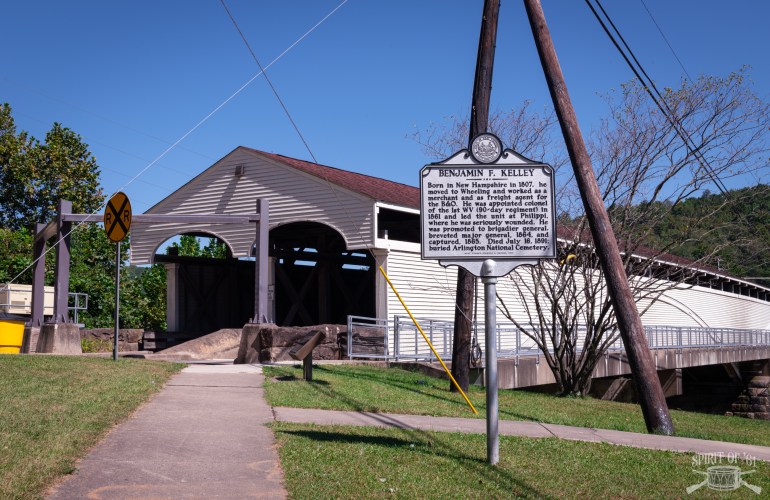
Virginia voters overwhelmingly ratify the Ordinance of Secession, 125,950 to 20,373, with the anti-secession vote concentrated in western Virginia. The 1st Virginia Infantry Regiment (U.S.) musters into federal service in Wheeling, with benjamin F. Kelley as colonel.
Saturday, May 25
Secessionists in northwest Virginia destroy railroad bridges along the B&O Railroad and Northwestern Virginia Railroad.
Sunday, May 26
Department of Ohio commander Maj. Gen. George B. McClellan orders the 1st Virginia Infantry Regiment (U.S.), 14th Ohio Infantry Regiment, and 16th Ohio Infantry Regiment across the Ohio River into Virginia.
Tuesday, May 28
A Union patrol surprises an irregular secessionist band at Glover’s Gap along the Baltimore & Ohio Railroad, killing 65-year-old Stephen Roberts.
Thursday, May 30
Union troops occupy Grafton in northwestern Virginia unopposed.
Monday, June 3
Union Brig. Gen. Thomas A. Morris routes Confederate forces commanded by Col. George A. Porterfield in Philippi in northwestern Virginia.
Friday, June 7
Col. Robert S. Garnett is promoted to brigadier general and given command of Confederate troops in northwestern Virginia.
Tuesday, June 11
The Second Wheeling Convention opens in Wheeling with 100 delegates representing 34 counties to form a unionist Restored Government of Virginia.
Friday, June 14
Brig. Gen. Robert S. Garnett reaches Huttonsville along the Staunton-Parkersburg Turnpike and Tygart Valley River.
Thursday, June 20
The Second Wheeling Convention unanimously elects Francis H. Pierpont as Governor of the Restored Government of Virginia, arguing that Governor John Letcher and other state officials had forfeited their offices by embracing secession.
Friday, June 21
Men from the 20th Ohio Volunteer Infantry surround the house of secessionist Peter Righter at the Marion/Harrison County line and a firefight erupts.
Sunday, June 23
Maj. Gen. George McClellan arrives in Grafton to take command of his army in the field. Previously, he had directed the campaign from Cincinnati.
Thursday, June 27
A foraging expedition to Buckhannon led by Lt. Col. Jonathan McGee Heck of the 25th Virginia Infantry results in a sharp skirmish with unionist Home Guard in which no one is hurt.
Saturday, June 29
Counties under Union control hold elections for new delegates to the Restored Government. Union forces ambush a Confederate cavalry patrol along the Cheat River, killing Lt. Robert McChesney in present-day Tucker County, West Virginia.
Sunday, June 30
The 7th Ohio Infantry enters Weston, Virginia and seizes gold earmarked for construction of the Trans-Allegheny Lunatic Asylum to prevent it from falling into Confederate hands. It is used to help fund the Restored Government.
Saturday, July 6
Union Brig. Gen. Newton Schleich orders a reconnaissance of Middle Fork Bridge east of Buckhannon on the road to Rich Mountain, resulting in a small but bloody skirmish.
Sunday, July 7
A Confederate scouting party exchanges fire with George McClellan’s advancing vanguard at Middle Fork Bridge. Thomas A. Morris’ Brigade reaches Yeager’s farm in front of Robert S. Garnett’s camp at Laurel Hill and skirmishing ensues.
Thursday, July 11
Union forces commanded by Brig. Gen. William Rosecrans flank and surprise Confederates at the Battle of Rich Mountain.
Saturday, July 13
Brig. Gen. Robert S. Garnett is killed directing his men across Corrick’s Ford on Shavers Fork of the Cheat River.
Sunday, July 14
The 14th Indiana Infantry Regiment occupies the summit of Cheat Mountain and will began constructing Cheat Summit Fort (also known as Fort Milroy) a few days later.
Friday, July 19
Confederate guerillas ambush a patrol from Burdsall’s Dragoons along the Greenbrier River in Pocahontas County, inflicting heavy casualties.
Monday, July 22
George McClellan is ordered to Washington, DC to take command of the demoralized Union army following the defeat at Bull Run. Brig. Gen. William S. Rosecrans assumes command of Union troops in northwest Virginia on July 23.

 Spirit of '61