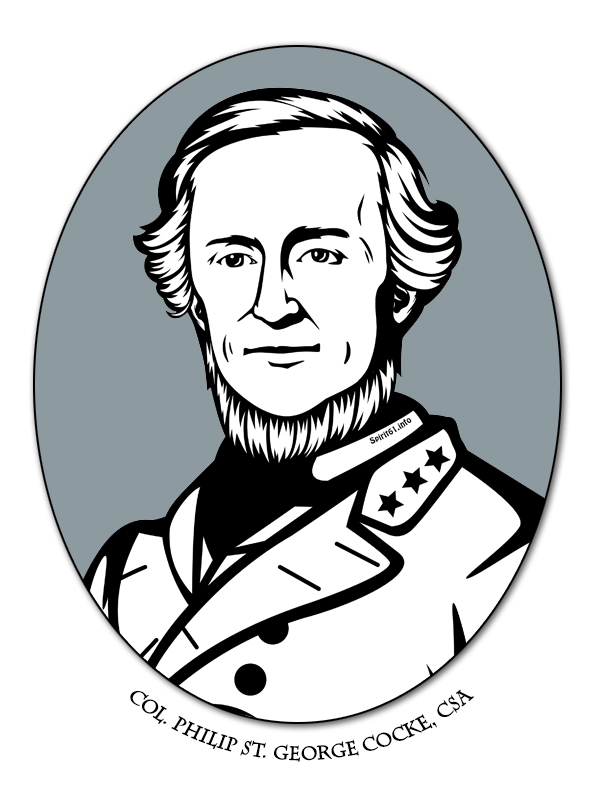
Philip St. George Cocke (1809–1861) was born along the James River in what is today Fluvanna County, Virginia to John Hartwell and Ann Blaws Barraud Cocke. As a member of Virginia’s planter class, he was educated at the University of Virginia and attended the U.S. Military Academy at West Point, graduating in 1834. He briefly served as a second lieutenant of artillery before resigning to marry and pursue the life of a plantation owner. His home was at Belmead in Powhatan County but he owned more than 27,000 acres in two states, worked by over 610 slaves.
When the Civil War broke out, he was among the first to offer his services to the Virginia government. Governor John Letcher commissioned him a brigadier general in the Virginia Provisional Army and sent him to organize and command the Alexandria Line, the state’s first line of defense if invaded from the north. Despite his entreaties to the contrary, state militia under his overall command fled Alexandria in the face of Union troops. He then established his headquarters at Manassas Junction and is credited with coming up with the strategy to use the Manassas Gap Railroad to mutually support Confederate forces in northern Virginia.
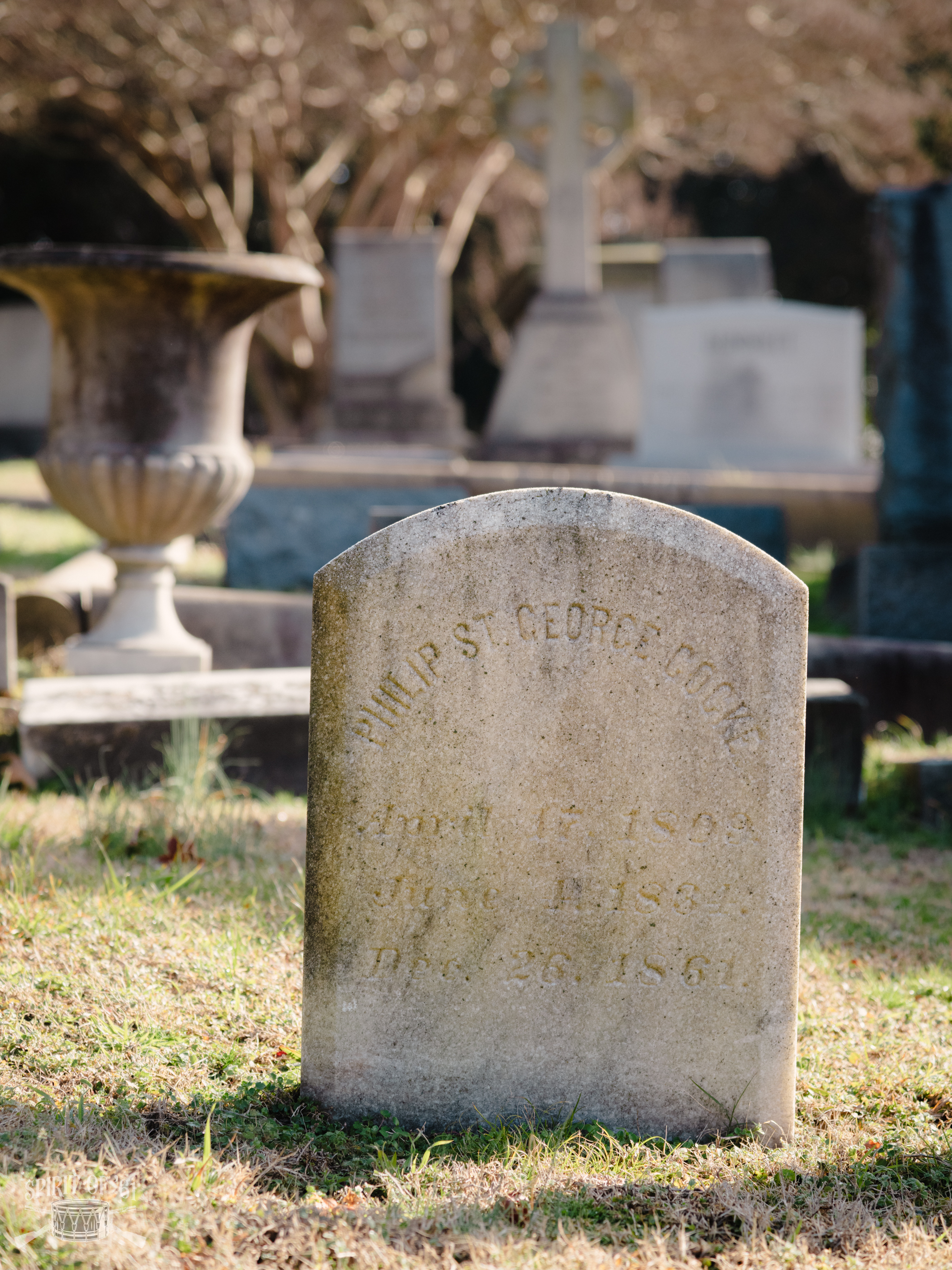
Cocke felt slighted when he was only offered the rank of colonel in the Confederate Army. Though he performed well as a field commander at the First Battle of Manassas, and later promoted to brigadier general, he suffered a psychological break. The 52-year-old returned to Belmead for Christmas and took his own life on December 26, 1861. He is buried in Hollywood Cemetery in Richmond, Virginia, largely forgotten in the annals of Civil War history.
Reports and Letters
Updated: 18 March 2025
Created: 29 January 2024
 Spirit of '61