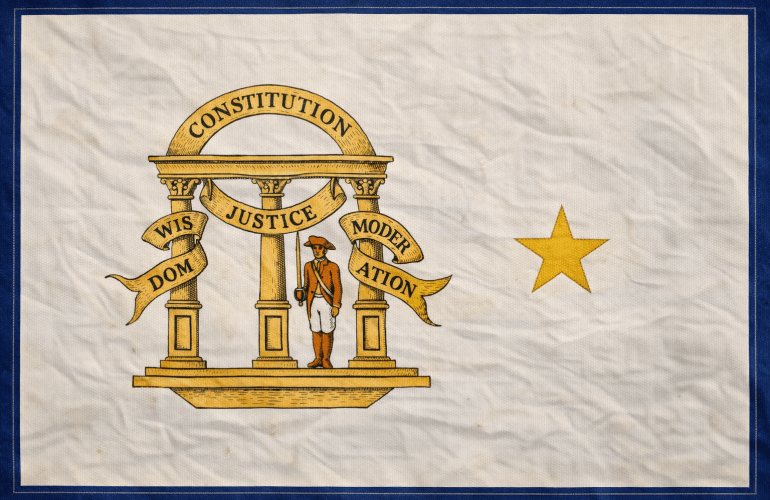
Another eyewitness account of the Engagement at Sewell’s Point appeared in the book The History of Norfolk, Virginia by Harrison W. Burton (1840-1902), a journalist who served in the 1st Virginia Infantry and Otey's Battery during the Civil War. It was simply identified as being written by "a Georgia gentleman" shortly after the fight concluded, dated…
research
Eyewitness Account of the Engagement at Sewell’s Point by a Member of the Norfolk Light-Artillery Blues
The following eyewitness account of the Engagement at Sewell’s Point appeared in the book The History of Norfolk, Virginia by Harrison W. Burton (1840-1902), a journalist who served in the 1st Virginia Infantry and Otey's Battery during the Civil War. It was written anonymously by a member of the Norfolk Light-Artillery Blues. There is no date…
Patron Exclusive: The Trouble with the Dairy of T. Roberts Baker and Gloucester Point
It was the first time Virginia militia opened fire on federal forces during the American Civil War, weeks before the state’s secession referendum. One private left behind a detailed recollection of this fateful moment, but there is reason to question its accuracy. It serves as a cautionary tale about why all sources should be carefully…
Thomas W. Colley Recollects the Skirmish at Bunker Hill
Like many ex-Confederates, Thomas W. Colley wrote a memoir years after the war. And, like John Singleton Mosby, Colley enlisted in the Washington Mounted Rifles, a storied unit initially led by Capt. William E. “Grumble” Jones. He served with the company for the duration of the war and was wounded several times, ultimately losing a…
Continue reading ➞ Thomas W. Colley Recollects the Skirmish at Bunker Hill
Mosby Sheds Light on What Happened Outside of Martinsburg on July 11, 1861
During the American Civil War, John Singleton Mosby became a famous (or infamous) partisan leader in northern Virginia. The "Gray Ghost" vexed Union commanders and wreaked havoc behind the lines. But in the spring and summer of 1861, he was a private in the Washington Mounted Rifles, a cavalry company in J.E.B. Stuart's 1st Virginia…
Continue reading ➞ Mosby Sheds Light on What Happened Outside of Martinsburg on July 11, 1861
Map of the Lower Shenandoah Campaign, Summer 1861
Through June and July 1861, the armies of Union Maj. Gen. Robert Patterson and Confederate Brig. Gen. Joseph E. Johnston shadowboxed across the lower Shenandoah Valley. They fought a few incidental skirmishes, but no major battles. The stakes were high: the Shenandoah was a fertile valley rich in grain and foodstuffs, and it served as…
Continue reading ➞ Map of the Lower Shenandoah Campaign, Summer 1861
What happened at Bunker Hill? Detecting this early Civil War skirmish in the Shenandoah
In early July 1861, Union Major General Robert Patterson’s army (largely three-month Pennsylvania volunteers, about 18–25,000 strong) occupied Martinsburg in the Shenandoah Valley. After a minor clash at Falling Waters (Hoke’s Run) on July 2, Patterson remained inactive for nearly two weeks. Opposite him, Confederate General Joseph E. Johnston had moved his forces (approximately 10–12,000)…
Uncovering the Action at Martinsburg
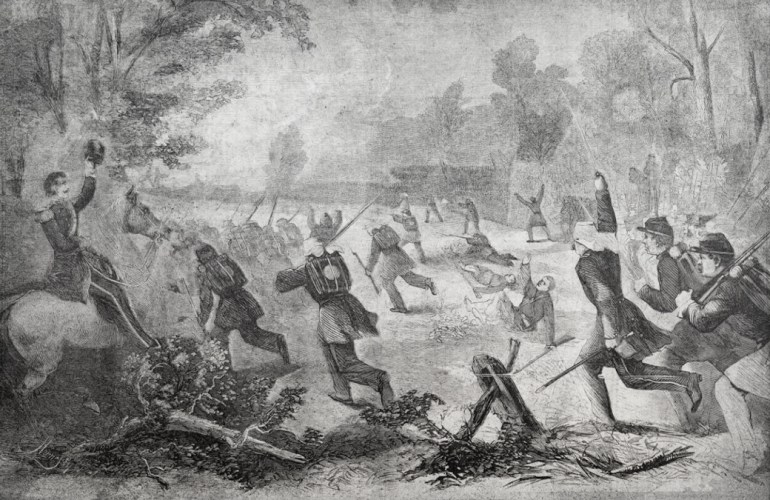
On July 11, 1861, somewhere south of Martinsburg, (West) Virginia, a Union foraging party encountered Confederate cavalry. A sharp fight erupted and one Union soldier was killed. The details of this nearly forgotten incident are hazy at best. Join us as we dig into the sources and piece together what happened over 164 years ago.…
Lower Shenandoah Timeline
Events in Virginia's Lower Senandoah Valley* during the spring and summer of 1861 were confusing at best, with marches and counter-marches as Maj. Gen. Robert Patterson's Department of Pennsylvania army sought to confront Confederate Brig. Gen. Joseph E. Johnston's Army of the Shenandoah and prevent him from reinforcing P.G.T. Beauregard at Manassas Junction. Only one…
Two New Skirmishes in the Shenandoah?
Two previously unexplored skirmishes conducted during Robert Patterson's short-lived campaign in the lower Shenandoah Valley have recently come to my attention. One, near Martinsburg on July 11, 1861, resulted in the death of private Isaac Sly of the 28th New York Infantry Regiment. The other occurred near Bunker Hill on July 15, 1861. Unfortunately, information…