Wednesday, June 19, 1861
In June 1861, a strategic bridge across the Potomac River became a focal point of conflict between Confederate forces and a modest pro-Union home guard. Col. John C. Vaughn’s surprise pre-dawn assault showcases the unpredictability and high stakes of warfare along the pivotal Baltimore & Ohio Railroad.
Narrative
The Action at New Creek was fought on Wednesday, June 19, 1861 between Confederate forces commanded by Col. John C. Vaughn and Union Home Guard commanded by Capt. Horace Resley in Mineral County, West Virginia.
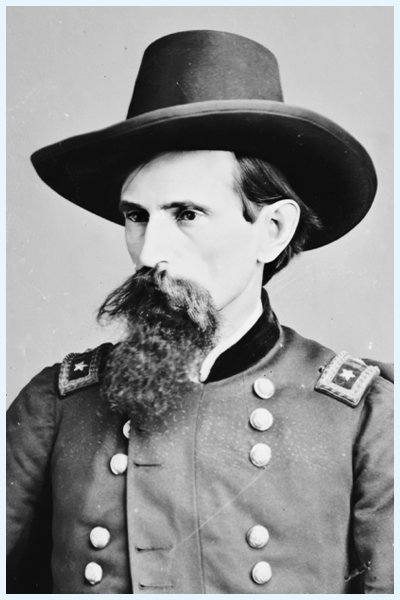
Library of Congress, Prints and Photographs Division.
On June 11, 1861, Union Col. Lewis “Lew” Wallace, commanding the 11th Indiana Infantry Regiment at Cumberland, Maryland, attacked several companies of ill-trained militia at Romney, Virginia (today West Virginia) along the South Branch of the Potomac River. The Confederates fled in disorder. This, and the threat of McClellan’s army coming over the mountains from the west, led Confederate Brig. Gen. Joseph E. Johnson to withdraw his small Army of the Shenandoah from Harper’s Ferry south to Winchester, fearing he was in danger of being surrounded.
To counter Wallace’s presence in the area, Johnson sent Col. Ambrose Powell Hill with the 3rd Tennessee Infantry Regiment and Hill’s own 13th Virginia Infantry Regiment to re-occupy Romney. They arrived sometime on the night of June 15th.
“I have positive information that there will be four thousand rebel troops at or in Romney to-night, who swear they will follow me to hell but what they will have me,” Wallace wrote frantically. Their actual number was likely around 1,500.
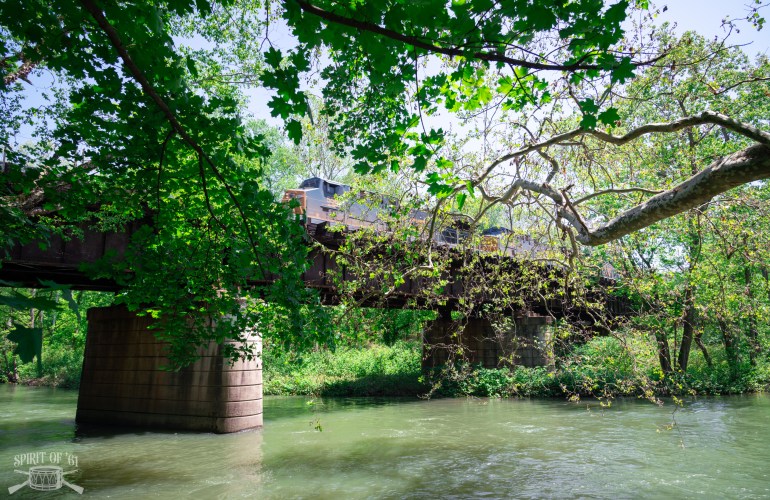
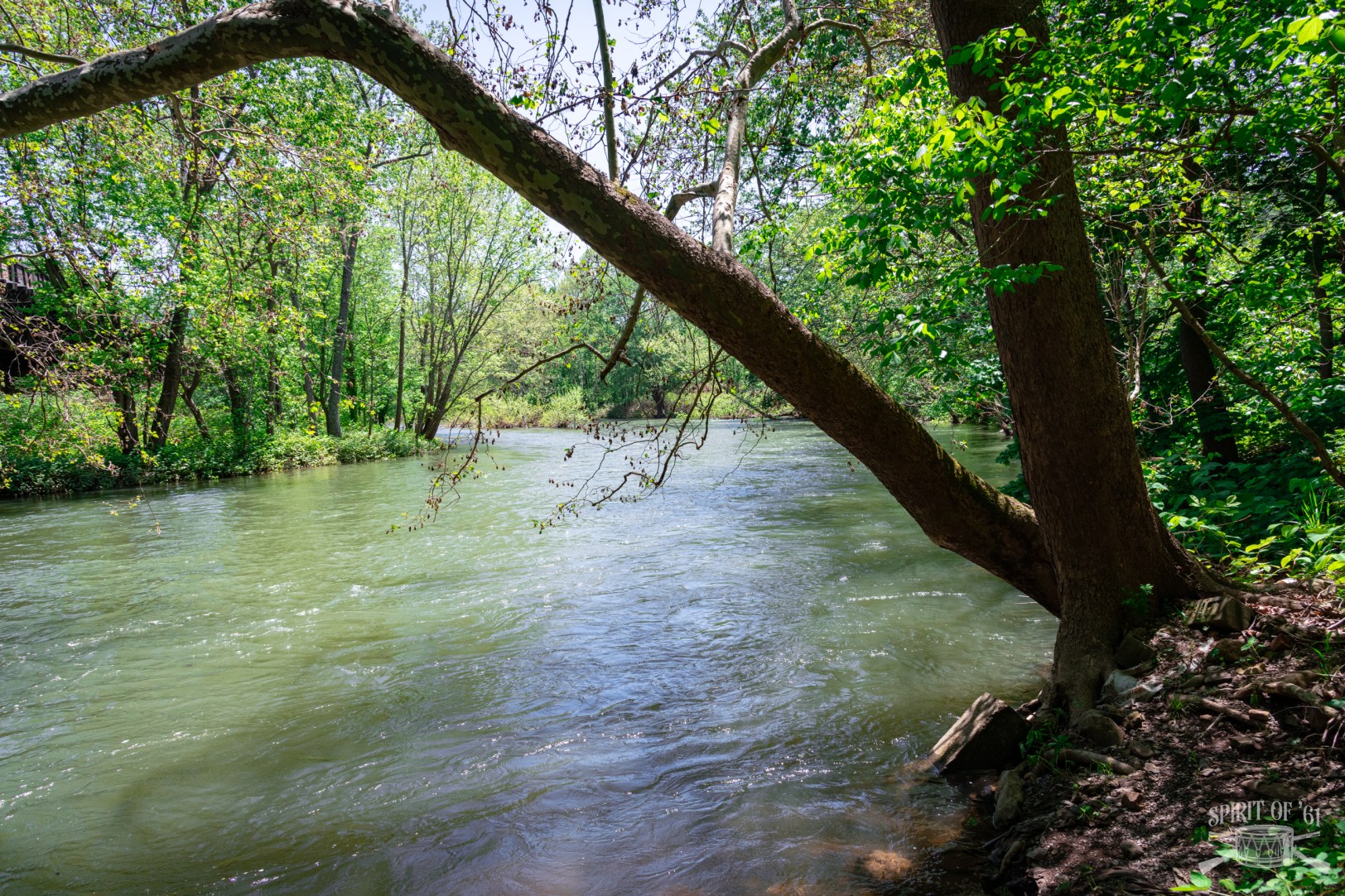
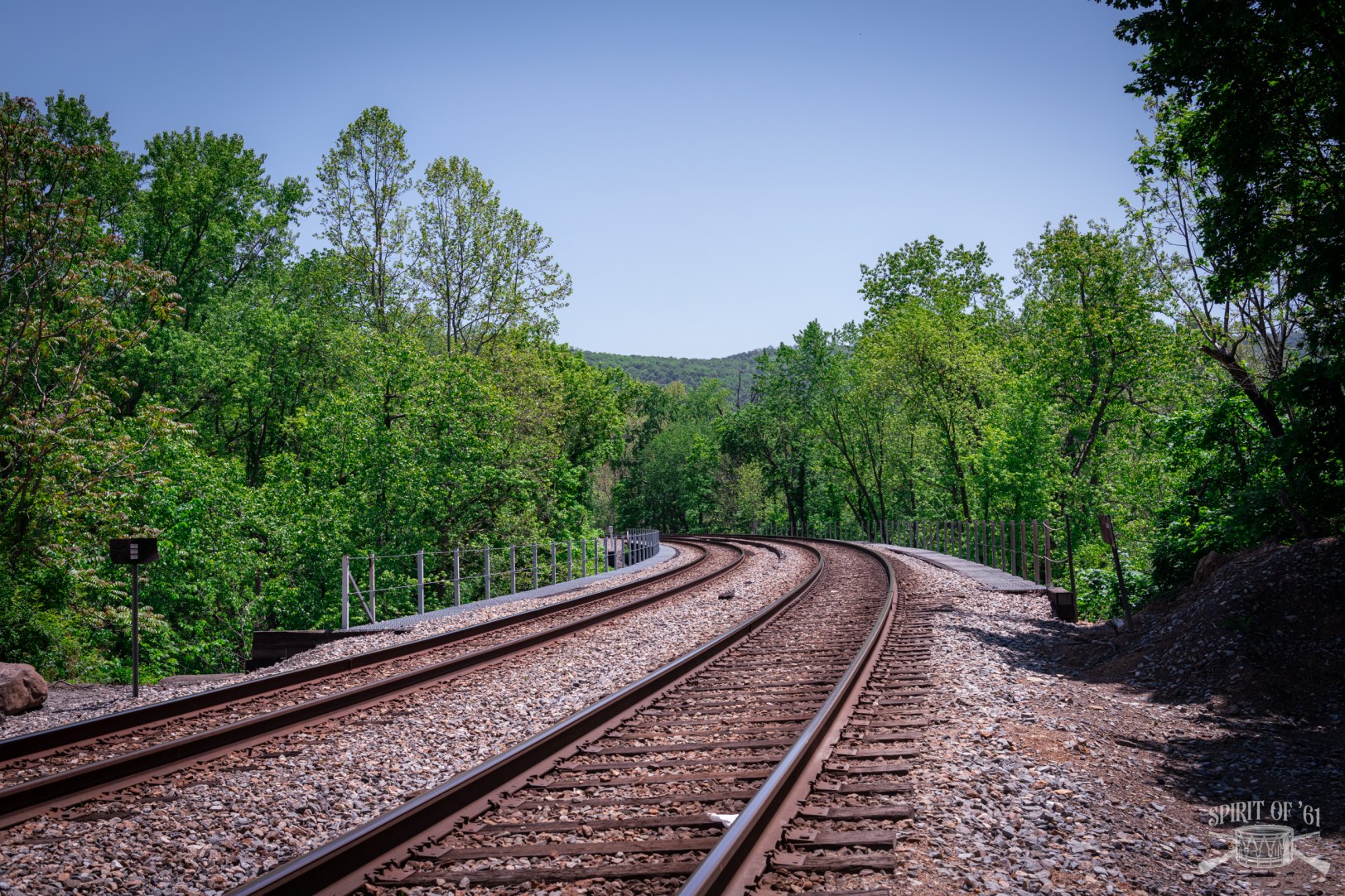
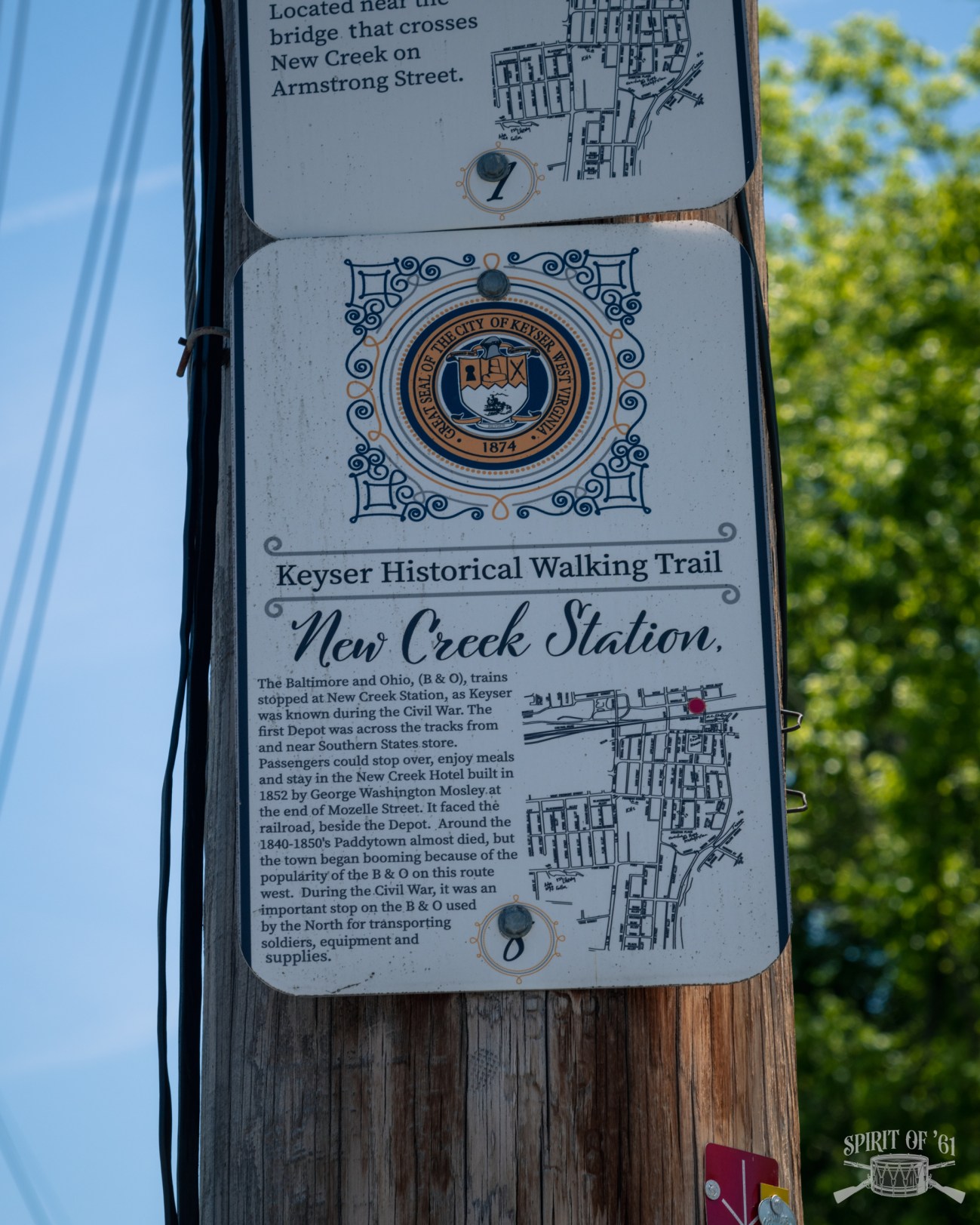
On the night of Tuesday, June 18, 1861, Col. John C. Vaughn took two companies from the 3rd TN and two from the 13th VA and marched 18-miles northwest to New Creek (today, Keyser) on the North Branch of the Potomac River. New Creek was also located along the strategically important Baltimore & Ohio Railroad. A.P. Hill gave Vaughn instructions to disburse whatever Union forces were there and burn the bridges over the river.
When Col. Vaughn arrived at New Creek around 4am on Wednesday, June 19th, he claimed to observe 200 to 300 armed men with two pieces of artillery on the north bank of the Potomac. In truth, the “Cumberland Continentals” defending the bridge hardly consisted of a modern-day platoon. They numbered between 28-40 men privately raised by the B&O Railroad and fielded one 6-pounder Gun and an old 4-pounder.
To avoid capture, the poorly-trained militia spiked their two cannon, fired their muskets, and skedaddled, wounding a private from Company I, 3rd TN. The Confederates captured the guns and the unit’s flag, then burned the bridge and returned to Romney.
In Cumberland over the following days, Wallace prepared his men to fight and evacuate if necessary. He staged their wagons filled with baggage on the main road going north to Pennsylvania, then arrayed his regiment for battle when scouts reported a rebel force coming toward Cumberland from Romney. “There were a number of curios in my camp, relics of the late raid, and I did not relish the thought of making contributions of the kind in return, not even a handful of beans,” he wrote in his memoir.
The enemy unit turned around four miles away, however, and the anticipated battle never arrived. In a few days, the 11th Indiana would be tested again, but another inconsequential skirmish would do little to change the fortunes of war in that corner of northern Virginia.
Opposing Forces
Confederate
Col. John C. Vaughn, Commanding
| Unit | Commander(s) | Strength | Killed | Wounded | Captured |
|---|---|---|---|---|---|
| Elements of the 3rd Tennessee Inf. and 13th Virginia Inf. Regiments | Col. John C. Vaughn | 300 | 0 | 1 | 0 |
Union
Capt. Horace Resley, Commanding
| Unit | Commander(s) | Strength | Killed | Wounded | Captured |
|---|---|---|---|---|---|
| Cumberland Continentals | Lt. James C. Lynn Lt. Theodore Luman | 28-40 | 0 | 0 | 0 |
Timeline
June 10, 1861: Col. Lewis “Lew” Wallace and the 11th Indiana Infantry Regiment arrives in Cumberland, Maryland to guard the Baltimore & Ohio Railroad.
June 13, 1861: Wallace and the 11th Indiana drive Confederate forces away from Romney, Virginia.
June 15, 1861: Col. Ambrose Powell Hill and the 3rd Tennessee Infantry Regiment and Hill’s own 13th Virginia Infantry Regiment re-occupy Romney.
June 17-19, 1861: Colonel Angus W. McDonald, Sr. forms the 7th Virginia Cavalry Regiment and establishes his headquarters in Romney.
Location
GPS Coordinates — 39.45084, -78.95916
Primary Sources
News Articles
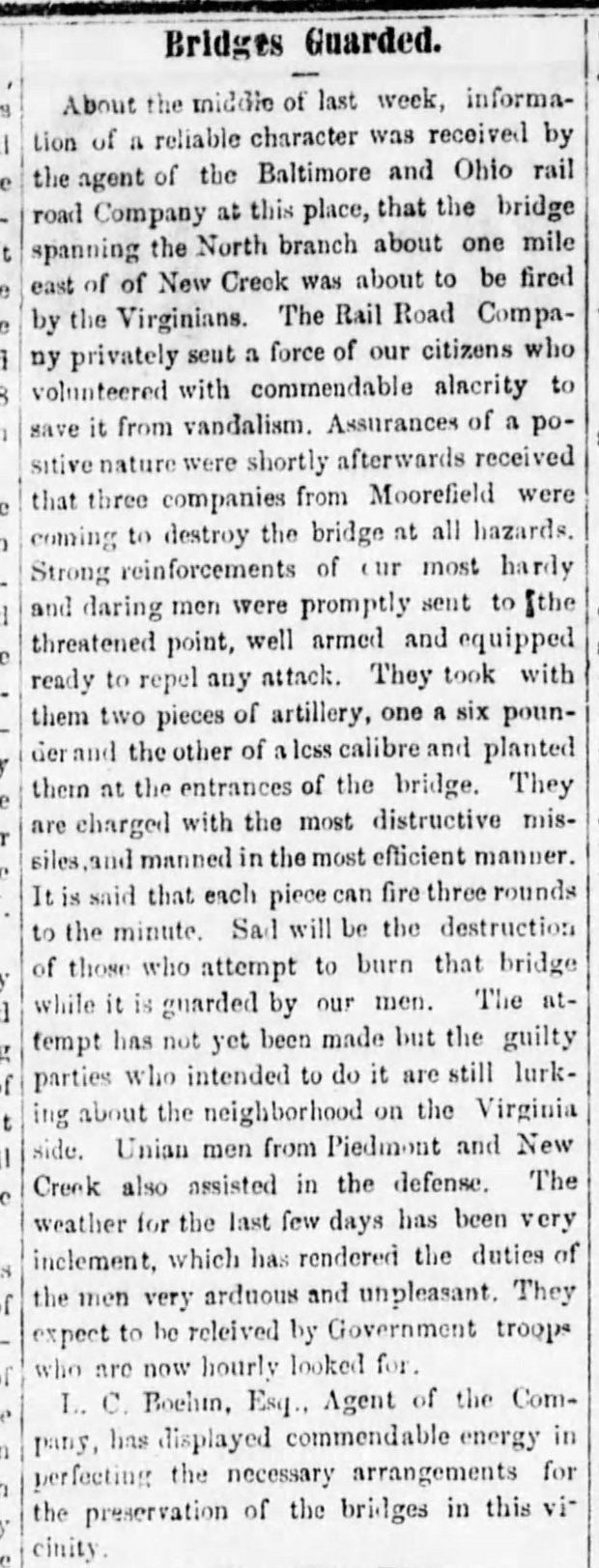
Civilian and Telegraph (Cumberland) 6 June 1861.
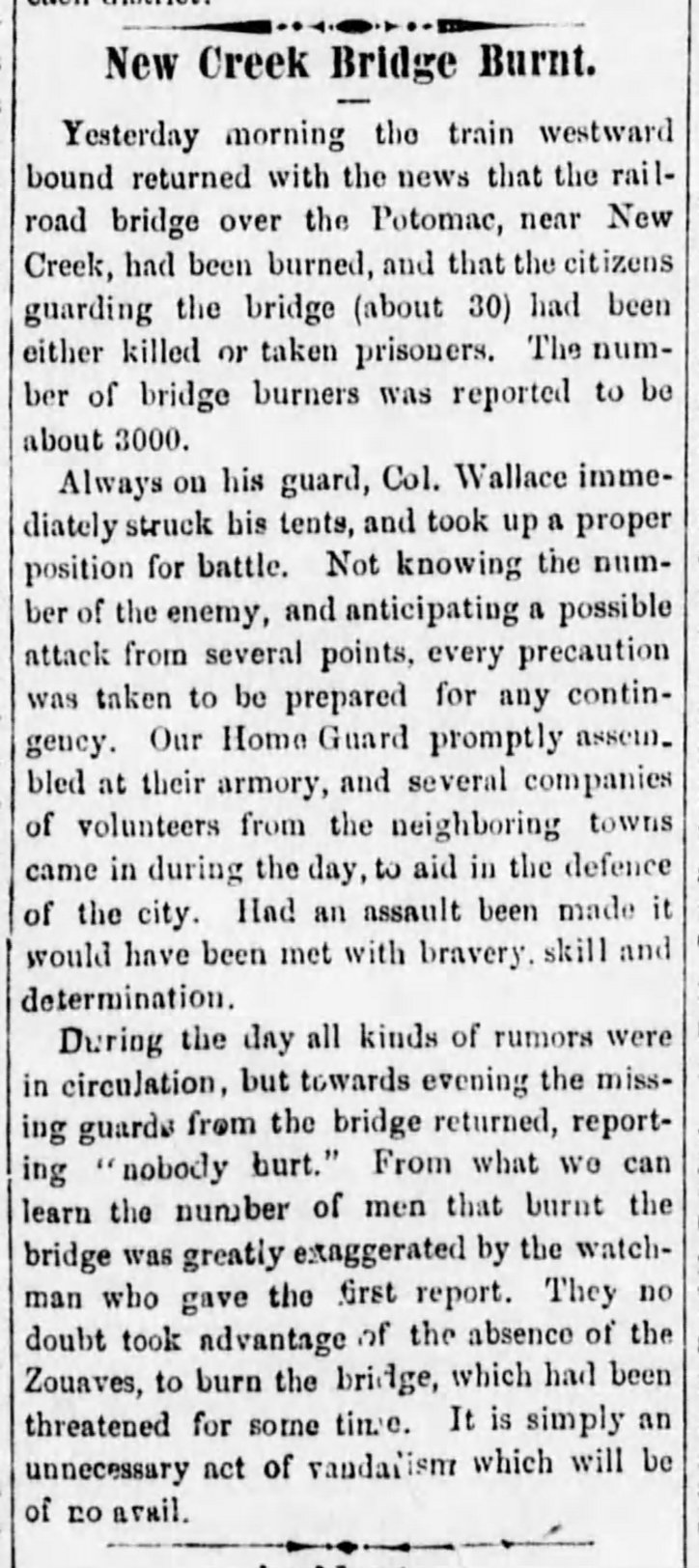
Civilian and Telegraph (Cumberland) 20 June 1861.
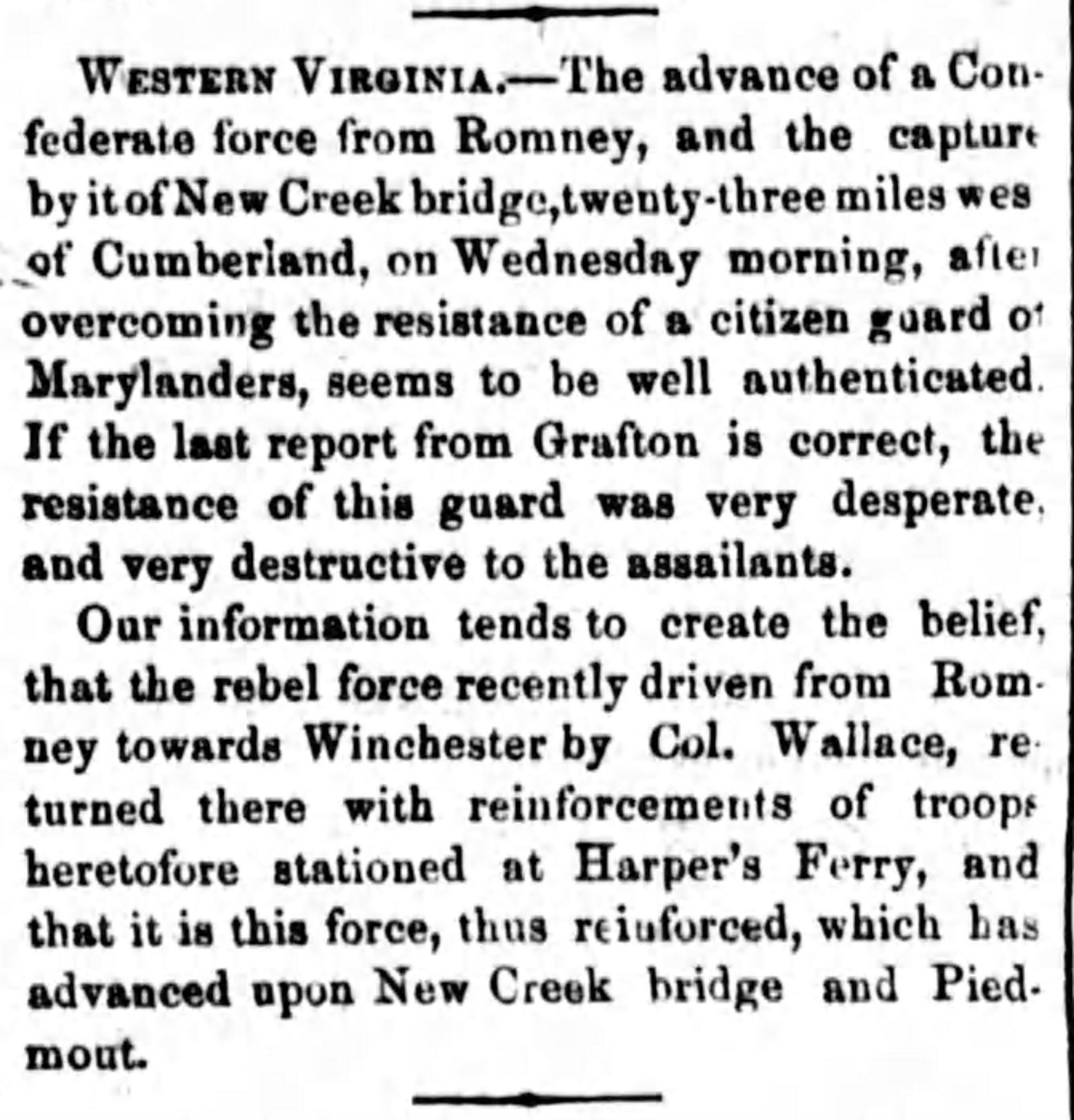
National Republican (Washington, DC) 21 June 1861.
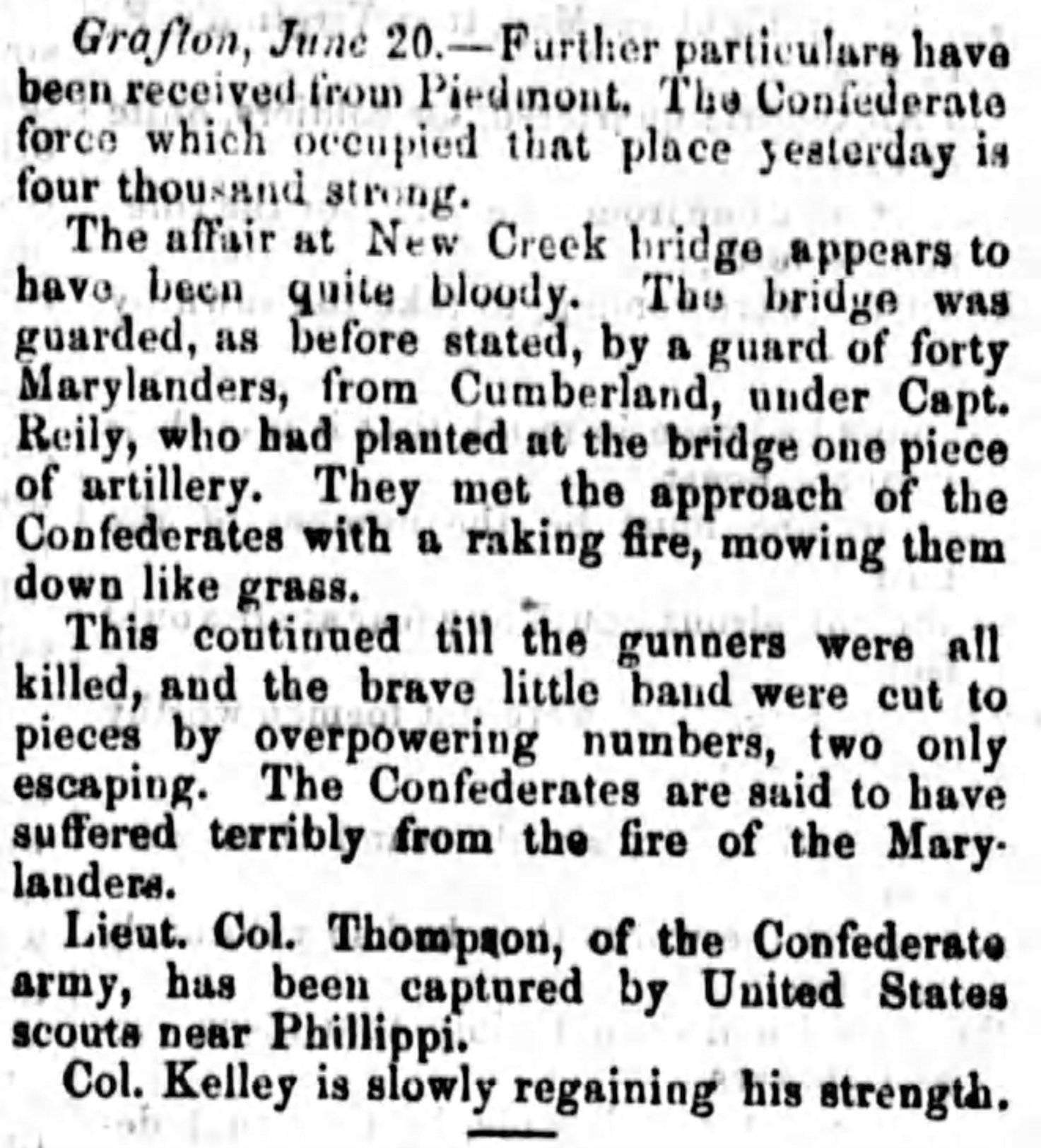
National Republican (Washington, DC) 21 June 1861.
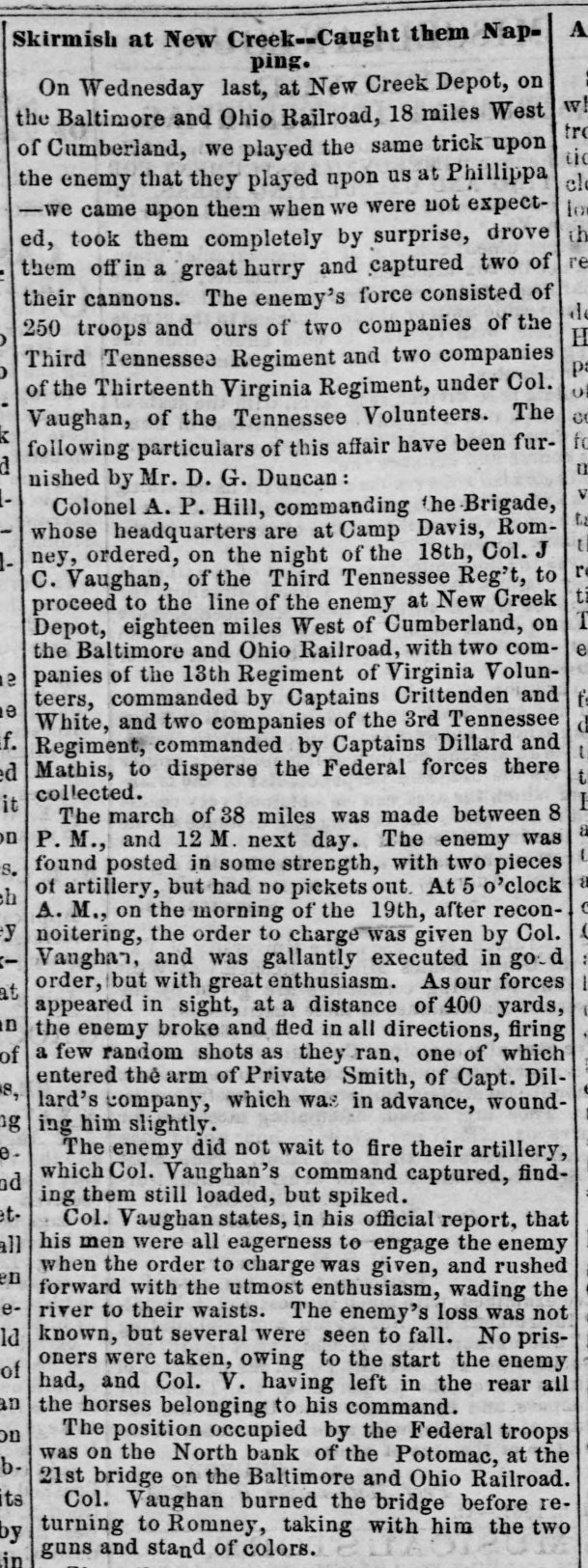
Staunton Spectator (Staunton) 25 June 1861.
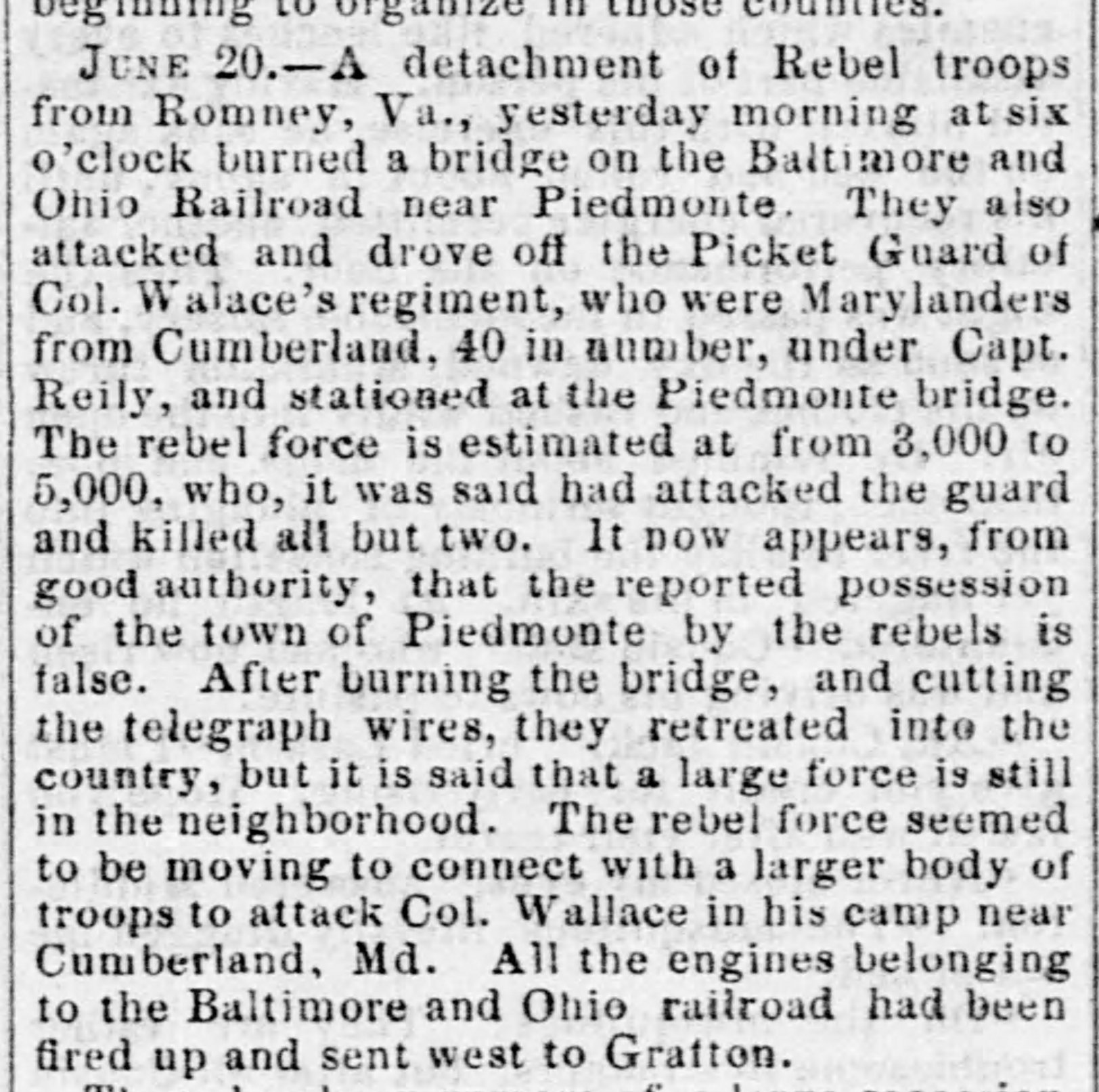
Raftsman Journal (Clearfield, PA) 26 June 1861.
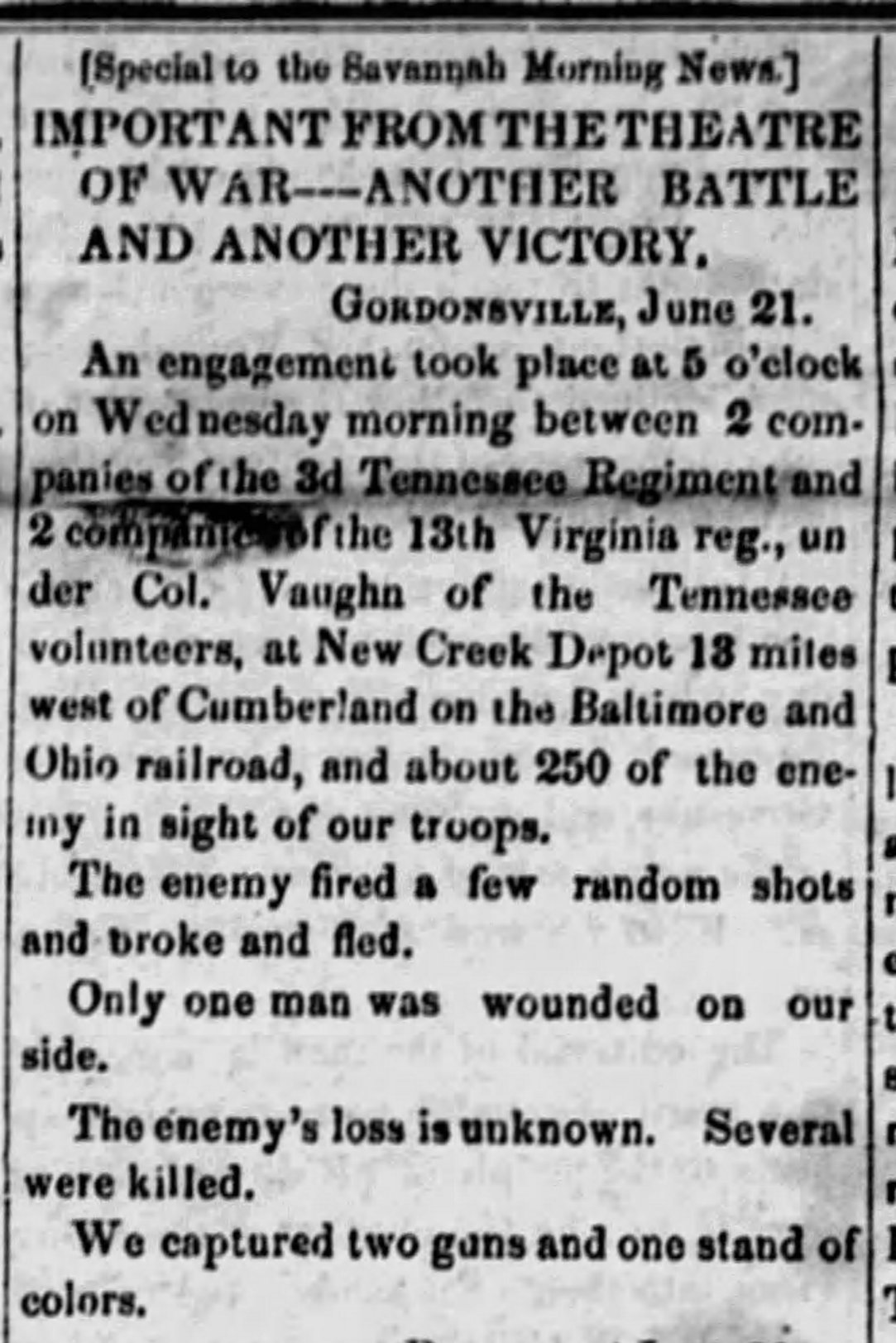
Southern Statesman (Prattville, AL) 29 June 1861.
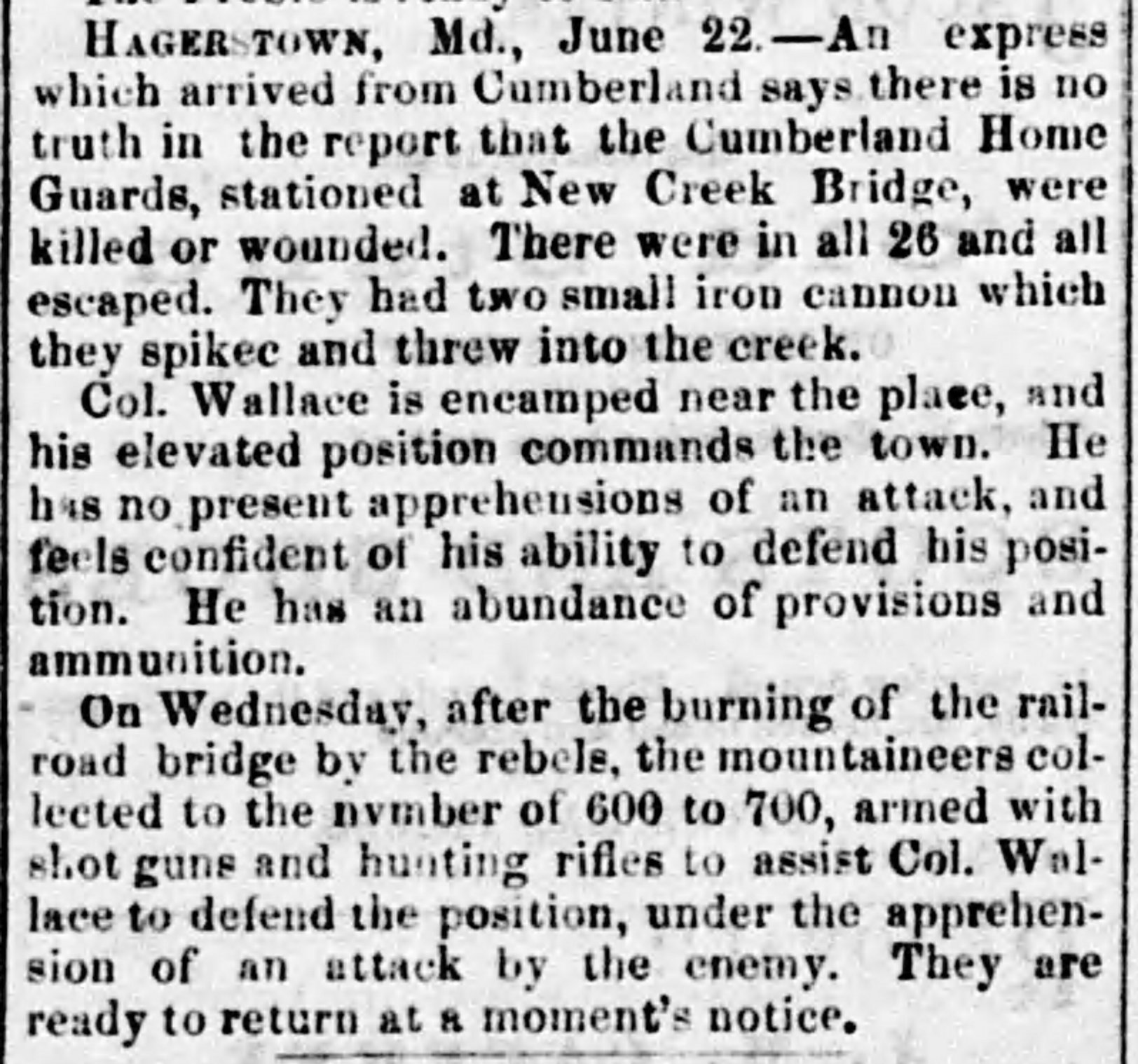
Burlington Weekly Hawk (Burlington, IA) 29 June 1861.
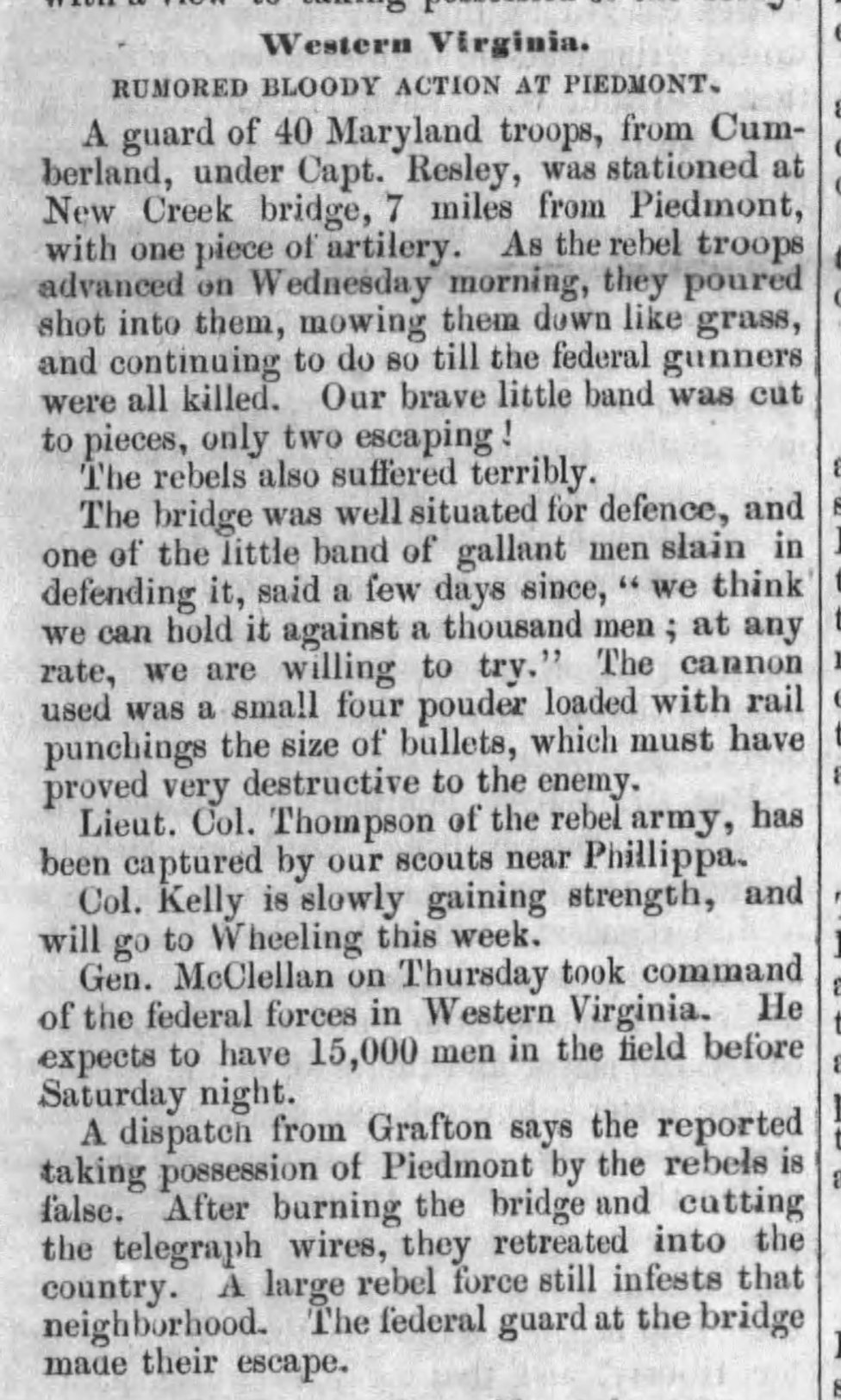
Vermont Journal (Windsor) 29 June 1861.
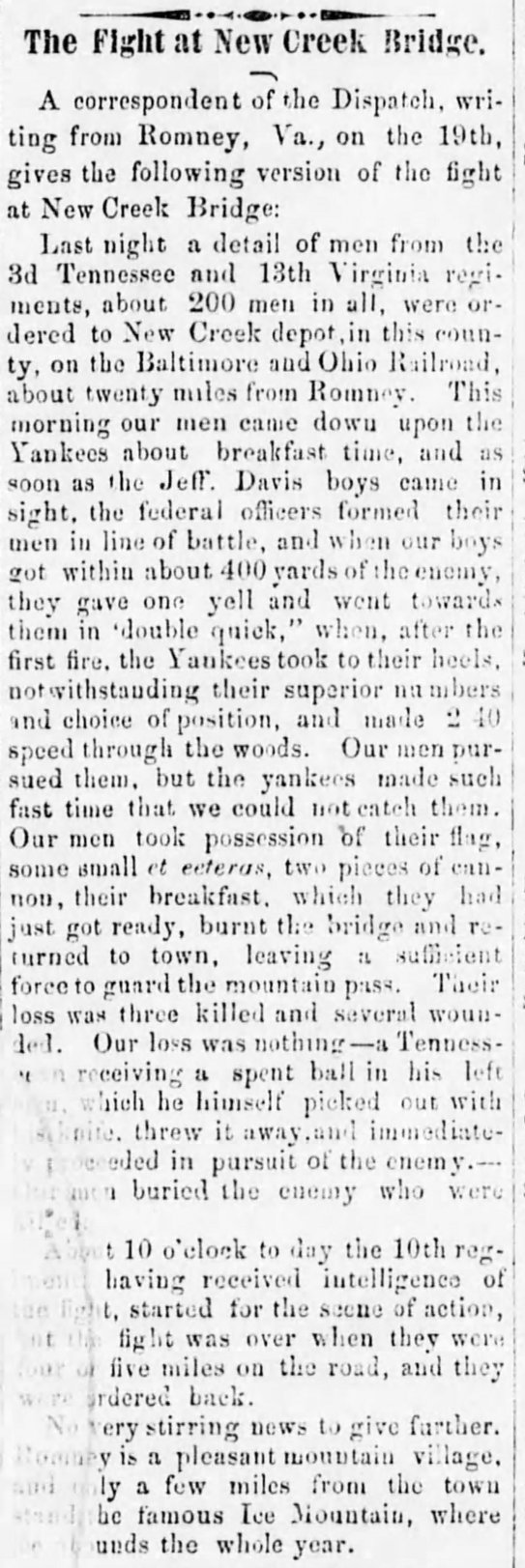
Civilian and Telegraph (Cumberland) 4 July 1861.
Primary Sources
Reports and Letters
- June 15th Letter from Col. Lew Wallace, Eleventh Indiana Infantry
- June 15th Letter from Maj. Gen. Robert Patterson
- June 19th Report of Colonel A. P. Hill, Thirteenth Virginia Infantry
- June 19th Report of Col. John C. Vaughn, Third Tennessee Infantry
Diaries and Memoirs
Casler, John O. Four Years in the Stonewall Brigade. Guthrie: State Capital Print, Co., 1893.
Sources
Thomas, James Walter and T.J. Williams. History of Allegany County, Maryland, Vol. 1. L.R. Titsworth & Co., 1923. Baltimore: Regional Publishing Company, 1969.
Updated: 1 December 2025
Created: 23 March 2021
 Spirit of '61