Thursday, July 4, 1861
In the summer of 1861, an Independence Day mission to capture a Confederate flag across the Potomac River ignited a deadly skirmish at Harper’s Ferry. Learn how this brief but pivotal encounter set the stage for Union control of the strategic town.
Narrative
The Skirmish at Harper’s Ferry was fought on Thursday, July 4, 1861 between Union forces commanded by Maj. William Atterbury and Confederate forces commanded by Capt. John Henderson in present-day Jefferson County, West Virginia. The skirmish was technically a draw, as both sides withdrew without gaining an advantage; however, all the casualties were on the Union side.
Following the capture of Harper’s Ferry Arsenal by Virginia militia in April, Harper’s Ferry became the assembly point for the growing Confederate Army of the Shenandoah. By the time Confederate Brig. Gen. Joseph E. Johnston superseded Col. Thomas J. Jackson in command on May 23rd, the Confederate forces had swelled to approximately 10,000 infantry and cavalry. Additionally, Col. Angus W. McDonald, Sr.’s 7th Virginia Cavalry Regiment was tasked with patrolling a broad area, stretching from Harper’s Ferry to the headwaters of the Potomac River.
On June 10th, Colonel Charles Pomeroy Stone, commander of the newly formed 14th U.S. Infantry Regiment, was ordered to lead several volunteer infantry regiments and battalions on an expedition westward along the Maryland side of the Potomac River. The goal was to disrupt pro-Confederate supply lines from Baltimore and hinder any Confederate attempts to control the Potomac River crossings. Stone’s force consisted of around 2,500 men, including the 9th New York State Militia Regiment (not to be confused with the 9th New York Infantry Regiment stationed on the Virginia Peninsula).
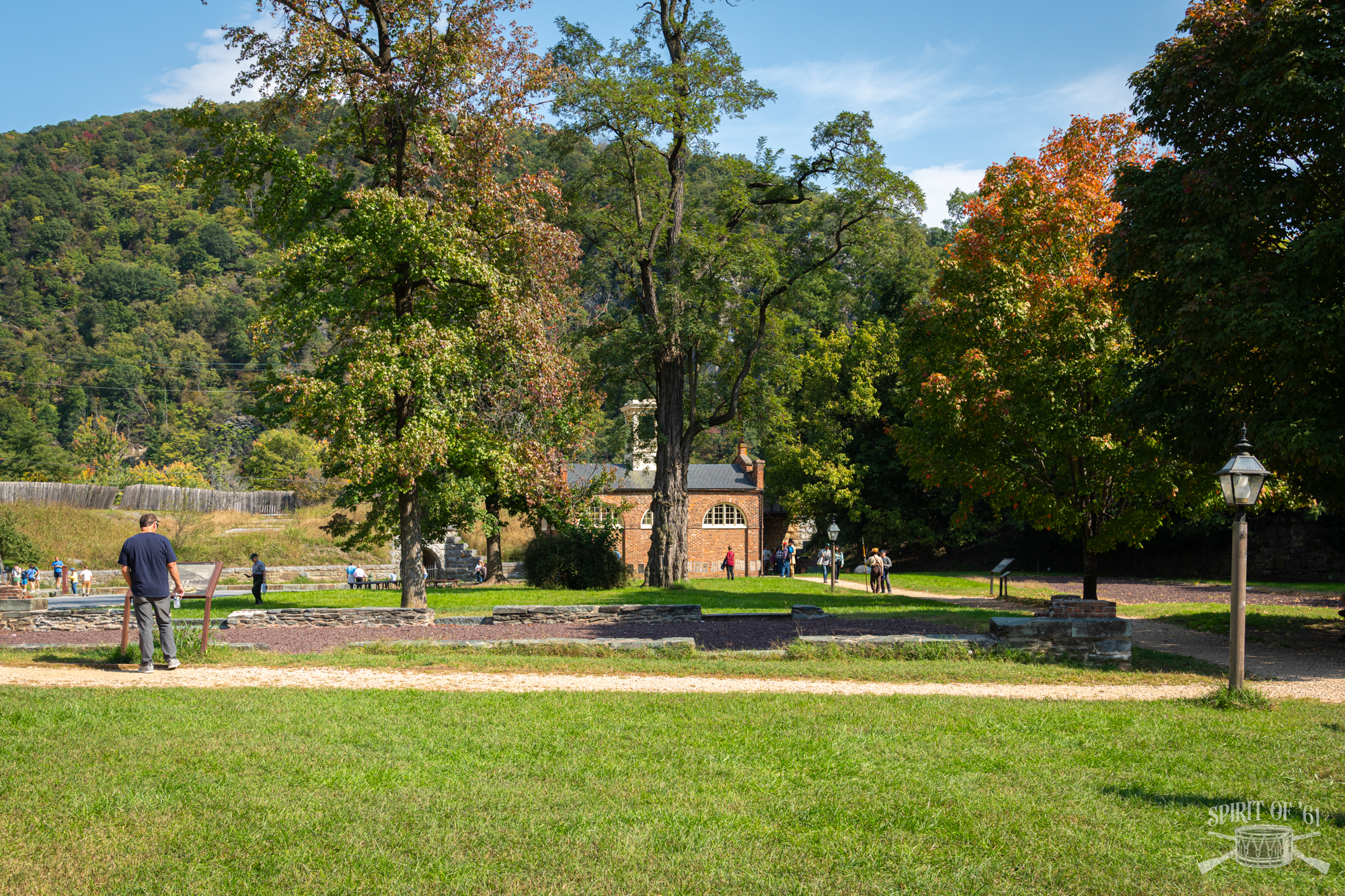
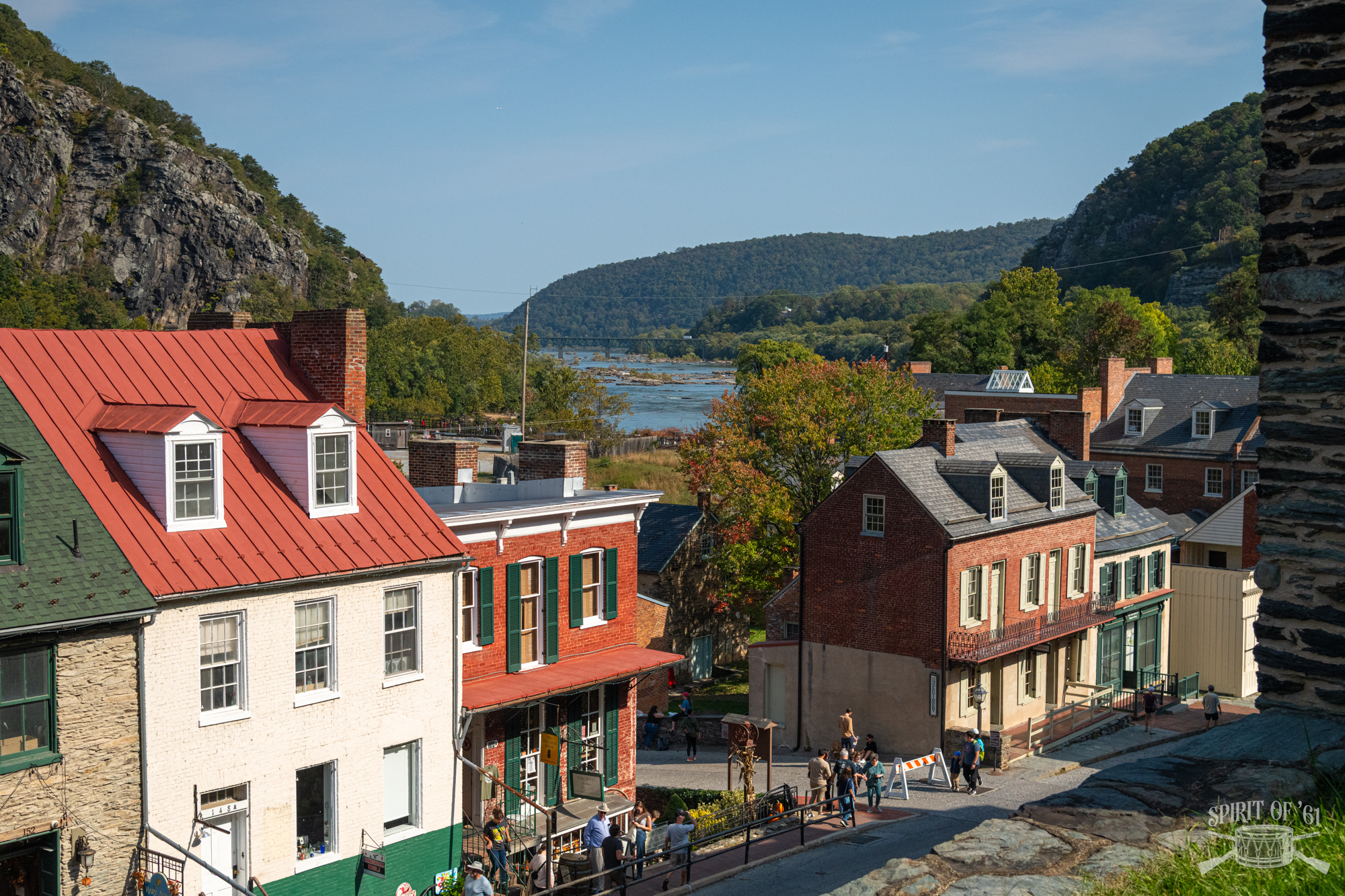
Meanwhile, the Confederate high command debated the feasibility of defending Harper’s Ferry, which was situated between mountains at the confluence of the Potomac and Shenandoah rivers. Ultimately, Johnston decided it was untenable, and between June 13-15, he evacuated his army south to Winchester, destroying the bridges across the Potomac in the process. McDonald’s cavalry remained behind to monitor Union movements across the river.
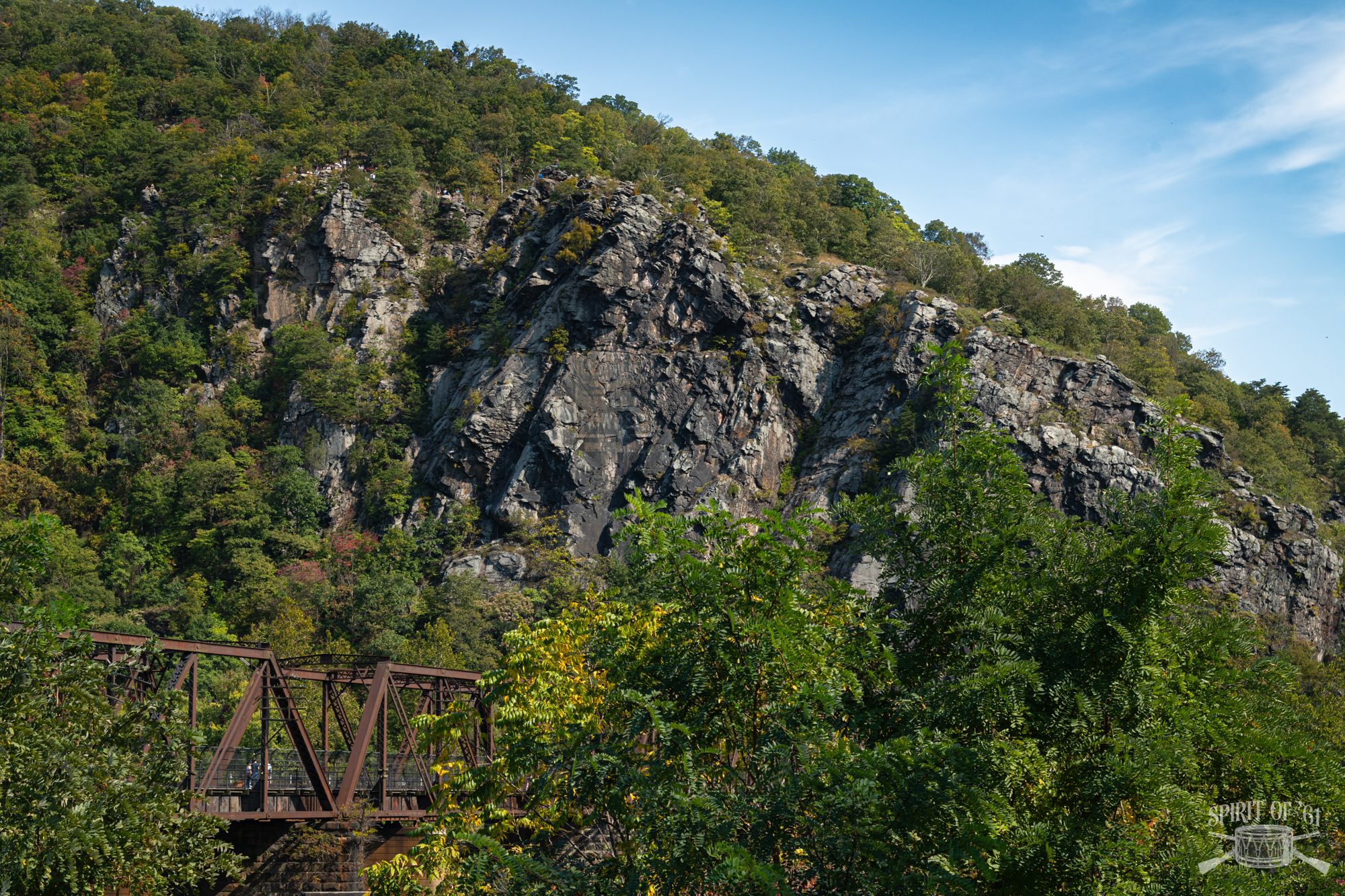
By early July 1861, the lead elements of Stone’s expedition reached Sandy Hook and Maryland Heights, directly across from Harper’s Ferry. Among them were Companies A and C of the 9th New York State Militia Regiment, commanded by Major William Atterbury. On the morning of July 4th, Independence Day, a volunteer picket post, composed of men from Companies A, C, E, and G under the command of Lieutenant William P. Galbraith, noticed a Confederate flag fluttering in the eerily quiet town. Believing it was deserted, they decided to cross the river in a small boat to remove the flag.
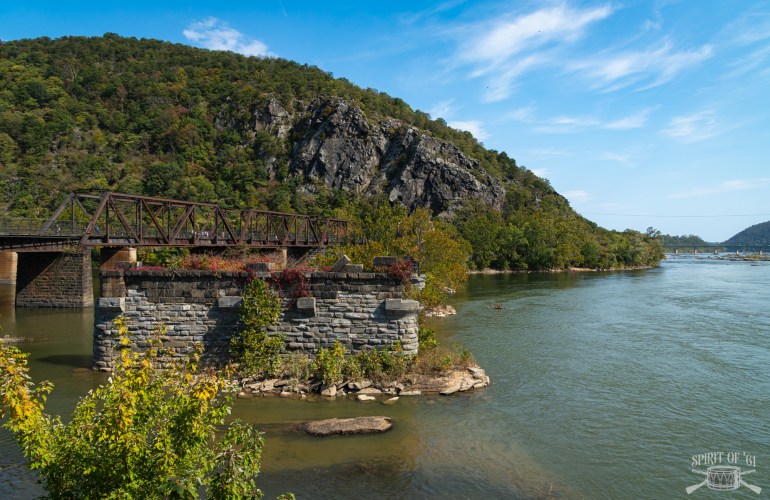
The men accomplished their mission, but they were mistaken about being unopposed. As they crossed back to the Maryland side, approximately 25 Confederate soldiers from Captain John Henderson’s dismounted cavalry appeared from windows and the ruins of the railroad bridge, opening fire with deadly accuracy. Henderson’s company, mustered in Charles Town on June 26, 1861, primarily consisted of recruits from Jefferson County, (now West) Virginia—the same county where Harper’s Ferry is located.
Atterbury rushed to the scene with Companies A, C, and sixteen men from Company G. He reported later that evening, “On arrival, found the enemy posted about the trestle-work and behind the abutments of the bridge on the Virginia shore and in some of the buildings along the river. Opened fire on them, but ascertaining that the muskets of the command were not effective at that distance, and the enemy being armed with rifles or rifled muskets, ordered the command to retire.”
The skirmish lasted about 30 minutes before both sides withdrew. Two Union soldiers were killed and two wounded, with no casualties among Henderson’s command. Tragically, Frederick Roeder, a local baker and known Unionist, believed it was safe to venture outside to assess the aftermath, but Atterbury’s men still anxiously overwatched the town. As he stepped into the open, a bullet ricocheted off a building and mortally wounded him.
On July 18, 1861, the 2nd Massachusetts Infantry Regiment crossed the river and occupied Harper’s Ferry. The town remained under Union control until October of that year.
Opposing Forces
Confederate
Col. Angus W. McDonald, Sr., Commanding
| Unit | Commander(s) | Strength | Killed | Wounded | Captured |
|---|---|---|---|---|---|
| Virginia Rangers (Henderson’s Company) | Capt. John Henderson | 25 | 0 | 0 | 0 |
Union
Col. Charles P. Stone, Commanding
| Unit | Commander(s) | Strength | Killed | Wounded | Captured |
|---|---|---|---|---|---|
| 9th New York State Militia Regiment, Companies A, C, E, G | Col. John W. Stiles Maj. William Atterbury | 230 | 2 | 2 | 0 |
Timeline
April 18, 1861: Union troops set fire to and evacuate Harper’s Ferry Arsenal. Virginia militia seize most of its equipment.
May 23, 1861: Confederate Brig. Gen. Joseph E. Johnston supersedes Col. Thomas J. Jackson as commander of Confederate forces at Harper’s Ferry.
June 13-15, 1861: Confederate forces evacuate Harper’s Ferry, destroying the bridges across the Potomac in the process.
July 2, 1861: Lead elements of Col. Charles Pomeroy Stone’s expedition along the Potomac River’s Maryland shore reaches Sandy Hook and Maryland Heights opposite Harper’s Ferry. Col. Thomas J. Jackson conducts a fighting withdrawal against Union forces commanded by Maj. Gen. Robert Patterson at Hoke’s Run.
July 4, 1861: Union forces across the Potomac River in Maryland exchange fire with a small Confederate force on the opposite bank at Harper’s Ferry.
Location
GPS Coordinates — 39.3238, -77.7273
Primary Sources
News Articles
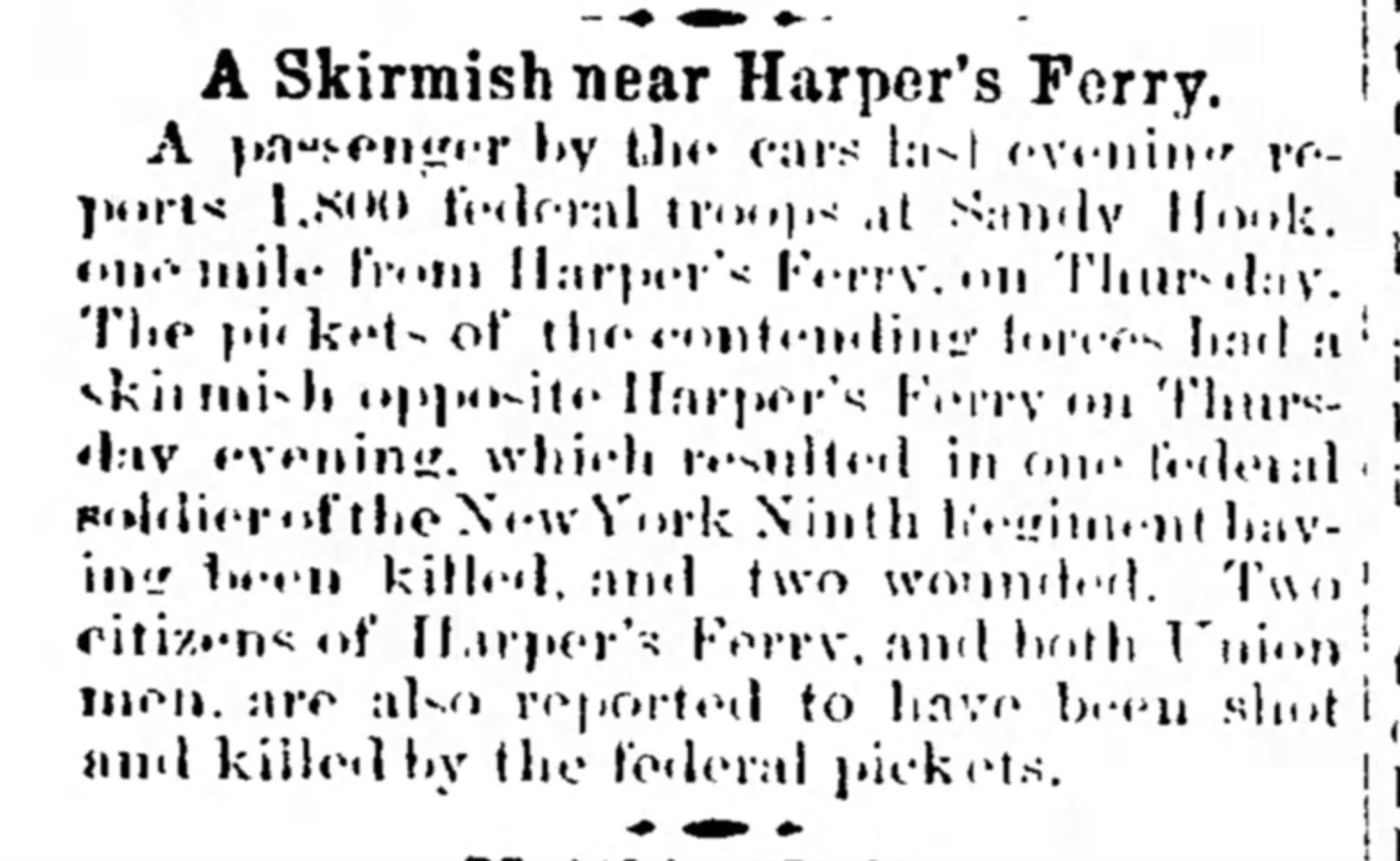
Gettysburg Compiler (Gettysburg, PA) 8 July 1861.
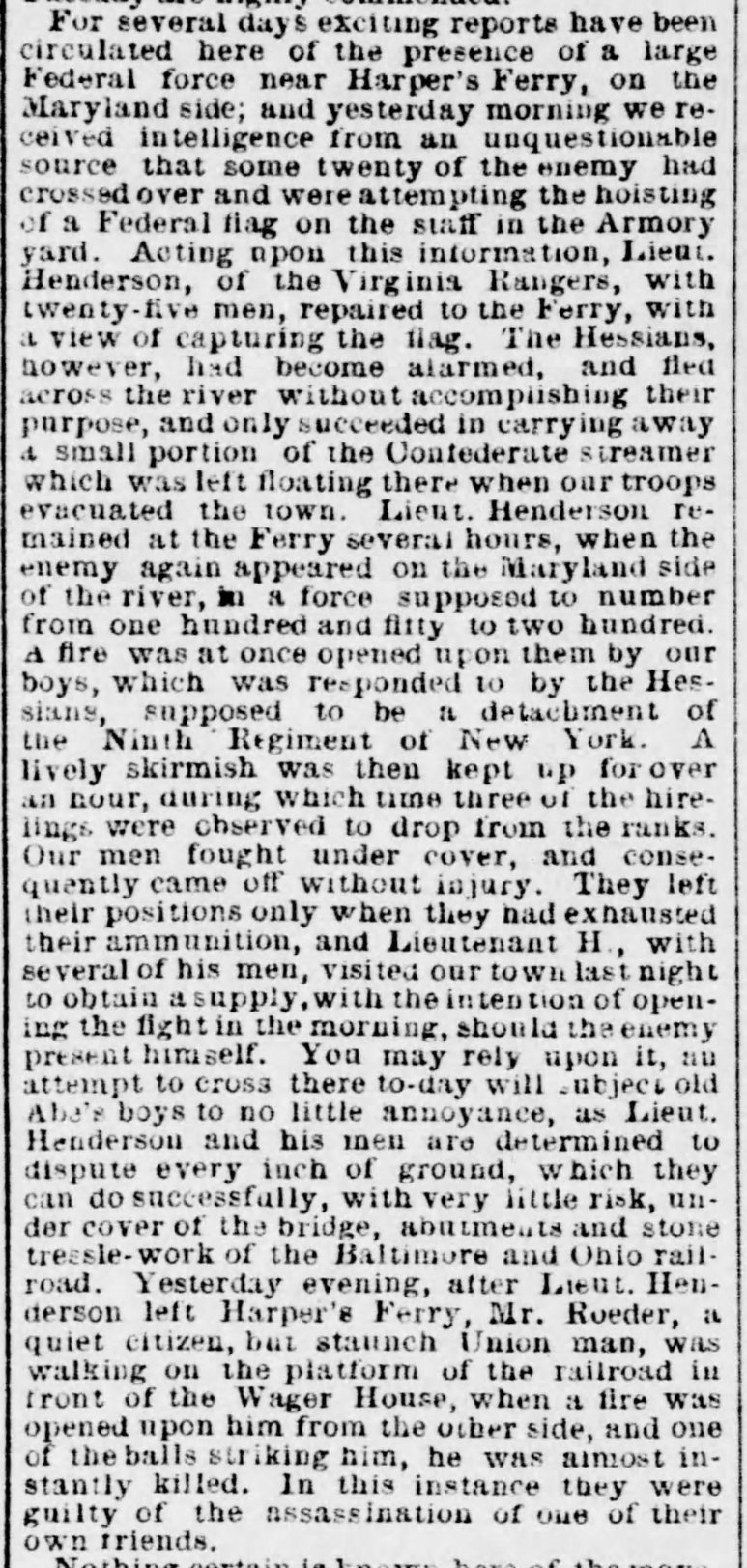
Richmond Dispatch (Richmond, VA) 9 July 1861.
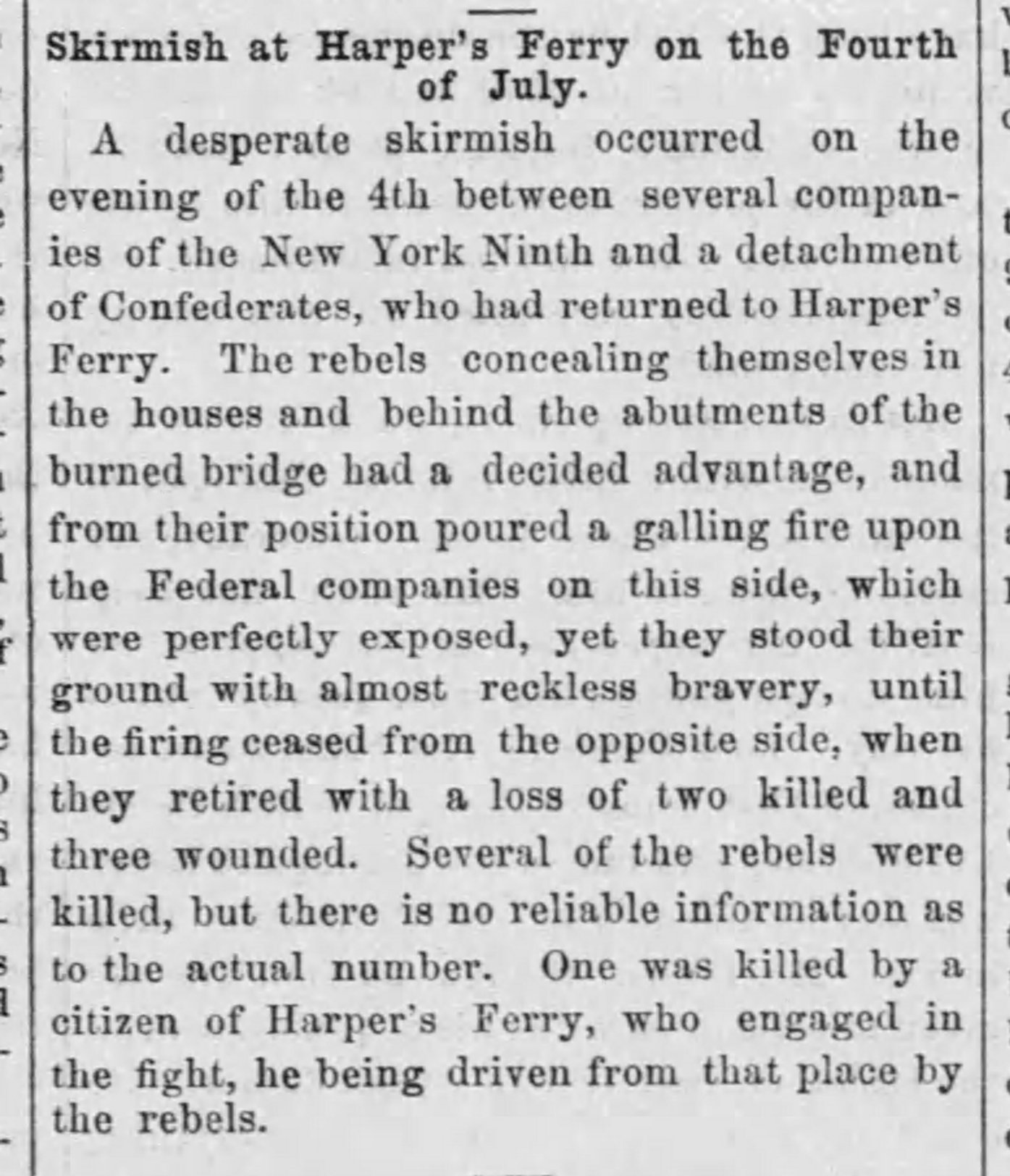
The Lancaster Examiner (Lancaster, PA) 10 July 1861.
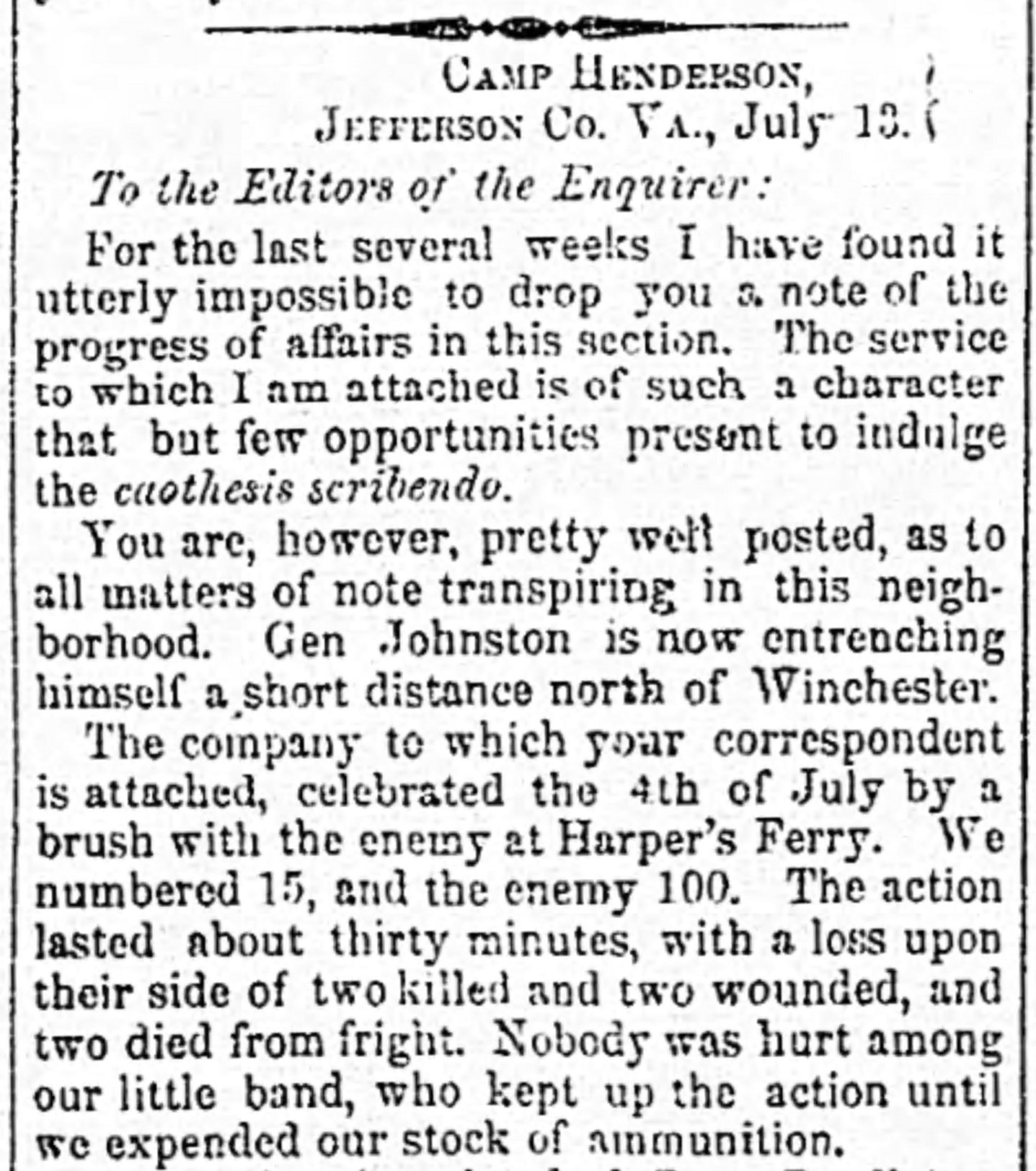
Richmond Enquirer (Richmond, VA) 16 July 1861.
Reports and Letters
- July 1 Report of Col. Charles P. Stone, Colonel Fourteenth Infantry
- July 3 Report of Col. Charles P. Stone, Colonel Fourteenth Infantry
- July 4 Report of Col. Charles P. Stone, Colonel Fourteenth Infantry
- July 4 Report of Col. John W. Stiles, Eighty-third New York Infantry
- July 4 Report of Maj. William Atterbury, Eighty-third New York Infantry
- July 5 Report of Col. Charles P. Stone, Colonel Fourteenth Infantry
Secondary Sources
Frye, Dennis E. Harpers Ferry Under Fire: A Border Town in the American Civil War. Virginia Beach: The Donning Company Publishers, 2012.
Hussey, George A. and William Todd, ed. History of the Ninth Regiment N.Y.S.M. — N.G.S.N.Y. (Eighty-Third N.Y. Volunteers) 1845-1888. New York: J.B. Ogilvie, 1889.
Updated: 6 March 2025
Created: 28 March 2021
 Spirit of '61