Thursday, July 18, 1861
Though minor in comparison to the clash that would erupt at Bull Run days later, the fight at Blackburn’s Ford rattled Union confidence and emboldened Confederate troops. With McDowell now seeking another route forward, the war’s first major battle loomed just beyond the horizon.

Narrative
The Battle of Blackburn’s Ford was fought on Thursday, July 18, 1861 between Union forces commanded by Brig. Gen. Daniel Tyler and Confederate forces commanded by Brig. Gen. James Longstreet in Prince William and Fairfax Counties, Virginia. The battle was a Confederate victory and resulted in 165 total casualties.
By mid-July 1861, Union and Confederate forces in northeastern Virginia remained locked in a stalemate, much as they had been since the initial invasion seven weeks earlier. Both sides maneuvered cautiously, reinforcing their ranks and searching for weaknesses while struggling to shape eager but inexperienced recruits into effective armies. Though skirmishes flared along the front, none proved decisive.
Forced into a defensive stance by Confederate high command, 43-year-old Brig. Gen. Pierre Gustave Toutant-Beauregard prepared for a potential advance by Brig. Gen. Irvin McDowell’s Union Army of Northeastern Virginia. His plan called for a strategic withdrawal to defend the vital junction of the Orange and Alexandria Railroad and the Manassas Gap Railroad along Bull Run. If needed, Brig. Gen. Joseph E. Johnston’s Army of the Shenandoah could be rapidly transported to the area via the Manassas Gap Railroad. Beauregard’s strategy relied on 21,000 infantry and cavalry to guard multiple crossing points along Bull Run, from the Warrenton Pike to Union Mills.
On June 29, McDowell met in Washington, D.C., with President Abraham Lincoln and Lieutenant General Winfield Scott to plan a march on Richmond, Virginia, the newly established Confederate capital. McDowell doubted that his small, inexperienced army was ready, but Lincoln pressured him to act, as many of the 90-day volunteer enlistments would expire by the end of July. The initial plan called for 30,000 men to advance around Beauregard’s right flank, beginning on July 8, but McDowell did not start moving until July 16. By then, he had approximately 34,000 infantry and cavalry present for duty.
As soon as McDowell’s men left their camps, his meticulous plan began to unravel. The inexperience and lack of discipline among his troops, combined with a shortage of cavalry and a poor understanding of the terrain beyond his immediate front, turned an 18-mile march into a two-day slog. Col. Orlando B. Willcox’s brigade reached Fairfax Station at noon on July 17. The following morning, Col. Israel B. Richardson’s brigade arrived in Centreville, only to find it eerily quiet and devoid of Confederates, with abandoned earthworks and scattered military accoutrements marking their former presence.
At Centreville, McDowell ordered Brig. Gen. Daniel Tyler’s division to search for a crossing over Bull Run about three miles south at Blackburn or Mitchell’s Fords. Tyler advanced along the road with two companies from Richardson’s brigade and a squadron of cavalry. At Blackburn’s Ford, he spotted only a few Confederate artillery pieces. However, Brig. Gen. James Longstreet’s brigade, consisting of three Virginia regiments, was concealed in the woods on the opposite shore. Capt. Delaware Kemper’s four 6-pounder guns from the Alexandria Artillery were positioned about half a mile west on the north side of Bull Run at Mitchell’s Ford, supported by the 7th and 2nd South Carolina Regiments on the south side.
Despite orders to avoid engagement, Tyler directed two long-range rifled guns from Captain Romeyn B. Ayres’ 3rd U.S. Artillery, Company E, to open fire. Kemper’s battery, unable to match their range, withdrew across the creek. Tyler then shifted focus to Blackburn’s Ford, where artillery bombardment damaged Wilmer McLean’s house, kitchen, and barn about a mile south. He ordered Richardson’s brigade forward, led by a mixed 160-man battalion under Capt. Robert Brethschneider.
Longstreet’s Virginians displayed remarkable restraint for inexperienced troops, lulling the attackers into a false sense of security. Tyler, overconfident, believed he could force a crossing of Bull Run, seize Manassas Junction, and end the campaign in one stroke. Instead, his troops charged headlong into a well-prepared Confederate position. Around 1 p.m., the 12th New York Infantry, led by Col. Ezra L. Walrath, advanced but quickly took cover under a “murderous” volley. Both sides called for reinforcements. The remainder of Richardson’s brigade, comprising the 1st Massachusetts and the 2nd and 3rd Michigan regiments, moved up to assist, while Longstreet received support from the 7th Louisiana and 7th and 24th Virginia.
The 12th New York broke and fled in the heat and confusion. Sensing an opportunity, Longstreet ordered the 17th and 1st Virginia regiments to pursue across the creek, but the inexperienced troops became disorganized on the opposite bank. Both sides suffered from friendly fire incidents, with Longstreet himself narrowly escaping shots from the 7th Virginia. Assessing the situation, Tyler ordered Richardson’s brigade to withdraw. After several hours of fighting, 83 Union and 78 Confederate soldiers lay dead or wounded. The engagement concluded with an inconsequential artillery duel, serving only to add more names to the casualty lists.
The casualties were minor compared to the First Battle of Bull Run, which would take place nearby just days later, but the skirmish set the stage for what was to come. The Confederate victory boosted the morale of their inexperienced troops while discouraging their Union counterparts. Bruised by the setback at Blackburn’s Ford, McDowell chose to shift west and flank the Confederate army at Stone Bridge over Bull Run, setting the stage for the war’s first major battle.
Opposing Forces
Confederate
Brig. Gen. Pierre Gustave Toutant-Beauregard, Commanding
Brig. Gen. Milledge L. Bonham, Commanding First Brigade
| Unit | Commander(s) | Strength | Killed | Wounded | Missing/Captured |
|---|---|---|---|---|---|
| Alexandria Light Artillery | Capt. Delaware Kemper | 4 guns | 0 | 0 | 0 |
Brig. Gen. James Longstreet, Commanding Fourth Brigade
| Unit | Commander(s) | Strength | Killed | Wounded | Missing/Captured |
|---|---|---|---|---|---|
| 1st Virginia Infantry Regiment | Maj. Frederick G. Skinner | 13 | 27 | 0 | |
| 11th Virginia Infantry Regiment | Col. Samuel Garland, Jr. | 1 | 5 | 0 | |
| 17th Virginia Infantry Regiment | Col. Montgomery D. Corse | 745 | 1 | 14 | 0 |
| Washington (Louisiana) Artillery, 3rd Company | Lt. John J. Garnett | 2 guns | 0 | 2 | 0 |
| 15 | 48 | 0 |
Col. Jubal A. Early, Commanding Sixth Brigade
| Unit | Commander(s) | Strength | Killed | Wounded | Missing/Captured |
|---|---|---|---|---|---|
| 7th Virginia Infantry Regiment | Col. James L. Kemper | 0 | 7 | 0 | |
| 7th Louisiana Infantry Regiment | Col. Harry T. Hays | 2 | 2 | 0 | |
| 24th Virginia Infantry Regiment | Lt. Col. Peter Hairston, Jr. | 0 | 0 | 0 | |
| Washington (Louisiana) Artillery, 1st and 4th Companies | Lt. Charles W. Squires | 5 guns | 1 | 3 | 0 |
| 3 | 12 | 0 |
Union
Brig. Gen. Daniel Tyler, Commanding First Division
Col. Israel B. Richardson, Commanding Fourth Brigade, First Division
| Unit | Commander(s) | Strength | Killed | Wounded | Missing/Captured |
|---|---|---|---|---|---|
| 1st Massachusetts Infantry Regiment | Col. Robert Cowdin | 10 | 8 | 14 | |
| 2nd Michigan Infantry Regiment | Maj. Adolphus W. Williams | 0 | 1 | 0 | |
| 3rd Michigan Infantry Regiment | Col. Daniel McConnell | 0 | 1 | 0 | |
| 12th New York Infantry Regiment | Col. Ezra L. Walrath | 5 | 19 | 10 | |
| Light Battalion | Capt. Robert Brethschneider | 160 | 2 | 4 | 2 |
| 1st United States Artillery, Light Company G | Lt. John R. Edwards, Jr. | 2 guns | 0 | 0 | 0 |
| 17 | 33 | 26 |
Col. William T. Sherman, Commanding Third Brigade, First Division
| Unit | Commander(s) | Strength | Killed | Wounded | Missing/Captured |
|---|---|---|---|---|---|
| 3rd United States Artillery, Company E | Capt. Romeyn B. Ayres | 2 guns | 2 | 2 | 0 |
Maj. Innis N. Palmer, Second U.S. Cavalry, Commanding Cavalry Battalion
| Unit | Commander(s) | Strength | Killed | Wounded | Missing/Captured |
|---|---|---|---|---|---|
| 2nd United States Cavalry, Company I | Capt. Albert G. Brackett | 75 | 0 | 3 | 0 |
Timeline
June 2, 1861: Confederate Brig. Gen. Pierre Gustave Toutant-Beauregard arrives at Manassas Junction to take command of the Alexandria Line.
June 6, 1861: Governor John Letcher signed General Orders, No. 25, transferring control of Virginia’s Provisional Army and Navy to the Confederate government.
June 29, 1861: Union Brig. Gen. Irvin McDowell meets in Washington, D.C., with President Abraham Lincoln and General Winfield Scott to plan a march on Richmond.
July 4, 1861: Confederate Col. Joseph B. Kershaw conducts a reconnaissance-in-force toward Falls Church that ends in a deadly friendly fire incident.
July 16, 1861: The Union Army of Northeastern Virginia begins its offensive toward Manassas Junction.
Battlefield
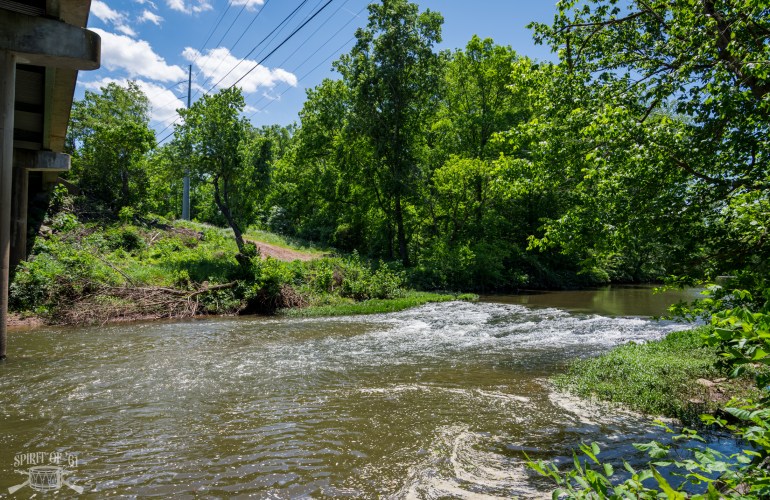
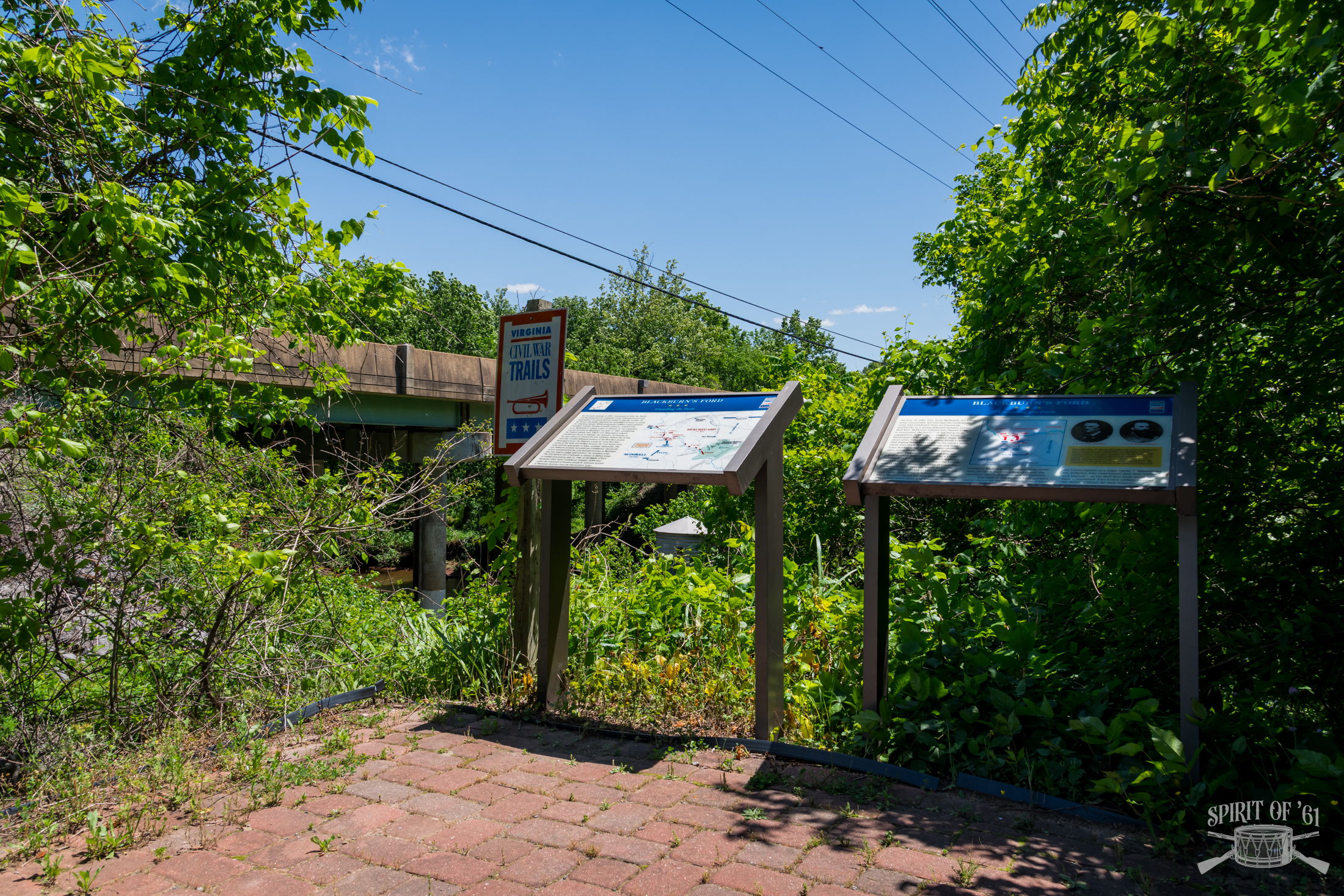
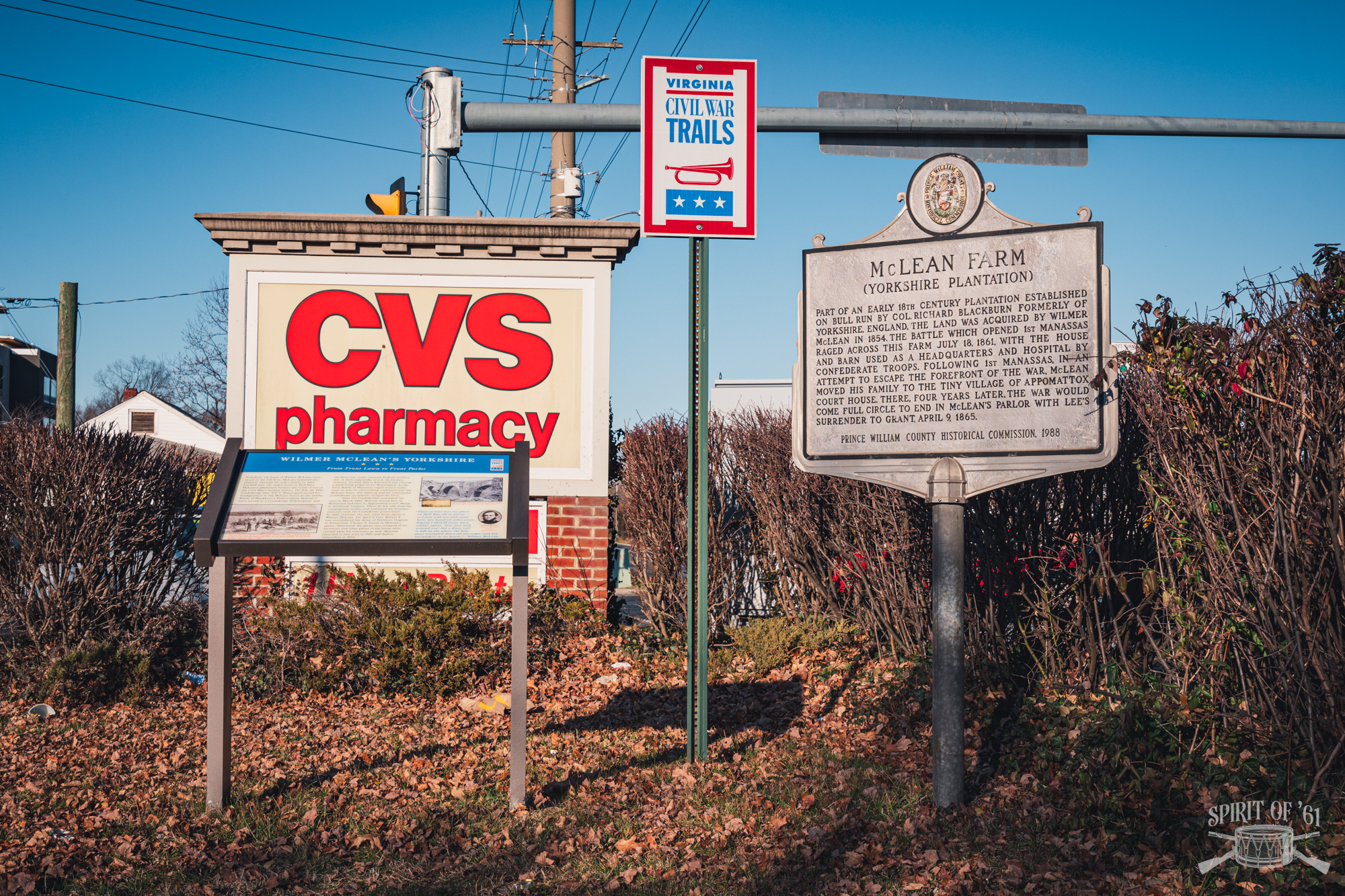
The area surrounding Manassas Junction has undergone significant development in the intervening decades, and there are no monuments to mark the skirmish at Blackburn’s Ford, prelude to the first major battle of the war. A Civil War Trail marker was installed sometime in the last decade or so overlooking the Centreville Road bridge crossing Bull Run.
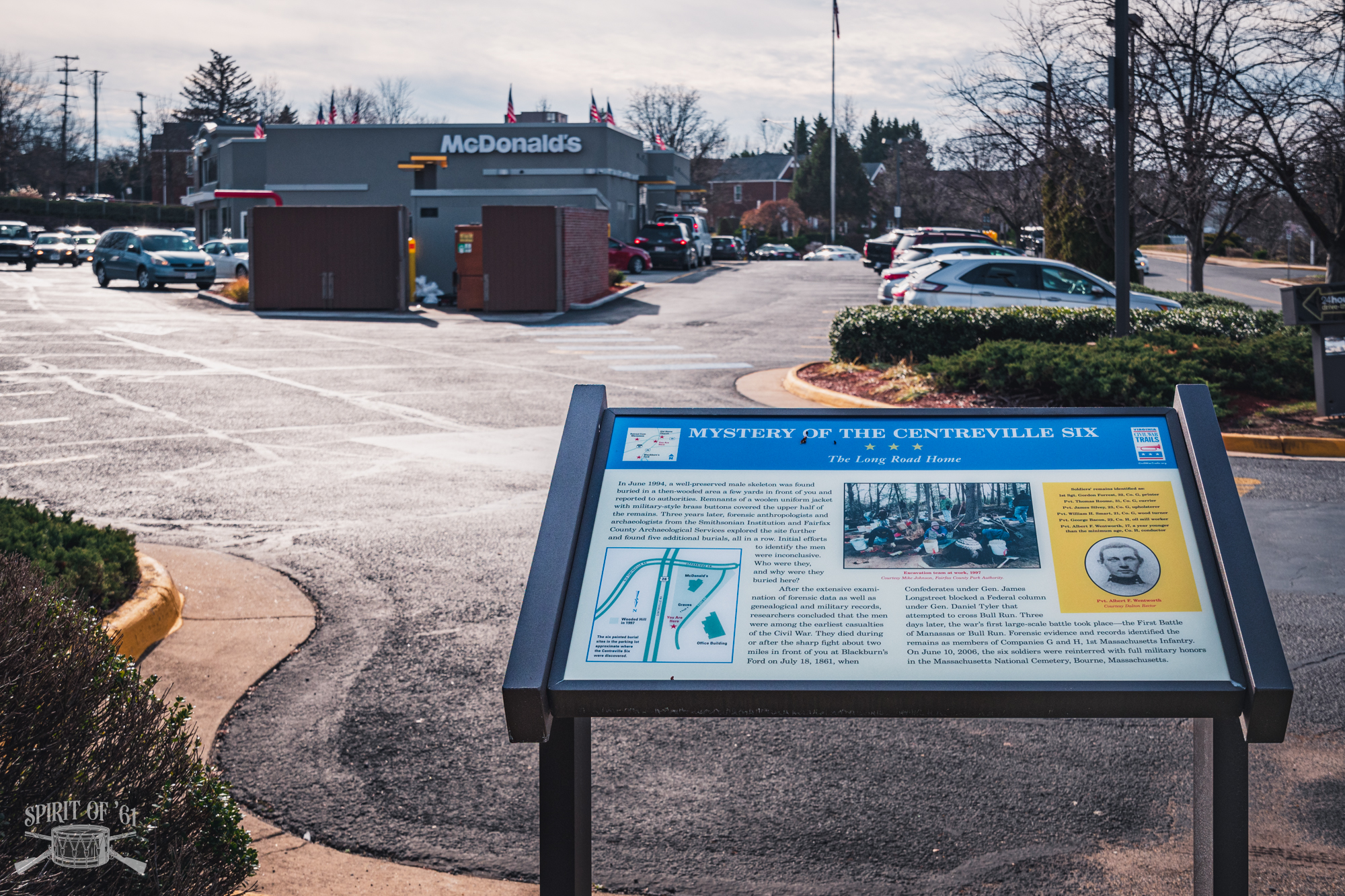
In 1994, Kevin Ambrose was metal-detecting in the woods north of the battlefield and discovered the unmarked graves of six soldiers from the 1st Massachusetts Infantry who were killed during the battle. An investigation by the Smithsonian Institution determined their likely identities and the remains were repatriated to Massachusetts and buried with honors. A McDonald’s now stands at the location.
Blackburn’s Ford Civil War Trails historical markers are located at the Bull Run-Occoquan Trail Parking Lot on the north bank of Bull Run Creek near 7152 Centreville Road, south of Comptons Corner (GPS coordinates 38.803493, -77.449756). The McDonald’s where the six Union soldiers’ bodies were discovered is located at 5931 Fort Drive in Centreville, Virginia. Six blue rectangles mark their former burial spots.
Location
GPS Coordinates — 38.80348, -77.44975
Primary Sources
Reports and Letters
- July 16 General Orders No. 17 from Brig. Gen. Irvin McDowell
- July 17 Report of Brig. Gen. Irvin McDowell
- July 17 Report of Col. Orlando B. Willcox
- July 18 Report of Col. Thomas Jordan
- July 18 Report of Brig. Gen. Irvin McDowell
- July 18 Report of Col. Orlando B. Willcox
- July 19 Report of Col. Thomas Jordan
- July 19 Report of Brig. Gen. Irvin McDowell
- July 19 Report of Col. Israel B. Richardson
- July 19 Report of Col. Montgomery D. Corse, 17th Virginia Infantry
- July 24 Report of Col. R.E. Rodes
- July 25 Report of Capt. Del. Kemper
- July 26 Report of Col. J.B. Kershaw
- July 27 Report of Col. R.C.W. Radford
- July 27 Report of Brig. Gen. Daniel Tyler
- July 29 Report of Lieut. Col. J.W. Henagan
- July 31 Report of Brig. Gen. M.L. Bonham, C.S. Army
- July 31 Report of Col. E.B.C. Cash
- July 31 Report of Col. Jubal A. Early
- August 1 Report of Lieut. C.W. Squires
- August 2 Report of Col. J. H. Williams
- August 2 Report of Maj. John B. Walton
- August 2 Report of Col. T.G. Bacon
- August 1861 Report of Brig. Gen. Pierre Gustave Toutant-Beauregard
- 1861 Report of Brig. Gen. James Longstreet, C.S. Army
Secondary Sources
Andrus, Michael J. The Brooke, Fauquier, Loudoun and Alexandria Artillery. Lynchburg: H.E. Howard, Inc., 1990.
Bell, Robert T. 11th Virginia Infantry. Lynchburg: H.E. Howard, Inc., 1985.
Davis, William C. Battle at Bull Run: A History of the First Major Campaign of the Civil War. Mechanicsburg: Stackpole Books, 1977, 1995.
Detzer, David. Donnybrook: The Battle of Bull Run, 1861. Orlando: Harcourt, Inc., 2004.
Fry, James B. “McDowell’s Advance to Bull Run” in Battles and Leaders of the Civil War, Vol. I. New York: The Century Co., 1887.
Gottfried, Bradley M. The Maps of First Bull Run: An Atlas of the First Bull Run (Manassas) Campaign, Including the Battle of Ball’s Bluff, June – October 1861. New York: Savas Beatie, 2009.
Gunn, Ralph White. 24th Virginia Infantry. Lynchburg: H.E. Howard, Inc., 1987.
Longacre, Edward G. The Early Morning of War: Bull Run, 1861. Norman: University of Oklahoma Press, 2014.
Riggs, David F. 7th Virginia Infantry. Lynchburg: H.E. Howard, Inc., 1982.
Wallace, Lee A., Jr. 1st Virginia Infantry. Lynchburg: H.E. Howard, Inc., 1984.
Wallace, Lee A., Jr. 17th Virginia Infantry. Lynchburg: H.E. Howard, Inc., 1990.
Wallace, Lee A., Jr. The Richmond Howitzers. Lynchburg: H.E. Howard, Inc., 1993.
Updated: 20 May 2025
Created: 17 March 2021
 Spirit of '61