Friday, May 31, 1861
In the early days of the Civil War, a nighttime skirmish near Cloud’s Mill led to confusion, tragedy, and one of the first Union casualties of the conflict. What seemed like an enemy ambush may have been something far more chaotic—a fatal case of friendly fire.
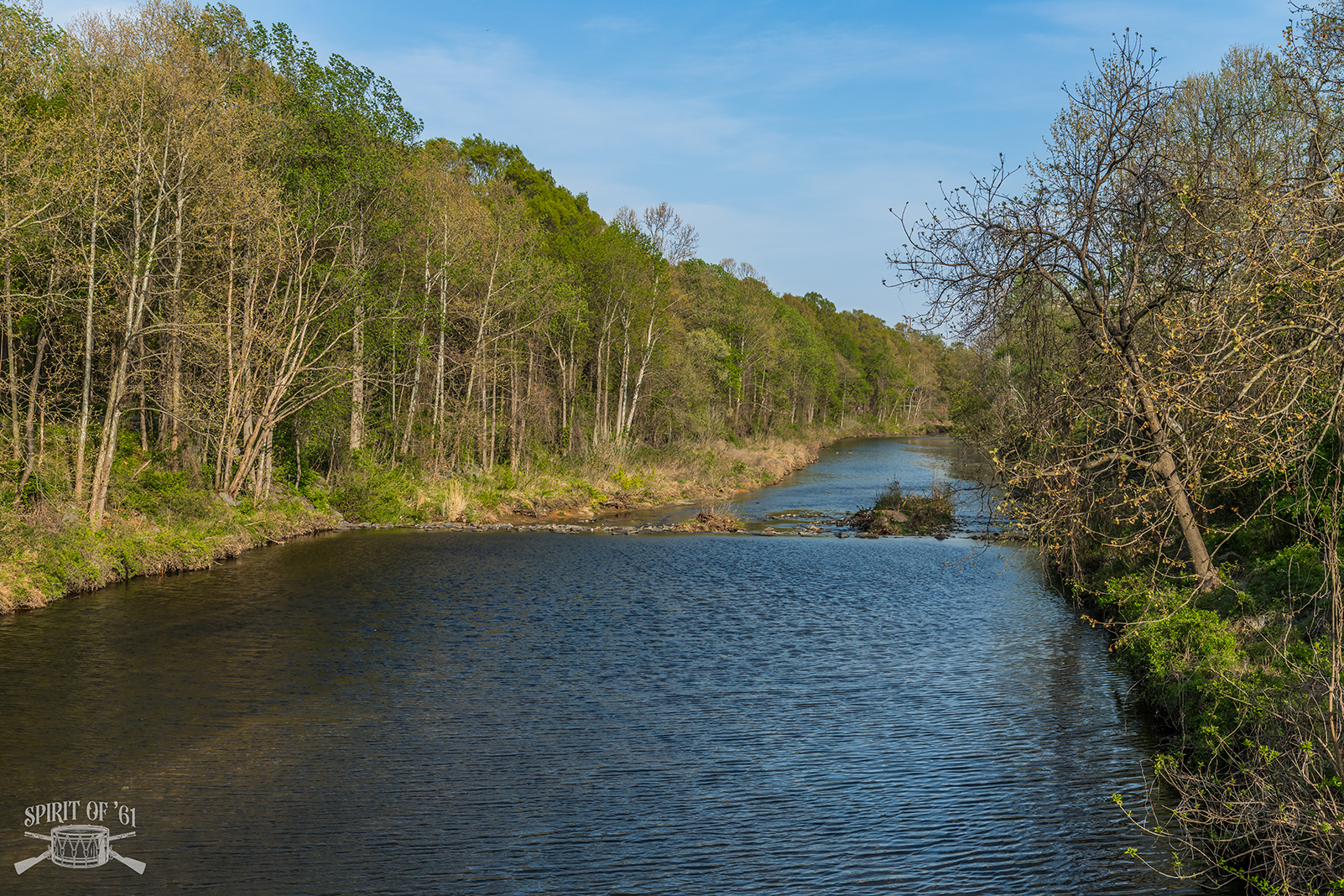
Narrative
The Action at Cloud’s Mill was fought on Friday, May 31, 1861 between Union forces commanded by Capt. William F. Roth and Capt. Michael Tagan (or Fegan) and unknown Virginian militia in Arlington County, Virginia. The action, most likely a friendly-fire incident (though we’ll never know for certain), had no effect on the overall strategic situation.
On May 23, 1861, Virginia voters ratified secession, and at 2 a.m. the next day, eleven full regiments, with accompanying engineers, cavalry, and artillery, crossed the bridges into northern Virginia from Washington, DC, and by boat to Alexandria. The 1st Michigan Volunteer Infantry (3 months), led by Colonel Orlando B. Willcox, crossed Long Bridge and proceeded to Alexandria overland, while the 11th New York Volunteer Infantry (First New York Zouaves), led by Colonel Elmer E. Ellsworth, occupied Alexandria by boat from the Potomac River.
Ellsworth, a close friend of President Abraham Lincoln, was killed by James W. Jackson, proprietor of the Marshall House inn, shortly after removing a Confederate flag from the inn’s roof. Virginia militia forces fled the town, destroying bridges and railroad tracks along the Orange & Alexandria Railroad as they retreated. Captain Mottrom Dulany Ball and 35 members of his Chesterfield Troop were captured without firing a shot. By May 28, both the 1st Michigan and the 11th New York had set up camp on Shuter’s (or Shooter’s) Hill, west of Alexandria along the Little River Turnpike leading to Fairfax Court House.
Approximately three miles west of Shuter’s Hill, near Holmes Run on the north side of the Little River Turnpike, stood a mill owned by James Cloud. The mill, an unremarkable four-story brick structure, was “noted for nothing but the millions of horrible fleas bred in its vicinity.” Its wheel was powered by a muddy stream, largely hidden by weeds and brush. Captain Ebenezer Butterworth and Company C of the 1st Michigan—the “Coldwater Cadets”—seized the mill, confiscating 400 barrels of flour and hundreds of bushels of wheat. Southern newspapers accused them of forcibly evicting James Cloud’s family and ransacking their belongings.
Around the same time, Major General Robert E. Lee visited Manassas Junction to inspect Brigadier General Milledge L. Bonham’s defensive preparations. Lieutenant Colonel Richard S. Ewell, a former U.S. Regular Army officer, assumed command of the Virginia cavalry at Fairfax Court House, where the Warrenton Rifles, Rappahannock Cavalry, and Prince William Cavalry were stationed. Both cavalry units were poorly armed, and the Warrenton Rifles had only just arrived. The Goochland and Hanover Light Dragoons were positioned at Fairfax Station, 3.5 miles to the south.
On the night of May 31, approximately 25 men from Company E, the “Steuben Guard” of the 1st Michigan, were stationed on picket duty at Cloud’s Mill under Captain William F. Roth. Company G of the 11th New York, led by Captain Michael A. Tagan, was preparing to relieve them. At around 10 p.m., impatient Michigan soldiers began walking back to camp to check on their replacements. The two groups met on the road and returned to the mill together.
Accounts differ on what happened next, but it is generally agreed that some members of the 1st Michigan were inside the mill, while the New York Zouaves took position in a nearby storehouse. In the darkness, a sergeant noticed several figures emerging from a barn. “Who goes there?” he demanded twice, receiving the same response each time: “Soldiers.” Unsatisfied, the sergeant raised his musket and fired. A volley of gunfire followed. The Michigan troops began shooting from inside the mill, but in the confusion, no one could distinguish friend from foe.
Captain Roth rushed outside to assess the situation but quickly dropped to the ground to avoid being caught in the crossfire. Two soldiers from the 11th New York, 21-year-old Private Henry S. Cornell and Private Joseph Cushman, were hit—Cornell mortally. As he lay dying, Cornell reportedly exclaimed, “Who would not die a soldier’s death?” After the shooting stopped, troops searched the woods but found no signs of enemy soldiers.
Northern journalists, unfamiliar with the local geography, initially misreported the skirmish as taking place at Arlington Mills, three miles to the north. While most believed they had been ambushed by an enemy patrol, others were not so certain. In a letter published in the New York Leader on July 3, 1861, under the pseudonym Harry Lorrequer, Private Arthur O’Neil Alcock—a former newspaper editor in Company A of the 11th New York—wrote:
“The simple fact is, that since we left New York we have had only one man killed and two wounded, as is said, by the fire of the rebels. And it is by no means certain that these were not shot by friends in mistake, or by themselves accidentally or through carelessness.”
Cornell was given a hero’s funeral, attended by his entire company, and was initially buried beneath a tree on a hill near Camp Ellsworth. However, his body was soon exhumed and transported to New York, where he now rests in Green-Wood Cemetery in Brooklyn.
The Action at Cloud’s Mill did not change the strategic picture, but it underscored the confusion and inexperience that marked the early days of the Civil War. The chaotic skirmish, likely a friendly-fire incident, revealed the challenges of coordinating troops unfamiliar with the terrain. It also reflected the tense and uncertain nature of Union operations in newly occupied Virginia, where every shadow and distant movement could be mistaken for a lurking enemy. It was a stark reminder of the costly learning curve that both sides would endure in the conflict to come.
Opposing Forces
Confederate
Unknown Commander
| Unit | Commander(s) | Strength | Killed | Wounded | Captured |
|---|---|---|---|---|---|
| Unknown Scouting Party | Unknown | unk | unk | unk | 0 |
Union
Col. Orlando B. Willcox, Commanding
| Unit | Commander(s) | Strength | Killed | Wounded | Captured |
|---|---|---|---|---|---|
| 1st Michigan Infantry Regiment (3 months), Company E “Steuben Guard” | Capt. William F. Roth | 25 | 0 | 0 | 0 |
| 11th New York Infantry Regiment, Company G | Capt. Michael A. Tagan / Fegan | 40 | 1 | 1 | 0 |
Timeline
May 23, 1861: Virginia voters ratify their state’s Ordinance of Secession.
May 24, 1861: Union troops cross the Potomac River into northern Virginia, securing Arlington Heights and Alexandria. Col. Elmer Ellsworth of the 11th New York “Fire Zouaves” is shot dead by the proprietor of the Marshall House Hotel. Ellsworth is the first Union officer to die in the Civil War.
May 26-28, 1861: 1st Michigan and 11th New York infantry regiments go into camp on Shuter’s (Shooter’s) Hill, just west of town along the Little River Turnpike, where they began constructing Fort Ellsworth in honor of the fallen colonel.
May 28, 1861: Robert E. Lee visits Manassas Junction to inspect Brig. Gen. Milledge L. Bonham’s command.
May 29, 1861: Lt. Col. Richard S. Ewell takes command of Confederate cavalry at Fairfax Court House.
May 30, 1861: Union forces seize several hundred barrels of four at Cloud’s Mill and establish a picket post there.
Battlefield
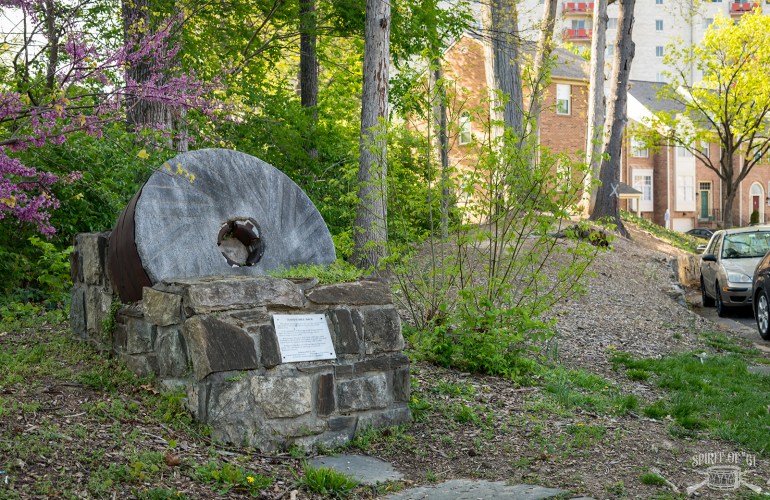
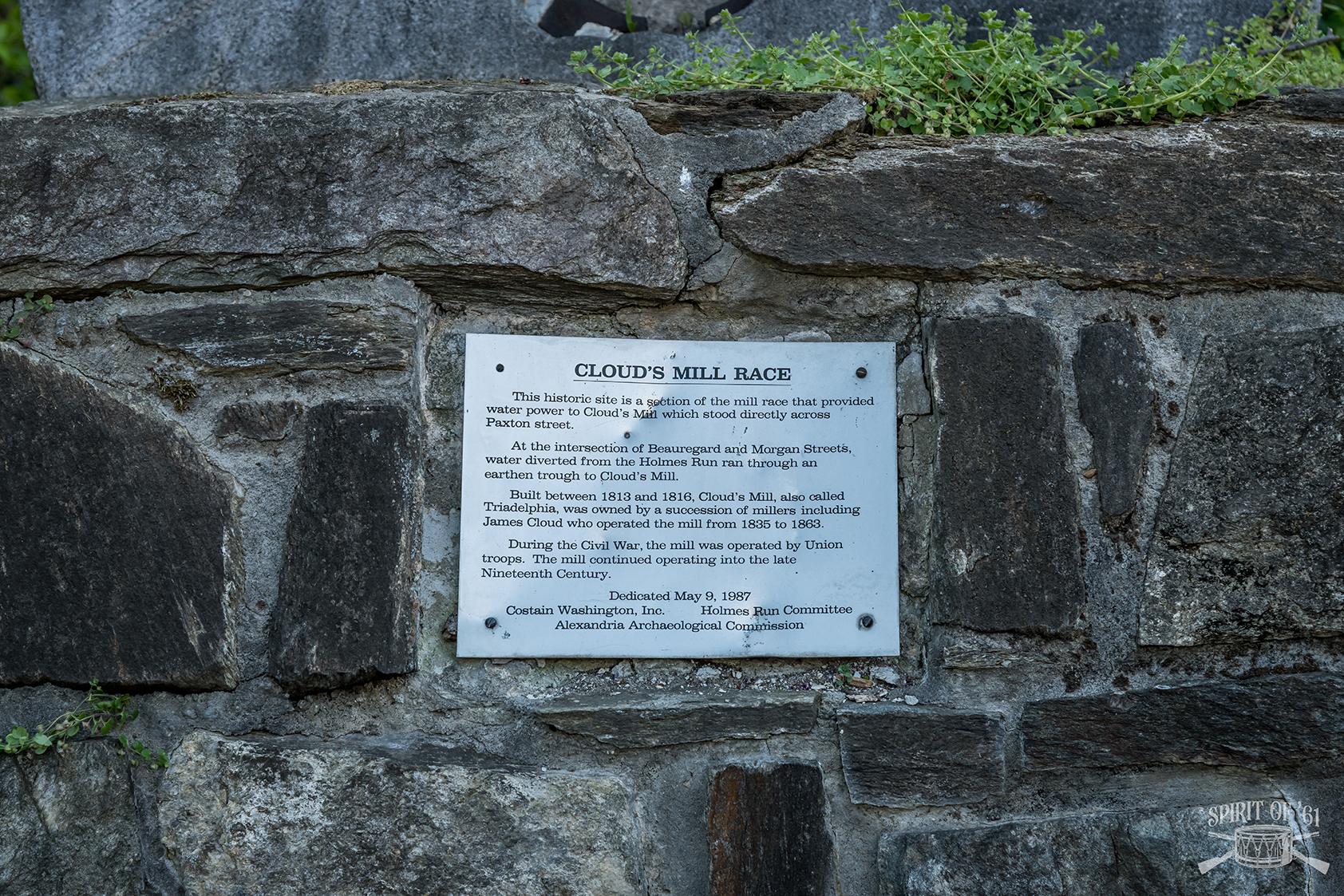
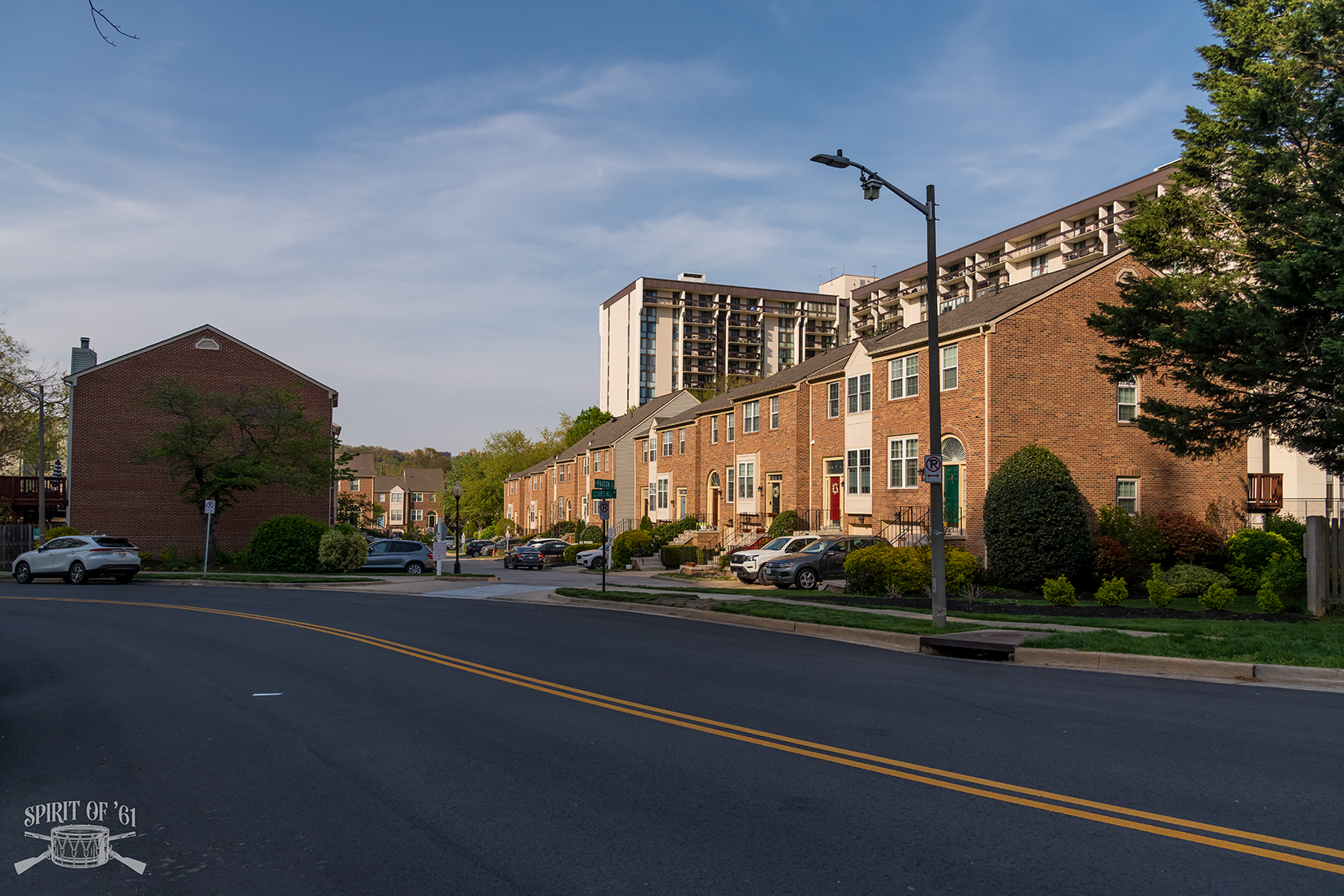
Today, Northern Virginia would be unrecognizable to the men who fought there during the Civil War. Suburban sprawl has reshaped the landscape. What the war didn’t destroy, modern development has erased. The exact date of Cloud’s Mill’s demolition is unknown, but it likely occurred in the late 1930s or early 1940s. In the 1970s, Alexandria Archaeology discovered remnants of its mill race near a townhouse development. The real estate developer took an interest in preserving what remained. On May 9, 1987, Costain Washington Inc., the Holmes Run Committee, and the Alexandria Archaeological Commission dedicated a memorial marking the surviving section of the mill race.
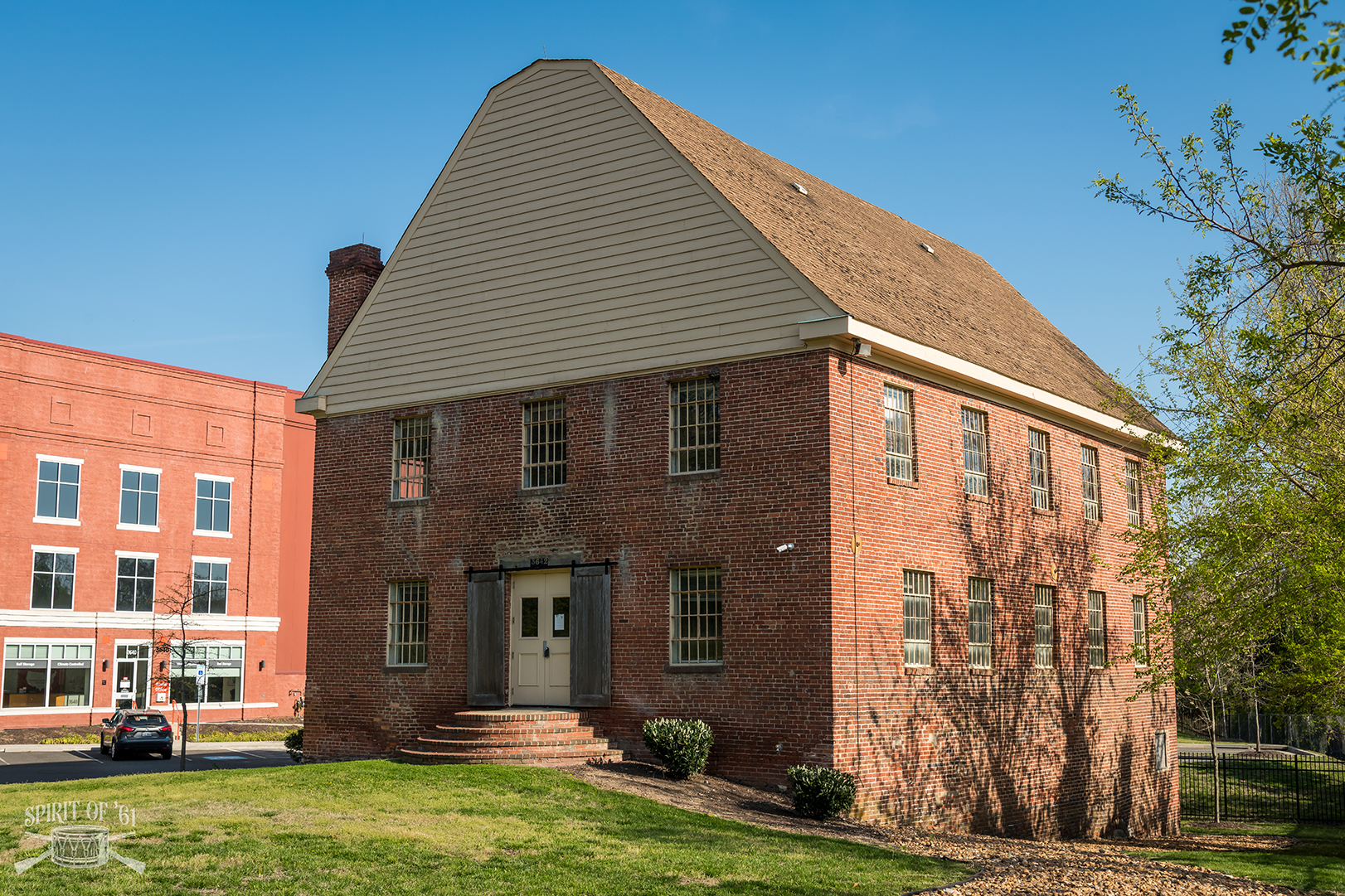
The Mill Race Commemorative Stone now stands on North Paxton Street, near the London Park Towers Apartments, at GPS coordinates 38.814468, -77.123355. Phoenix Mill (also known as Dominion Mill) was built in 1801 near 3640 Wheeler Avenue and is one of Alexandria’s oldest surviving mills. As an early nineteenth-century brick mill still standing, it offers the closest visual reference to what Cloud’s Mill likely looked like. In fact, old photographs of Phoenix Mill have sometimes been mistaken for Cloud’s Mill, suggesting the two shared a similar appearance.
Location
GPS Coordinates — 38.81468, -77.12355
Primary Sources
News Articles
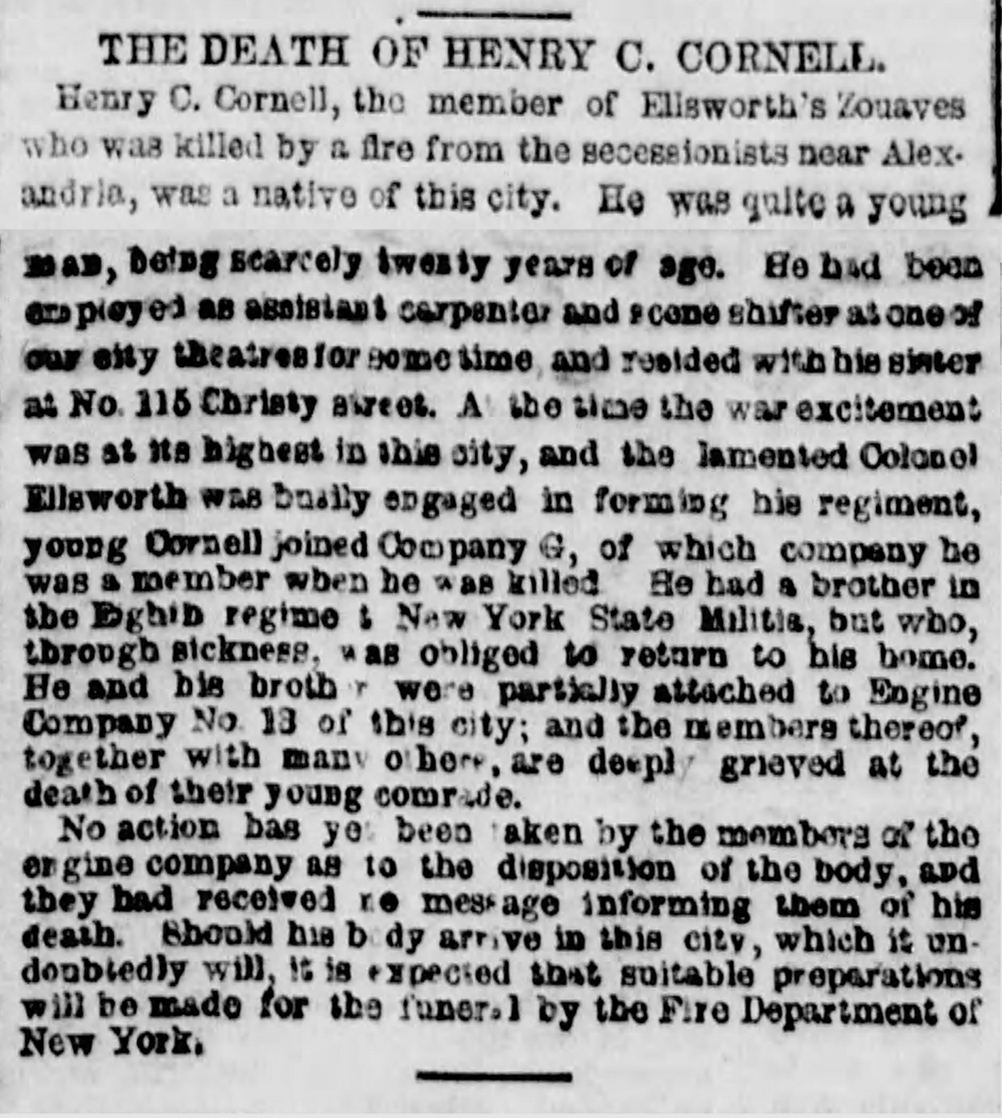
New York Herald (New York, NY) 2 June 1861.
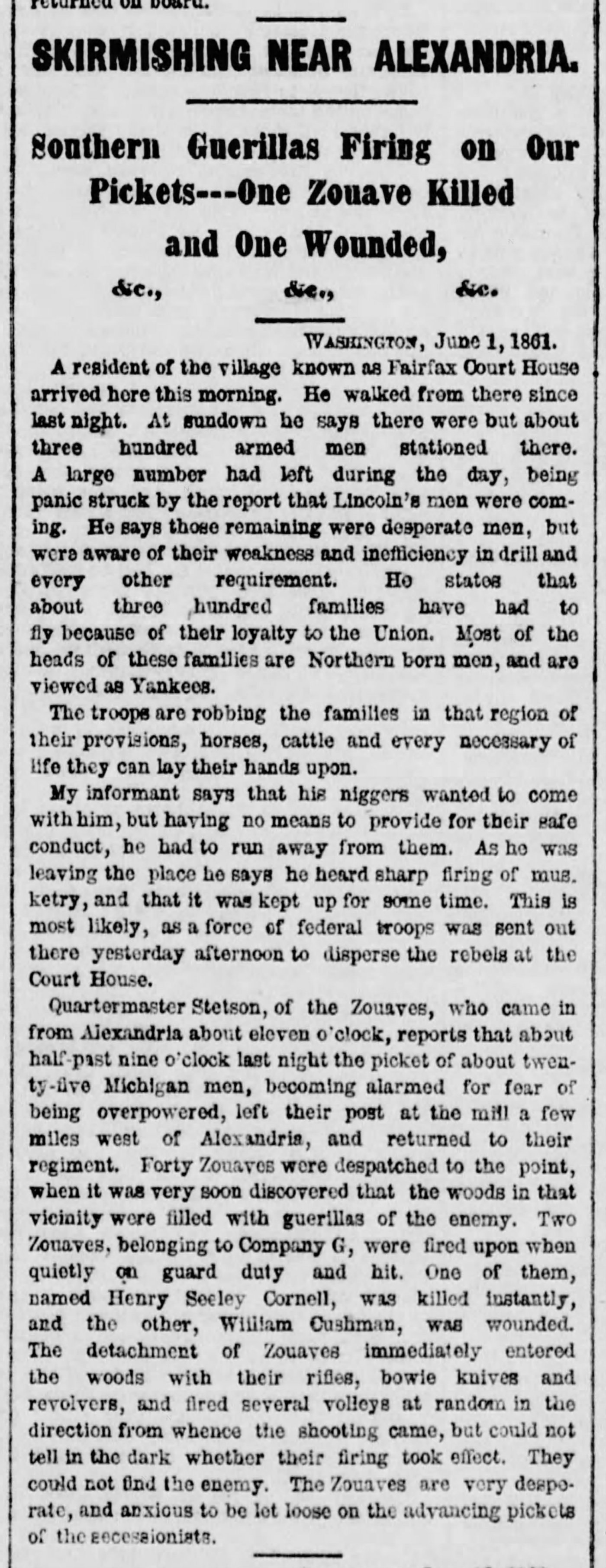
New York Herald (New York, NY) 2 June 1861.
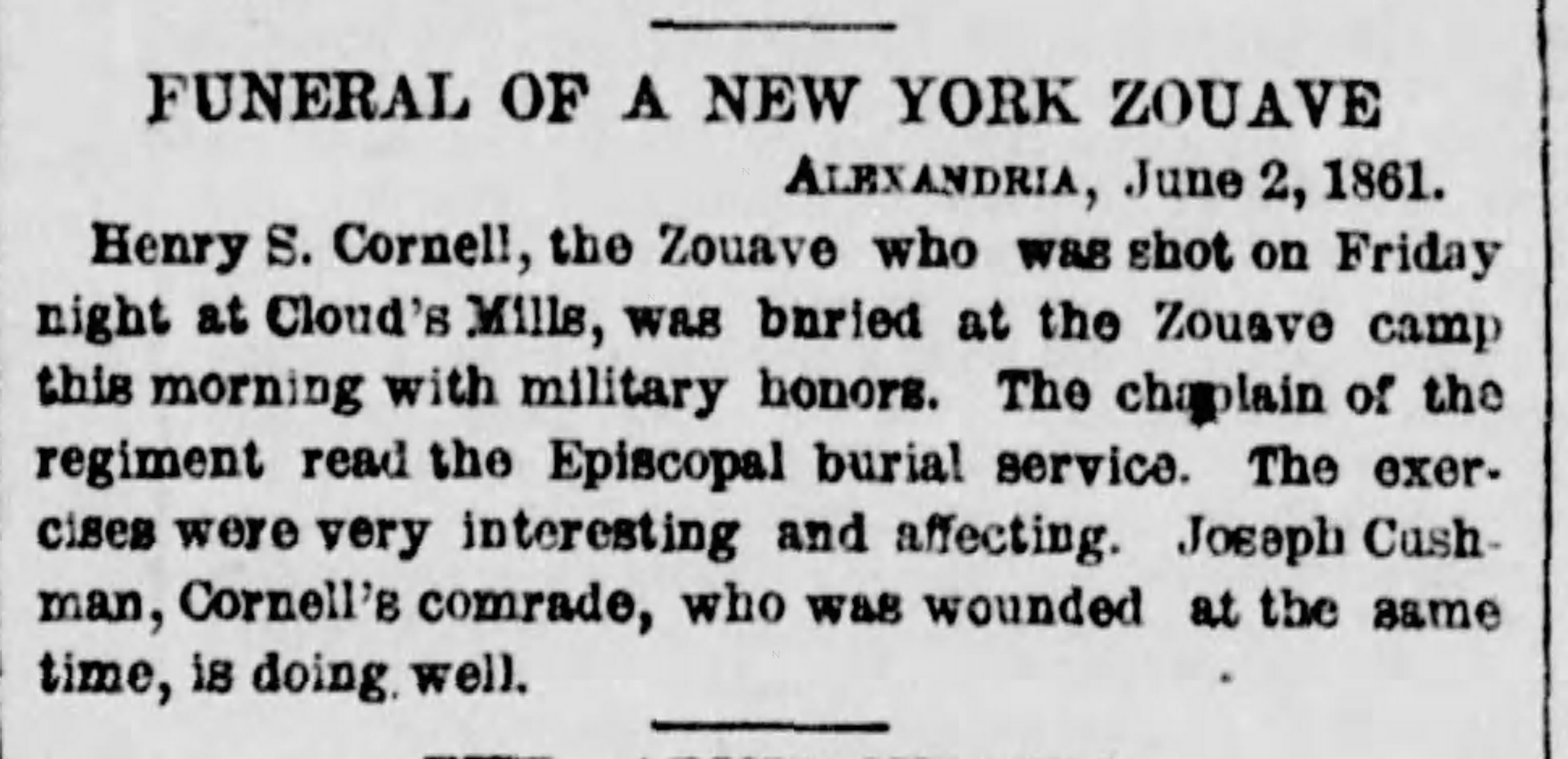
New York Herald (New York, NY) 3 June 1861.
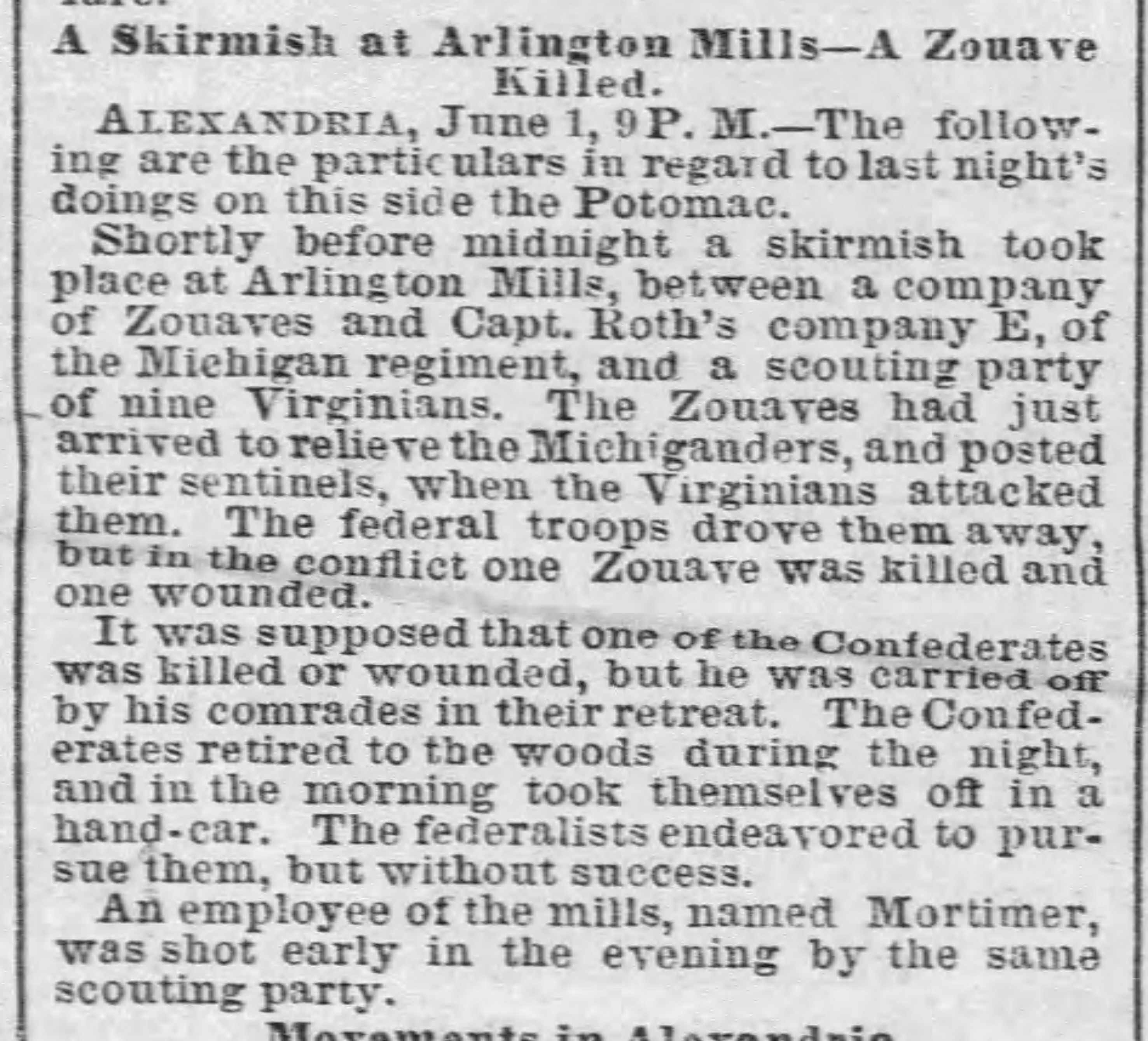
The Baltimore Sun (Baltimore, MD) 3 June 1861.
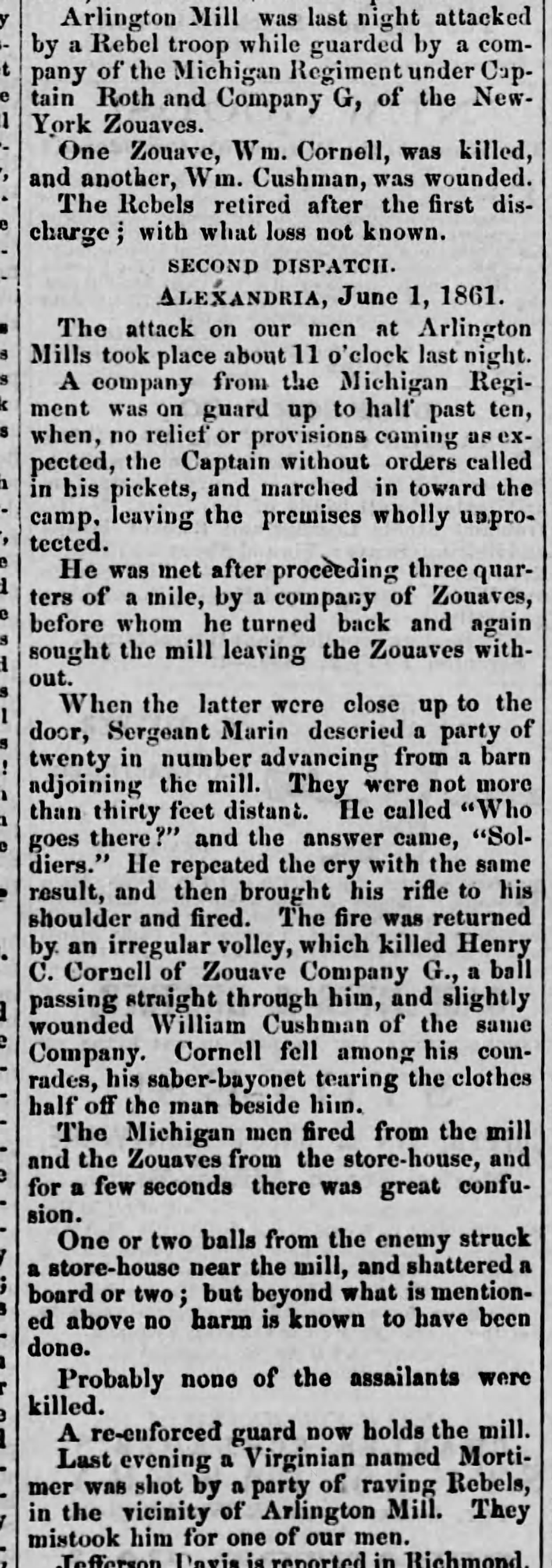
Pittston Gazette (Pittston, PA) 6 June 1861.
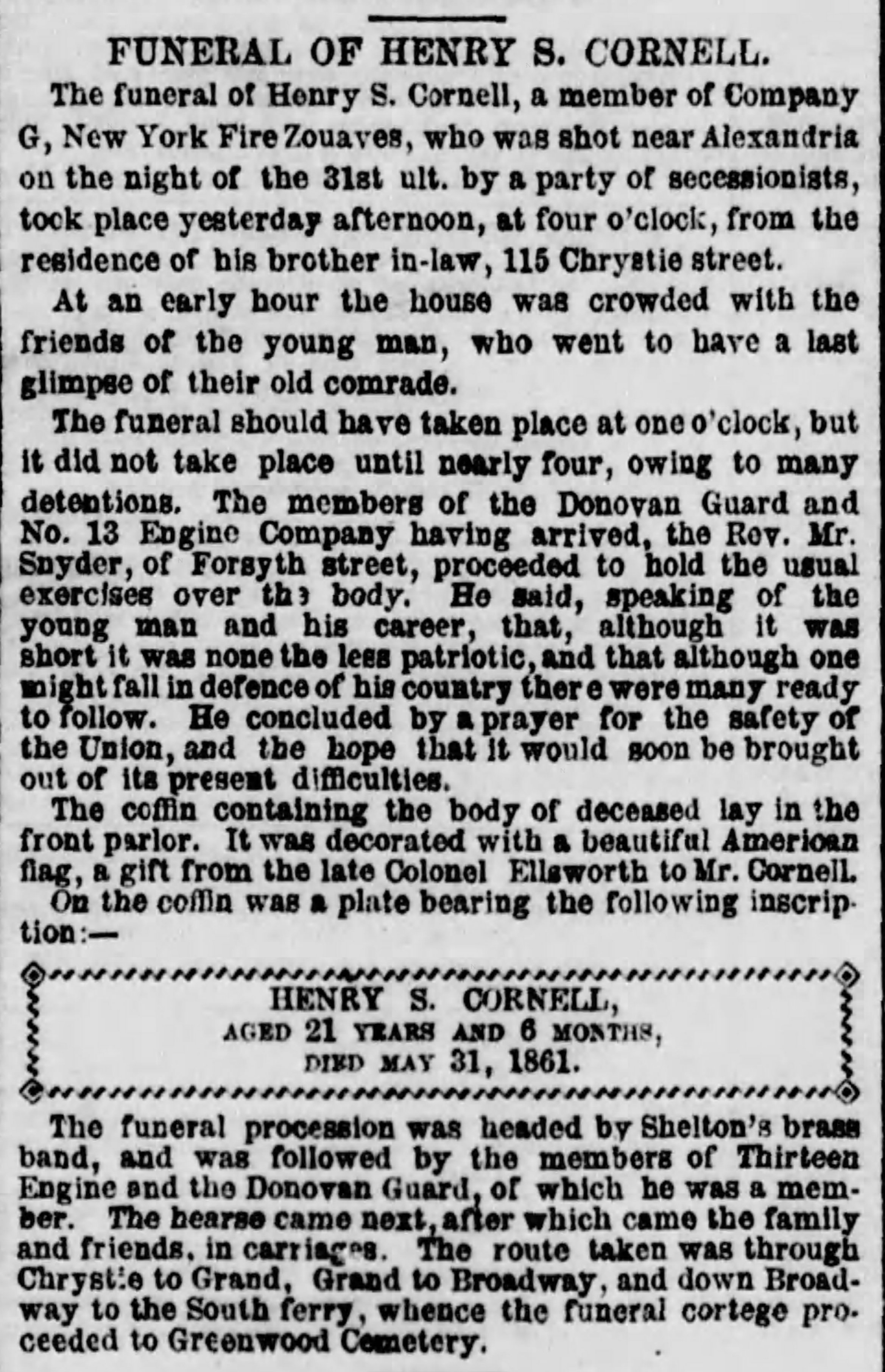
New York Herald (New York, NY) 7 June 1861.
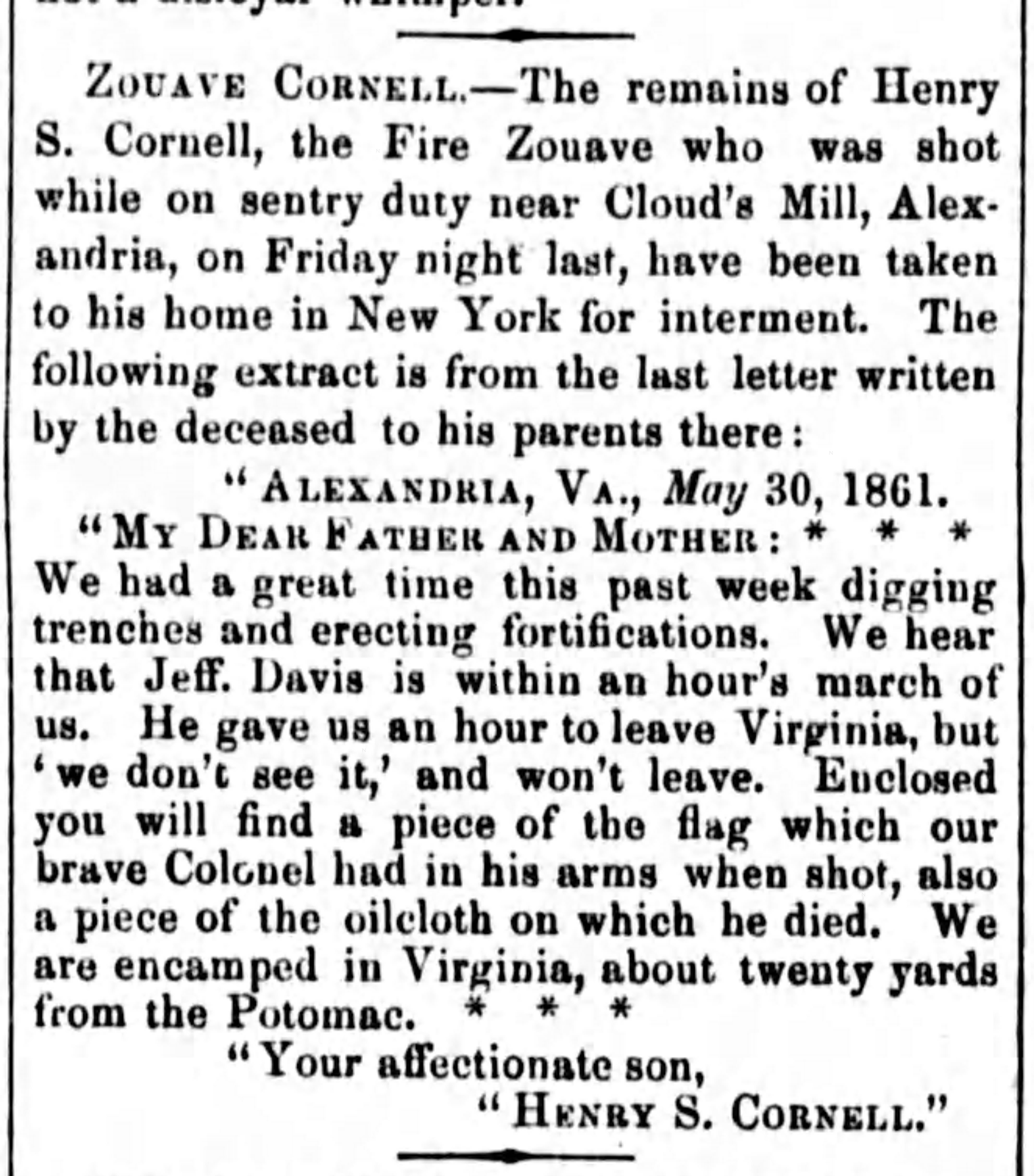
National Republican (Washington, DC) 7 June 1861.
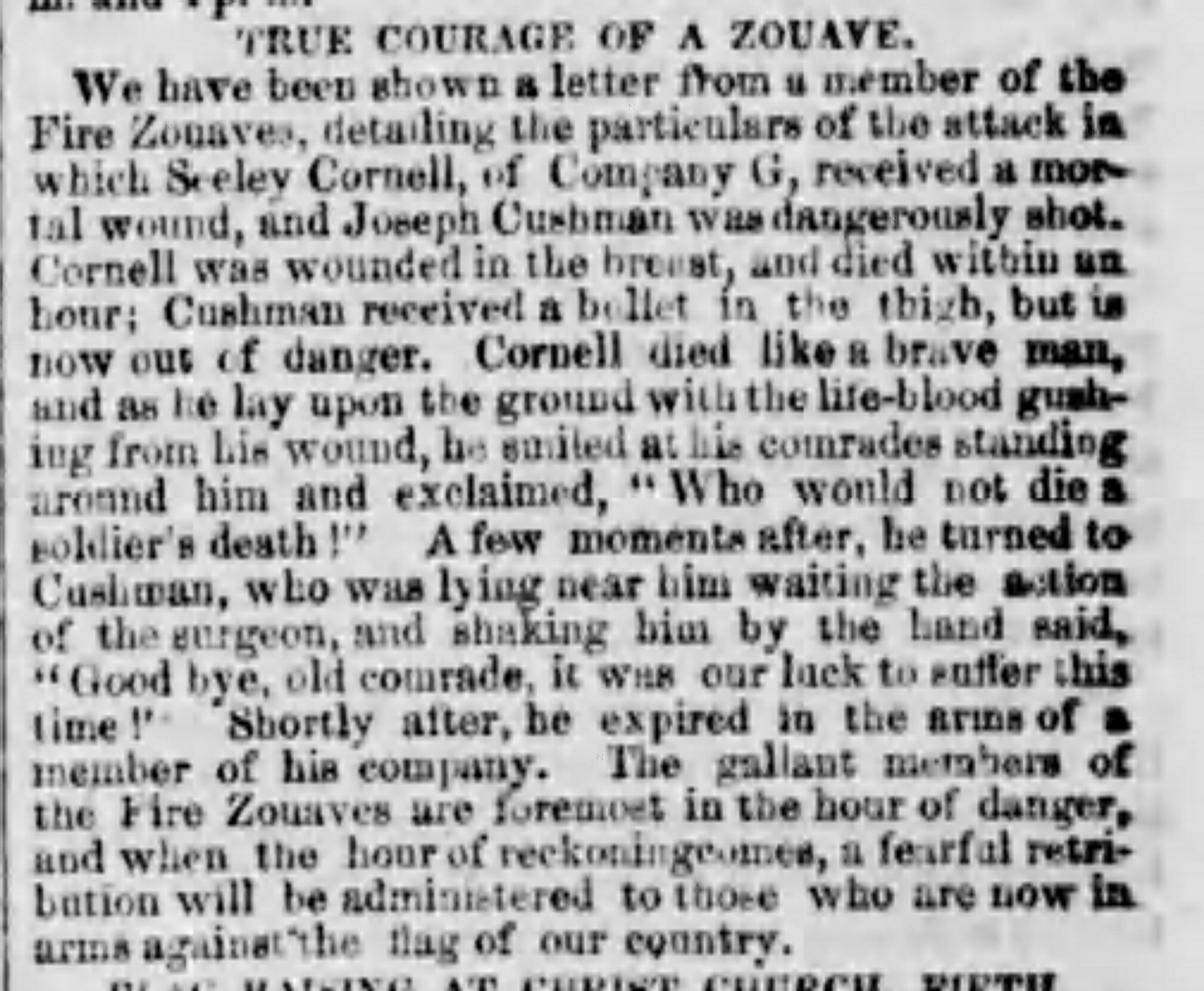
New York Tribune (New York, NY) 9 June 1861.
Reports and Letters
- May 25 Report of Philip St. George Cocke, Colonel, Virginia Volunteers
- May 28 Brig. Gen. Irvin McDowell General Orders No. 1
- June 6 Letter from J.A.S., 11th New York Infantry, to the Sunday Mercury
Sources
Beiro, Jean A. A History of Cloud’s Mill in Alexandria, Virginia. Edited by John G. Motheral. Alexandria: Alexandria Archaeology Publications, 1986.
Bell, John W., ed. Memoirs of Governor William Smith, of Virginia: His Political, Military, and Personal History. New York: The Moss Engraving Company, 1891.
Connery, William S. Civil War Northern Virginia 1861. Charleston: The History Press, 2011.
Isham, Frederic S., ed. History of the Detroit Light Guard: Its Records and Achievements. Detroit: Detroit Light Guard, 1896.
Musick, Michael P. 6th Virginia Cavalry. Lynchburg: H.E. Howard, Inc., 1990.
Schroeder, Patrick A. and Brian C. Pohanka, eds. With the 11th New York Fire Zouaves in Camp, Battle, and Prison: The Narrative of Private Arthur O’Neil Alcock in the New York Atlas and Leader. Lynchburg: Schroeder Publications, 2011.
Scott, Robert G., ed. Forgotten Valor: The Memoirs, Journals, & Civil War Letters of Orlando B. Willcox. Kent: Kent State University Press, 1999.
Styple, William B., ed. Writing and Fighting the Civil War: Soldier Correspondence to the New York Sunday Mercury. Kearny, NJ: Belle Grove Publishing Company, 2000.
Wenzel, Edward T. Chronology of the Civil War in Fairfax County, Part I. CreateSpace: By the Author, 2015.
Updated: 18 May 2025
Created: 2 February 2025
 Spirit of '61