Tuesday, May 7, 1861
This short exchange of cannon fire is significant for being the first hostile engagement between Virginia and the U.S. government in the Civil War.
Narrative
The Engagement at Gloucester Point was fought on Tuesday, May 7, 1861 between a Union gunboat commanded by Lt. Thomas O. Selfridge, Jr. and a Virginian battery commanded by Lt. John Thompson Brown in Gloucester County, Virginia.
On April 17, 1861, the attack on Fort Sumter and President Abraham Lincoln’s call for 75,000 volunteers to “suppress the rebellion” in the Deep South spurred delegates at the Virginia Convention in Richmond to pass an ordinance of secession, pending the results of a popular referendum on May 23.
A few days later, Virginia militia captured the Gosport Navy Yard at Norfolk, seizing approximately 1,085 cannon and 250,000 pounds of powder. Governor John Letcher appointed Robert E. Lee, recently resigned from the U.S. Army, as a major general in command of Virginia’s Provisional Army and Navy.
On April 27, Lincoln extended the blockade of the seven original Confederate States to include the ports of Virginia and North Carolina. From his post at Fort Monroe at the mouth of the Chesapeake, Flag-Officer Garrett J. Pendergrast attempted to enforce this blockade with the remnants of the fleet he had rescued from Norfolk. With resources stretched thin, the U.S. Navy supplemented its fleet by chartering civilian vessels.
One of these chartered ships was the USS Yankee, a 328-ton side-wheel steamer built in New York City in 1860. Measuring 146 feet in length, the Navy outfitted her with two 32-pounder guns and a crew of 48. The Yankee first helped evacuate the Gosport Navy Yard before serving as a dispatch and escort vessel between Annapolis and Havre de Grace, Maryland.
As Virginia slid inexorably toward war, defensive preparations became urgent.
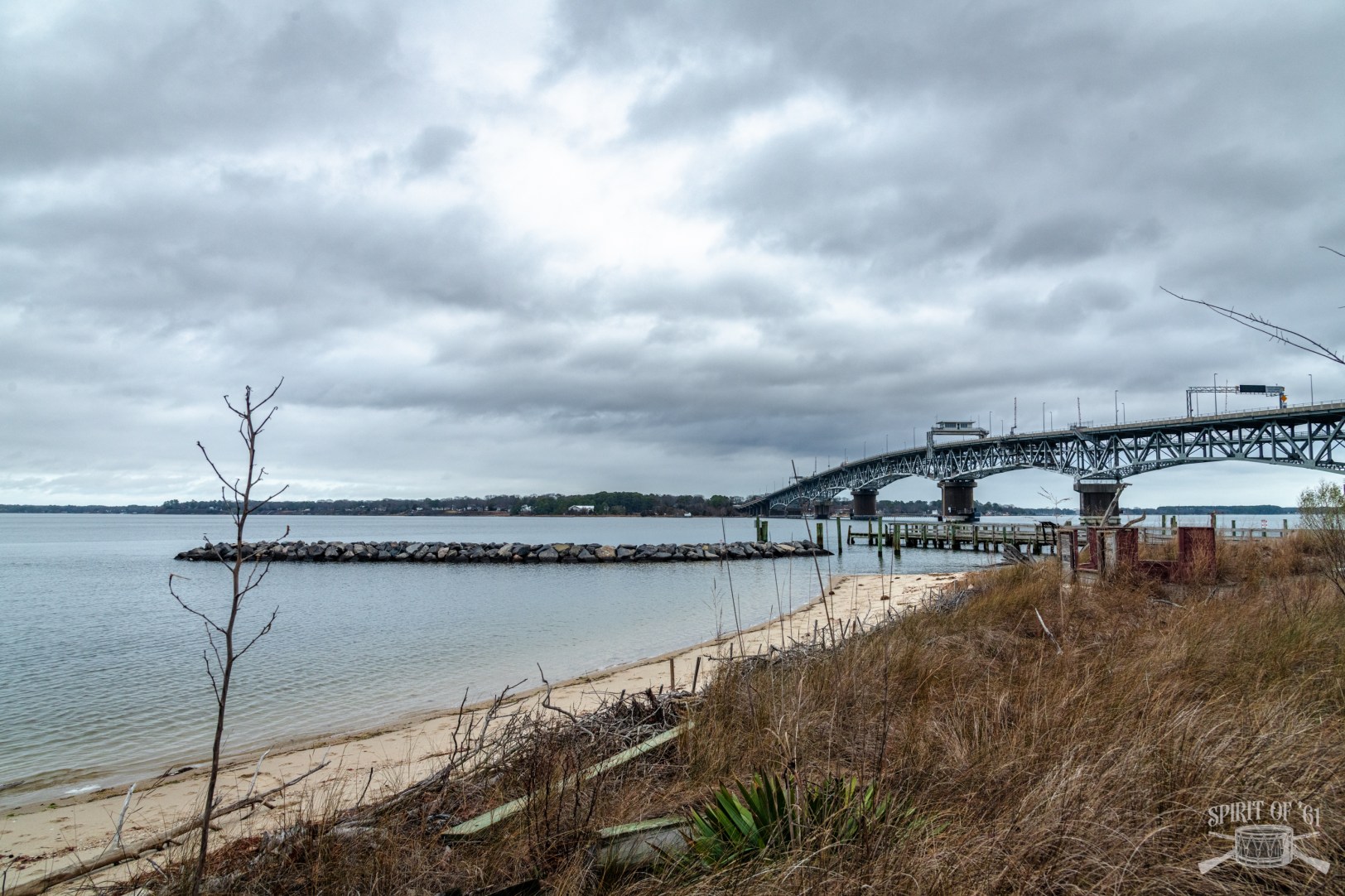
Located across the York River from Yorktown, Gloucester Point (originally Tyndall’s Point) offered a natural defensive position where the river narrows to less than a mile wide. Recognizing its strategic value, British colonists constructed a fort there in 1667, which they later named Fort James. This site became a crucial stronghold for British forces during the American Revolution. Fortifying the point would be vital for preventing the U.S. Navy at Fort Monroe from controlling the York River.
On May 3, Lee appointed Gloucester County native William B. Taliaferro as colonel of Virginia volunteers, placing him in command of the defenses at Gloucester Point. Lee instructed him to cooperate with Virginia Navy Capt. William C. Whittle on the construction of a shore battery. By that time, local militia and enslaved laborers had already begun erecting rudimentary fortifications.
While still in Richmond, Taliaferro wrote to Lee for guidance, asking what he should do if a U.S. Naval ship attempted to pass the point: “Is the attempt to be resisted, or shall I await the institution of more decisive hostilities on the part of the United States authorities?” He could not have foreseen how quickly his question would need an answer.
On May 6, Taliaferro ordered a company of the Richmond Howitzers, led by Lt. John Thompson Brown and equipped with two six-pounder cannons, to reinforce Gloucester Point. They arrived by steamboat from West Point the next morning. At the same time, Flag-Officer Pendergrast ordered Lt. Thomas O. Selfridge, Jr. to sail up the York River with the USS Yankee and examine the fortifications.
As soon as the vessel was spotted, the Richmond Howitzers sprang into action, joined by local civilians who hauled two older cannons down from the county courthouse. A volunteer company, the Gloucester Invincibles, which had not yet mustered into state service, took a supporting position behind the redoubt. Three cannons were positioned inside the fortification and a fourth was placed at the foot of the wharf.
As the Yankee approached within 2,000 yards of Lt. Brown’s battery, Brown made the fateful decision to open fire. The “political question” Taliaferro wrestled with was answered by a 26-year-old lawyer with no military experience.
The Richmond Howitzers fired approximately a dozen shots at the Yankee. From their viewpoint, the steamer “careened to one side,” indicating a successful hit. But the list was caused by the weight of the Yankee’s own guns being moved into firing position. Lt. Selfridge tried to counteract the tilt by shifting equipment and letting water into the starboard ballast tanks. The Yankee returned six rounds, but its guns could not elevate high enough to strike the shore battery.
Seeing the engagement was futile, Selfridge sailed away after thirty minutes. Neither side reported casualties.
Taliaferro arrived at Gloucester Point that evening, missing the fight. The next day, he finally received Lee’s instructions. Ironically, the orders were to do precisely what Lt. Brown had already done: fire a warning shot across the bow, and “if she still persist, you will fire into her.” However, when Lee learned of the incident, he disapproved of them firing from such a long range.
As the first hostile engagement between Virginia and the U.S. government in the Civil War, this brief exchange received surprisingly little press coverage, occurring less than two weeks before Virginia’s secession referendum.
Opposing Forces
Confederate
Col. William B. Taliaferro, Commanding
| Unit | Commander(s) | Strength | Killed | Wounded | Captured |
|---|---|---|---|---|---|
| Richmond Howitzers, 2nd Co. | Lt. John T. Brown | 50 men, 4 guns | 0 | 0 | 0 |
| Gloucester Invincibles | Capt. Powhatan R. Page | 21 men | 0 | 0 | 0 |
Union
Commodore Garrett J. Pendergrast, Commanding
| Unit | Commander(s) | Strength | Killed | Wounded | Captured |
|---|---|---|---|---|---|
| USS Yankee | Lt. Thomas O. Selfridge, Jr. | 48 men, 2 guns | 0 | 0 | 0 |
Timeline
April 17, 1861: Delegates at the Virginia Secession Convention vote in favor of secession, 88 to 55, to be ratified by a referendum on May 23rd.
April 21, 1861: Shortly after midnight, Union forces attempt to destroy Gosport Navy Yard, but Virginia militia capture its dry dock and approximately 1,085 cannon of various sizes.
April 27, 1861: U.S. President Abraham Lincoln extends the naval blockade of seven original Confederate States to include the ports of Virginia and North Carolina.
May 3, 1861: Robert E. Lee appoints Col. William B. Taliaferro commander of defenses at Gloucester Point on the York River opposite Yorktown.
May 7, 1861: The USS Yankee exchanges fire with a Virginia shore battery at Gloucester Point.
Battlefield
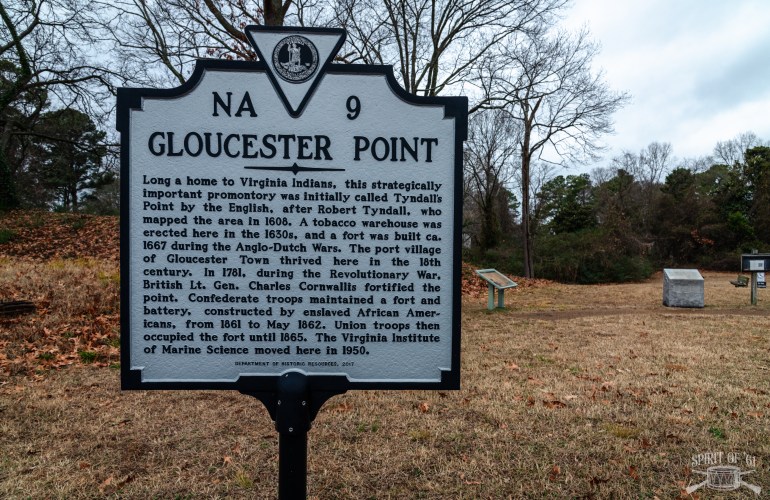
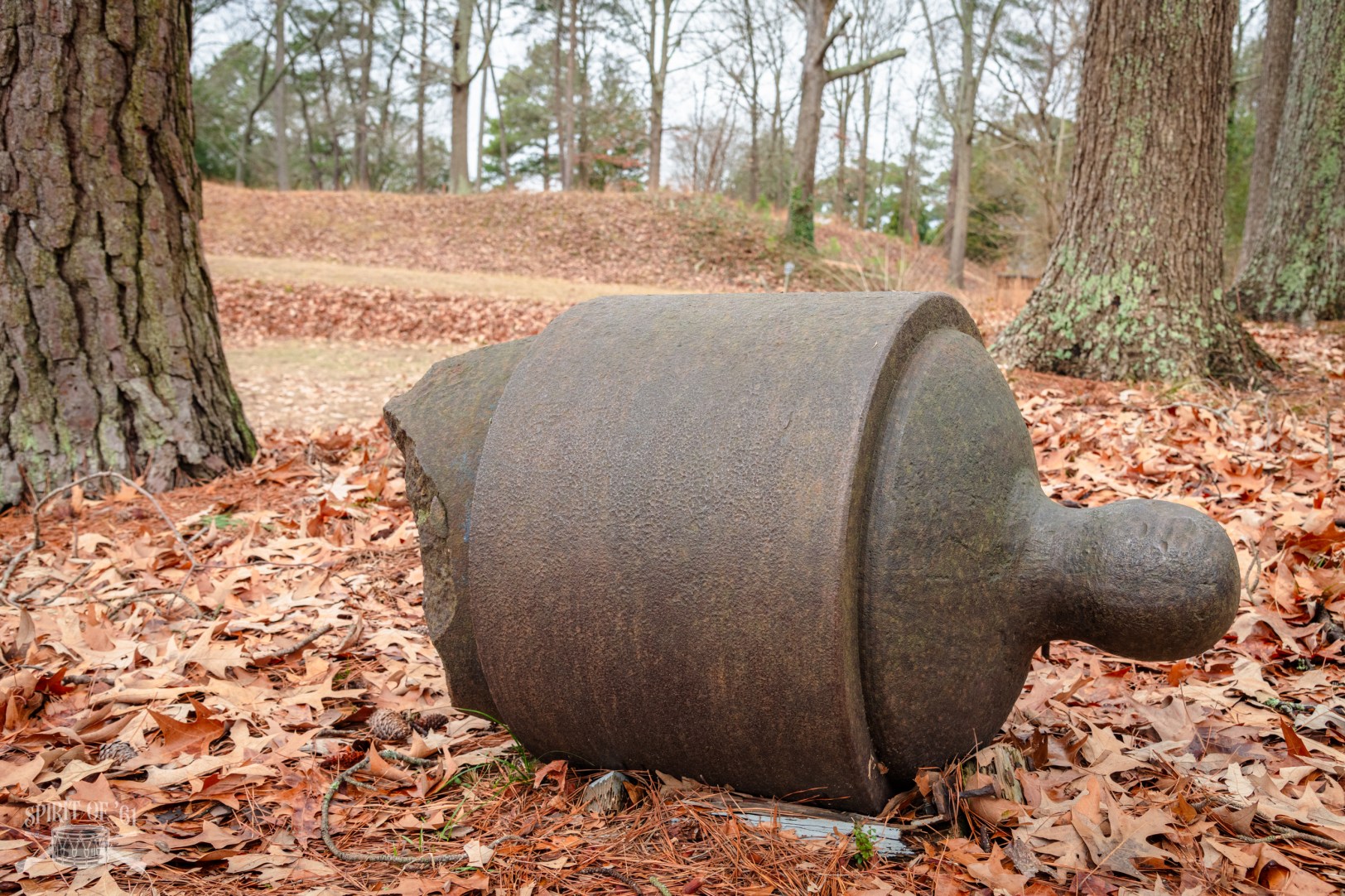
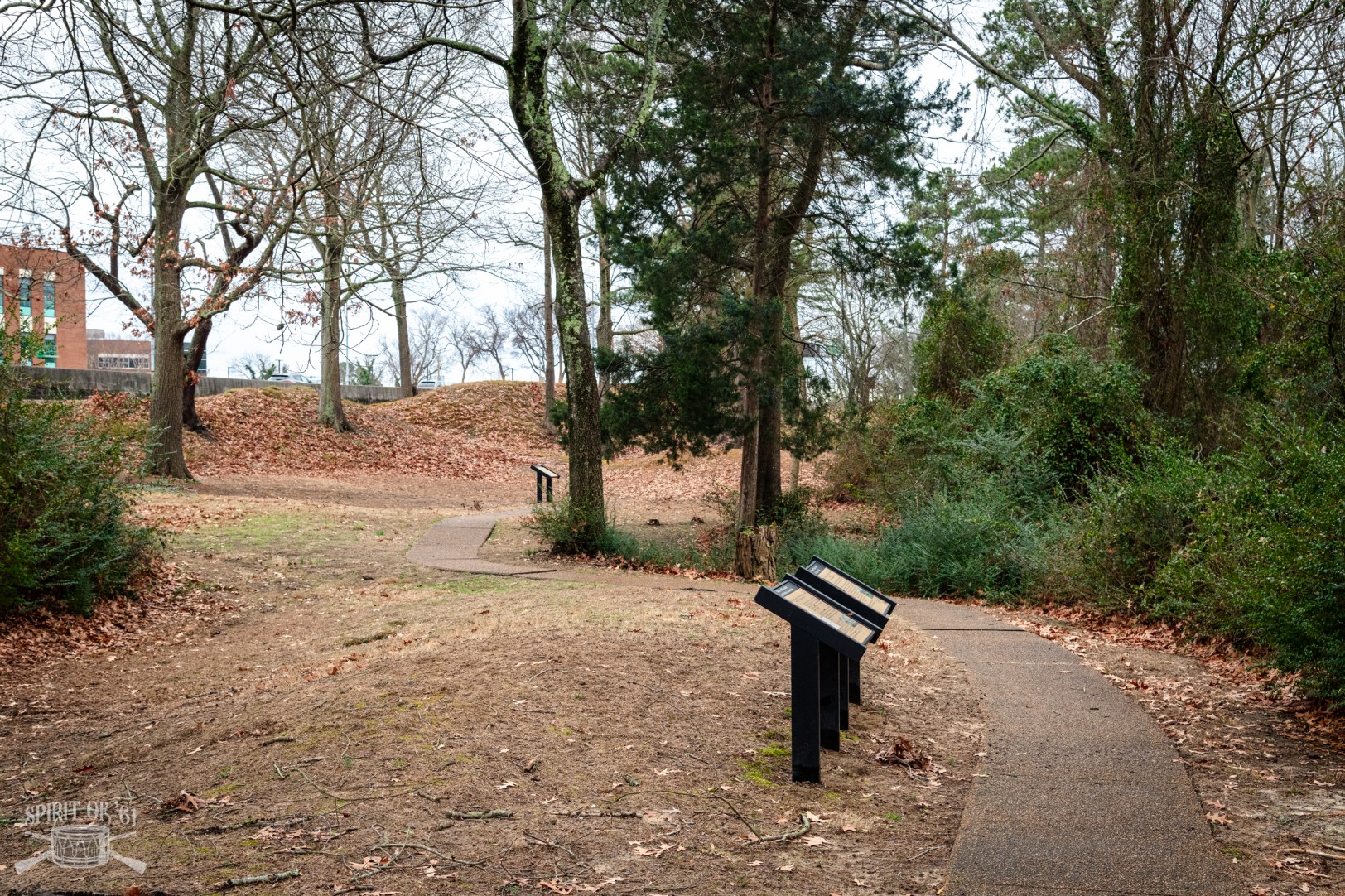
Today, you can visit the former Confederate earthworks at Tyndall’s Point Park off Vernon Street, behind the Gloucester Inn at 7418 Battery Dr, Gloucester Point, VA 23062. There is a small parking lot, and several interpretive markers and signs along the winding trail tell the story of its use during the Revolutionary War and Civil War.
This strategic point has a long history of military activity going back hundreds of years. Tyndall’s Point was renamed Gloucester Point sometime after the Revolutionary War. The existing earthen parapets were built by Confederate engineers during the American Civil War.
Location
GPS Coordinates — 37.24676, -76.50271
Primary Sources
News Articles
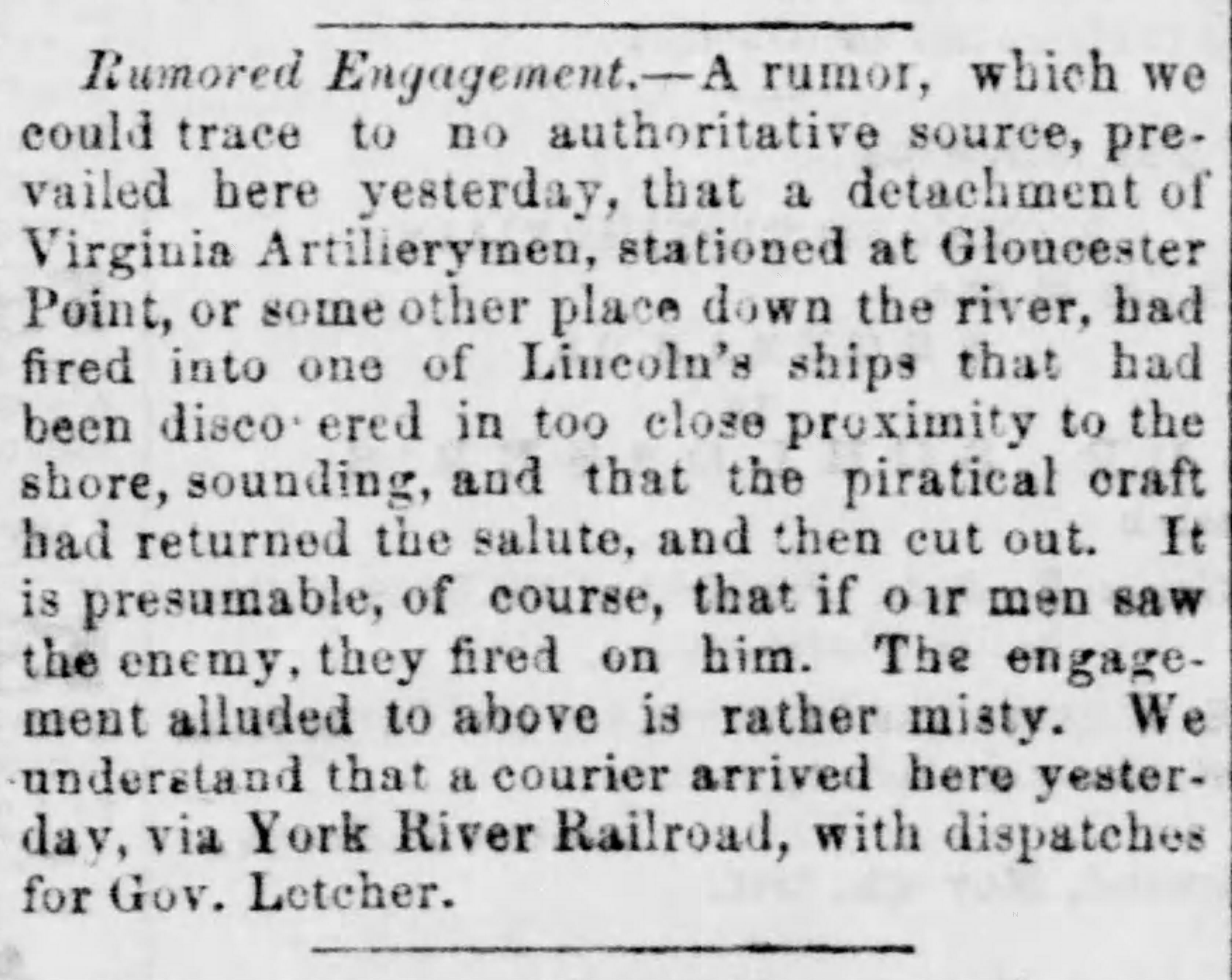
Richmond Daily Dispatch (Richmond, VA) 9 May 1861.
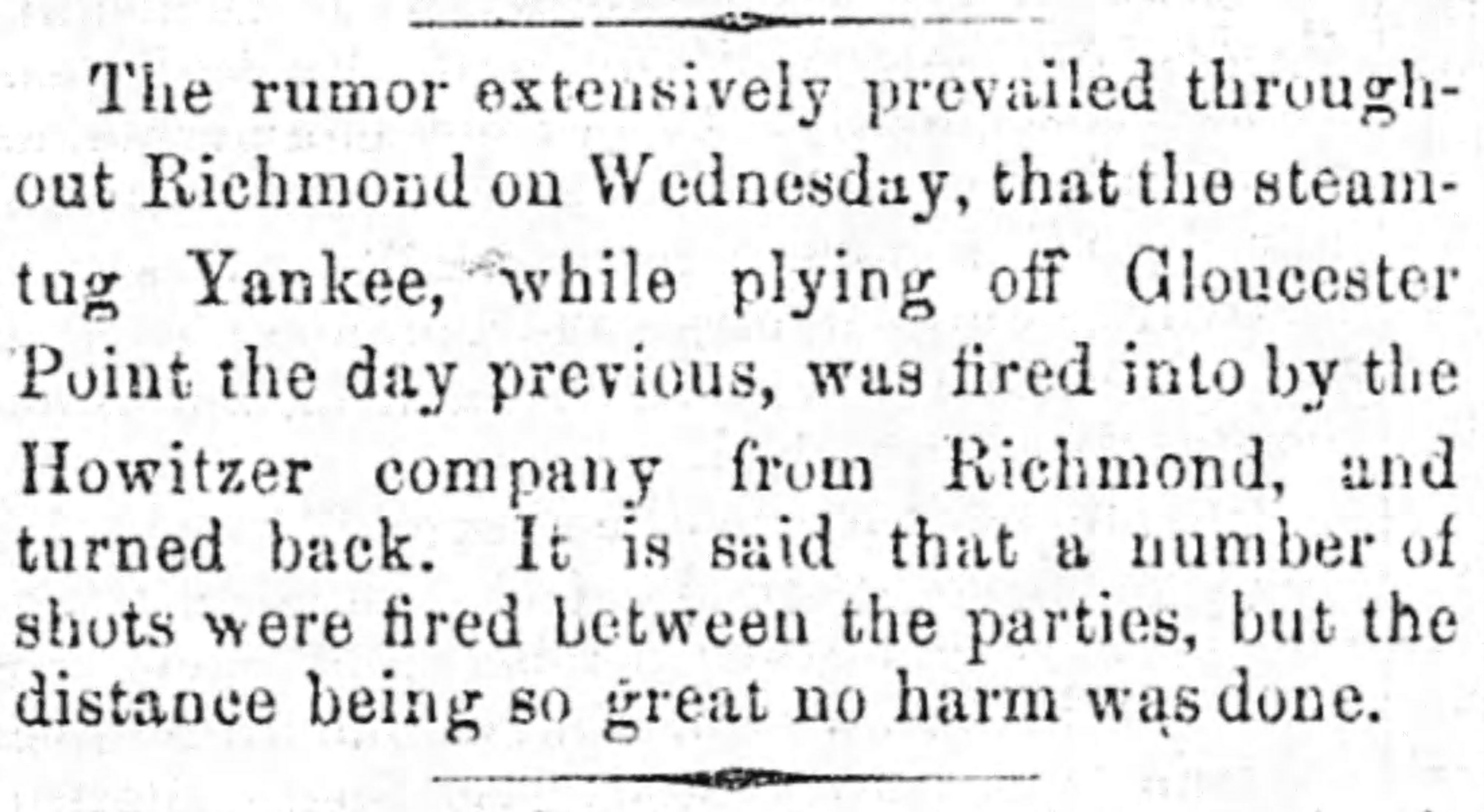
Alexandria Gazette (Alexandria, VA) 10 May 1861.
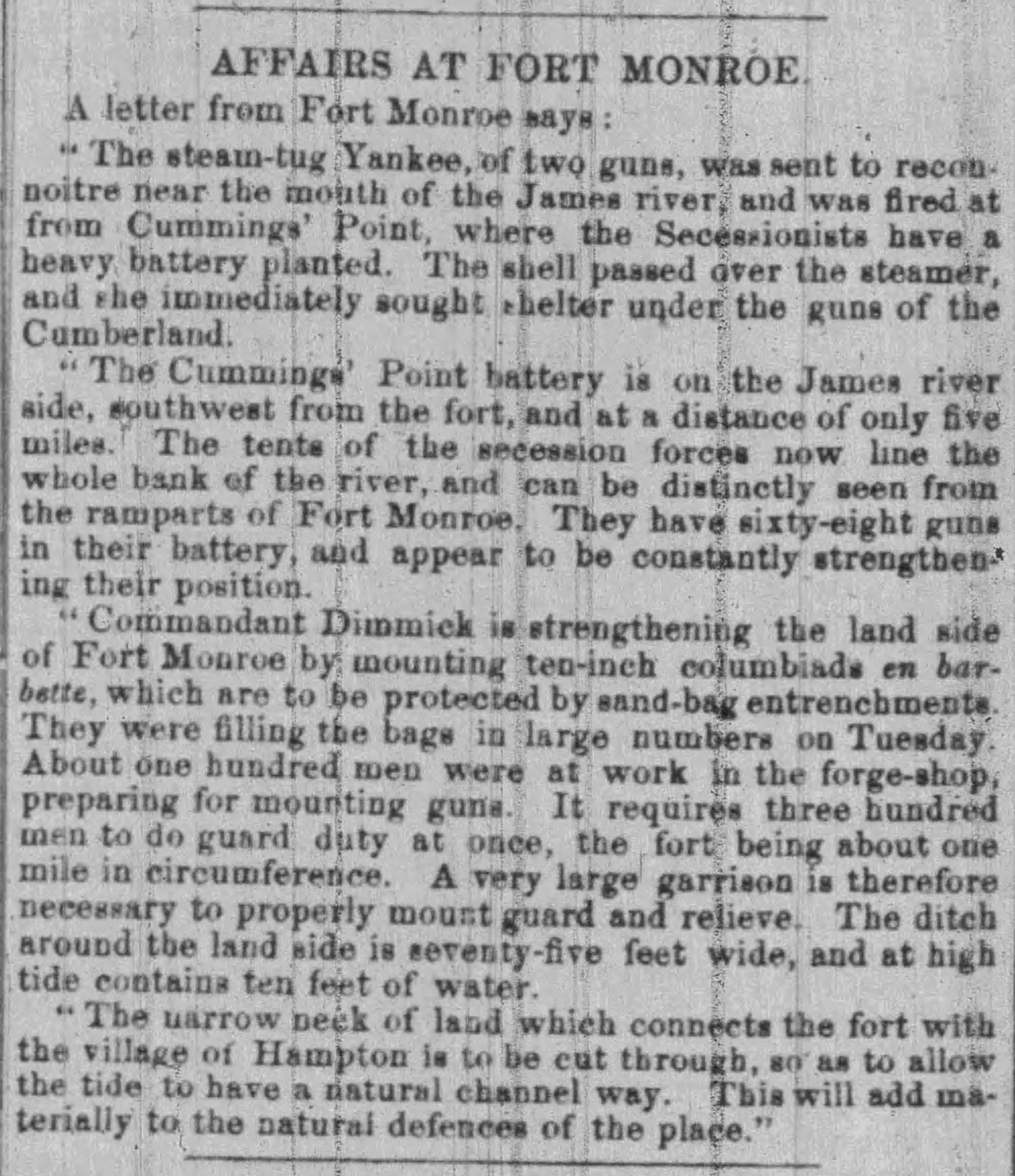
Daily National Intelligencer (Washington, DC) 15 May 1861.
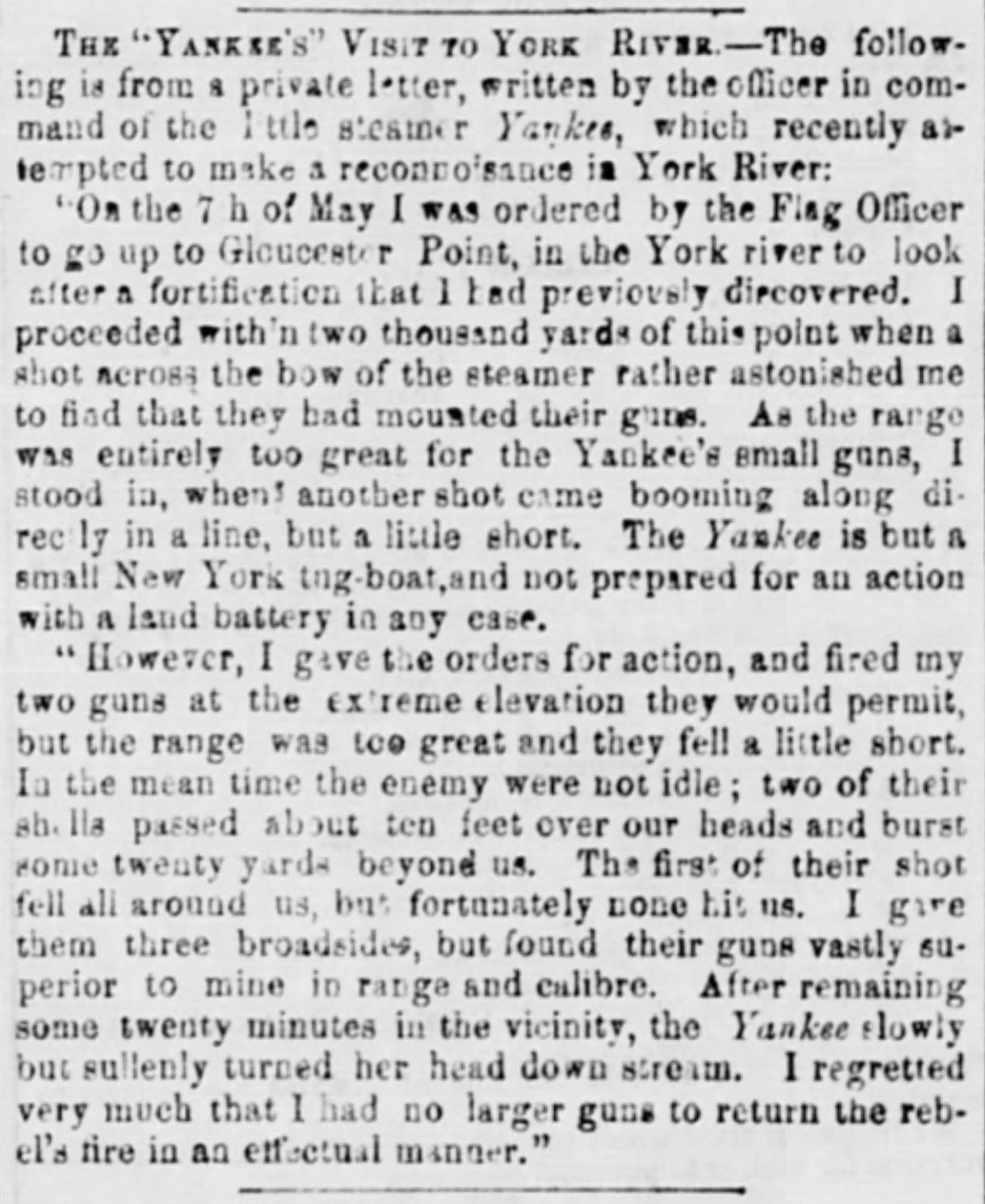
Richmond Whig (Richmond, VA) 21 May 1861.

Richmond Enquirer (Richmond, VA) 4 June 1861.
Reports and Letters
- April 30 Order of Flag-Officer Pendergrast, U. S. Navy, commanding Home Squadron
- May 3 Letter from Robert E. Lee, Major-General, Commanding
- May 6 Report of Lt. Thomas O. Selfridge, Jr., U. S. Navy (1st)
- May 6 Report of Lt. Thomas O. Selfridge, Jr., U. S. Navy (2nd)
- May 6 Letter from William B. Taliaferro, Colonel Volunteers, Commanding Gloucester Point
- May 7 Report of Lt. Thomas O. Selfridge
- May 8 Report of Colonel Taliaferro, C.S. Army, commanding at Gloucester Point
- May 8 Letter from Robert E. Lee, Major-General, Commanding
- May 10 Report of Bvt. Colonel Justin Dimick, Second U. S. Artillery
Diaries and Memoirs
Baker, T. Roberts. “Dairy of T. Roberts Baker, of the Second Howitzer Company, of Richmond, Va.” in Contributions to a History of the Richmond Howitzer Battalion, Pamphlet No. 3. Richmond: Carlton McCarthy & Co., 1884.
Secondary Sources
Mooney, James L. “Yankee I (Tug) 1861-1865.” Naval History and Heritage Command. April 13, 2021. https://www.history.navy.mil/research/histories/ship-histories/danfs/y/yankee-i.html
Scharf, J. Thomas. History of the Confederate States Navy from its Organization to the Surrender of its Last Vessel. New York: Rogers & Sherwood, 1887.
Wallace, Lee A., Jr. The Richmond Howitzers. Lynchburg: H.E. Howard, Inc., 1993.
Wiatt, Alex L. 26th Virginia Infantry. Lynchburg: H.E. Howard, Inc., 1984.
Updated: 20 January 2026
Created: 12 February 2021
 Spirit of '61