
Friday, July 12, 1861
Though a minor skirmish, this lopsided Confederate victory won praise for John Bell Hood’s leadership and set him on the path to rapid promotion.
Narrative
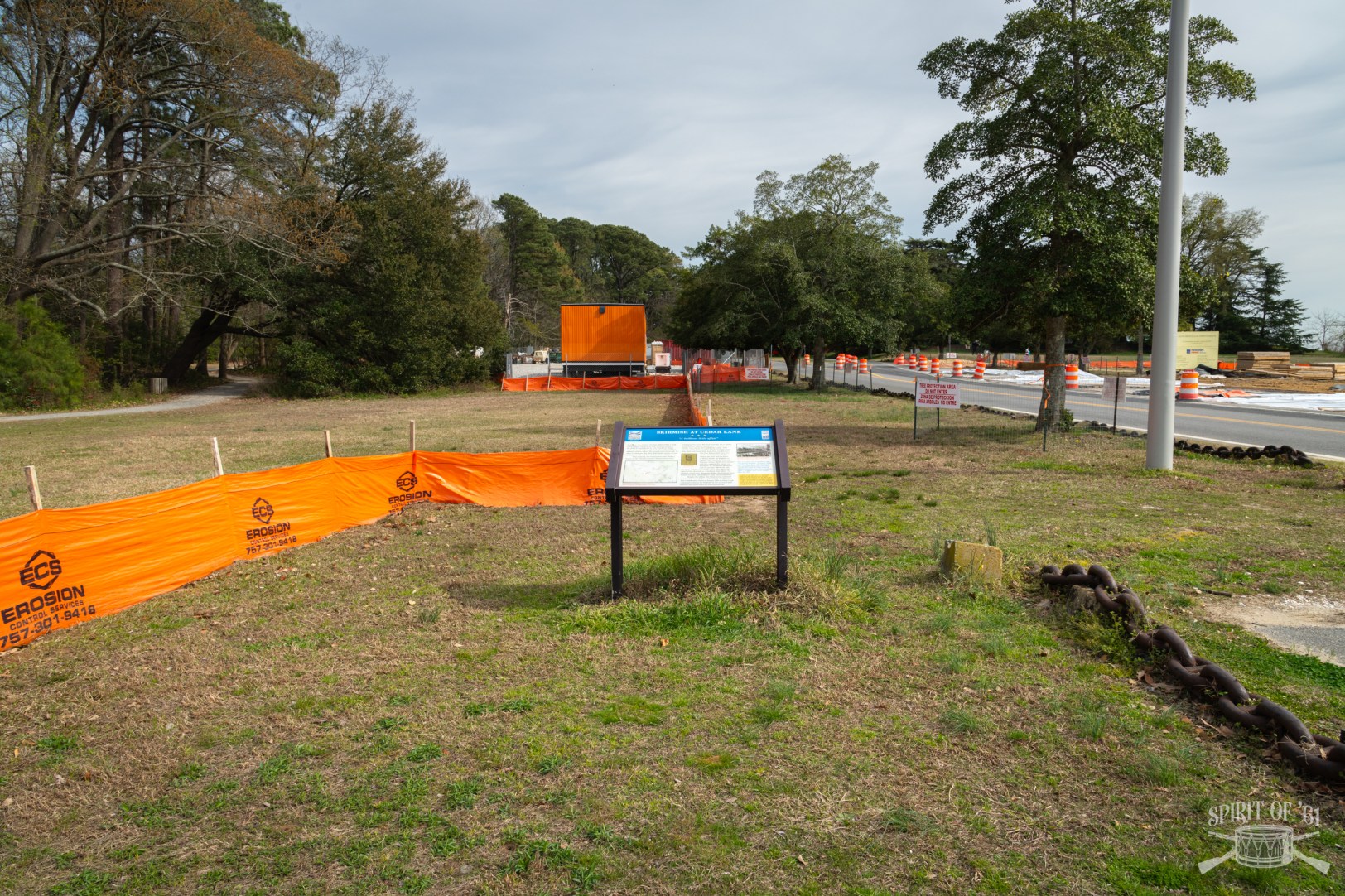
The Skirmish at Cedar Lane was fought on Friday, July 12, 1861 between Union forces commanded by Lt. Oscar von Heringen and Confederate forces commanded by Maj. John Bell Hood in present-day Newport News, Virginia. This minor skirmish resulted in a total Confederate victory, with all casualties occurring on the Union side.
Following the Battle of Big Bethel, Union and Confederate forces on the Virginia Peninsula settled into a stalemate behind their fortifications. Both armies occasionally sent patrols into no man’s land to forage for supplies or scout for enemy activity, but neither was strong enough to dislodge the other.
On July 5, 1861, a failed ambush near the farm of Nelson Smith resulted in the death of Confederate Lt. Col. Charles Dreux, commander of the 1st Louisiana Infantry Battalion. Dreux was the first Confederate field officer killed in the war, and his death was mourned throughout the South, especially in his hometown of New Orleans.
Eager for revenge, Confederates camped at nearby Young’s Mill sought an opportunity for action. Commanding the Confederate cavalry in the area was 30-year-old Maj. John Bell Hood, a graduate of the United States Military Academy at West Point. On the morning of July 12th, Hood led a mixed force of 125 men from the Old Dominion Dragoons, Charles City Troop, Dinwiddie Cavalry, Cumberland Light Dragoons, Mecklenburg Dragoons/Boydton Cavalry, and Black Walnut Dragoons, which collectively formed the nascent 3rd Virginia Cavalry Regiment. Hood and his men rode toward Union lines near the southern tip of Newport News, “looking out for a fight.”
Meanwhile, 36 men from Company E of the 7th New York Infantry Regiment had received permission to leave Camp Butler to gather firewood. The 7th New York was composed primarily of German-born immigrants from New York City, many of whom spoke little English. The regiment, known as the “Steuben Guard” in honor of Revolutionary War hero Baron von Steuben, had been involved in a friendly-fire incident during the Battle of Big Bethel when it mistakenly fired on the 3rd New York Infantry, which was wearing gray uniforms similar to those of the Confederates.
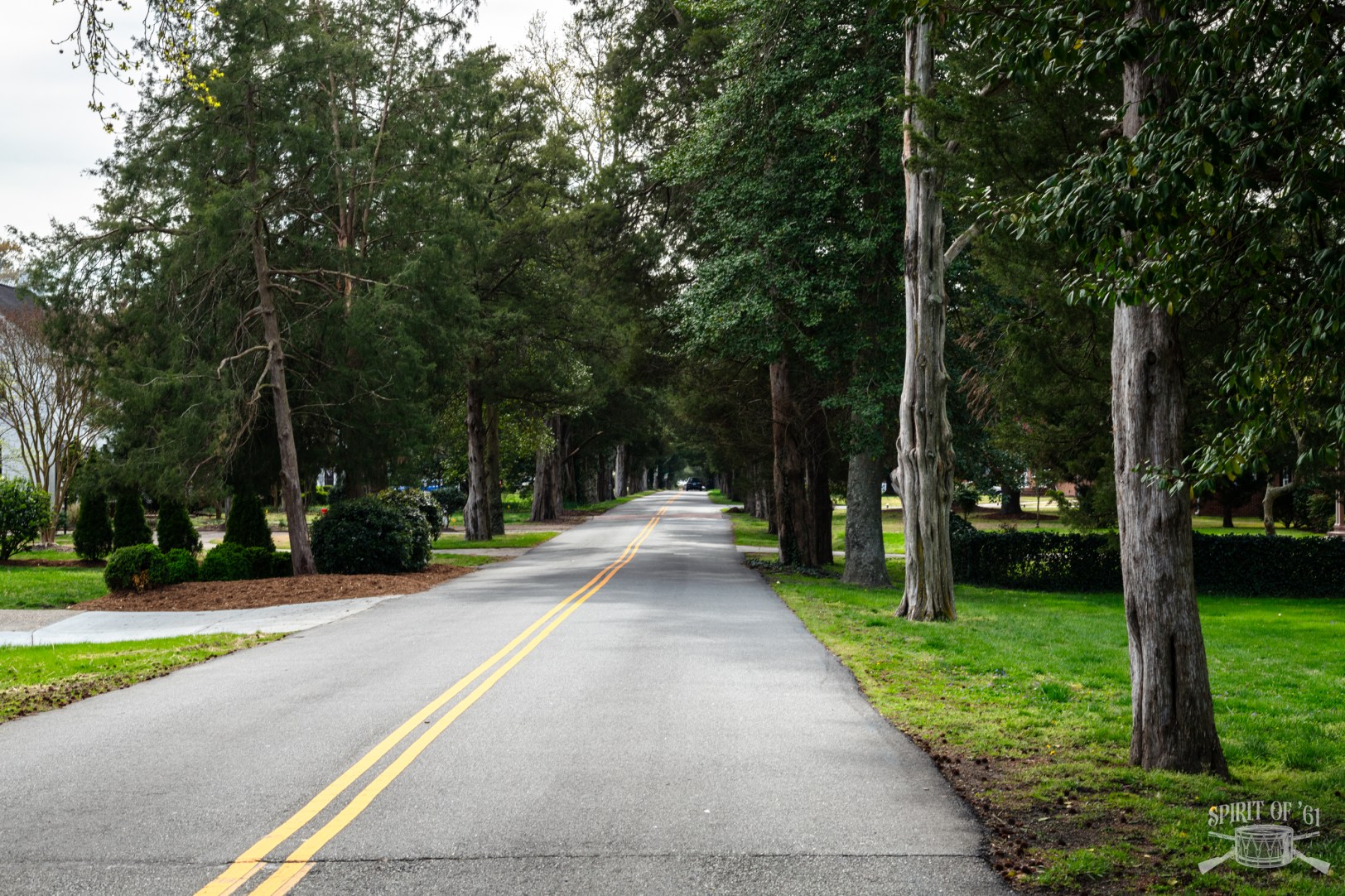
As the foraging party gathered firewood, a group led by 36-year-old Lt. Oscar von Heringen decided to venture deeper into the woods, moving closer to Confederate lines. They were spotted by Hood’s scouts near Cedar Lane and Nelson Smith’s farm sometime before noon. They were motivated to act outside their orders, it was said, by boredom and a desire to avenge their defeat at Big Bethel. Lt. Frederick Mosebach stayed behind with the rest of the party.
Hood mistook von Heringen’s patrol for an ambush and sent a detachment of 30 men, mostly from the Mecklenburg Dragoons, who were armed with Sharps breech-loading carbines, through the thick woods to confront them. Flanking von Heringen’s group, Hood’s men surprised Mosebach’s party, and a sharp skirmish broke out. Mosebach ordered his men to flee toward Nelson Smith’s house.
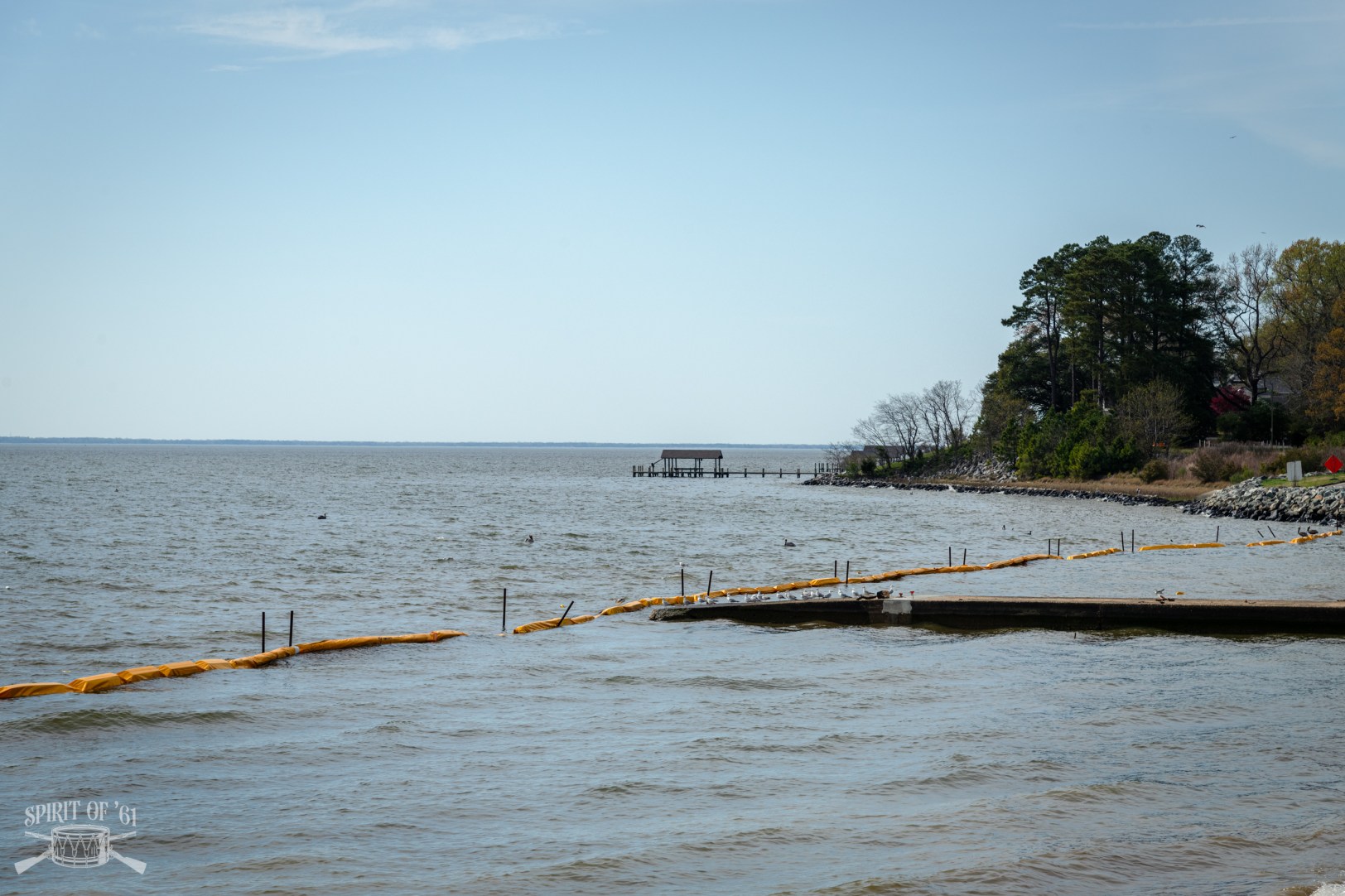
In Hood’s account, he recalled, “The enemy having been driven from cover in a very rapid and disorderly flight in the direction of Captain Smith’s house, on the banks of James River, I then ordered a charge, and the detachments … dashed gallantly down upon them, taking the flying enemy prisoners.”
Von Heringen’s patrol was cut off, and most of his men surrendered. The rest of Company E straggled back to camp. In total, von Heringen, Mosebach, nine privates, a mule, and a cart were captured. Four Union soldiers were killed, one mortally wounded, and several others wounded. The Confederates suffered no casualties, except for an injured horse.
Later, after the surviving men of Company E returned to camp, Lt. Col. Edward Kapff led 200 men from the 7th New York to the scene of the skirmish, but they found only scattered remnants of the battle.
Opposing Forces
Confederate
Brig. Gen. John B. Magruder, Commanding
| Unit | Commander(s) | Strength | Killed | Wounded | Captured |
|---|---|---|---|---|---|
| 3rd Virginia Cavalry Regiment | Maj. John Bell Hood | 125 | 0 | 0 | 0 |
Union
Col. John F. Bendix, Commanding
| Unit | Commander(s) | Strength | Killed | Wounded | Captured |
|---|---|---|---|---|---|
| Company E, 7th New York Infantry Regiment | Lt. Oscar von Heringen | 36 | 4 | 1-3 | 11 |
Timeline
June 10, 1861: Union Maj. Gen. Benjamin F. Butler orders a disastrous attack on Confederate Col. John B. Magruder’s forces on the Virginia Peninsula at Big Bethel.
July 5, 1861: Confederate Lt. Col. Charles D. Dreux is killed in a failed ambush near Smith’s Farm in present-day Newport News, Virginia.
July 12, 1861: Confederate forces led by Maj. John Bell Hood skirmish with Union forces led by Lt. Oscar von Heringen at Cedar Lane in present-day Newport News, Virginia.
Location
GPS Coordinates — 37.04199, -76.48806
Primary Sources
News Articles

Fayetteville Weekly Observer (Fayetteville, NC) 8 July 1861.
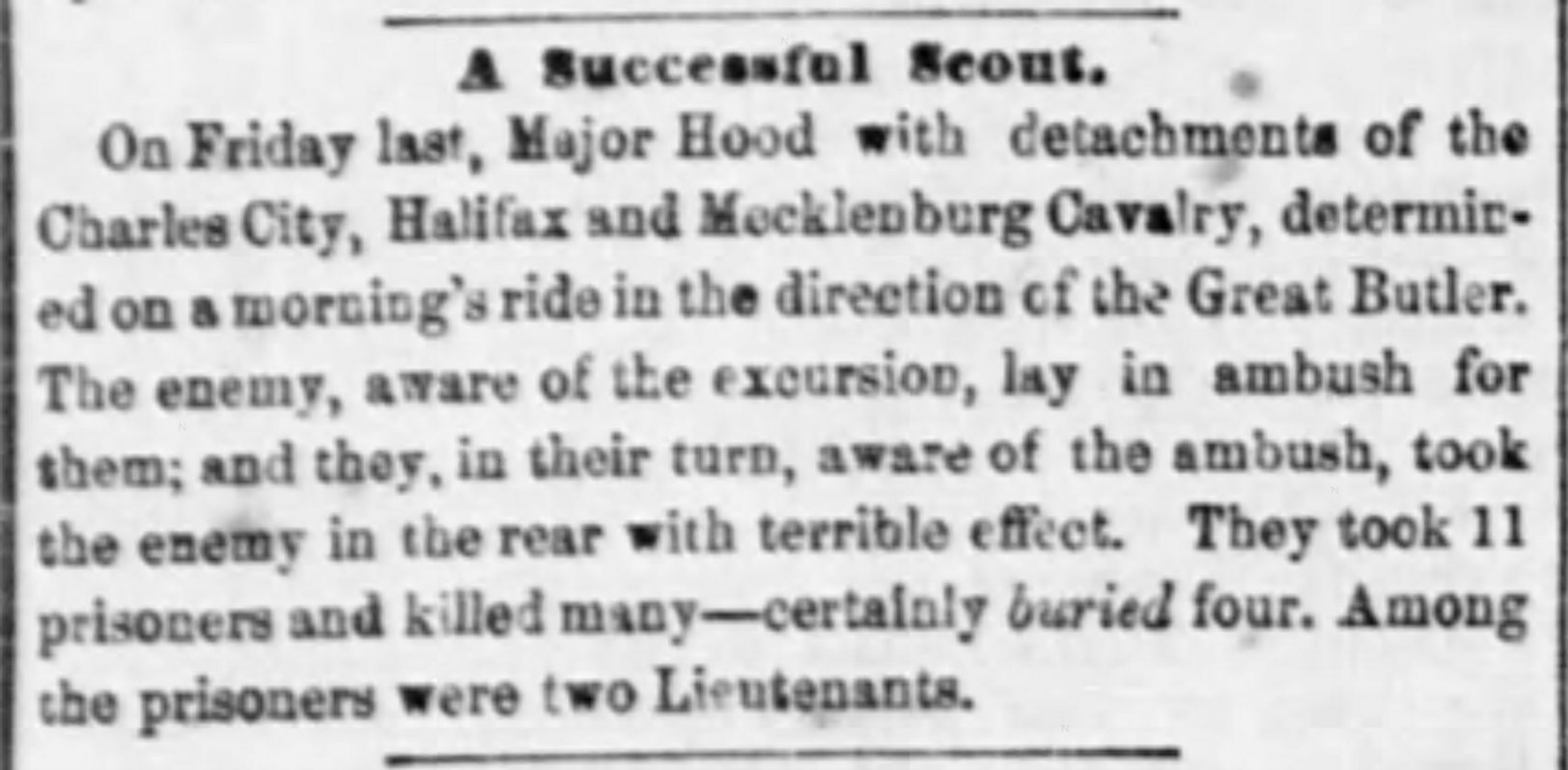
Richmond Times Dispatch (Richmond, VA) 15 July 1861.

New York Tribune (New York, NY) 16 July 1861.
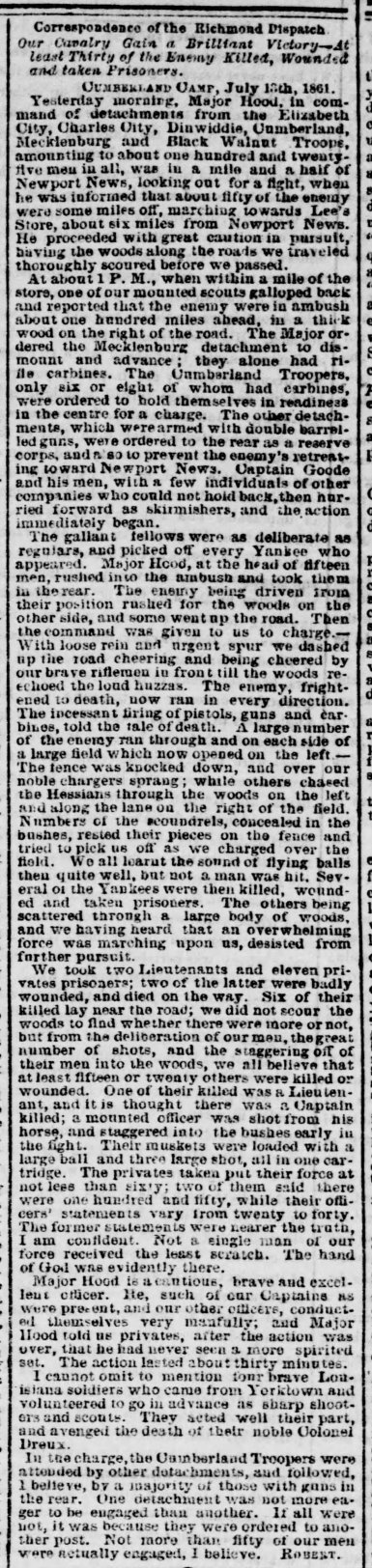
Richmond Dispatch (Richmond, VA) 17 July 1861.
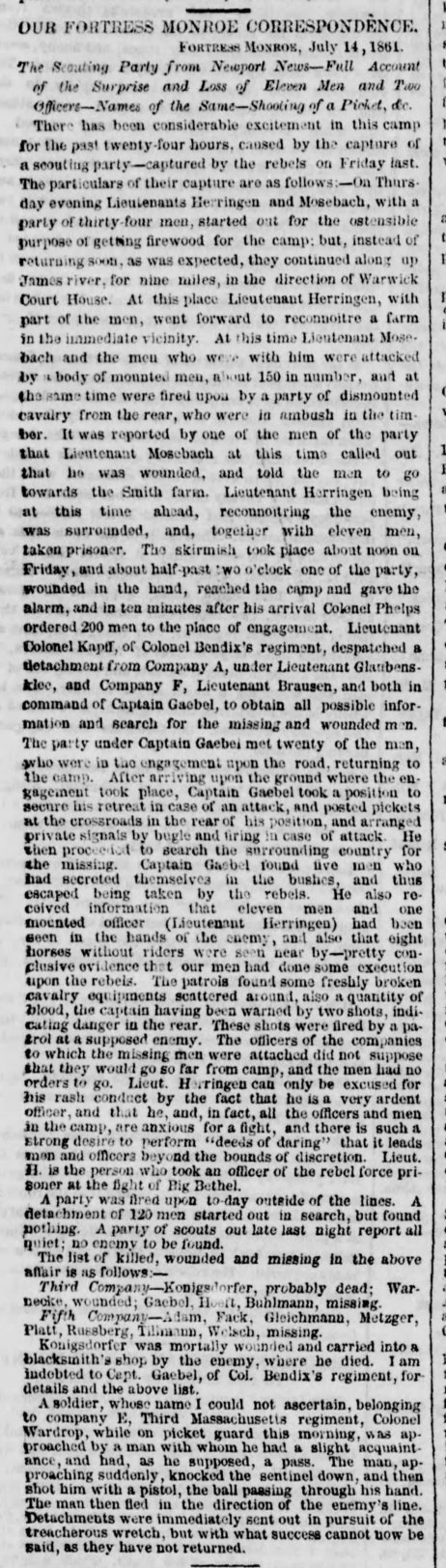
New York Daily Herald (New York, NY) 17 July 1861.
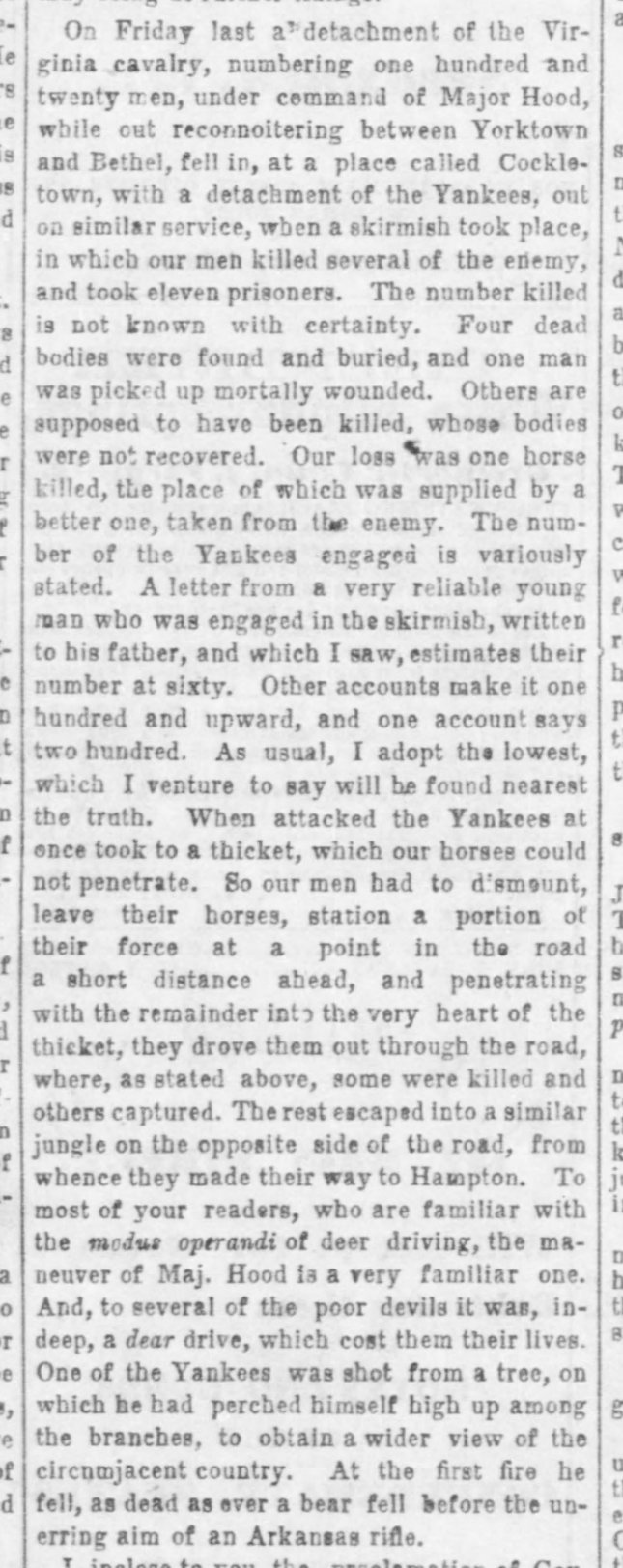
Memphis Daily Appeal (Memphis, TN) 18 July 1861.
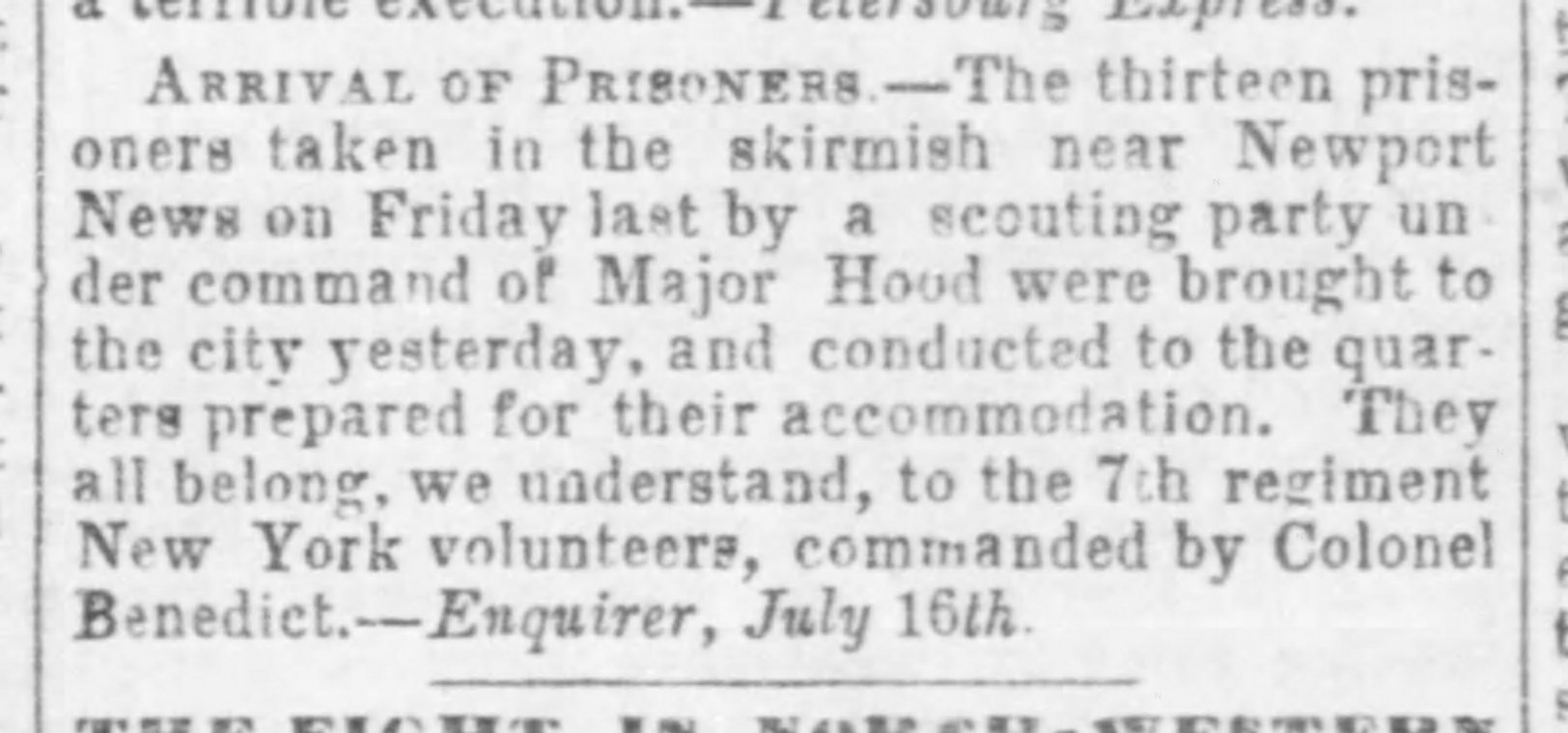
Memphis Daily Appeal (Memphis, TN) 19 July 1861.

New York Tribune (New York, NY) 20 July 1861.
Reports and Letters
- July 12 Report of Maj. John B. Hood, C.S. Army
- July 13 Report of Lieut. Col. E. Kapff, Seventh New York Infantry
- July 13 Reports of Brig. Gen. John B. Magruder, C.S. Army
- July 15 Congratulatory letter from General Lee, C.S. Army
- July 15 Report of Lieut. Louis Schaffner, Adjutant Seventh New York Infantry
- July 19 Report of Maj. Gen. B.F. Butler, U.S. Army
Sources
Dyer, John P. The Gallant Hood. Bobbs-Merrill Company, 1950. Reprint. New York: Smithmark Publishers, 1994.
McMurry, Richard M. John Bell Hood and the War for Southern Independence. Lincoln: University of Nebraska Press, 1992.
Nanzig, Thomas P. 3rd Virginia Cavalry. Lynchburg: H.E. Howard, Inc., 1989.
Updated: 5 March 2025
Created: 28 March 2021
 Spirit of '61