
Sunday, July 7 to Thursday, July 11, 1861
For five days in July 1861, Union and Confederate forces exchanged artillery and skirmish fire at Laurel Hill near Belington, with neither side gaining a clear advantage. However, when Confederates suffered a decisive loss at nearby Rich Mountain, Brig. Gen. Robert S. Garnett abandoned his position, turning what had been a stalemate into a strategic Union success.


Narrative
The Battle of Belington (Laurel Hill) was fought from Sunday, July 7 to Thursday, July 11, 1861 between Union forces commanded by Brig. Gen. Thomas A. Morris and Confederate forces commanded by Brig. Gen. Robert S. Garnett in Barbour County, West Virginia during the American Civil War. The battle was technically a draw, but defeat at Rich Mountain on July 11 compelled Garnett to abandon his fortified camp at Laurel Hill.
Following an ignominious Confederate defeat at the Battle of Philippi in early June, Brig. Gen. Garnett took command of Confederate forces in western Virginia and fortified two key mountain passes: one at Laurel Mountain leading to Leadsville and the other at Rich Mountain to Beverly. Lt. Col. John Pegram commanded a smaller force at Camp Garnett in Rich Mountain, while Garnett stayed at Camp Laurel Hill with 4,000 men.
Garnett knew his prospects for victory were slim. “I don’t anticipate anything very brilliant–indeed I shall esteem myself fortunate if I escape disaster,” he wrote. His pessimism would be tested on July 7, when Brig. Gen. Morris arrived with his 3,500-man brigade and made camp in nearby Belington (where he soon received reinforcements, bringing his total to 4,000). The two sides skirmished for several days. Morris’ orders were to “amuse” his opponent and prevent him from reinforcing Rich Mountain.
Accounts of the battle vary, but it involved both infantry and artillery duels. A Confederate soldier wrote to the Richmond Daily Dispatch: “The company had no sooner taken their proper place, when they opened briskly on the foe, which was returned as briskly; but few of the return shots did any execution…,” and “During the latter part of the day the enemy fired a number of bomb shells, grape-shots and balls in the direction of our troops, playing havoc with the trees and shrubbery…”
Another Confederate, George P. Morgan, recorded in his journal: “Early in the morning the enemy made his appearance near our fortified camp (near Laurel Hill) and were promptly repulsed by the 1st Georgia regiment with the loss of one wounded on our side and several killed on theirs. The day was principally occupied in skirmishes, in which nearly all our forces were engaged, but with the loss of only one man on our side.”
Ambrose Bierce, a Union soldier in the 9th Indiana Infantry and later an accomplished author, remarked: “A few dozen of us, who had been swapping shots with the enemies’ skirmishers, grew tired of the resultless battle, and by a common impulse – and I think without orders or officers – ran forward into the woods and attacked the Confederate works. We did well enough considering the hopeless folly of the movement, but we came out of the woods faster than we went in – a good deal.”
Casualty estimates from these five days of fighting are hard to come by, since contemporary accounts tended to exaggerate, but the number of killed and wounded may have been as high as two dozen on either side. Confederate forces held out until the 11th, when they slipped away under cover of night to avoid being surrounded.
Opposing Forces
Confederate
Brig. Gen. Robert S. Garnett, Commanding
| Unit | Commander(s) | Strength | Killed | Wounded | Captured / Missing |
|---|---|---|---|---|---|
| 23rd Virginia Inf. Regiment | Col. William B. Taliaferro | 620 | 3 | 2 | 4 |
| 31st Virginia Inf. Regiment | Lt. Col. William L. Jackson | ||||
| 37th Virginia Inf. Regiment | Col. Samuel V. Fulkerson | 1 | |||
| 1st Regiment, Georgia Infantry (Ramsey’s) | Col. James N. Ramsey | 950 | 1 | 3 | 2 |
| Second Rockbridge Dragoons | Capt. John R. McNutt | 74 | |||
| Bath Cavalry | Capt. Archibald T. Richards | 67 | |||
| Charlotte Cavalry | Capt. John G. Smith | ||||
| Pittsylvania Dragoons | Capt. Cabel E. Flournoy | 61 | |||
| Greenbrier Cavalry | Capt. Robert B. Moorman | 80 | |||
| Danville Battery | Capt. Lindsay M. Shumaker | 4 Guns | |||
| Eighth Star New Market Battery | Capt. William H. Rice | 0 Guns | |||
| 5 | 5 | 6* |
Union
Brig. Gen. Thomas A. Morris, Commanding
| Unit | Commander(s) | Strength | Killed | Wounded | Captured |
|---|---|---|---|---|---|
| 14th Ohio | Col. James B. Steedman | ||||
| 15th Ohio, 3 Companies | Lt. Col. Moses R. Dickey | ||||
| 16th Ohio, 3 Companies | Lt. Col. John S. Fulton | ||||
| 6th Indiana | Col. Thomas T. Crittenden | 778 | |||
| 7th Indiana | Col. Ebenezer Dumont | 782 | |||
| 9th Indiana | Col. Robert H. Milroy | 786 | |||
| 1st Virginia (Union) | Maj. Isaac H. Duval | ||||
| 2nd Virginia (Union), Company B “Grafton Guards” | Capt. George R. Latham | ||||
| 1st Ohio Light Artillery | Col. James Barnett | 6 guns |
Casualties
| Name | Unit | Killed | Mortally Wounded | Wounded | Captured | Date |
|---|---|---|---|---|---|---|
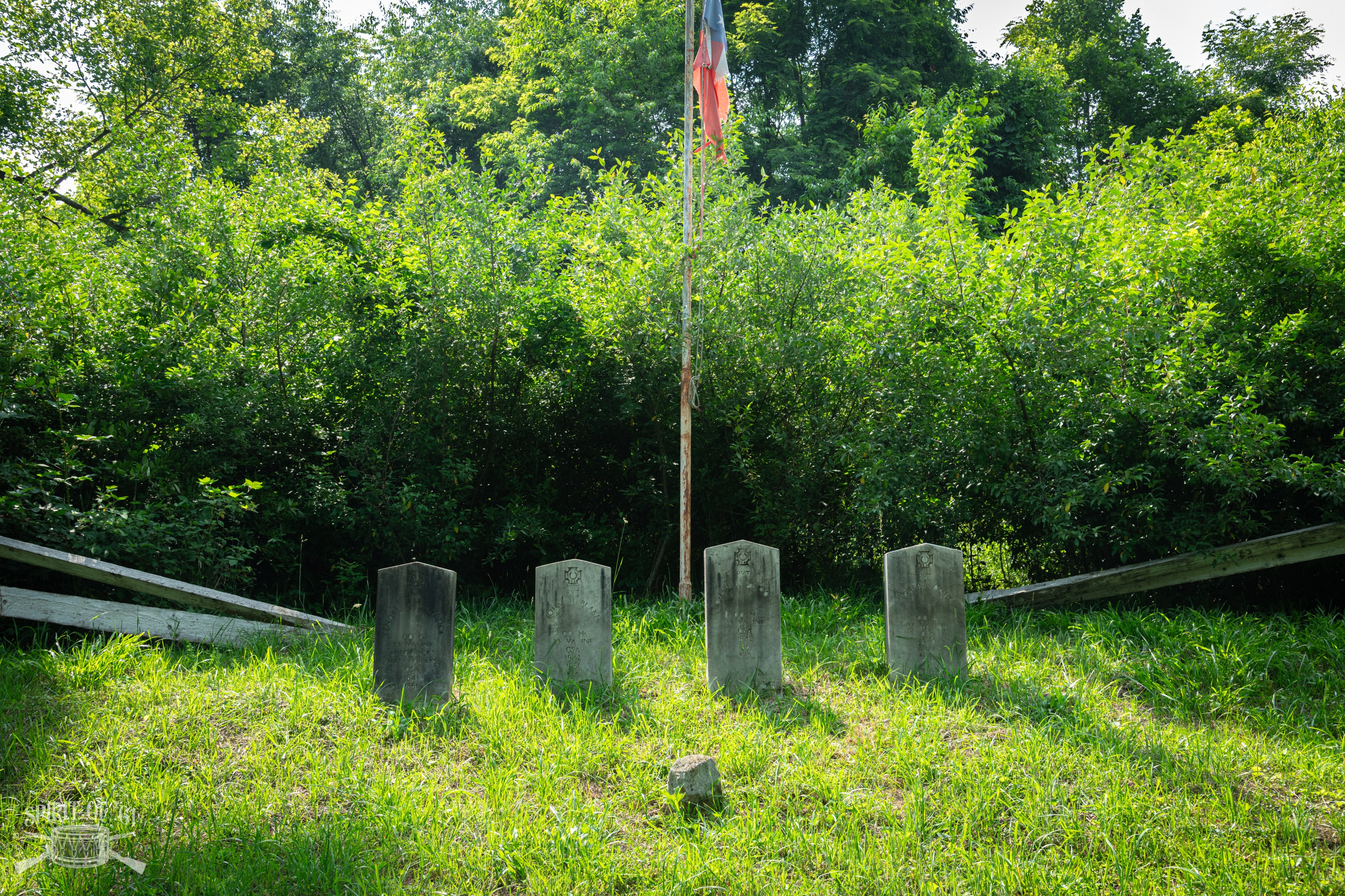
| Pvt. Dillard Adams | 1st GA, Co. D | X | 7/8 | |||
| Pvt. George W. Huckaby (Huckaba) | 1st GA, Co. A | X | 7/8 | |||
| Pvt. George W. Allen | 1st GA, Co. I | X | X | 7/8 | ||
| Pvt. William P.S. Poole | 1st GA, Co. I | X | X | 7/12 | ||
| Sgt. John B. Pendleton | 23rd VA, Co. G | X | 7/10 | |||
| Pvt. John H. Blake | 23rd VA, Co. H | X | 7/9 | |||
| Pvt. Charles H. Goff | 23rd VA, Co. H | X | 7/7 | |||
| Pvt. Thomas E. Gentry | 23rd VA, Co. G | X | ? | |||
| Pvt. Julian L. Henderson | 23rd VA, Co. G | X | ? | |||
| Pvt. Hugh A. Curry | 31st VA, Co. E | X | 7/10 | |||
| Pvt. Washington Phares | 31st VA, Co. B | X | 7/10 | |||
| Pvt. Robert M. Oney | 37th VA, Co. B | X | 7/11 |
| Name | Unit | Killed | Mortally Wounded | Wounded | Captured |
|---|---|---|---|---|---|
| Sgt. Samuel Donaldson | 14th Ohio, Co. E | X | |||
| Pvt. Frank Gero | 14th Ohio, Co. E | X | |||
| Sgt. William Martin | 14th Ohio, Co. K | X | |||
| Pvt. Joseph Sudborough | 14th Ohio, Co. K | X | |||
| Pvt. George W. Tillotson | 1st Ohio Light Artillery, Btty. D | X | |||
| Pvt. Sylvester Brown | 6th Indiana, Co. B | X | |||
| Pvt. John R. Smith | 7th Indiana, Co. C | X | |||
| Pvt. Dyson Boothroyd | 9th Indiana, Co. A | X | |||
| Pvt. William H. Todd | 9th Indiana, Co. B | X | |||
| Pvt. John Neeb | 9th Indiana, Co. E | X | |||
| Pvt. William T. Girard | 9th Indiana, Co. G | X | |||
| Pvt. John Mathews | 9th Indiana, Co. H | X | |||
| Pvt. John Anten/Auten | 9th Indiana, Co. I | X |
Timeline
June 13-15, 1861: Brig. Gen. Robert S. Garnett is placed in command of Confederate forces in northwestern Virginia. He proceeds to fortify positions at Laurel Hill and Rich Mountain in Barbour and Randolph counties to guard the two main mountain roads.
July 2, 1861: Union Maj. Gen. George B. McClellan occupies Buckhannon in Upshur County, approx. 23 miles from the Confederate encampment at Rich Mountain.
July 7, 1861: Union forces arrive in front of Rich Mountain and Laurel Hill.
Battlefield
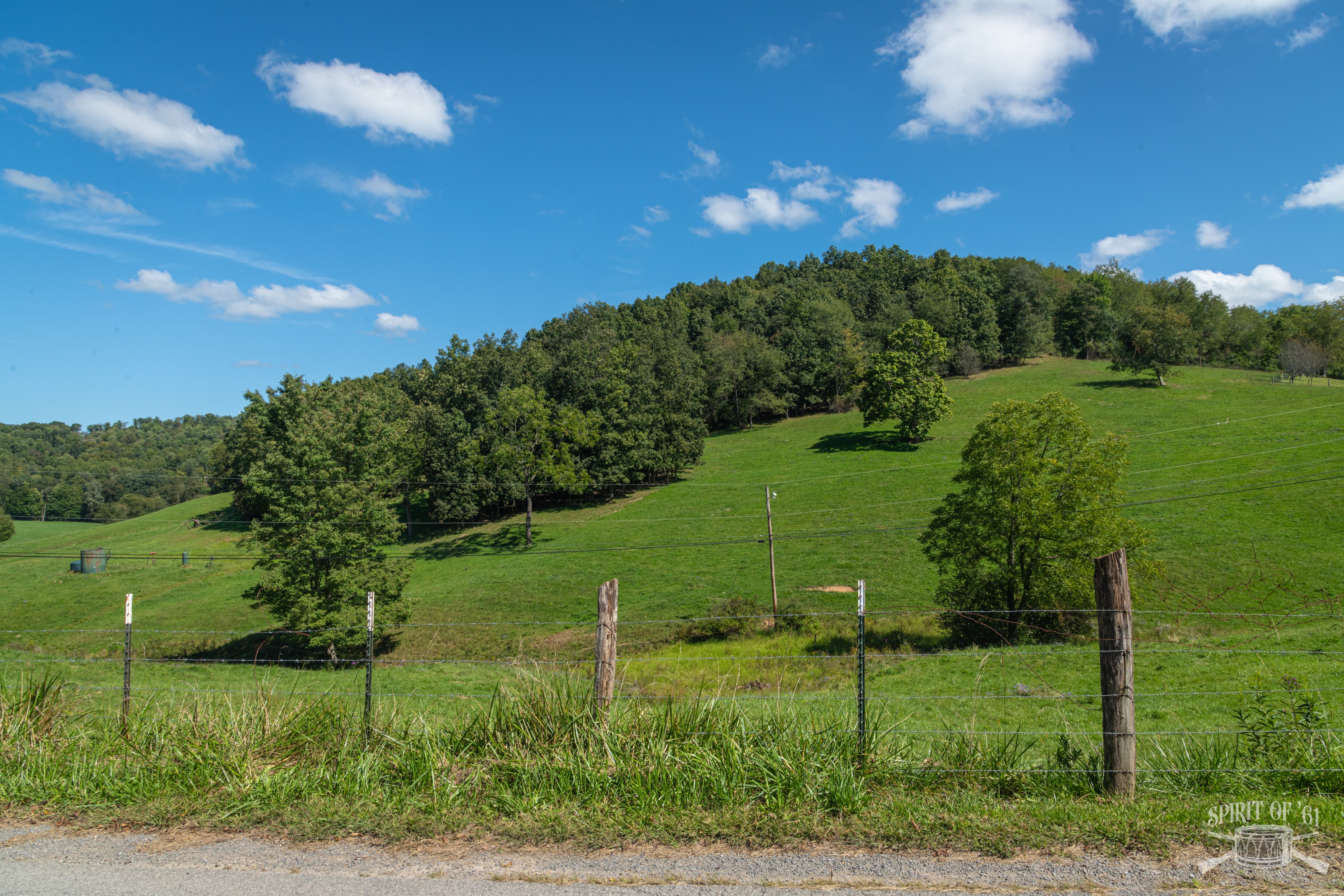
After the armies moved on, Laurel Hill returned to its sleepy and agrarian existence. There was little effort to preserve or commemorate the battle until the early 2000s. In 2004, the City of Belington acquired ownership of 50 acres of the old Confederate camp, and began to hold an annual reenactment there. A Civil War Trail interpretive sign was installed in Belington in 2005, and a trail and information kiosk were erected on the battlefield in 2008. Today, the Friends of Laurel Hill Battlefield protect and preserve it for posterity.
Laurel Hill Battlefield is located at 63 Laurel Mountain Road southeast of Belington, West Virginia. A parking lot is just north of the Mill Creek Reservoir, and the trails are west of there off Battlefield Drive. The park is open dawn to dusk. There is another sign along Laurel Mountain Road at GPS coordinates 39.013234, -79.924219.
Location
GPS Coordinates — 39.00848, -79.90881
Primary Sources
Reports and Letters
- Jul. 5 Report of Maj. Gen. George B. McClellan
- Jul. 6 Report of Maj. Gen. George B. McClellan
- Jul. 6 Instructions to Brigadier General T. A. Morris
- Jul. 9 Report of Brigadier General T. A. Morris, Indiana Militia
- Jul. 10 Report of Maj. Gen. George B. McClellan
- Jul. 12 Report of Maj. Gen. George B. McClellan (1st)
- Jul. 12 Report of Maj. Gen. George B. McClellan (2nd)
- Jul. 13 Report of Brigadier General T. A. Morris, Indiana Militia
- Jul. 13 Report of Maj. Gen. George B. McClellan
- Jul. 14 Report of Maj. Gen. George B. McClellan (3rd)
- July 20 Report of Captain Lindsay Mayo Shumaker, Captain, C.S. Army
- July 24 Statement of Col. Samuel Vance Fulkerson, 37th Virginia
Secondary Sources
Boeche, Thomas L. “McClellan’s First Campaign” in America’s Civil War (January 1998): 30-36.
Carnes, Eva Margaret. The Tygarts Valley Line, June-July 1861. Philippi: First Land Battle of the Civil War Centennial Commemoration, Inc., 1961. Parsons: McClain Printing Company, 2003.
Hardway, Ronald V. On Our Own Soil: William Lowther Jackson and the Civil War in West Virginia’s Mountains. Charleston: Quarrier Press, 2003.
Lesser, W. Hunter. Rebels at the Gate: Lee and McClellan on the Front Line of a Nation Divided. Naperville: Sourcebooks, Inc., 2004.
Martin, George Winston. “I Will Give Them One More Shot”: Ramsey’s First Regiment Georgia Volunteers. Macon: Mercer University Press, 2011.
Updated: 8 March 2025
Created: 12 February 2021
 Spirit of '61