The town of Wheeling, located along the Ohio River in what was then the Virginia panhandle (today, West Virginia), was Virginia’s fourth largest city in 1860. Sandwiched between the free states of Ohio and Pennsylvania, it was largely populated by German immigrants with no affinity for Virginia’s Anglo-American planter class.
When the Secession Convention in Richmond voted in favor of secession in April, Robert E. Lee directed Maj. Alonzo Loring to raise volunteer companies in Wheeling and the surrounding counties. Loring, a New Yorker by birth, was a Mexican War veteran and businessman with an interest in the local ironworks. He evidently chose to either ignore the order or realized the futility of following it.
A secession referendum was held on May 23rd, and Union partisans in Wheeling were eager to name and shame their opponents, as this broadside from the University of Virginia Library shows.
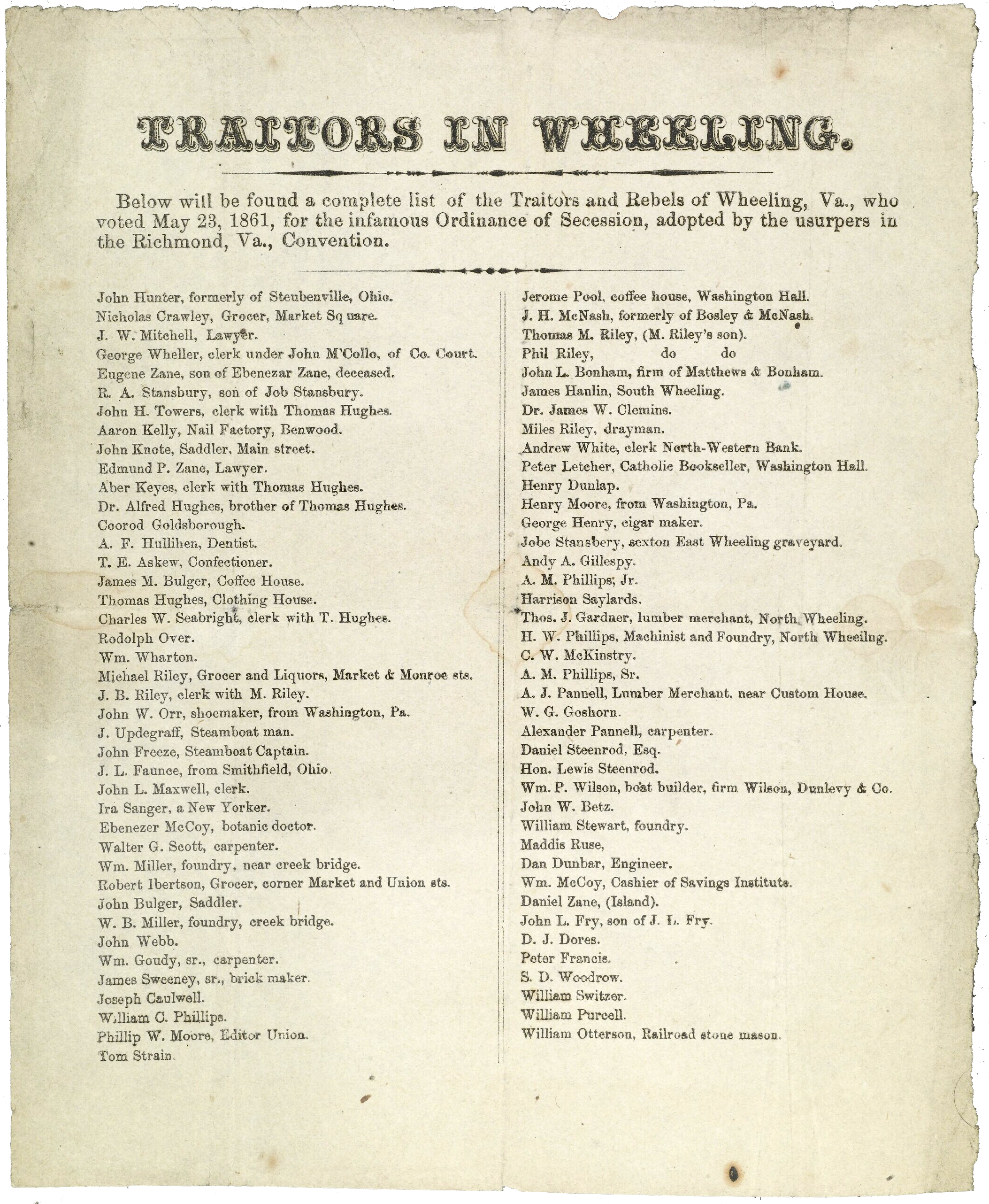
for the Infamous Ordinance of Secession, Adopted by the Usurpers In the Richmond, Convention. s.n. 1861.
Broadside 1861 .T73 https://search.lib.virginia.edu/items/u2862865
The Shriver Grays and Capt. James W. Sweeney’s Company were the only Confederate units raised in Wheeling. The Shriver Grays were led by Capt. Daniel Shriver and lieutenants John W. Mitchell, John B. Leadley, and Pryor Boyd. Mitchell’s is the only name that appears on this list. If these men were willing to give their lives for their cause, why don’t their names appear? Well, the Shriver Grays’ 80 men formed in secret and slipped away days before the secession referendum to join other pro-secession militia gathered at Harpers Ferry, so they would not have been present to vote.
 Spirit of '61