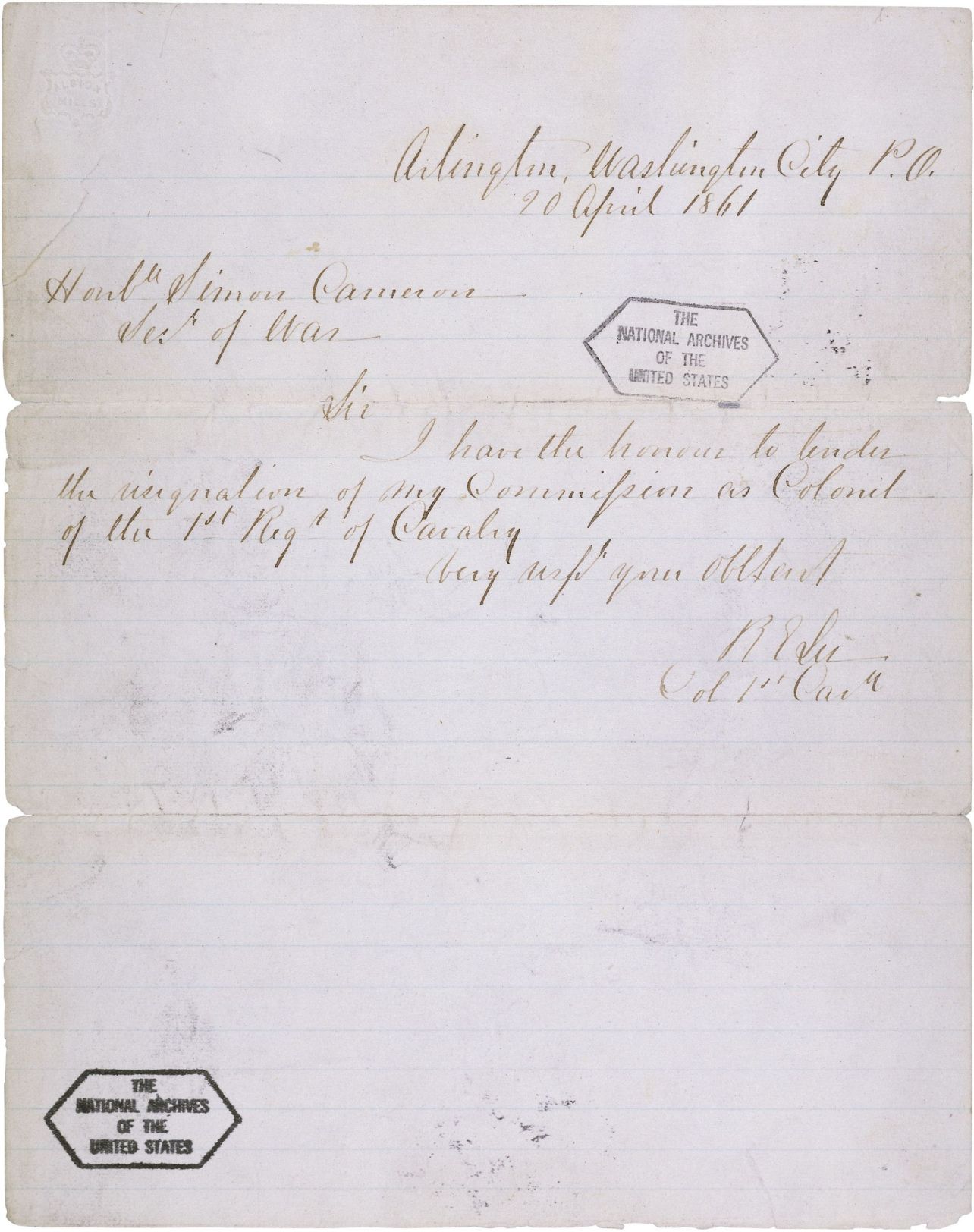
Arlington, Washington City, P.O.
20 April 1861
Honble Simon Cameron
Sect of War
Sir
I have the honour to tender the resignation of my Commission as Colonel of the 1st Regt of Cavalry
Very respt your ob Servt
R E Lee
Col 1st Cavy
On April 17, 1861, the Virginia Secession Convention voted in favor of secession, subject to a popular referendum to be held on May 23, 1861. The Lincoln Administration saw secession as illegal and was eager to secure the loyalty of prominent Virginians like 54-year-old Col. Robert E. Lee, a respected U.S. Army officer whose example could sway many to one side or the other.
On April 18, Francis Preston Blair, Sr., a prominent newspaper editor, met with Robert E. Lee in Washington, DC to convey President Lincoln’s offer to command the volunteer army then gathering under the Union banner. Lee declined, saying: “Mr. Blair, I look upon secession as anarchy. If I owned the four millions of slaves at the South, I would sacrifice them all to the Union; but how can I draw my sword upon Virginia, my native State?”
Lee then went to visit General Winfield Scott, a fellow Virginian and longtime friend, to formally decline the president’s offer. Though no record of the meeting exists, Scott supposedly replied, “Lee, you have made the greatest mistake of your life; but I feared it would be so.”
Two days later, on April 20th, Lee resigned his commission in the U.S. Army. His letter to Secretary of War Simon Cameron, transcribed above, was brief.
 Spirit of '61